
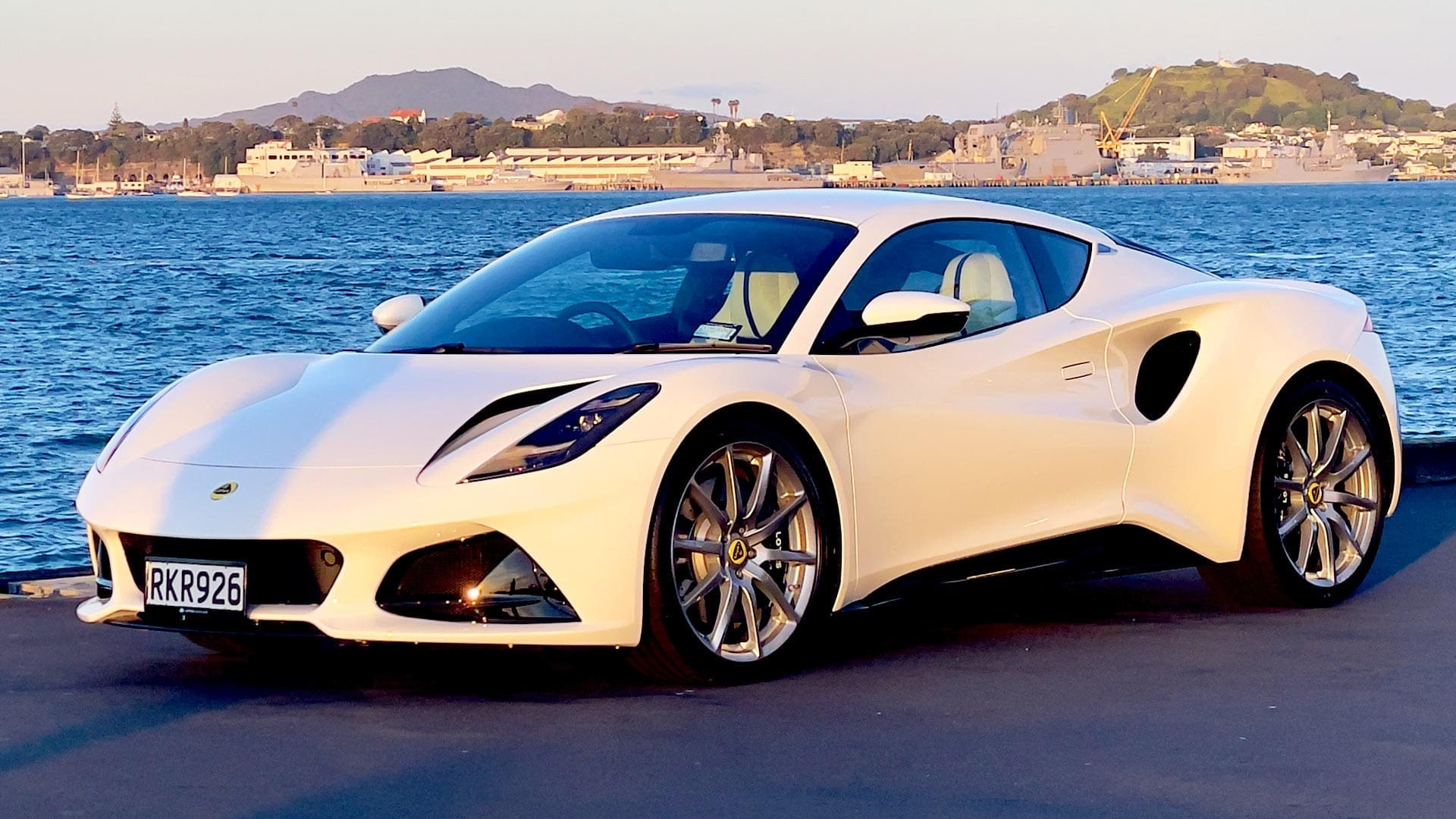
2025 Lotus Emira Turbo
Well, isn’t this a little treasure? Lotus is the ultimate sports car formula: small, light, fast and fun. “Lightness” was the catch-cry of Colin Chapman, founder of Lotus; it helped him win many Formula One victories. The Emira typifies this fabulous form. With compact dimensions, rear-wheel drive, and a mid-mounted engine, it is masterfully packed.
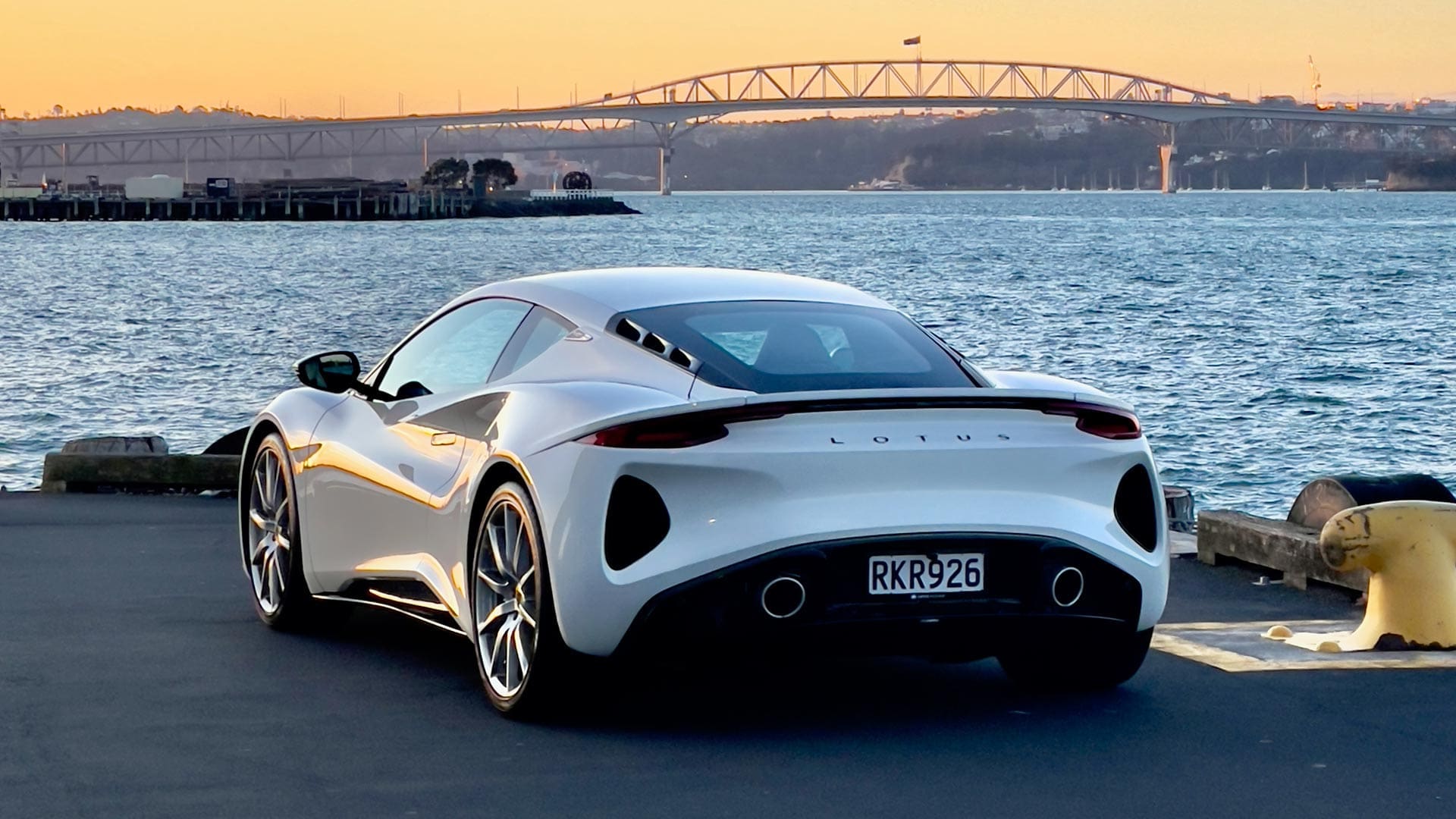
Everything about the proportions looks ravishing from the outside. It’s a true sports car where everything you see is there for performance first, then looks. The exterior doesn’t quite convey just how small it is because the proportions are so good. You notice when you get inside however. It’s a long way down. The top of your roof is at the sill level of other cars. Inches from the pavement; not quite Formula One low, but very low. This layout provides an excellent view thanks to the short nose, and one of the best aspects is looking out the wing mirrors over the haunches that encompass the air intakes.
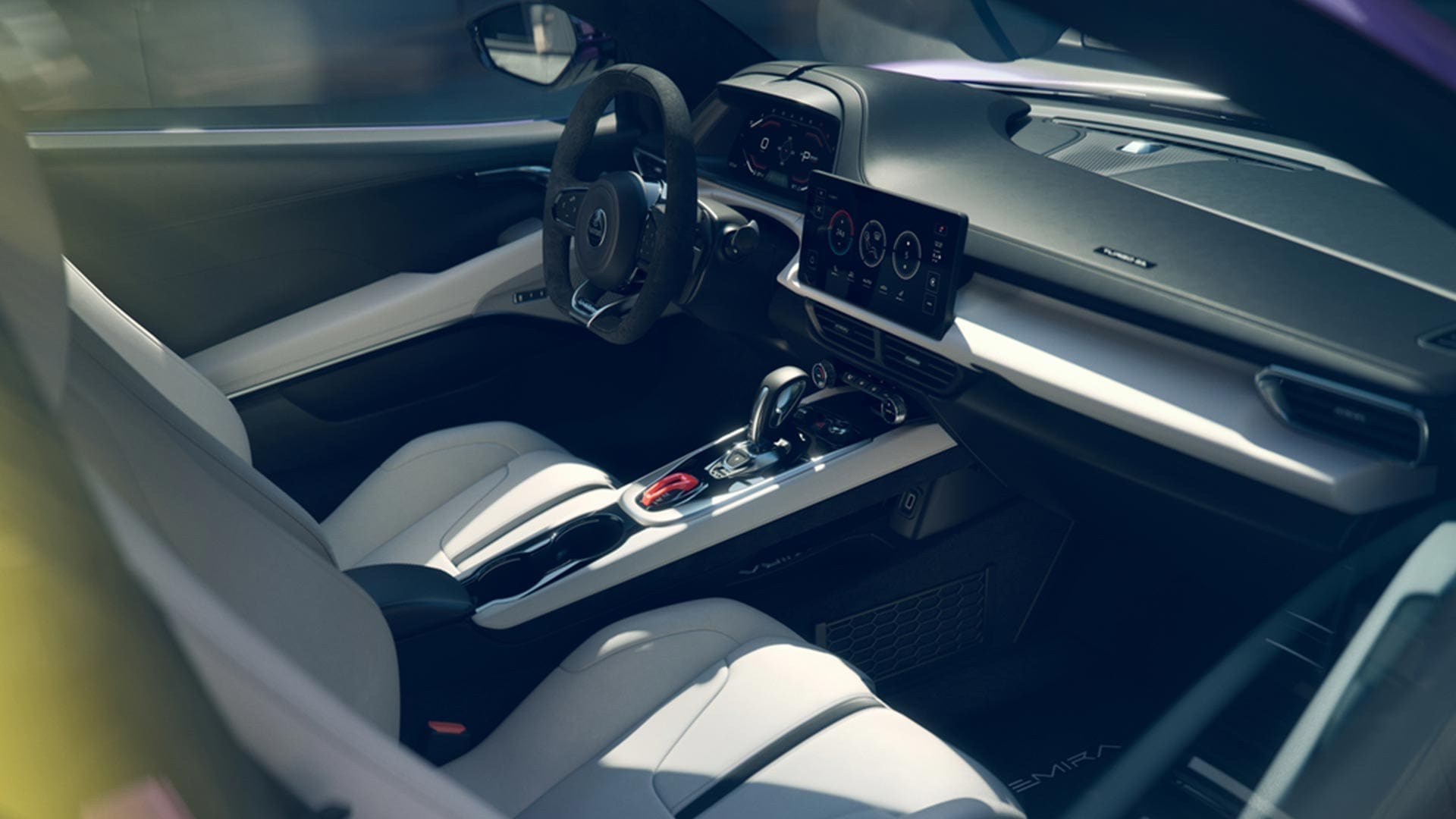
Inside it is beautifully appointed yet simple, with everything you need from A/C to intuitive controls at the touch of a button. Judging by the design, the English had the final say; the interior is restrained and entirely lined with Alcantara or leather. The cockpit remains compact: a wonderful slim steering wheel complete with metal shifters, driver’s instruments are subtle, and the form-fitting sport seats are very comfortable. There is even reasonable headroom; I think it would be no problem if you were 183 cm (six feet) tall.
There are a couple of variants, and this one has the AMG 2.0-litre turbocharged in-line four-cylinder engine that puts out 268 kW / 365 hp. It’s tucked right behind you. With a kerb weight of 1,446 kg, which is remarkably light these days, and that potent AMG mill producing 430 Nm of torque, it ticks off the sprint to 100 km/h in 4.4 seconds and carries on to a top speed of 275 km/h. The SE model is even faster! While it’s the same unit found in the A45, it feels tuned differently; power comes on a little higher and in a rush, giving it a distinct power band. You have to stay on top of what the engine is doing to wring the performance out of it, which makes this a true driver’s car. I suspect many buyers will opt for the larger V6 engine with the manual, but it’s no faster. Either way, you can’t go wrong.
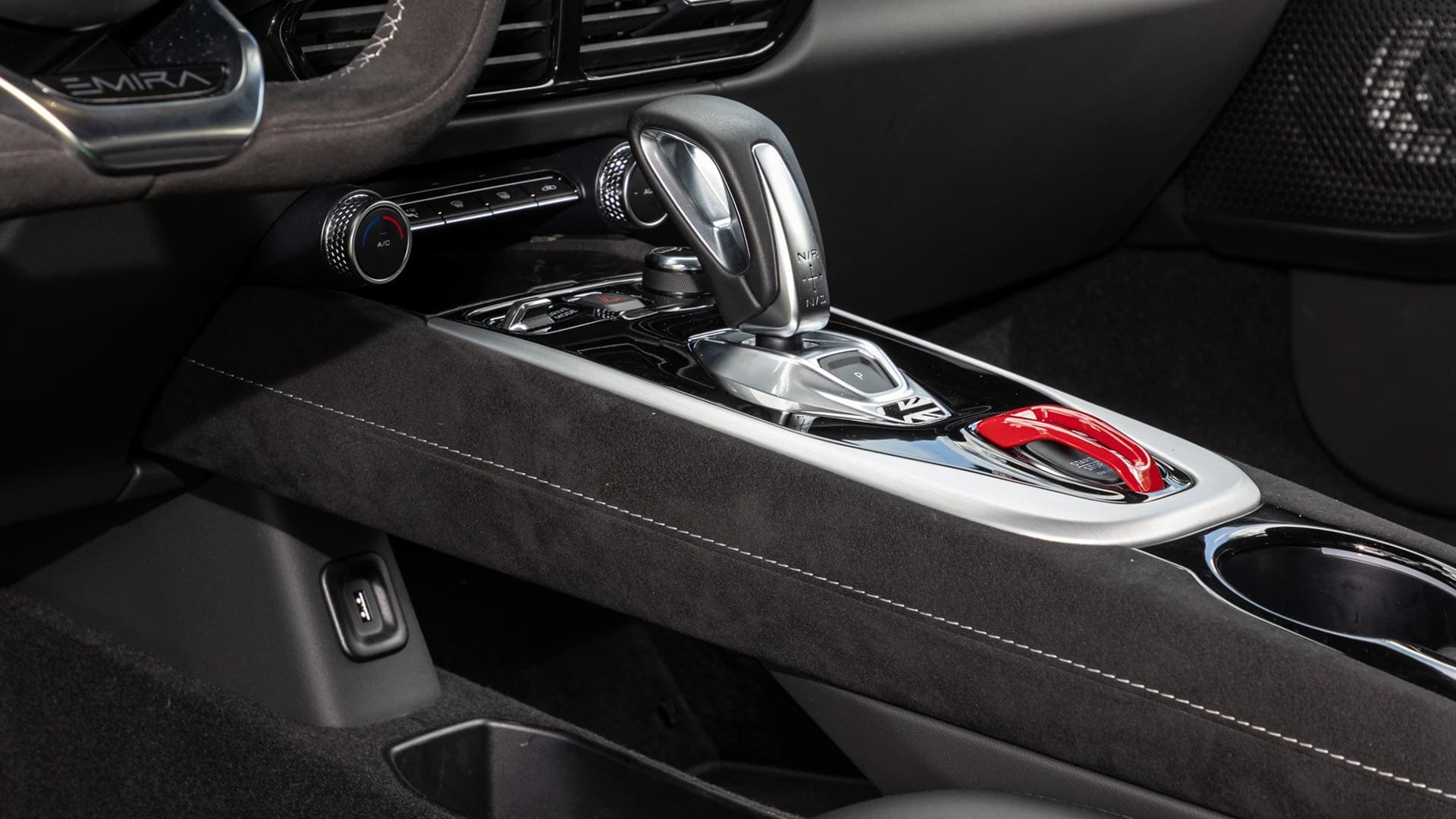
Lotus offers two drive modes: Tour and Sport. This is your weekend pocket rocket, a subcompact embarrasser of supercars. For the trek to a racetrack or a windy part of the country, the highway ride in Tour mode is quite acceptable. Flick on Sport when you are ready to party… You feel connected to the motor working right behind you; you can hear the giant turbo spin up and use that sound to ensure you’re at the right level of boost.
There are endless advantages to this smaller footprint: less tyre wear, lower fuel use, and it’s easy to park – none of reasons you buy a this car. You buy it because you can hardly get a more exhilarating ride on four wheels. If larger, more complex cars straighten out the corners for you, this acknowledges the corner and shoots around it like a razor, handling flat as a pancake and making you grin from ear to ear. I haven’t driven a car that corners better than this, and I’ve driven a few.
The road feedback is unparalleled; it’s defined without being twitchy. The steering is pinpoint precise and rewards thinking ahead. The DCT is a smart unit, though I found it an advantage to take over with the paddles in the twisty sections. It gives the impression of skimming or even flying. As the speed picks up, the car becomes lively and fun, less “planted” than a heavy car, but incredibly responsive to driver inputs. You are usefully aware of the different surfaces each wheel is on through vibrational and audio feedback.
Some powerful rear-wheel-drive cars can be “traction happy,” but there was little sense of that here. It showed no inclination to slide out the rear end even under duress, though I’ve no doubt you could do it if you tried. It doesn’t flatter you; it’s a force multiplier for your own skill. It brings back the enjoyment of a simpler time when mechanical understanding mattered. You quickly realize how much spare capacity this engine has. It gains and holds speed easily, especially through corners. Much of the time, the engine is just sitting there waiting for more input; and the braking is savage… the limitation in this car is the driver, not the vehicle.
Lotus is owned by Chinese giant Geely, who hold a wide portfolio of brands. The electronics have been inherited from the group company, which is an advantage. The technology gets out of the way so you can just drive, and everything you need is located on a physical button. Wireless integration is good, and if you’re navigating from your phone, directions appear directly on the dash. There are a few performance instruments worth noting: the vehicle continuously quotes power and torque, as well as two-dimensional G-forcel and I recorded the highest lateral G-force I’ve ever seen on a road car, at 1.4g.
This is the kind of car you can lose track of time in because it’s so much fun and so rewarding. It’s purposeful without being aggressive. Of all the cars I’ve driven, this has had the second-most attention from the public. A Lotus is for someone who thinks independently, a leader, not a follower, who seeks performance over “brag-ability.” I’ve driven nothing like this. It’s no surprise Lotus has such a reputation; it’s understated excellence and supreme competence. It doesn’t bark or brag, but it knows it’s one of the most fabulous vehicles available.