50 Years of the BMW 3 Series
For 50 years, the BMW 3 Series has been the backbone of BMW’s model lineup and the standard-bearer of what a compact executive sports sedan can and should be. In New Zealand, it has remained the highest-selling BMW of all time. And what better way to celebrate this longevity and success? Well, the release of a special edition 3 series, of course.
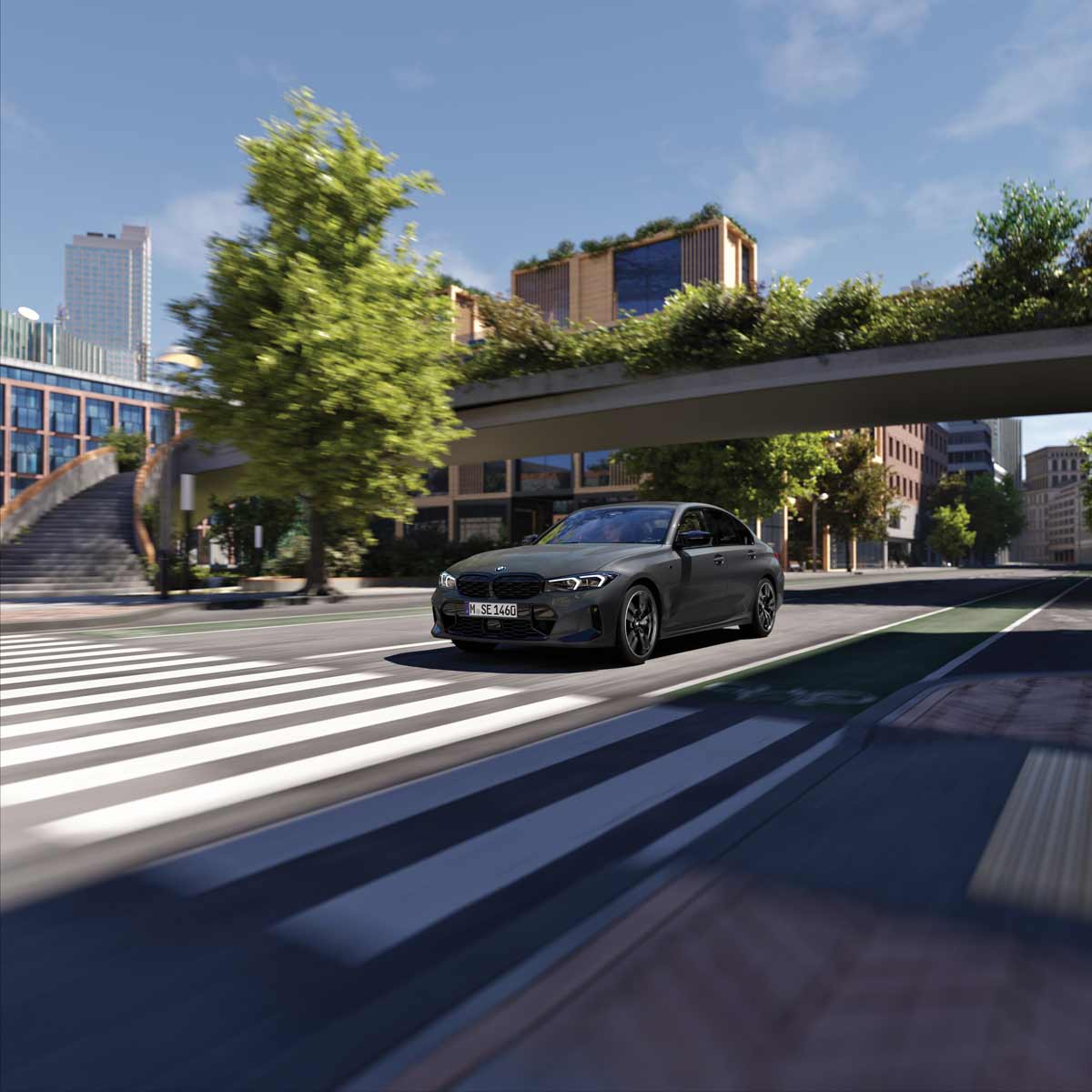
To mark this half-century milestone, BMW New Zealand has released a very special edition of the 3 Series in the very beautiful and sporty form of the M340i xDrive. The 50 Jahre Edition as it is coined, has been limited to just 10 examples available nationwide and features Anthracite Metallic paint from the BMW Individual catalogue, a bespoke build plate on the centre console, and a full specification nodding to performance pedigree. This specification includes 19-inch jet black M alloy wheels, red M Sport brakes, carbon-fibre interior trim, and the full M Sport Package Pro. Under the bonnet is the familiar straight-six TwinPower Turbo engine producing 285kW, paired with an eight-speed Steptronic Sport transmission and BMW’s xDrive system. It’s a collector’s item that’s just begging to be taken out on the road.
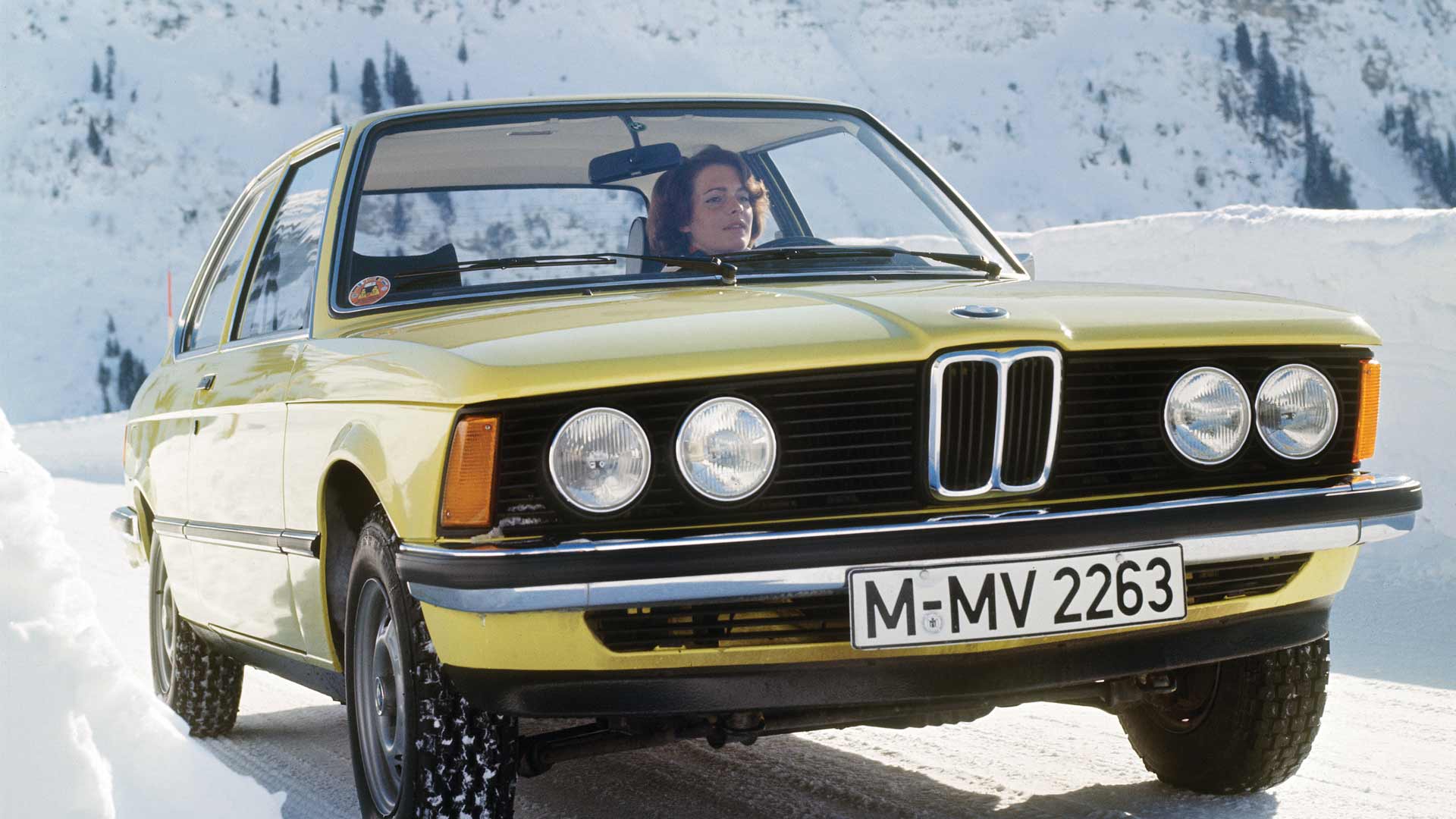
But let’s also look back on the journey that the iconic 3 series has taken to get here. Its story begins in 1975. The world was in the middle of an energy crisis, and compact sedans were becoming the smart choice. BMW’s answer was the E21, launched at the Frankfurt International Motor Show. Built with a budget of 35 million Deutschmarks and developed over five years, it was conceived as the smallest, most precise expression of BMW’s DNA. It was effectively a baby 5 Series, borrowing its executive style and sharpening it with a smaller footprint and more driver-focused proportions. The design team, headed by Paul Bracq, introduced elements that would become BMW signatures: the twin headlights, the double kidney grille, and the Hofmeister kink at the rear pillar. But the most radical feature was inside. The entire dashboard was angled toward the driver, signalling a commitment to driving pleasure.

Initially powered by four-cylinder engines, the E21 got a horsepower upgrade in 1977 with the introduction of a six-cylinder option. It was also released as a limited open-top model called the Baur Topcabriolet. Built with a fixed roof frame and rollover bar, it offered open-air driving years before BMW would offer a full convertible version. On the road it was precise. On the track it was competitive. And in New Zealand, the 3 Series began to carve out its reputation for performance in motorsport.
One of the most iconic models in an iconic series was the uber popular E30 launched in Morocco in 1982. Its crisp lines and silhouette were ahead of its time and still looks great on the road today. The E30 also offered up a lot of versatility. A four-door sedan was introduced by 1983, and by the mid-eighties, BMW added a factory-built convertible. It was the E30 that introduced the Touring model, too, thanks to the initiative of a BMW engineer named Max Reisböck. Finding the sedan’s boot too small for a family holiday, he converted his own car into a wagon in his garage. BMW turned that one-off into a production model. Innovation by necessity. But the biggest turning point was the introduction of the M3.

BMW wanted to go racing, and Group A regulations required 5,000 road-going examples. What followed was a car with flared arches, a high-revving engine, razor-sharp handling, and endless accolades. It won in DTM. It won in World Touring Cars. It won hearts. BMW ended up producing nearly 18,000 M3s, three times what they originally needed. It was also during the E30 era that the first all-wheel-drive 3 Series appeared, the 325iX, offering better traction without compromising BMW’s rear-wheel-drive identity.
In 1990, the E36 emerged with sleeker design aggression. Twin headlights were now tucked behind glass, giving it a sharper face. Underneath, it introduced a multi-link rear suspension for improved handling and comfort. Options included sedan, coupe, convertible, Touring, and the Compact, a short-wheelbase three-door hatchback aimed at urban buyers. Interestingly, the E36 platform also underpinned the BMW Z3, famously driven by the best Bond ever, Pierce Brosnan (fact) in GoldenEye.
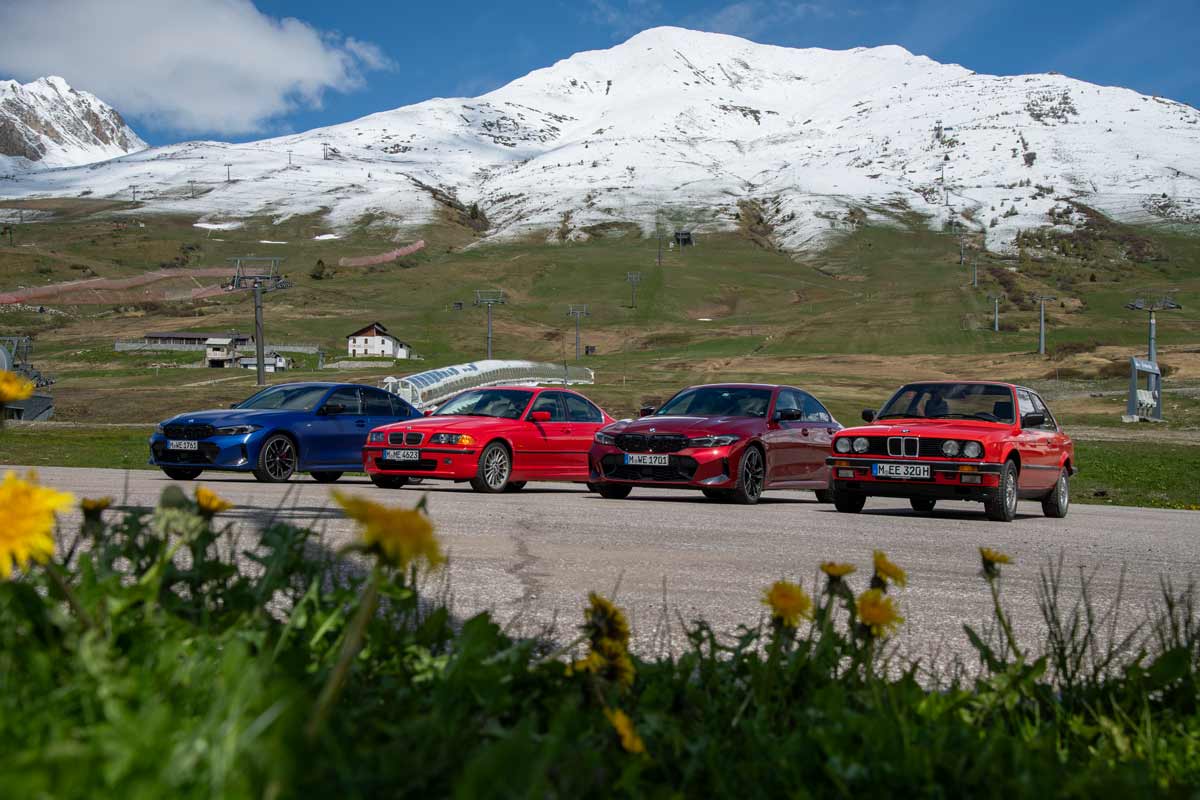
By 1997, the E46 took the reins. It was cleaner in design and bolder in character. It brought back rear passenger headroom with a redesigned greenhouse and added serious safety tech as standard, six airbags and ABS. It also introduced Otto-cycle engines with Valvetronic variable valve control, improving efficiency without dulling performance. The M54 engine family used an all-aluminium construction for both the head and block, a departure from the cast iron of earlier generations. This made the engines lighter and helped earn a spot on Ward’s 10 Best Engines list for three years running. If you wanted a refined, reliable performance car in the early 2000s, the E46 was it. At the sharp end of the range was the M3 CSL, a lightweight track weapon that is still revered today.
The fifth generation, coded E90 through E93, debuted in 2005 under the controversial yet visionary eye of Chris Bangle who developed the design language of “flame surfacing” characterised by convex and concave lines a sculpted aesthetic. Inside, the E90 introduced the iDrive infotainment system, a rotary controller linked to a screen that managed everything from navigation to vehicle settings. It was the beginning of the digital cockpit era. Under the bonnet, the 335i introduced turbocharging to the mainstream 3 Series lineup. A 3.0-litre twin-turbo straight-six that delivered 225kW of power and a mountain of torque. The M3 version of this generation went in a different direction entirely. A 4.0-litre V8, the first and likely the last of its kind in a 3 Series, made it a howling, track-ready anomaly. And for sophisticated bogans, there was even an M3 ute built by BMW M engineers for fun. It never went on sale but became an internal cult legend, used for transporting parts around the plant.

As the 2010s rolled in, the F30 series redefined the family. Coupes and convertibles were spun off into their own model line, the 4 Series, and the 3 Series became a more focused sedan and Touring platform. It also embraced electrification. The 330e plug-in hybrid arrived, alongside the ActiveHybrid 3. Every engine was now turbocharged. Customers could now tailor their 3 Series like never before, choosing from M Sport, Luxury Line, or a range of colours and trim levels. This was also the generation that introduced the Gran Turismo, a liftback variant with a longer wheelbase and more interior room. The M3, now dubbed F80, continued the turbocharged trend, with a 3.0-litre inline-six delivering 317kW and more torque than ever. Lightweight components, including a carbon roof, kept it nimble.
The G20 generation, revealed in 2018 at the Paris Motor Show, builds on that evolution. It rides on BMW’s CLAR platform, blending steel and aluminum for strength and lightness. The design is refined, with connected headlights and crisp lines. Inside, the focus is digital. A curved display and voice control assistant replace buttons and dials. Over-the-air updates keep it current. Engine choices range from four-cylinder diesels and petrols to the six-cylinder M340i and plug-in hybrids. With the eighth generation approaching, more electrification and autonomous features are expected.
In New Zealand, the 3 Series still has a strong following. Even with SUVs dominating and electric cars on the rise, the 3 Series keeps earning its place. It offers something different, a connection, a sense of balance, and a reminder that driving can still feel good just for the sake of it.
The 50 Jahre Edition is a tribute to that. But it’s also a signal. The 3 Series doesn’t stand still. It learns, adapts, and keeps getting better. The next chapter is coming soon. And if the last half-century is any clue, it’ll be another careful evolution.