
Raising The Standards
‘Oh my, Standards have sure slipped’, ‘that’s not up to Standard’ and; ‘that’s the Gold Standard’. Talk to anyone over the age of thirty and you’ll hear such comments soon enough. But what are they actually wahing on about?
What Are Standards?
Standards are like those other invisible things that surround us like radio waves, chlorine and the Patriarchy deathbeaming women into bikinis purely for our amusement. There are two types of standard; a loose version which changes over time either up or down depending on what is acceptable at the time. This kind of standard usually isn’t written down like an Olympic high jump record, it’s more an unspoken behavioural expectation like you should wear a shirt when going to a restaurant or not swearing in a business meeting. They can change over time as a few years ago it used to be the standard to dress up in your finest clothes whenever you went into ‘town’.
The Law Impersonators
The other kind of standard is written down, often as industry-wide agreements containing technical specifications, criteria and/or best-practice guidelines. Though they may look like laws, these types of standards usually aren’t – although governments will often mention them in actual laws. All the same they act like an ‘invisible rulebook’ that ensures products and services are made to be safe, reliable and work together with other products as smoothly as possible.
Who Makes Them
They are usually put together by a panel of scientific or engineering experts within a specific industry, often at the behest of major companies like Apple, Samsung or Bosch. Why not? It could really pay off having someone from your team involved in writing the new standards for your industry, or at least having an early understanding of their implications on your manufacturing processes. Often these panels will also include consumer representatives as well to ensure the end user isn’t forgotten either.
Of course, this doesn’t always run smoothly with a famous example being the Blu-ray/HD-DVD ‘Format War’ being fought within the standards advisory panel with Sony and Toshiba engineers fighting to promote their own proprietary techs. You can probably guess who won…
Another classic victory was USB (Universal Serial Bus) back in the 90s. This came about as a consortium of companies – as well as us poor consumers! – were frustrated with the mess of different, incompatible ports for printers, keyboards, and mice. USB was the compromise solution that saw everyone (except maybe Apple) triumph.
The Standard For Standards
Though it’s not a ‘gold standard’ by any means, the ISO 9001 means a manufacturer meets minimum standards for the specific processes required to create and deliver a particular product or service. The core idea here is; ‘Say what you do, do what you say, and prove it.’ So if a company has scored an ISO 9001, it is walking the talk, that’s all. It is a sign of a good, consistent manufacturing process, not a gauge of a product or service’s quality at all. Conversely, if a mass-produced product or service doesn’t have an ISO 9001 – buyer beware!
Nothing’s Universal
The irony of standards is that they’re not standard! That makes sense for a lot of industries as you wouldn’t expect Cadbury to have to meet the same stringent AS9100 requirements expected of aeronautic companies like Airbus or SpaceX. Yet, even the same ISO 9001 certification can have a radically different impact in divergent sectors. For example the public and/or commercial fallout from a failure to measure up in standards in vehicle manufacture is somewhat different to the same failure in data collection. So, Elon Musk would cop a hell of a lot more flak for failing a safety certificate for a self-driving Tesla or SpaceX rocket than he would for flunking the same test for X.
Policing The Standards
Because standards are not laws they can’t be policed as such. True, some governments do write them into their national laws so then a standard can become a standard – by law. The real police for standards are us, the buying public. If we don’t buy products that are not made to a globally-accepted ‘standard’, we are the only ones who can force a manufacturer to step up – or step out. That’s the thing about standards: they’re not fixed, they can be raised or lowered at any time. It all comes down to how high or low we want them to be.
It’s Time to Say Goodbye to Smart Doors
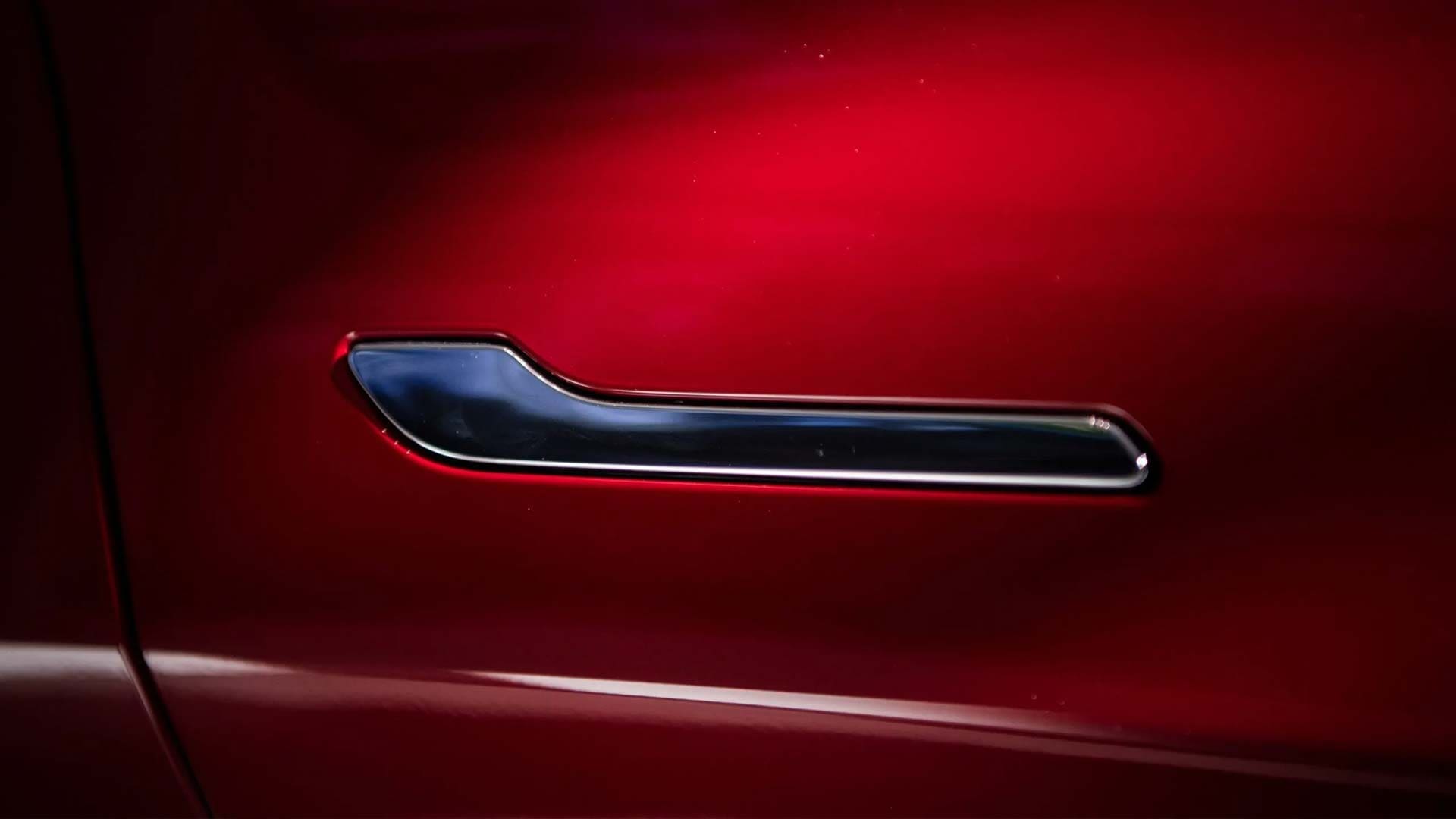
My wife has recently gained a fascination for Teslas, mostly to bag on their weird design decisions, in particular the practically non-existent door handles. On this score her and the Chinese government may be of accord. Safety concerns in China and troubling statistics may see the fad turn into a thing of the past, not just there but globally.
China is the biggest buyer of electric cars, with 21,800,000 cars in the EV fleet as of 2023, making up 37% of the global market share. Tesla led the way with their flush handles that reduce wind drag giving reductions in power consumption about 0.6 kWh over 100km according to independent research. Unfortunately the few cents you save there is not worth the amount of lives that have been put in harm’s way by the design. As a result an industry insider told Der Spiegel Pro a one-size-fits-all ban on fully concealed door handles is in the works, and would probably give a one-year transition period starting from its tentative announcement in July 2027. This date is a wee way off and things can change between then and now. But the stats don’t lie. An electric handle costs three times as much as a regular one, and for the honour you get a piece of tech with a failure rate 8 times higher. Door handle failure accounts for 12% of EV vehicle repair. Anecdotal stories in China record several instances of engine freezes during cold snaps, or shorts during heavy rains forcing occupants to smash their car windows to escape after the doors refused to work. If you want to get really hard numbers just ask an insurance company. When money is on the line they don’t leave anything to chance. The China Insurance Automotive Safety Index found that in side impact cases electric handles only responded 67% of the time, as opposed to 98% for good old mechanical doors. Children’s fingers aren’t even safe, with incidents of pinches and even fractures rising by 132% from electric handles.
During accidents there’s usually a way for first responders to bypass the handles, and there are supposed to be failsafes. But in the heat of the moment, or the circumstances of the crash, these systems fail or responders aren’t familiar with how to use these systems. You don’t want your paramedic consulting a YouTube tutorial while you immolate or sink to the bottom of the lake.
We’ll just have to wait and see how things shake out. It turns out maybe there was no need to reinvent the handle.