
Making the outdoors great again
The outdoors has a marketing department that deserves a pay rise. It’s convinced an entire generation that “disconnecting” is best achieved by buying more gear, driving further away, and then sleeping in a flapping nylon envelope while checking the weather app every 12 minutes. After my own recent tent-based experiment through one of the hottest, windiest, wettest summers on record, I’m ready to ditch the tent.
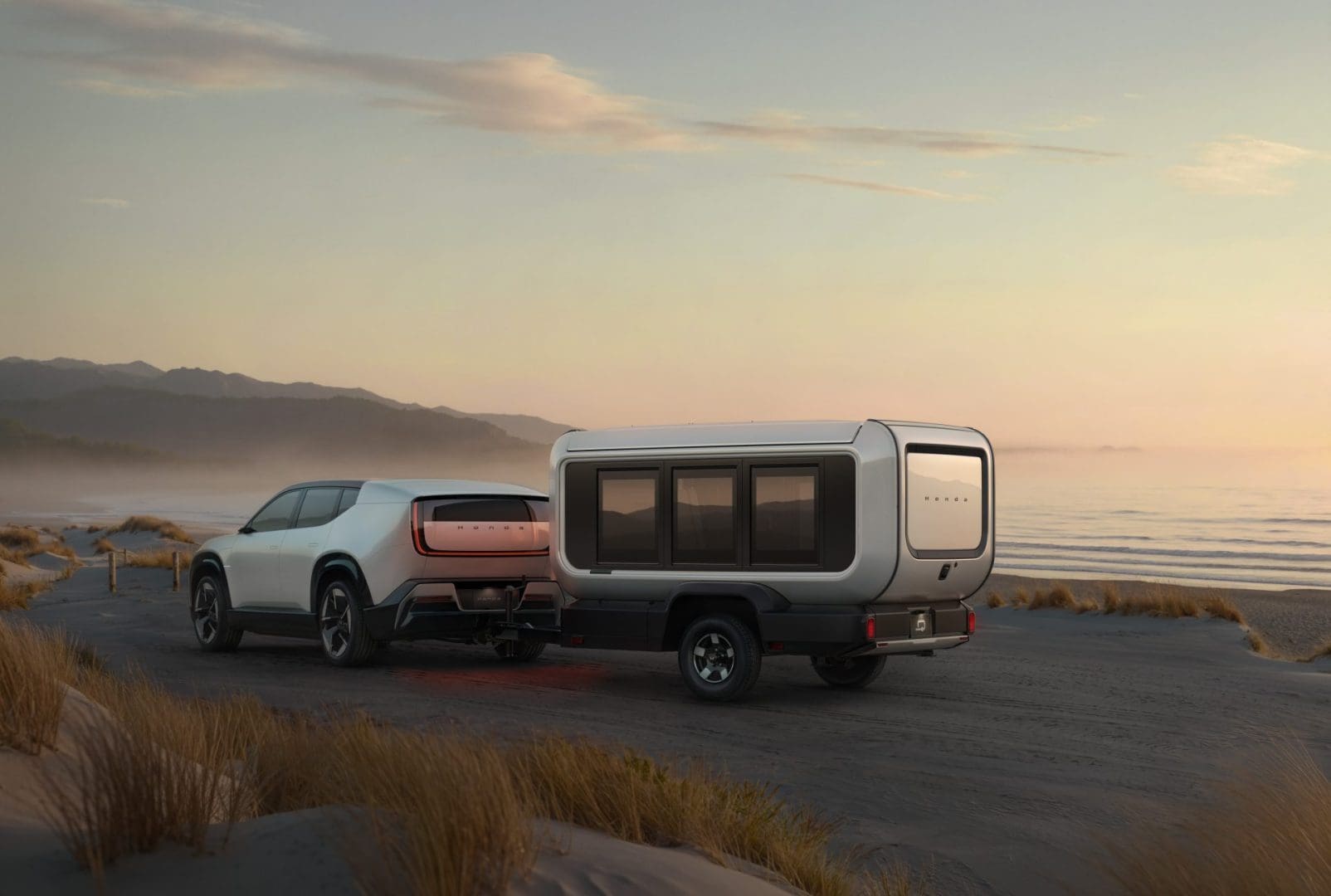
Which is why Honda’s latest idea lands with almost suspicious precision. Enter the Base Station Prototype, from the company’s US R&D teams in Los Angeles and Ohio.
Honda’s stated mission is to “democratise outdoor adventures”. Corporate, speak for “you shouldn’t need an industrial diesel quota to go on a weekend break. The Base Station is designed so it can be pulled by the cars people already drive. Honda also explicitly namechecks EVs like the Honda Prologue and the upcoming Honda 0-Series SUV, which is the subtle part of the story: towing and electrification currently have a relationship status of “it’s complicated”. Heavy trailers annihilate range. So the whole point of this concept is a trailer that doesn’t behave like an anchor.
Honda hasn’t released a full production spec sheet in the press release, no final dimensions, no tow-rating guidance, no pricing, and it’s still described as a prototype subject to change. But the company claims the Base Station will fit in a standard residential garage or parking space.
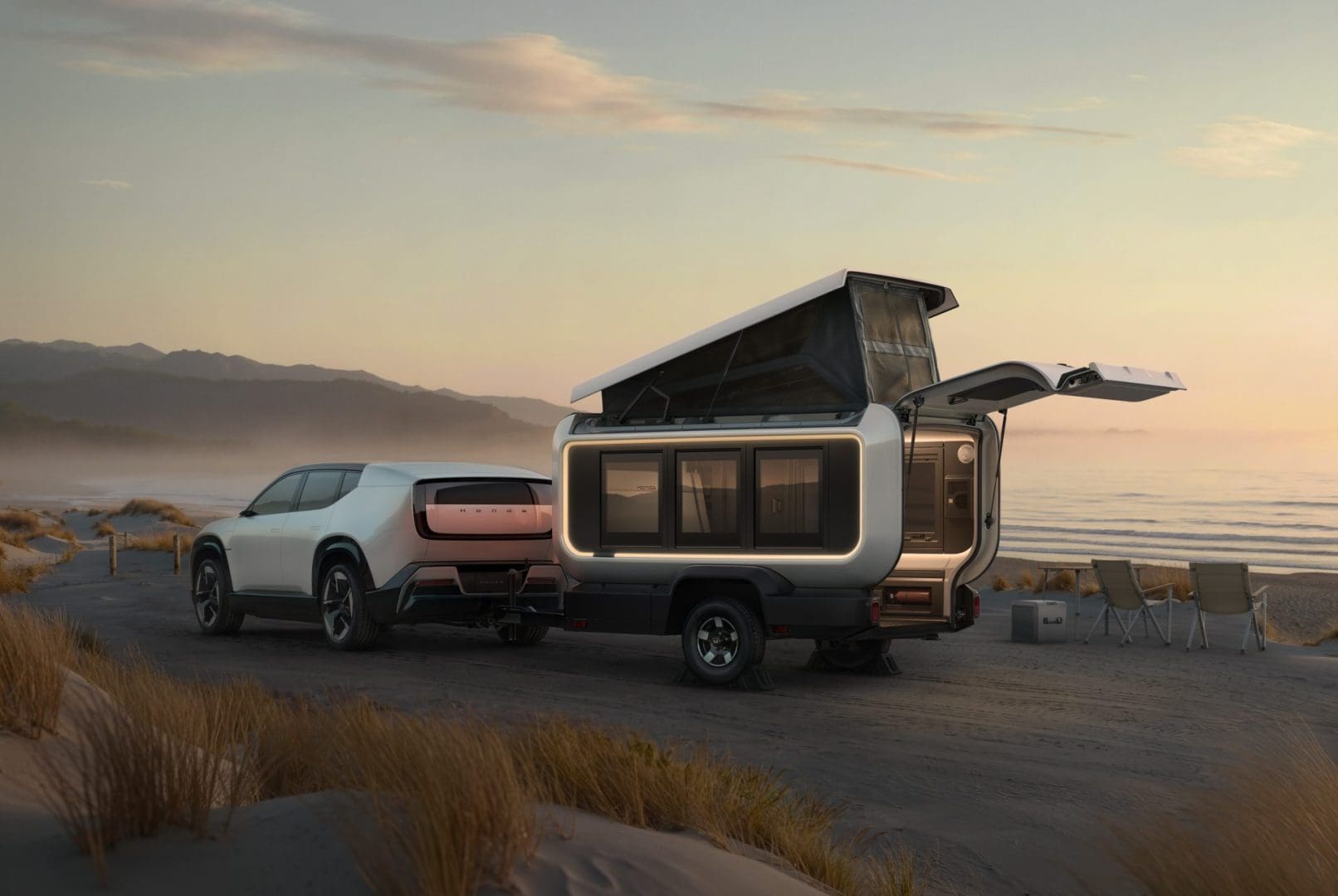
Inside, Honda’s gone hard on the “airy and bright” idea. There are five large side windows bringing in natural light, and those windows are also the Base Station’s big trick: they’re modular. The panels can be removed and swapped for accessories. Honda’s examples are genuinely practical: an air conditioner, an external shower, and an external kitchen with running water and an induction cooktop.
Then there’s the roof. The top of the Base Station can be raised quickly to create seven feet of stand-up space. Honda also includes a top-hinged rear tailgate that opens up the back end to the campsite, creating that indoor–outdoor flow caravan people love talking about.
The press release says a large futon-style couch folds out to create a queen-sized sleeping area, and there’s an optional kids’ bunk bed, taking the whole thing to sleep four. If you’re camping with children, you now have a dedicated space for them to bounce off the walls until they collapse. If you’re camping without children, that bunk becomes a storage mezzanine for all the Temu camping gear you promised yourself you would use but you never will.
The design language is clean and modern but Honda has added a detail that’s either wonderfully practical or faintly ridiculous, depending on your tolerance for novelty: ambient light rings around the windows that are programmable for brightness and colour, and can illuminate the campsite at night. You can imagine the use case: arriving late, setting up without a headtorch, not tripping over your own dignity. You can also imagine someone turning the lights purple and calling it “vibes”. Both scenarios will happen.
Power is where Honda clearly wants to future-proof the concept. Base Station is designed for “zero emissions power off the grid” using a standard lithium battery, an inverter, and integrated solar panels.
If Honda takes this beyond the prototype stage, Base Station could land in a sweet spot that a lot of people want: a compact, garage-friendly trailer that you can tow behind normal SUVs and many EVs, with modular options that let you scale comfort up or down depending on the trip. Beats being slapped awake by your own tent at 3 in the morning!