The New King’s English
Social media’s killing us! Dumbing everything down to ‘vibe’ level. Whereas once upon a time we’d say something erudite like; ‘Her promise was like a politician’s handshake: full of conviction but with a firm grip on reality’ – now we just say💁♀️👍🤝!
Our former love of metaphor, shrewd assessment and, above all, subtlety is gone. Replaced by universal symbols that are easy to understand but lack any personality. Yet no one seems to care; sports stars announcing career moves solely in emoji sequences and brands hold entire ‘conversations’ with consumers using 😭🤝 and 🙌! The dense, rhythmic elegance of a well-crafted sentence is being displaced by something barely less crude than semaphore!
Stop 😭, start 😂
Duh, of course we are. We have to! It’s an ever-expanding global world we live in now so knowing just English, Maori and maybe a smattering of Island phrases is no longer enough to get by any more. Especially if you are doing business overseas as there are over a dozen premier languages in all the major markets around the world plus a multitude of secondary languages prominent in manufacturing nations like Vietnam and Bangladesh. Learning them all is a full-time job – so it’s far easier to simplify the languages we’ve got into something we can all understand no matter where we are.
The Power Of 🎌 And 🏮
Back in the 1980s the Japanese economy was exploding, with Tokyo’s money buying up everything on the planet; from Columbia Pictures to the Wairakei Golf Course. With such largesse in abundance, everyone wanted in on the action so business people of every stripe trooped dutifully into their local Workers Education Association rooms for night classes on learning Japanese. Of course, all those classes got cancelled the moment the Nikkei crashed – with our acquired love for sushi the only real survivor of those heady times.
Now, of course, it’s the People’s Republic of China that’s the dominant economic force in the world. Is it time for us to cancel some of those craft beer appreciation evenings and pub quiz nights to brush up on our Mandarin down at the local polytech?
Learning any language is always beneficial as it’s never just about the words, there’s always a unique cultural viewpoint to be discovered behind every foreign-sounding phrase. But going to all the trouble of brushing up on thousands of hanzi characters may be a vain effort in today’s global-facing world.
But China is a powerful country, with a huge population, colossal diaspora, a strong and ancient culture and, with Mandarin, has the most spoken language in the world. Why wouldn’t they demand that the world switch from English as the international lingua franca? Surely it is Beijing’s turn?
Wake Up And Smell The Colonialism
Because of the colossal cost changing the status quo would bring about; in time, money, errors and goodwill. English has been the international language for so long, technology has bloomed within its borders; with computing, finance, shipping and aviation chatter are all conducted in English by default. Forcing such a fundamental change to every subject in every corner of the globe is such a massive undertaking it beggars belief. Plus, it smacks of colonialism – or is that American Imperialism? – to demand everyone else bow to your whims, which is not what China is about – outwardly at least. Even the Communist Party’s own outward-facing investment brochures are drafted in English first and translated later. Demanding the planet flip to hanzi would slow the very cash flow China wants to accelerate.
Slice Of Guyanese Lasagne Anyone?
So we’re not all moving to Mandarin. But we’re not all staying in stiff, formal English either. What’s evolving is not one language, but a multi-layered system – a kind of linguistic code-switching of the type used by traders the world over for millennia, now turbocharged by smartphones.
The South American nation of Guyana is the perfect example of such a system in action. They have at least three dialects they use every day – depending on who they’re talking to and where they are.
Basilect
a mix of English, East Indian, Amerindian and West African languages, this casual creole is mainly used at home or with close friends.
Mesolect
a mishmash of English and creole you use if you want to be understood by everyone in the street or whilst trading at the border.
Acrolect
Basically the King’s English but spoken with the unique Guyanese accent and rhythms, this is the formal language used on TV, in schools, government departments and in court.
Guyanese switch between these three ‘Lects so often they don’t even notice they’re doing it. Our future languages could develop into a similar lasagne-like system:
Layer 1: Emoji – The Return of the Universal Pictogram
The new pidgin that lets everyone understand what you mean no matter what. It handles concrete nouns (🚢⏩), urgent modifiers (📉⬇️), and basic emotive tone (🤝🙏😤) across every language barrier. It’s the fastest terms sheet ever devised. No conjugation, no tuition, just a software update that delivered a global dictionary.
Layer 2: Business Pidgin – The ‘Singlish’ Skeleton
‘Singlish’ is an English-based creole that blends vocabulary and grammar from Malay, several Chinese dialects like Hokkien and Tamil which works like a Mesolect for the varying cultures on the island.
For trade with the increasingly dominant nation of China, you won’t need to learn 3000 characters, just 20 or so key hanzi that convey important mood-markers like; respect, relationship, or patience. The liability and numbers live in the English bits; the cultural nuance in the seasoning.
Layer 3: Standard English – The Legal Backbone
Relax! You already know this one. It’s the standard of standards; King’s English. Understood equally well in London, New York, Sydney and East Tamaki, lawyers, pilots, accountants and shipping clerks the world over know this one too.
Layer 4: Local Vernacular – The Soul
Kia ora, bro. Sweet as. This is the layer that reminds you who’s talking. It’s the Māori loanwords, the rugby metaphors, the rising terminal. This is the Basilect you use at home or down at the pub when you’ve switched off work for the day.
A Real-Time Demo of Business Pidgin in action:
Buyer (Shanghai)
📉⬇️5⃣%Woodchips ⌛3⃣0⃣%
(price-down 5 % / woodchips / 30-day)
Seller (Tauranga)
kia ora 🚢⏩3⃣ Tauranga 🤝
(kia-ora / ship-fast / Tauranga / respect)
Buyer
📦⏳4⃣5⃣ kia ora 🙏
(carton-45-day / kia-ora / thanks)
Seller
🚢⏩3⃣📉⬇️小🪵🧧
(ship-fast / small-discount / woodchips /relationship)
Buyer
✋⏬气
(palm-down / slow / annoyed)
Five lines. Four codes woven together—emoji, numbers, English, hanzi, Māori. Zero confusion. The cultural footnotes (🧧 = guanxi, ✋⏬ = ease off) can sit in a tap-to-expand help pane. The chat stays clean, fast, and – most importantly – is hard to misunderstand. So important in trade.
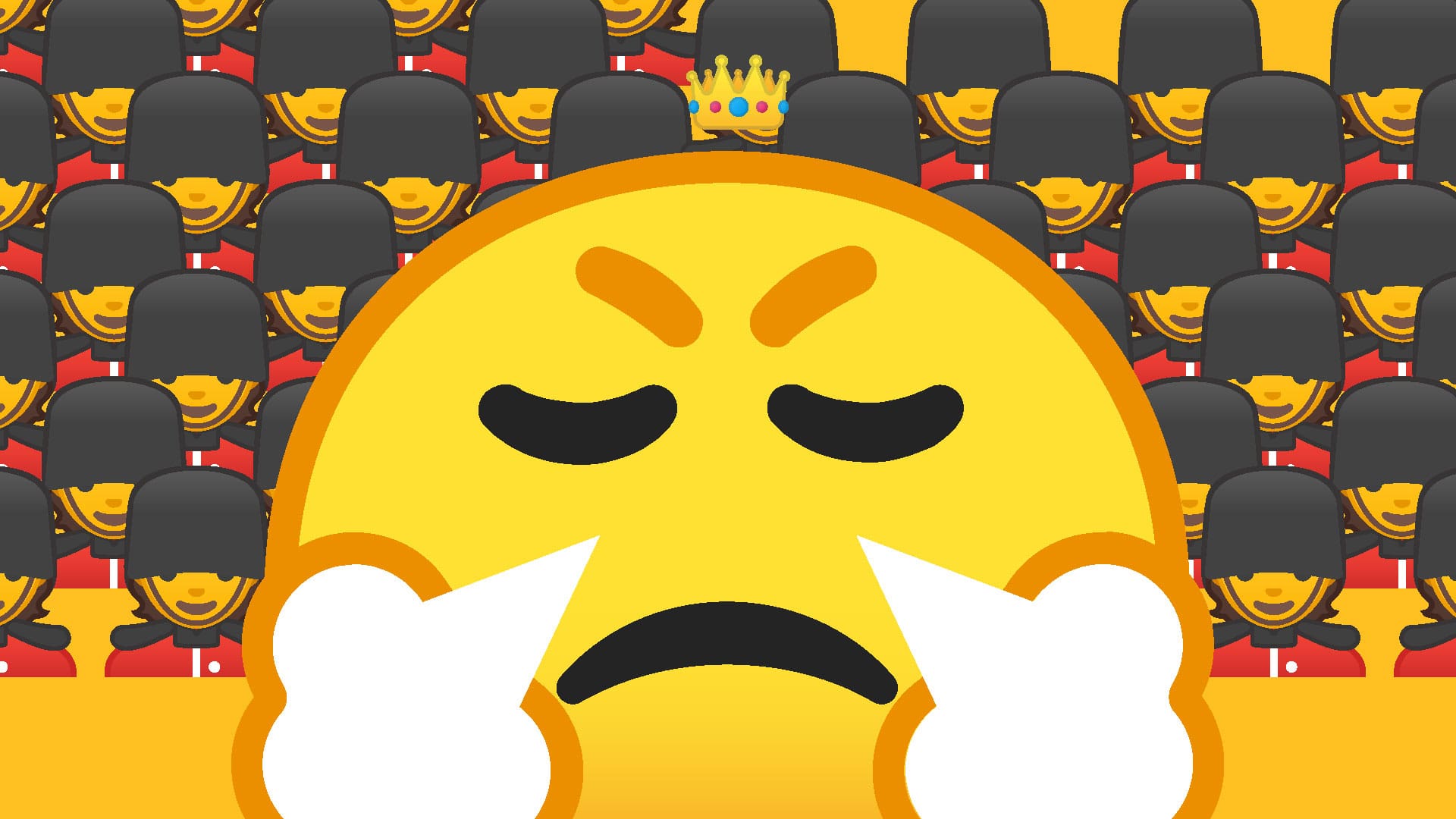
Emojis aren’t a decline in communication – they’re the beginning of a new specialisation of global trade. We’re not seeing the end of the King’s English. We’re hearing the sound of his crown being shared – 👌👍!
Speak Like An AI
What goes in must come out, and what we’re putting in us at the moment is a ton of Chat GPT generated beige walls of text shotgun blasted and bullet pointed with emojis.
You can spot AI formatted text a mile away, the subheadings, the gratuitous emoji usage. It’s like you’re talking to the most helpful Gen-Zer on the earth, equally full of confident assertions.
Studies have already found that in our short time interfacing with LLMs we have already started to pick up and use their quirks. One study from Cornell University found a “measurable and abrupt increase in the use of words preferentially generated by ChatGPT, such as delve, comprehend, boast, swift, and meticulous, after its release.”
Divya Thakur a behavioural scientist found that she was able to pick up when her students were using AI “not because of the sentence structure or ideas, but because of the stray 😊 or 🙌 left in a reflection piece or assignment. The AI adds emotional tone by default – even though neither I, nor the student, ever asked it to.”
While Thakur is interested in the design intent behind the heavy handed emoji use others are worried that this is creating what is called a “closed cultural feedback loop” in which AI regurgitates back what it’s learned at us and fundamentally flattens our culture of communication. The Cornell Study raises concerns over a future “erosion of linguistic and cultural diversity, and the risks of scalable manipulation.”
Shaping the way everyone thinks at scale has never been so easy. It all starts with a ✨