
The World Through a Champion’s Eyes
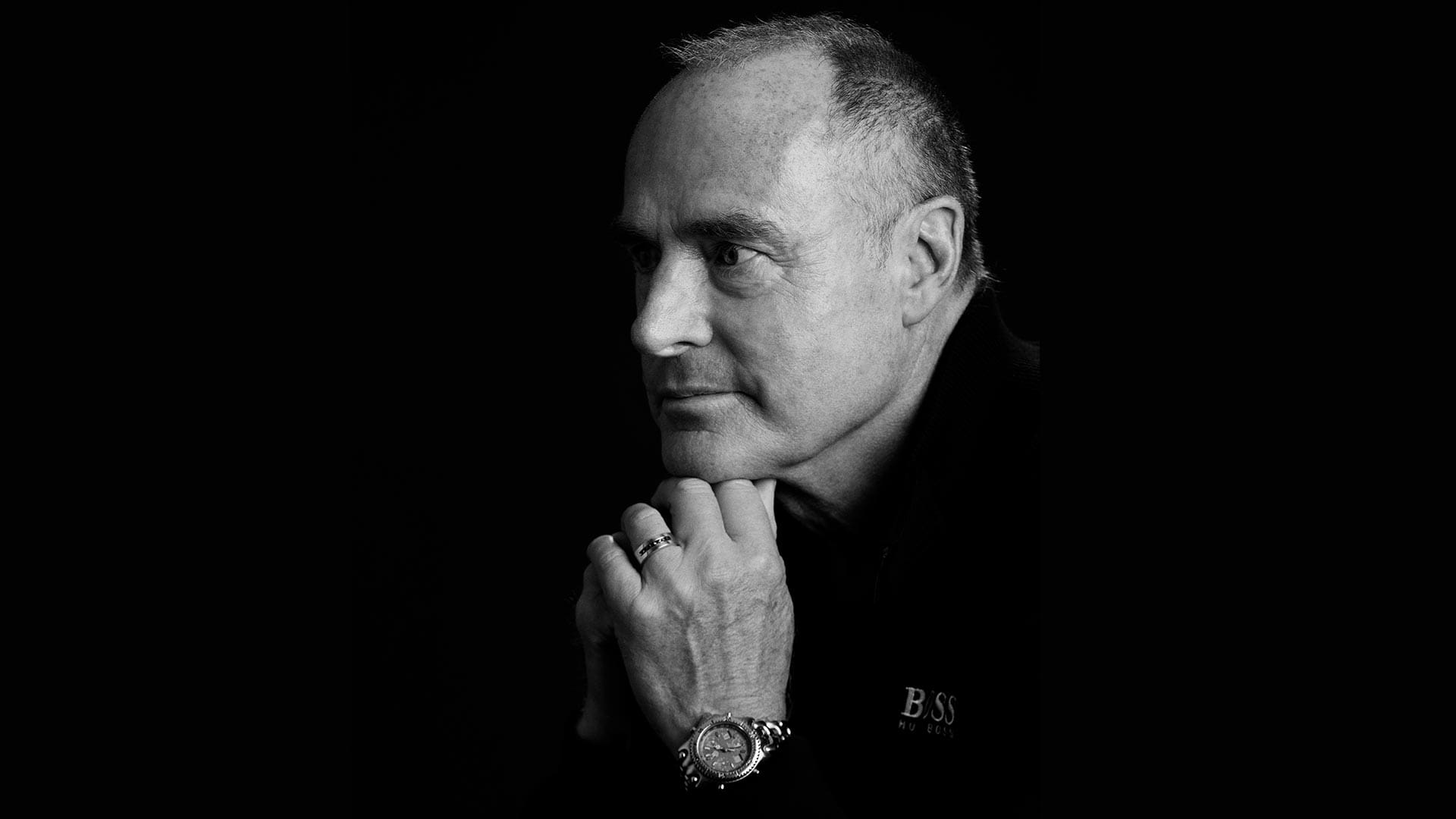
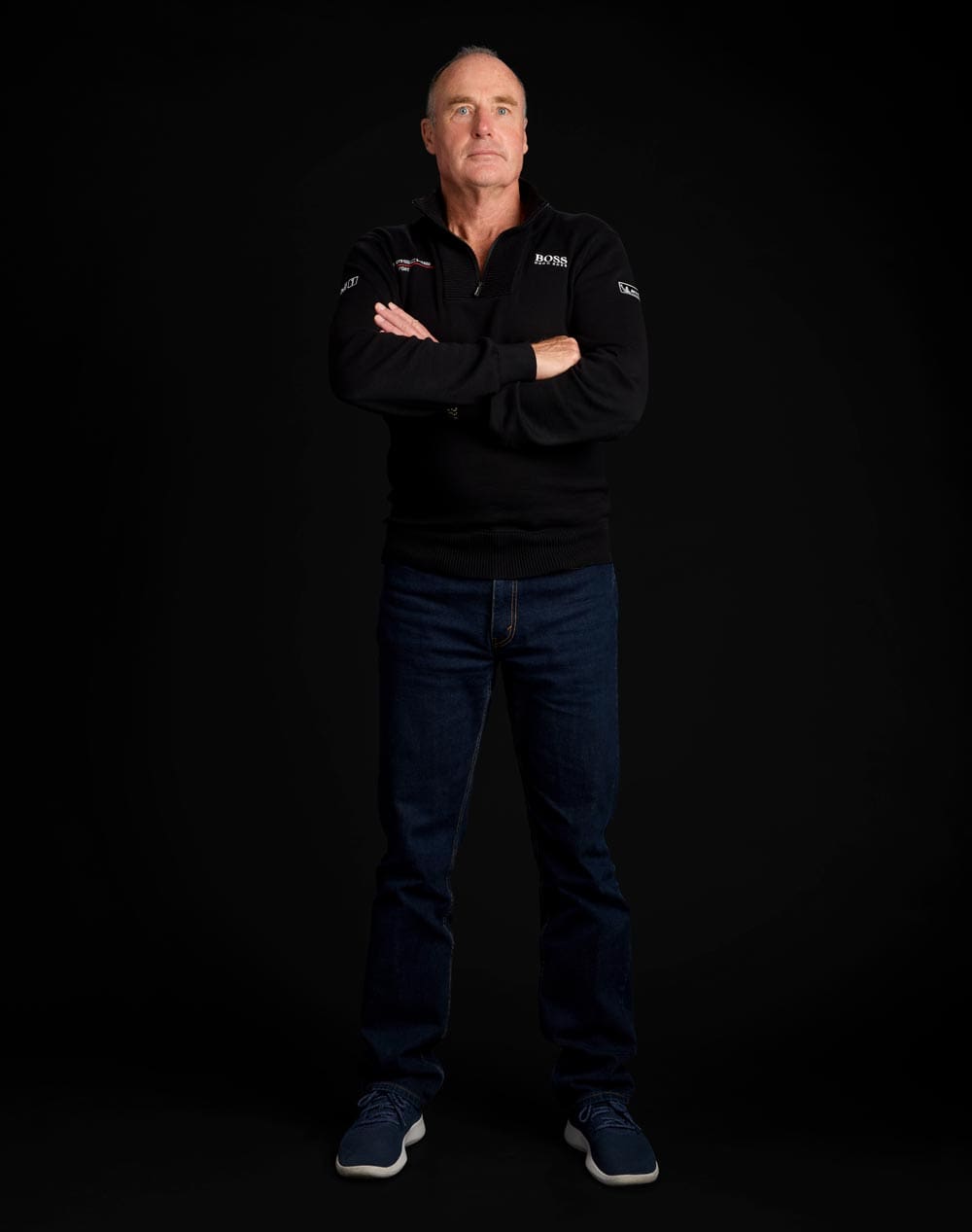
Dr. Kerry Spackman has built a career on extreme performance. Over the years, his work has taken him into the orbit of four Formula One teams, the All Blacks, Olympians and billionaire business figures, placing him inside worlds that, at first glance, seem to share little in common in terms of the skills, environments and metrics involved. But beneath the obvious differences, there are shared factors – certain ways of thinking, perceiving and responding that push performance to its outer edge.
Spackman is also particularly attuned to these less obvious qualities – the factors beyond training and talent. He is a cognitive neuroscientist, engineer, award-winning mathematician, inventor and performance specialist who has spent years studying outlier success in high-pressure environments where the margins are small and the consequences are vast.
A lot of this experience and insight culminates in his new book, The Winner’s Formula. “I did the first book, The Winner’s Bible, and I had zero expectations for it really,” he says. “It was just a book that people said I should write, and I wrote it. And the thing that’s really surprised me over time is that I am still getting people email me ten years later saying that that little book changed their lives.” This time, he says, the expectations are different. “This one I’ve put a lot more effort into. I’ve really thought about it a lot more.”
Rather than starting with the usual motivational tropes, Spackman set the foundation for the book with a more forensic question.
“If you approach a human as a machine, how would you optimise it?” he asks. This also led him to look at the mismatch between how the brain has evolved and the world it now has to operate in. “The brain is, as you know, made up of so many different modules – the logical circuits, the emotional circuits, and so on,” he says. “And a lot of those are optimised for thousands of years ago when we were hunter-gatherers, and they’re not optimised for modern society.” For Spackman, that is the real challenge. “The world has changed vastly quicker than we can evolve, and that is a big problem.”
Conventional self-help narrative suggests that if you want something badly enough and if your belief is strong enough, you can will your way there. Spackman is not buying that.
“Motivation is a two-edged sword,” he says. “If I’m highly motivated to be heavyweight champion of the world, that’s going to end up in disaster. You look at me, I’m not big enough to take on any boxer. So blind motivation on its own can be dangerous.”
He is not saying motivation does not matter, but there is more to the formula. “That’s where I think a lot of self-help books sell a dream that is unreal. The dream is, you know: believe it and it’ll happen. Dream it, and it’ll be there. Try hard enough, and you’ll get there. And it’s not necessarily the case.”
A lot of Spackman’s thesis is built on the concept that elite performers are not just working harder. They are perceiving differently. One of his favourite examples is Novak Djokovic’s returning serve. “A champion like Djokovic can tell, reliably, forehand or backhand, before the ball is even hit,” he says. “Now, the reason they can do that is they are paying attention to things that nobody else is paying attention to. They see details that nobody else sees. And that’s a skill set.”
The concept is close to the backbone of The Winner’s Formula. Once you start thinking about performance as perception, everything shifts. Spackman describes it almost like an engineering loop. “If you’re looking at sport, for example, you’ve got perception, computation and actuation. What is going on in the world? That’s a really complicated thing. What do I understand, and what do I need to do? And then how do I control my muscles? So that control loop is quite complex.” The job, then, is to break that down and see where it is failing. “Where does the rupture occur? How can we optimise that?”
Spackman highlights Formula One legend Sir Jackie Stewart as a good example of this attention to detail. Spackman remembers Stewart opening and closing a car door repeatedly, interested in the feel of the handle mechanism. And another time, watching Stewart describe a high-speed “moose test” in microscopic detail, it started to make sense. The moose test is a sudden high-speed lane-change manoeuvre designed to simulate a driver swerving to avoid an obstacle on the road and then trying to recover control. It happens quickly and violently, which is why most people only register the obvious movements. “Most people go, ‘Oh yeah, I had a bit of understeer, I had a bit of oversteer,’” Spackman says. “And we did it, and I said to Jackie, ‘What happened?’ He talked for like 15 minutes in detail about every minute thing, and I’m going, ‘Oh, come on, you’re just making this up.’” But the telemetry was there to verify it. “I had the audio, and I had the telemetry data, and it was like everything was there. It was just extraordinary.”
“That was this relentless attention to detail, which I think again is one of the core lessons. Of finding more detail in every aspect of your business, whether it’s designing a phone or whether it’s your corporate business. What are all the details? Because they all add up.”
The useful part for the rest of us is that he does not believe this belongs only to a tiny group of outliers. “I believe it’s trainable,” he says. “Because if you didn’t know that those details were there, you wouldn’t see them. But once they’re pointed out to you, you do start to notice them more often.”
One of the ways he explains that is through music. He plays a piece of music to Formula One drivers he is training. They listen to the tune, hum it back and assume they have taken it in. Then he plays it again and starts pointing out the layers. “They listen to the tune, and they hum it back. And then they go, ‘Yeah, I got it.’ And then I play it back, and then I point out, ‘Oh, here’s the cello coming.’” Suddenly, they realise how much they missed the first time. The exercise is not really about music. It is about attention. It is about learning that there is often far more signal in the environment than we consciously process on first pass. In business, sport, leadership or creativity, that extra bandwidth – that extra attention to detail – can make all the difference.
That same interest in attention, signal and the ability to process large amounts of information also runs through a chapter on AI. Spackman is more optimistic about it than a lot of people, but he is careful about where the line is. He sees AI as a useful extension of human capability, especially for routine tasks, structured thinking and quick access to information, but not as a substitute for judgement. “I think we’re going through an unusual part of the evolution of AI at the moment, in that it’s gone from years and years of research that didn’t really give us anything really valuable, and then suddenly, we’ve got these LLMs that are just mind-bogglingly good. But they’re also not that good at some things. They can fail catastrophically, and so if you rely entirely on them, there’s a risk that you’ll get the wrong answer.”
His take in the book is not to use AI passively, but deliberately. He suggests folding it into life in specific, measurable ways. A daily planning ritual where you spend five or ten minutes using AI to structure the day and spot missing steps. Using it to produce rough drafts that you then shape and refine yourself. Setting aside a regular weekly session with AI as a tutor to learn a new subject and track your progress over time. Using it as a fitness partner, a creative collaborator, or even a mood-check tool, while measuring whether it is actually helping in practical terms like time saved, goals met, stress reduced, or confidence improved. The point is not just to use AI more often. It is to consciously experiment with it and see where it genuinely improves your thinking, productivity or wellbeing.
“They’re only as good as the questions you ask, and then the questions you ask are only as good as your own knowledge,” he says. “There’s a difference between facts and intelligence, I think. And I think this is where we’re getting to a point where a lot of people are relying on AI to the point that they’re not thinking for themselves. And that is definitely a problem.”
In the book, he describes the ideal as “AI-augmented reasoning”, combining “the best of human intuition and emotion with the best of AI’s knowledge and speed”. Used properly, he writes, AI can become “a natural extension of your own abilities”, but only if human values, privacy, self-reliance and critical thinking remain at the centre.
There is also a rather encouraging finding in the book for those of us still hoping to shine later in life. He analysed tennis rankings over decades, expecting to find some clean relationship between early promise and eventual greatness. He found none.
“I analysed every single tennis player for the last, I think, 50 years, because the ATP ranks everybody on a weekly or monthly basis, and I plotted everybody, like male and female, and there was just no pattern,” he says.
Some players explode early and fade. Others build slowly and become legends. “You get some people who just struggle along for ages, and then they come back and just gradually get better and better and better and better,” he says. “Martina Navratilova is a great classic example. She was nothing as a junior, but unbelievably dominant.”
Early success is no predictor of ultimate success. “You have to pick your sport, of course,” he says. “Again, I won’t be a heavyweight boxer; I’ll probably be better at something else.” But once you are in the right arena, his view is much more expansive than the old talent myths allow. “Most of it is trainable.”
It is also important to actually think about what success is for you. And while The Winner’s Formula is about performance, it also speaks to happiness, anxiety, resilience, and contentment. Spackman brings up intrinsic versus extrinsic drivers, and the danger of chasing excellence for reasons that do not really belong to you. He mentions Andre Agassi as an example.
“He was extrinsically driven by his dad,” Spackman says. “And at some point, he actually hated tennis. And because he hated it, the wheels fell off eventually.” The healthier version, he suggests, came later. “He now wanted to be good at what he wanted to be good at.”
When asked about his own intrinsic driver, Spackman gives two unexpected words within the context of a conversation about elite performance.
“The thing that really drives me is truth and beauty,” he says.
He traces that back to physics and to the thrill of something being undeniably true, to the elegance of systems that lock together perfectly.
“When I was a young boy, my dad gave me all these science books… then I came to maths and physics, and was like, this is absolutely true – you know E = mc²; there’s no doubt about it. It’s not E equals half MC squared or 0.9 MC squared or MC cubed or whatever. It’s absolutely true. And I thought there’s very little that you can absolutely say is true. And that, to me, was just amazing. And so truth is something I’m really passionate about.”
He also highlights Einstein, not just for his physics prowess but for his pursuit of the truth.
“Einstein said there’s only three things in my life that are of any value, and I call them TBK: truth, beauty and kindness. And I thought that’s really profound, because he found beauty in all sorts of things. Truth just never goes away. And kindness, I thought, now that’s a really interesting thing. He didn’t say, love… But kindness, that’s what he meant. We don’t hear a lot about it these days.”
Spackman also points to the sheer scale of the effort behind general relativity. “That was one of the most Herculean efforts in human history, I think,” he says. “In 1905, Einstein did special relativity, and that was relatively straightforward. Then he said, ‘Okay, that’s only for inertial systems. What happens if we have gravity or acceleration?’ That took him another 14 years of day-and-night effort. He worked so hard that he got a stomach ulcer. He worked so hard, literally, he nearly died.” What fascinates Spackman is not just the brilliance of the theory, but the uncertainty surrounding it. A mountaineer can see the mountain. An athlete knows that somewhere, someone will win the title. Einstein did not know if the thing he was pursuing could even be done. “He just wanted, in his own words, ‘to know the mind of God’, and God is how the universe works,” Spackman says. “There was this incredible passion to understand how nature worked.”
There is something in this that speaks to the nature of The Winner’s Formula. For a book built around neuroscience, elite performance and optimisation, it is not built on frenetic hustle. It is more thoughtful and more considered. It’s about understanding the truth of human nature and the things that contribute to excellence. There is beauty in that.