
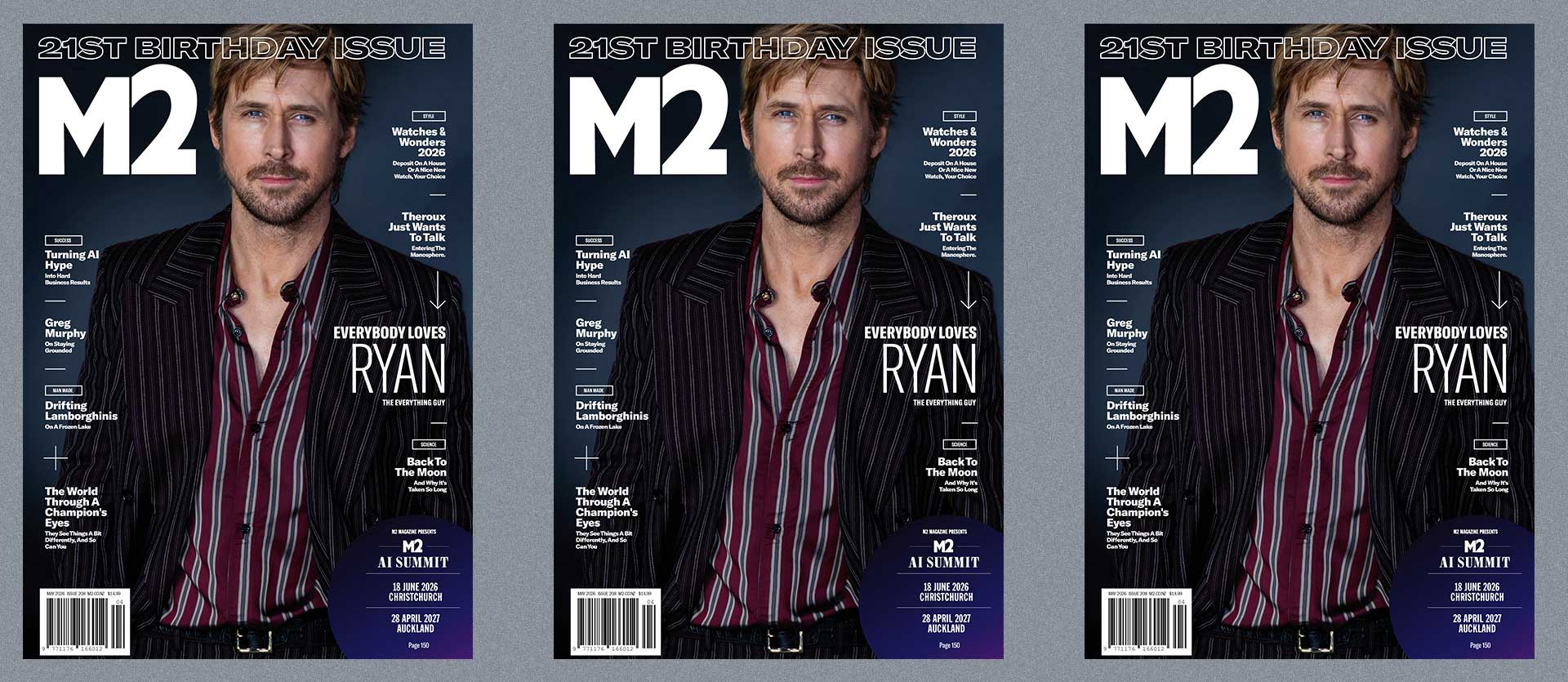
M2 May 2026 Issue Editor’s Letter
The concept of success often seems to be conflated with big-picture thinking. A bit of systems change, global impact and industry-wide disruption for good measure. But for this issue, when I sat down with Dr. Kerry Spackman, who lives in the space of high performance and achievement, I started to appreciate things a little more from the other end of the spectrum. While we can be so focused on the macro view of what progress looks like and whether we’re making any, you start to measure everything at scale, and somewhere along the way, you forget that scale is made up of a thousand tiny things you stopped noticing. Spackman has spent his career inside some of the most high-performance environments on the planet: Formula One teams, the All Blacks, Olympians and billionaires. You’d expect someone with that CV to arrive armed with grand unified theories of winning. Instead, he talked a lot about how high performers really notice the details. The feel of a car door closing. The weight of a steering wheel. The way Novak Djokovic reads a serve before the ball is even struck. Not through some supernatural gift, but because he has trained himself to notice details that the rest of us filtered out years ago. Elite performance, in Spackman’s framework, has a lot to do with how we perceive. I am an easily distracted person but I am trying to pay more attention to the little things along the way. It hasn’t improved my chances of making it into Formula One, but it has made me appreciate the day a lot more.
There’s something genuinely settling about shifting attention from the enormous to the immediate. Not as a replacement for ambition, but as a counterbalance to the kind of future-gazing that can leave you absent from the present and missing what’s actually in front of you.