

All the 2026 Tech You Need
In The Engine Room Of The Future
Dr. Roland Busch, President and CEO of Siemens at CES 2026 revealing how AI, digital twins, and automation are transforming manufacturing and infrastructure.
Siemens AG is one of those companies that never gets headlines but is quietly keeping the world humming, as is the way with B2B. It’s the largest engineering company in Europe and is a market leader in automation and industrial hardware. Roland Busch has been at the helm as CEO since 2021, just in time to be the key decision maker for the company in terms of AI adoption. They’ve had open arms for the AI revolution and as a consequence Busch and NVIDIA’s CEO Jensen Huang have become well acquainted. Together, the pair are planning to create an AI Operating System specifically for industry. The dream is that it could apply to the entire pipeline, from conception to production to shipping. “Just as electricity once revolutionised the world, industry is shifting toward elements where AI powers products, factories, buildings, grids and transportation. Industrial AI is no longer a feature; it’s a force that will reshape the next century,” said Busch at CES 2026.
Served Stone Cold
Recently there’s been a lot of noise about data centres in Texas sucking up gallons of water for cooling. When I think of Texas I think of Looney Tunes Characters, deserts and maybe an iconic cactus or two. It seems absurd to chuck data centres there.
Of course latency is always a concern, so having them close to civilization is important if we want to play Battlefield 6 with a decent ping, but ideally we’d be burying them all in polar snow drifts. Having no easy access to the poles Japan has the next best thing. Located on Hokkaido, their northernmost island in the prefecture of Ishikari is a completely emission free data center that uses the regions freezing temperatures to circulate naturally through the building six months of the year. The ventilation is so efficient that air conditioning isn’t needed at all. It’s a marvel of architecture, even if it does look like somewhere you’d get dragged to in 1984 for having an opinion. Heat isn’t wasted either, it’s vented to systems that keep the surrounding roads warm enough to keep the ice off. Nothing is wasted around here. During the summer months it has a private hookup to a nearby solar and wind plant piping it 2MW of power. It’s currently the first Japanese data center to achieve 24/7 carbon-free operation, by working smarter, not harder. If you’ve got cold air you may as well use it.
We’ve Got It On Tape
It’s time to find that old tape deck and finally get around to untangling that old Metallica tape out of the mechanisms because cassettes are back baby. In 2014 in the States sales of cassettes were sitting at just 50,000 sales. In the first quarter alone of 2025 they’ve already cracked 63,000 with year over year growth showing no sign of slowing down. This number represents a 5.7% increase over the same time the year before, which itself had grown 2.4%.

This demand has been driven by artists beginning to revive the medium and offering limited prints of records and cassettes we’d long since decided were dead mediums. In an age where Spotify is beginning to be deluged with AI slop music maybe it’s time to return to the old days of scarcity and physical media.
Tapes are still in the inferior minority though, Vinyl grew 15.4% to 1,702,360 units in Q1, which helps ease the blow being made to physical music sales by the slumping support for CDs which dipped 2.6%. Year over year Vinyl sales have been growing for 17 straight years. But 2024 was the first year in two decades there has been a year to year growth in overall physical music sales.
We’ve featured plenty of tape decks here in the gadget section for a couple years now, we’ve done our part. But We Are Rewind’s products first came across my desk with the announcement of their limited run Elvis edition of which only 1,957 were produced coming in what they’ve dubbed the WE-001 Elvis Presley Limited Edition Box Set to celebrate the king of Rock & Roll’s 90th birthday.
The WE-001 is a pretty solid little unit though with all the modern conveniences we’ve come to expect. Bluetooth 5.1 for your wireless earbuds, USB Compatibility, and a lithium-ion that gives you about 12 hours of playtime and can be charged via USB-C. That means you can listen to side A and B 12 times!
Inspired by Sony’s original TPS-I2 Walkman they eschewed plastic in favour of a good solid aluminum that would make it rugged enough to survive the bottom of your bag. It also allows Line-In recording for anyone wanting to do their own mixtapes.
If you are about to take your first step into the world of cassettes I recommend keeping a hexagonal pencil handy. You’ll understand why when the time comes.
The Steam Frame Is Here
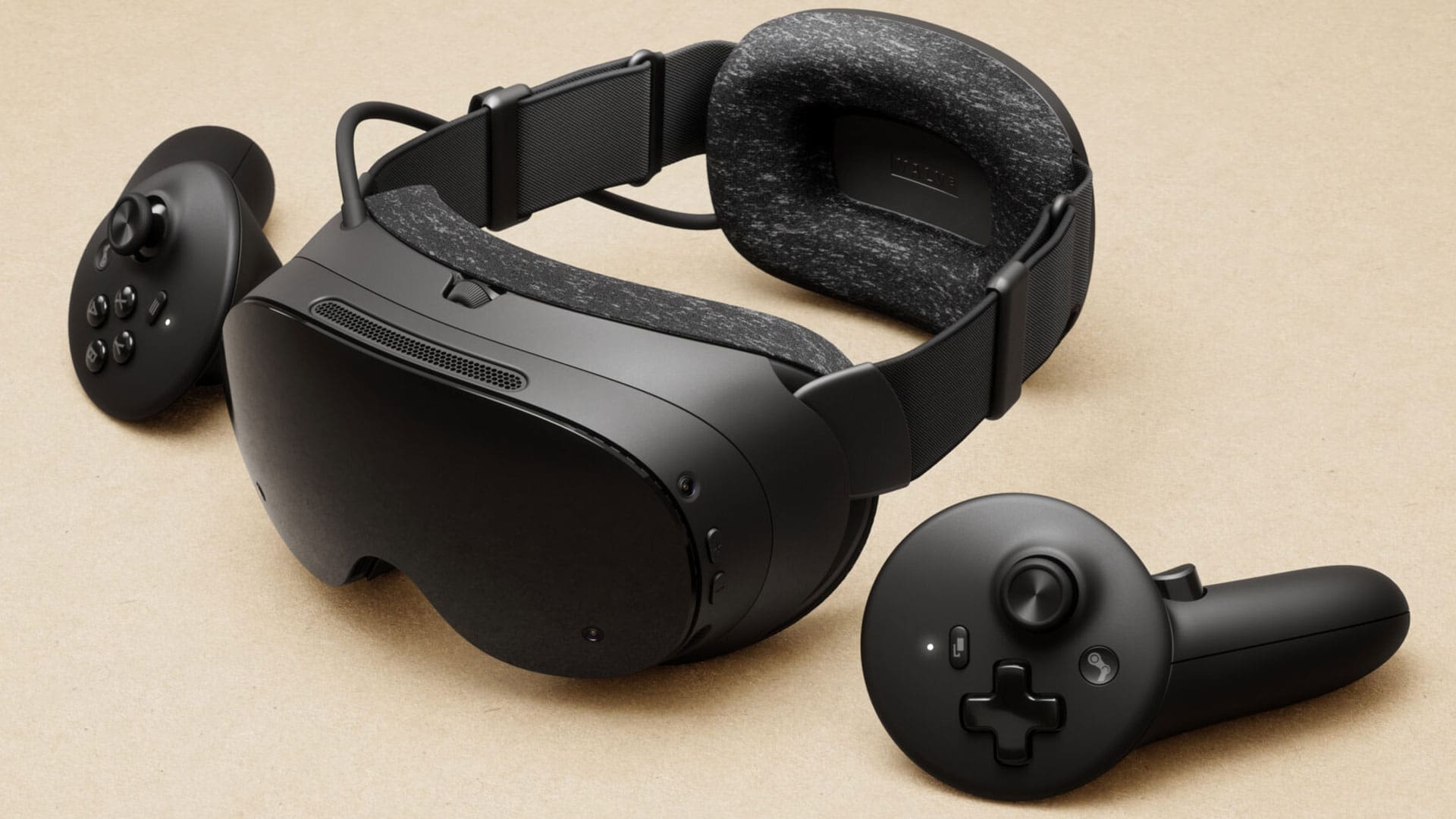
It’s been a hot minute since we’ve had any of the mainstream players deliver us anything interesting in the VR space, and in the case of VR I’m going to be considering Valve a “mainstream player”. Valve only comes out with new hardware when they absolutely feel like it. They’re under no impetus to do anything at all.
The last time they released some VR hardware it was at the beginning of the consumer market really taking off with the Valve Index. They bet big on outside-in tracking with their infrared lighthouses, and it’s still best in-class for tracking, but it’s a pain in the ass to set up and requires a nice big clear playspace that most gamers can’t afford.
This time around they’re following where the market ultimately went with inside-out tracking (cameras on the device itself that tracks arm and controller movements etc, which can lead to blindspots that are mitigated by controller gyros and accelerometers).
Long story short: meet the Steam Frame. It solves messy setup and kicks out the pain of wires by coming with a plug-and-play 6GHz wireless adapter and dual radios in the device itself, meaning it can split the data across two connections, so there aren’t any chokes or throttling. It further optimises bandwidth by using eyetracking tech to only provide sharp detail exactly where your eyes are looking. Each eye has a dedicated 2160 x 2160 LCD panel which beats out the Quest 2 (1832×1920 resolution per eye) and Quest 3 (2064 x 2208 per eye). The refresh rates are a standard 72-144Hz. Tracking is done via 4 infrared cameras. We’re talking a lot about streaming and connections but the device is a full-featured standalone that runs Steam OS, meaning you should be able to directly download and play your Steam games right off the device. It’s powered by a Snapdragon 8 Series Processor with 16GB of RAM. If you’re running low on any worthwhile VR games it plays non-VR stuff just fine, as long as you don’t mind a big virtual screen hanging in front of you. Could be handy on evenings when you don’t want to disturb anyone. Total weight with the headstrap comes to 440g. It should go on sale early this year.
Meet the Steam Machine
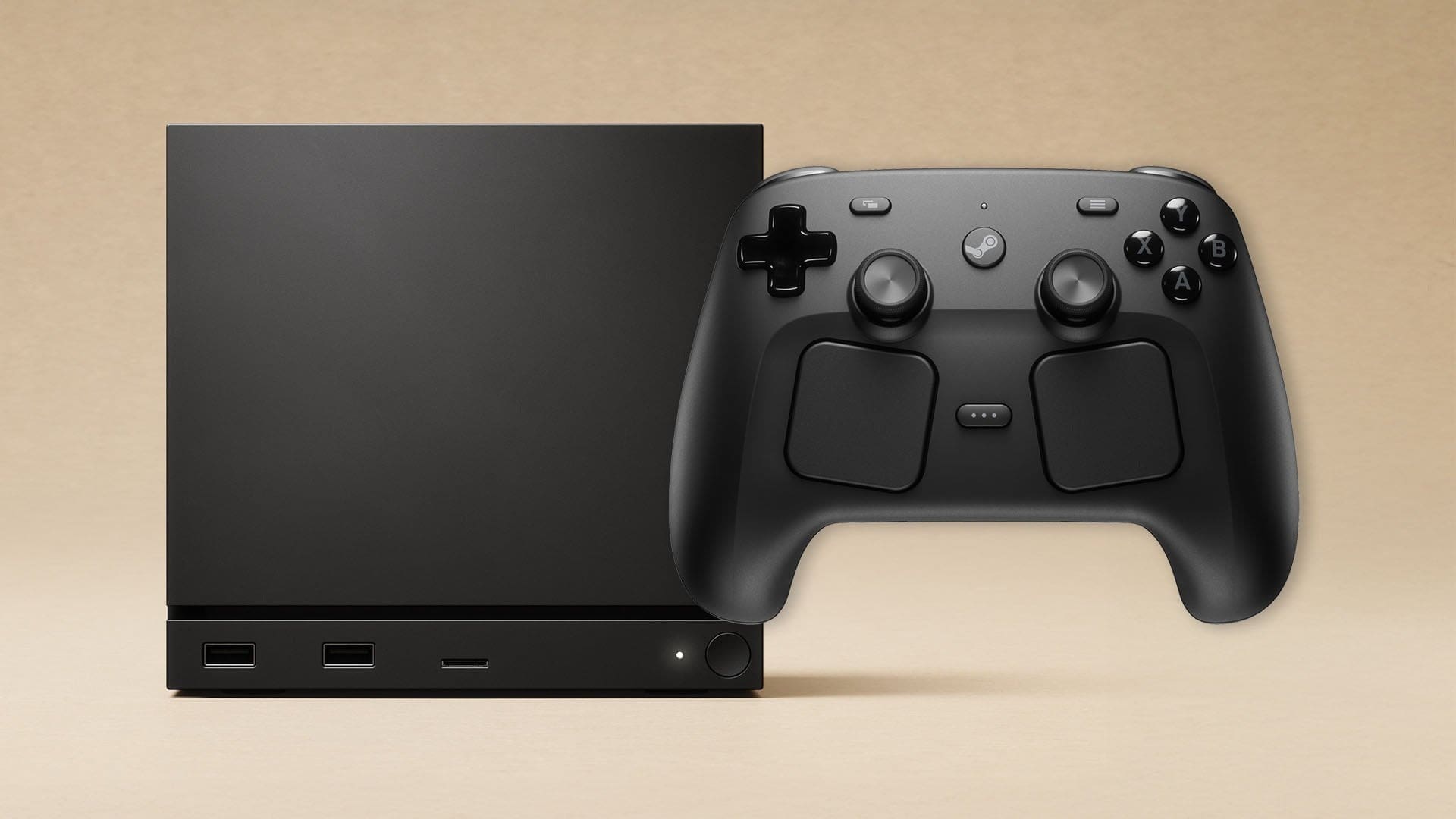
For everyone not looking to go another round of pretending they’re going to regularly slap sense deprivation goggles on during their free time then there’s the Steam Machine. This is a lightweight little midrange PC running Steam OS measuring 6 inches. Log into your Steam account and you’re good to go. Plugs include 1 Gigabit Ethernet, DisplayPort 1.4, HDMI 2.0, one USB-C and four USB-A ports. Storage has up to 2TB with the option to expand via MicroSD. It’s really a device for onboarding Console players who… Have a Steam library for some reason, but don’t want the hassle of PC stuff. With that said people who know what they’re doing can just chuck Windows or whatever on there and then go wild. It has a harder time differentiating itself from Steam’s other products that easily outclass other products in their class.