M2 Sep 2025 Issue M2 Sep 2025 Issue
Isaac Taylor
The internationally acclaimed World Press Photo Exhibition returns to Auckland later this year, showcasing the best and most important photojournalism and documentary photography from around the globe. The exhibition, which presents the winning photographs of the prestigious annual World Press Photo Contest, will head to Tāmaki Makaurau thanks to the Rotary Club of Auckland, from 26 July – 24 August at Level 1, Smith and Caughey’s Building.
Presented in more than 60 cities each year, the World Press Photo Exhibition 2025 invites viewers to step outside the news cycle and think critically about important topics in our world. Key themes range from politics, gender, migration, to conflict and the climate crisis.
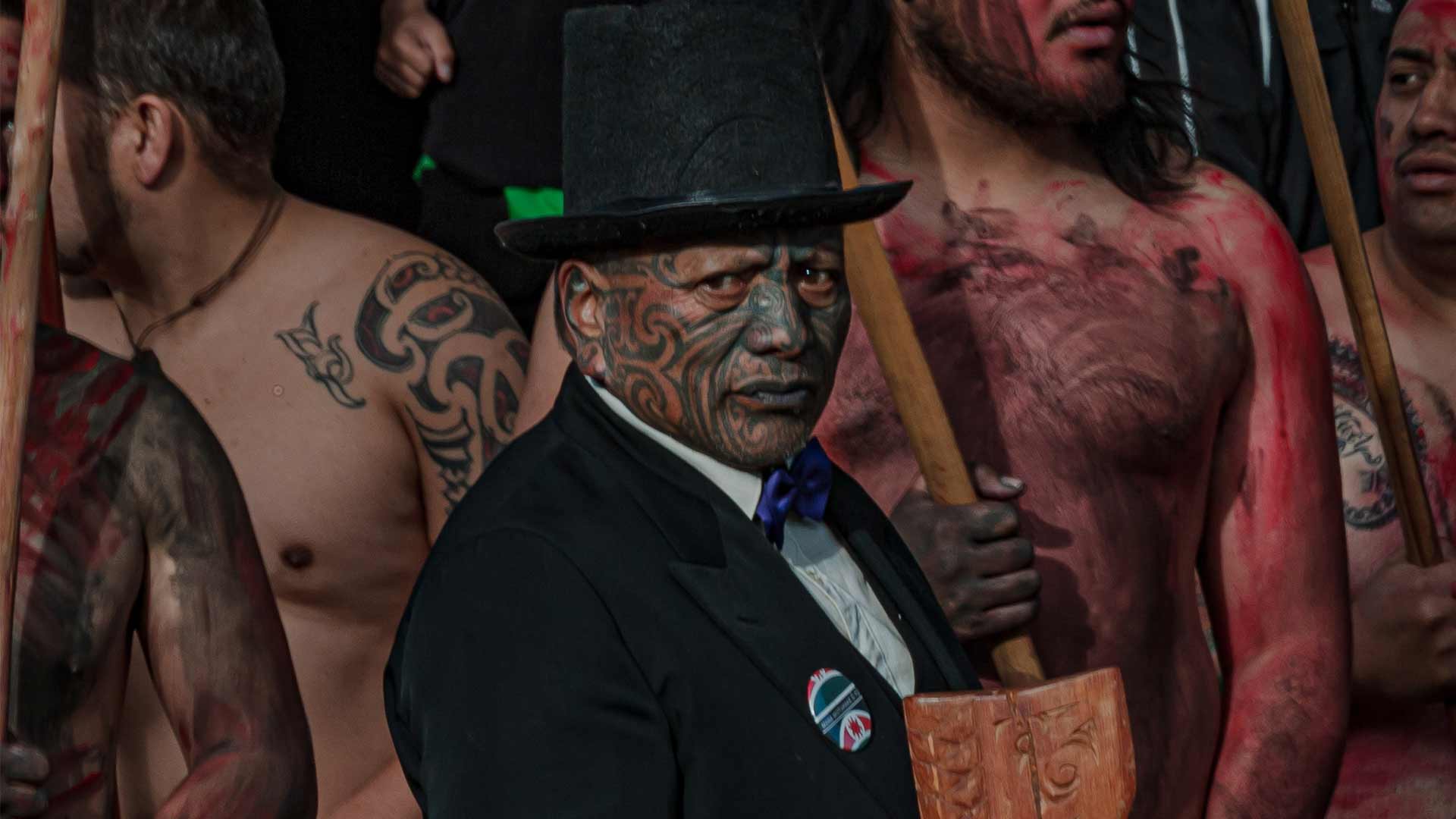
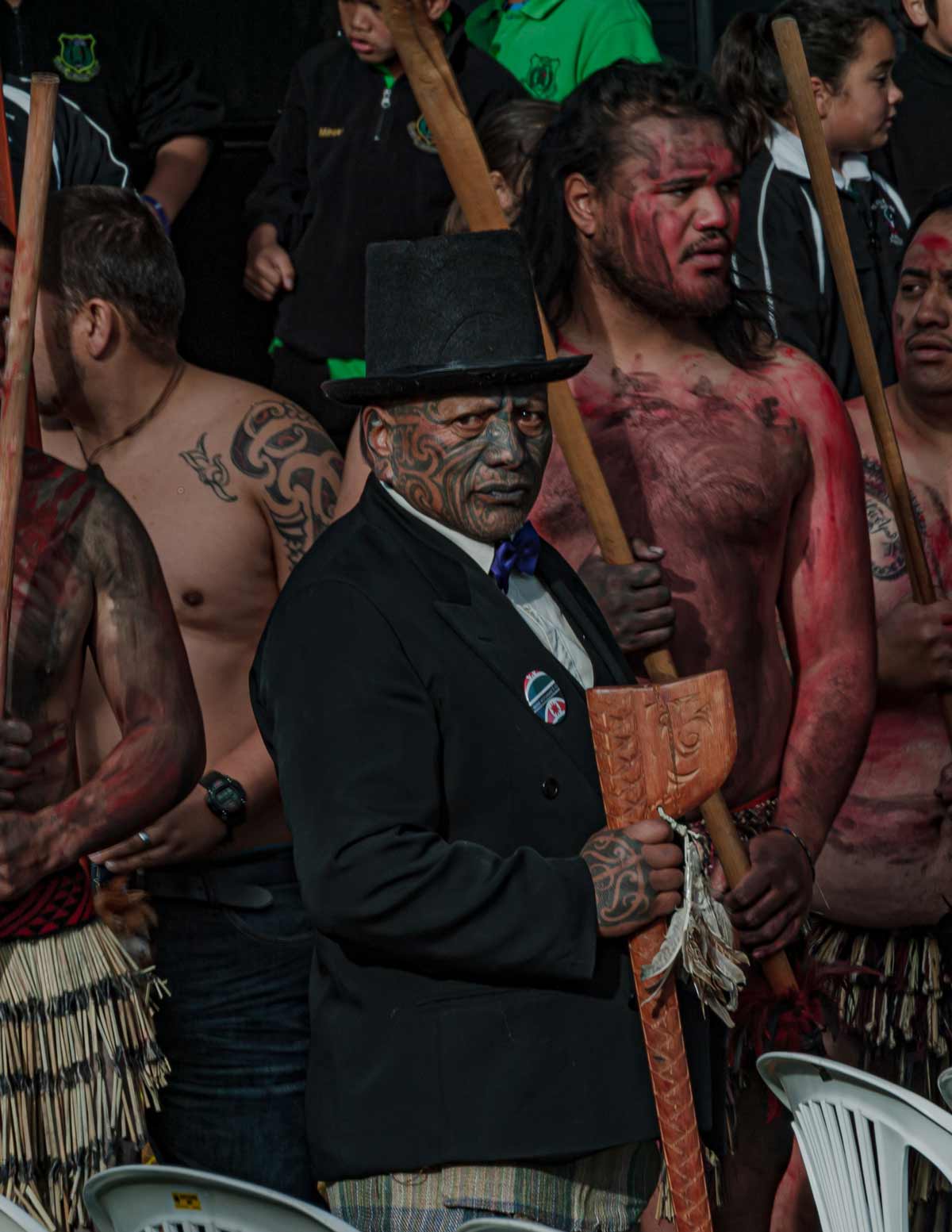
Te Urewera–The Living Ancestor of Tūhoe People. © Tatsiana Chypsanava, Pulitzer Center,New Zealand Geographic. World Press Photo 2025, Asia-Pacific and Oceania Long-Term Projects, Tatsiana Chypsanava, Tūhoe-Crown Settlement Day ceremony, New Zealand, 2014, for Pulitzer Center New Zealand Geographic
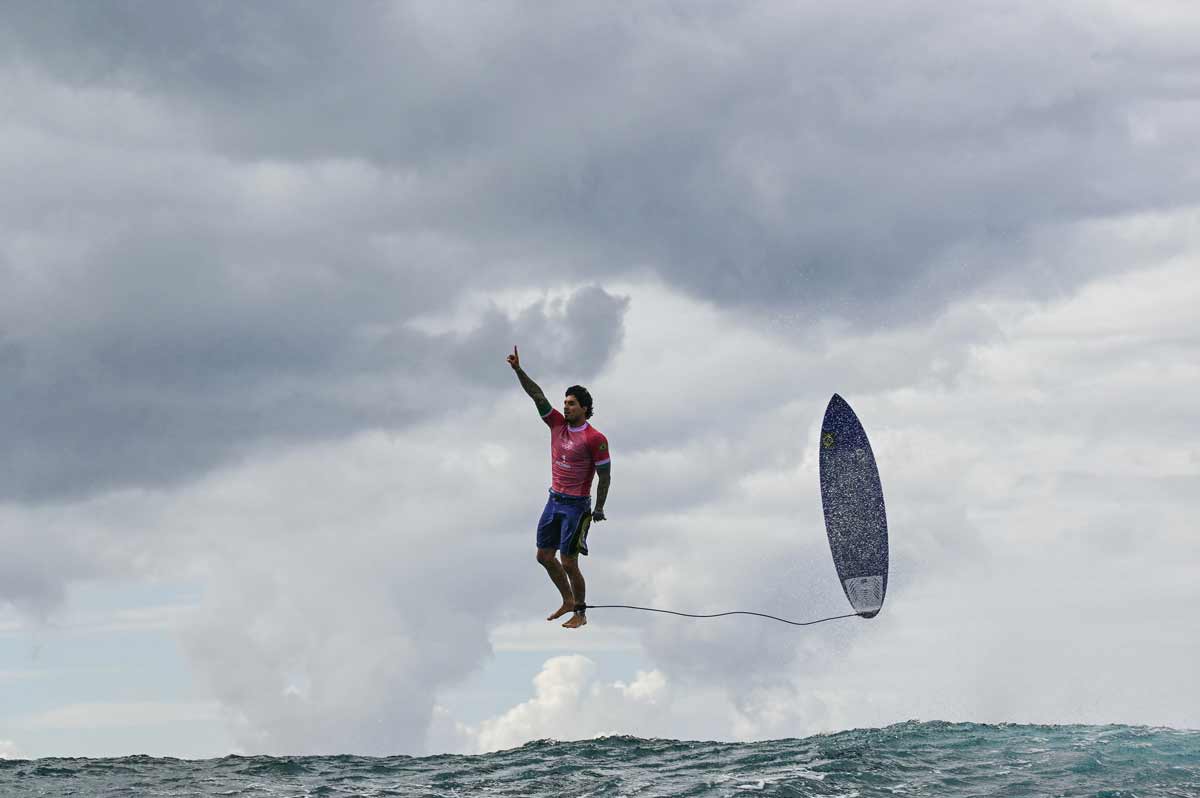
Brazil’s Gabriel Medina reacts after catching a large wave in the 5th heat of the men’s surfing round 3, during the Paris 2024 Olympic Games, in Teahupo’o, on the French Polynesian Island of Tahiti, on July 29, 2024. (Photo by Jerome BROUILLET / AFP) / AFP PICTURES OF THE YEAR 2024
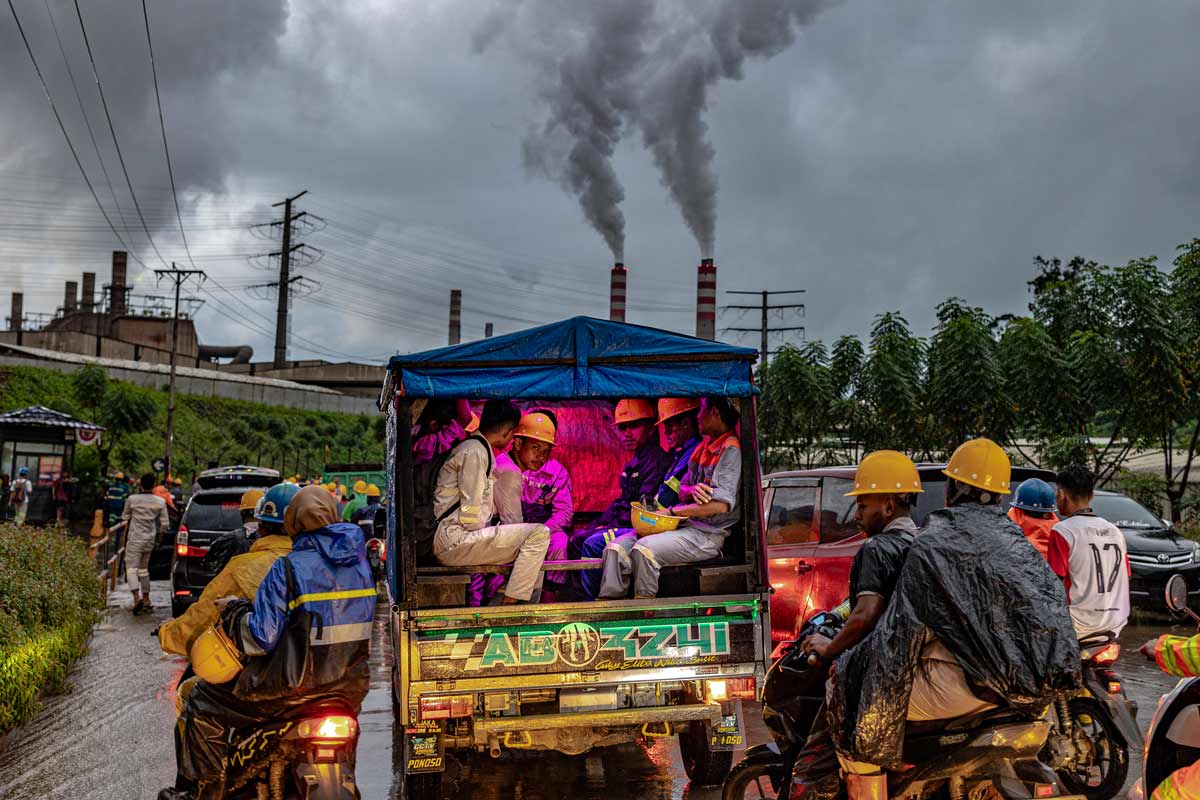
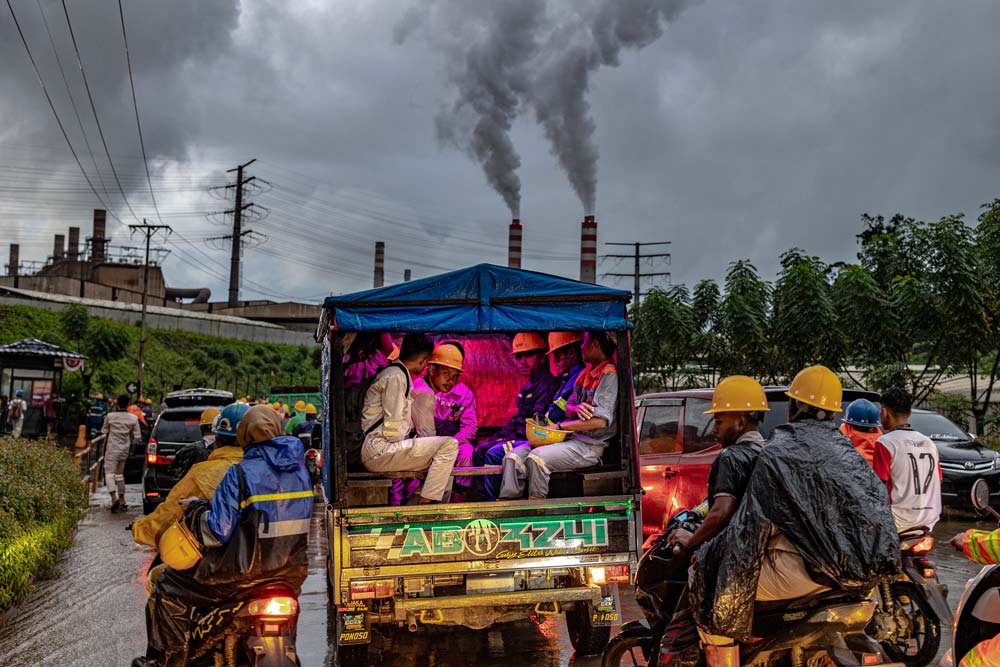
The Impact of Nickel Mining on Halmahera Island. © Mas Agung Wilis Yudha Baskoro, for China Global South Project. A mining worker sits in the back of a truck in front of the PT. IWIP factory area in Central Weda, Central Halmahera, North Maluku, Indonesia, on August 12, 2024.
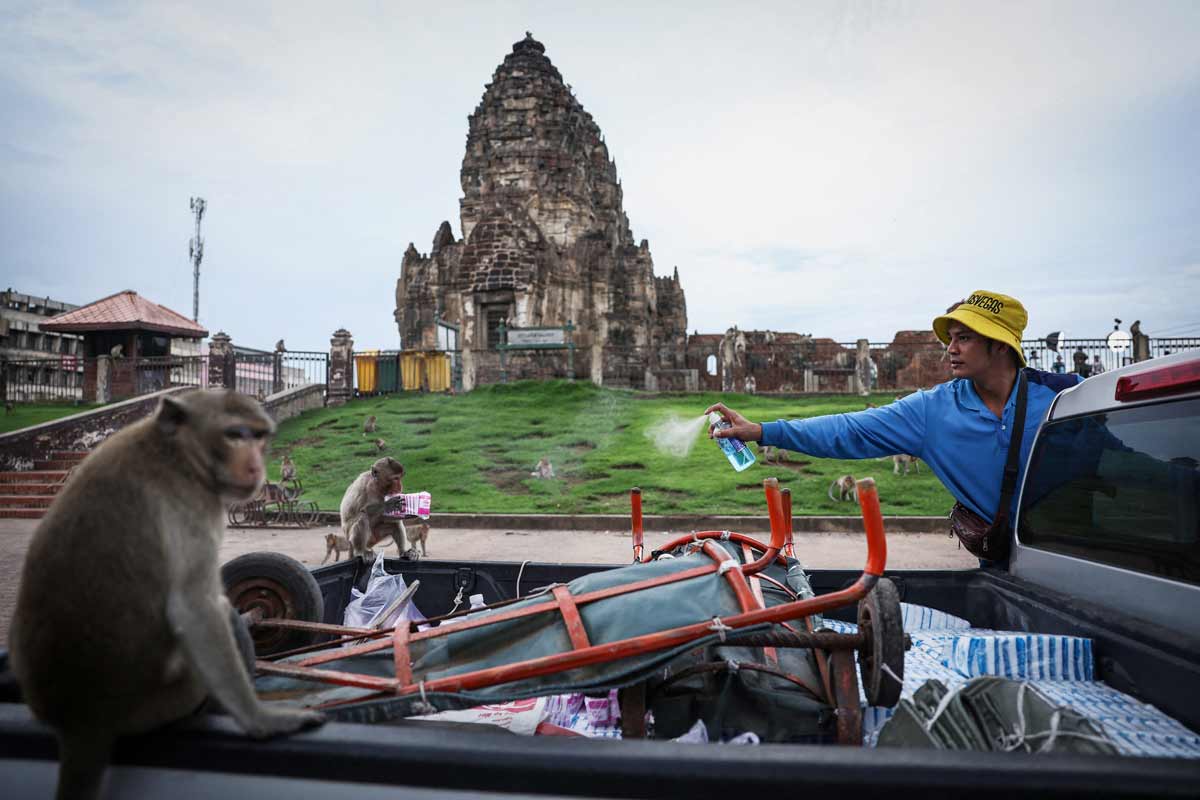
No More Monkey Mania in Thai Town. © Chalinee Thirasupa, Reuters. A man sprays alcohol toward long-tailed macaques to keep them from stealing goods near Phra Prang Sam Yot temple, as officials start capturing monkeys in Lopburi, Thailand, May 25, 2024. After Lopburi came out of the pandemic lockdown in mid-2022, its residents found that the monkeys, without people feeding them, had become unruly. Troops of macaques had taken over buildings, often confronting residents, stealing food and causing accidents. Gangs of monkeys also fought in brawls, shocking locals. Some residents resorted to caging themselves within their homes.
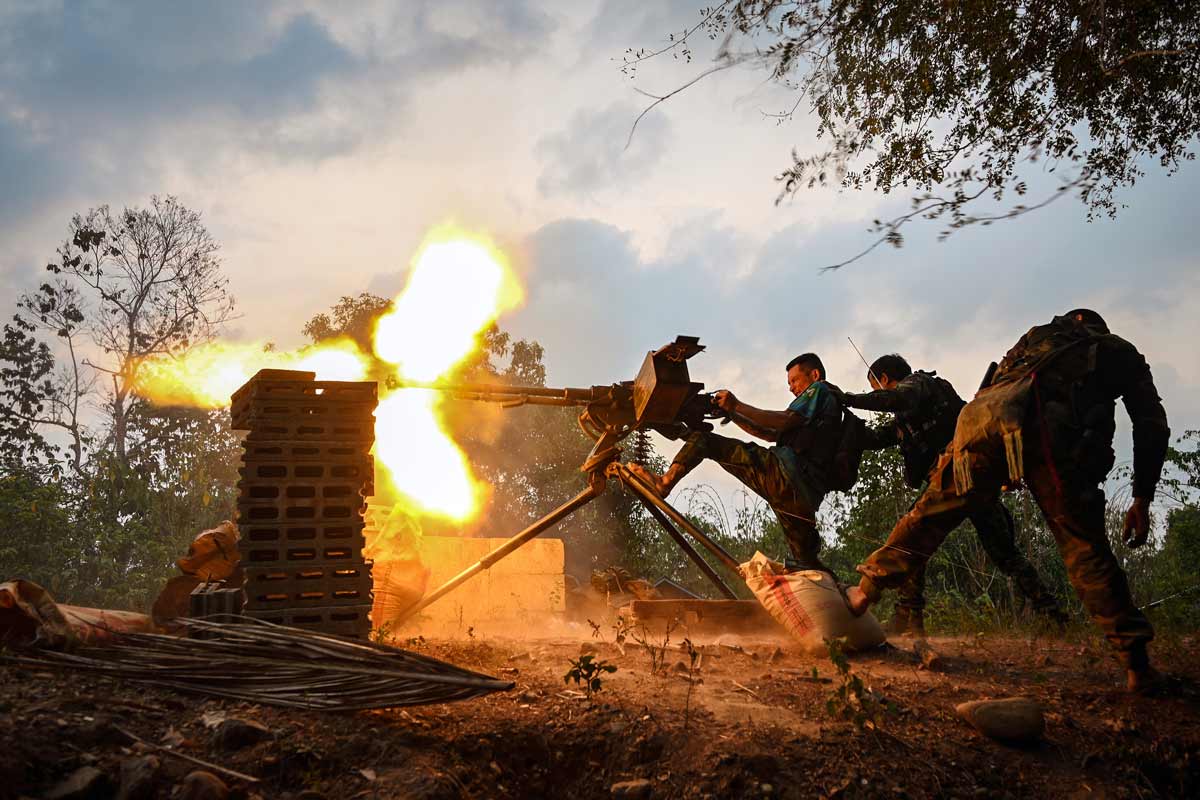
A Nation in Conflict. © Ye Aung Thu. This photo taken on April 21, 2024 shows Revolution fighters from Karen National Liberation Army (KNLA) and Special Operation Force (SOF) from National Unity Government (NUG) shooting 12.7mm Type 54 heavy machine gun to infantry Battalions 284, junta military camp based in Taung Soon, Kyainseikgyi Township, Kayin State, Myanmar. The Rest of the World
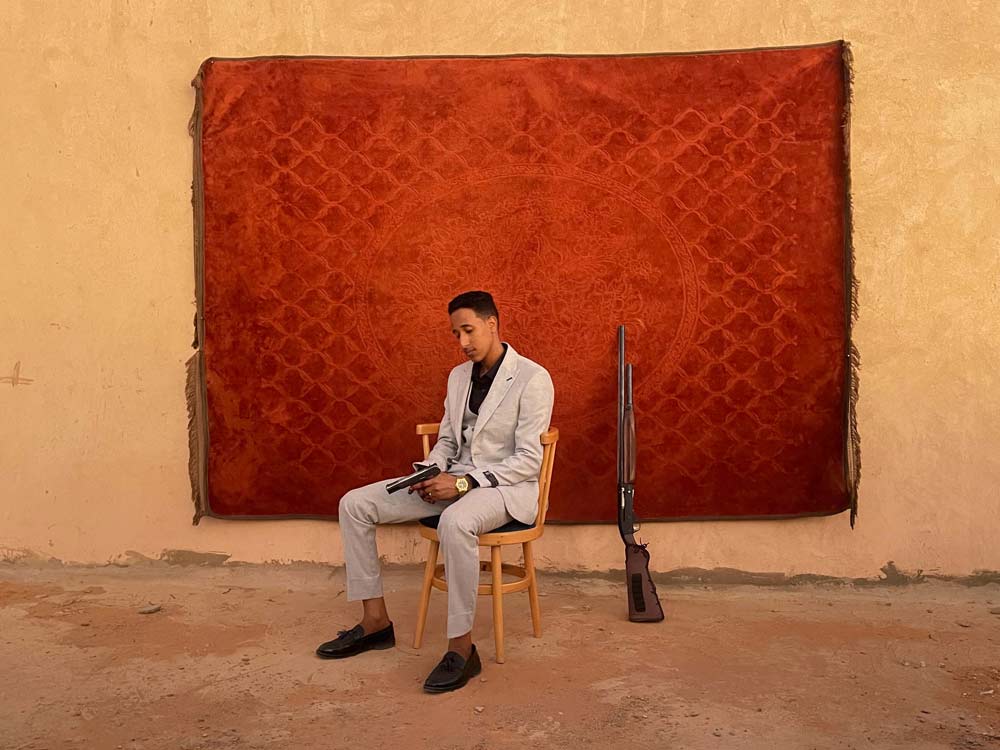
Life Won’t Stop. © Mosab Abushama. The groom poses for a portrait at his wedding. In Sudan, announcing a wedding with celebratory gunfire is a tradition. Omdurman, Sudan, 12 January 2024. This photo was taken with a mobile phone camera.
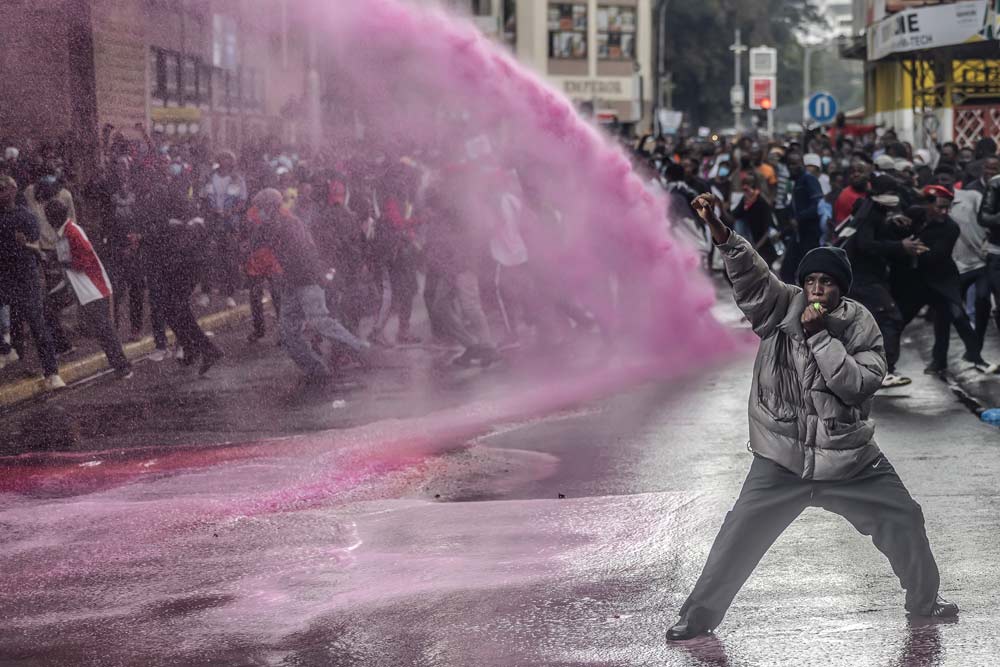
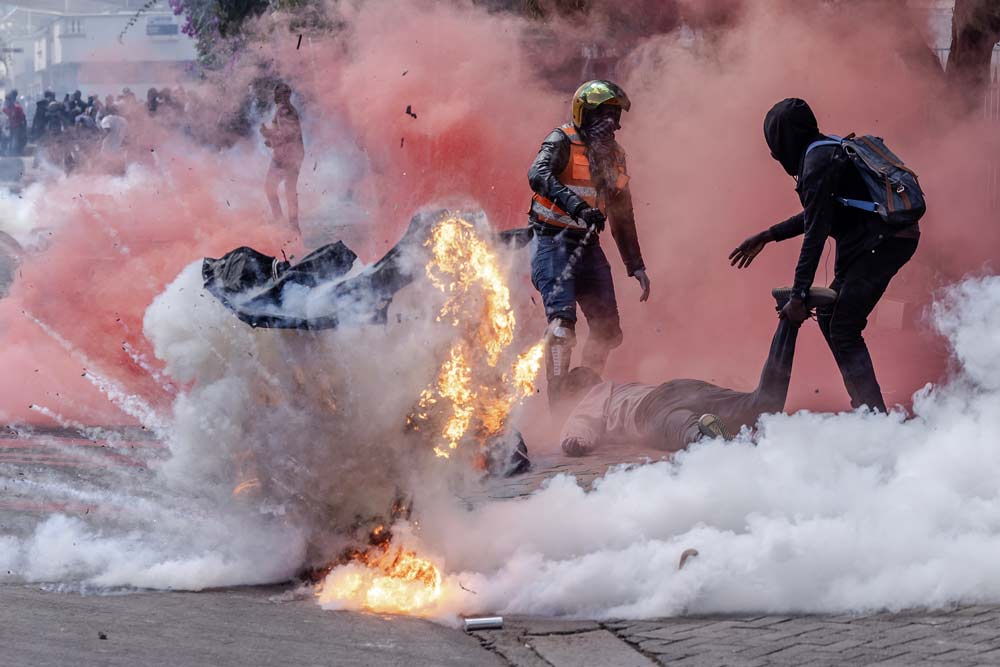
Kenya’s Youth Uprising. © Luis Tato, Agence France. A protester reacts as Kenya Police officers throw water to disperse people during a demonstration against tax hikes as Members of the Parliament vote the Finance Bill 2024 in downtown Nairoibi, on June 20, 2024. In 2024, weeks of protests in Kenya over a new finance bill that raised taxes led to at least 60 deaths, over 400 injuries and reports of abductions. Tensions peaked on June 25 when protesters stormed Parliament, demanding the bill’s rejection. Violent clashes with police resulted in injuries and fires around Parliament, with opposition lawmakers joining demonstrators in calls for government accountability and police reform.
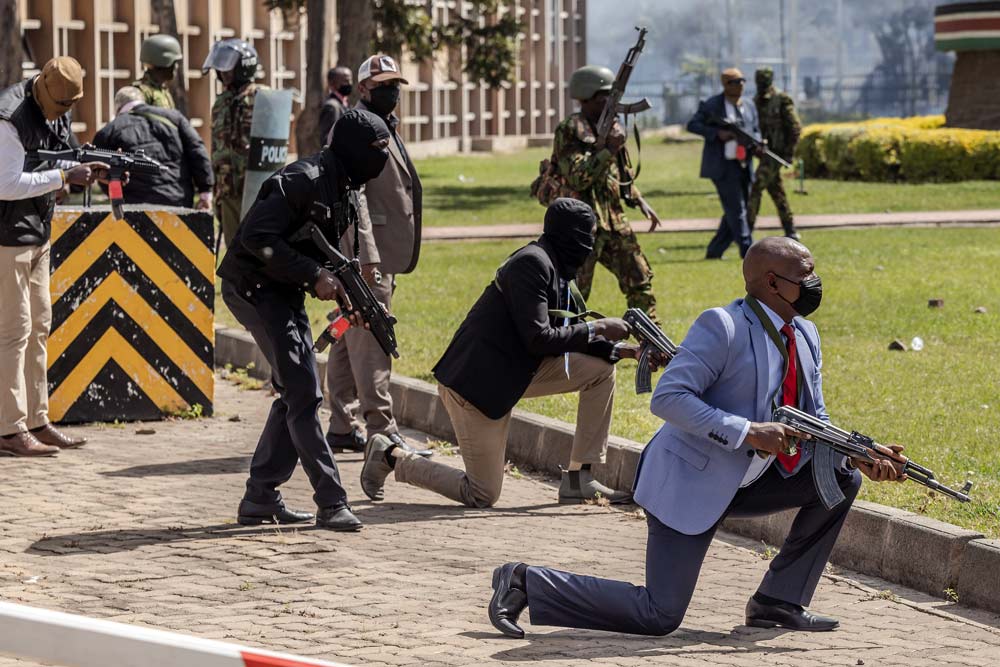
Kenya’s Youth Uprising. © Luis Tato, Agence France Presse. Kenya Police officers and security personnel protect the Kenyan Parliament as protesters try to storm the building during a nationwide strike to protest against tax hikes and the Finance Bill 2024 in downtown Nairobi, on June 25, 2024. In 2024, the National Treasury of Kenya proposed additional taxes on everyday items to generate additional income and alleviate Kenya’s high debt burden. Protests against the bill erupted, led by young Kenyans who organized actions over social media. On 25 June, protesters stormed Parliament and clashed with police; many were killed or abducted and hundreds were injured. Though President William Ruto withdrew the bill, protests persist into 2025, fueled by anger over economic hardship, corruption, police brutality, and distrust of the political class. All across Kenya, young people have emerged as a driving force, demanding accountability and systemic reforms.
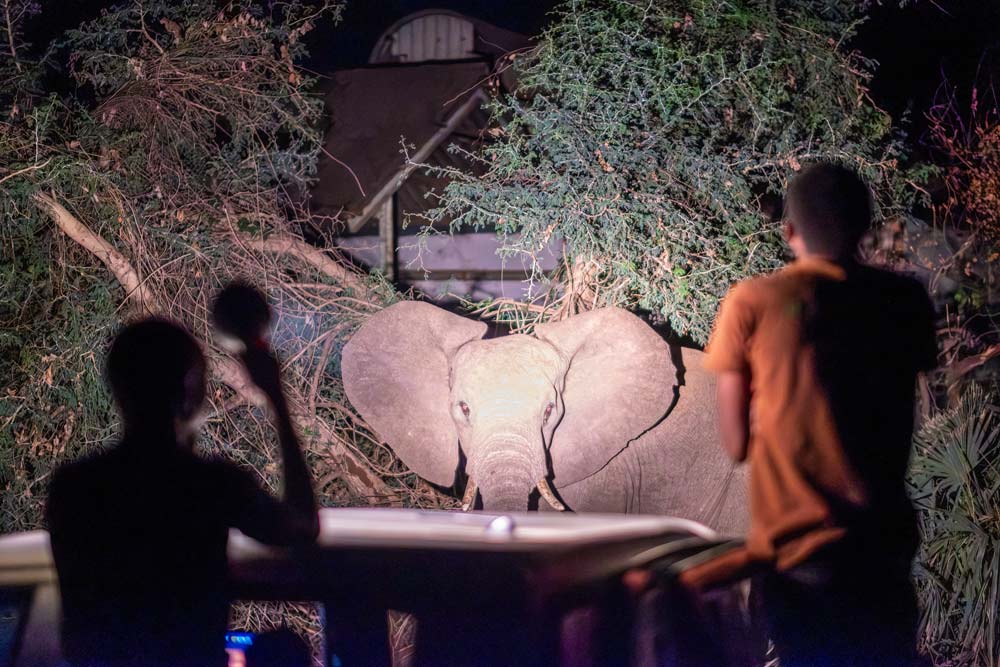
The Elephant Whisperers of Livingstone. © Tommy Trenchard, Panos Pictures, for NPR. Members of the CATS Elephant Response Team observe a group of elephants feeding by a roadside in front of a military base in the town of Livingstone, Zambia, where human-wildlife conflict has been on the rise.
Kenya’s Youth Uprising. © Luis Tato, Agence France.
The Impact of Nickel Mining on Halmahera Island © Mas Agung Wilis Yudha Baskoro, for China Global South Project. A mining worker sits in the back of a truck in front of the PT. IWIP factory area in Central Weda, Central Halmahera, North Maluku, Indonesia, on August 12, 2024.
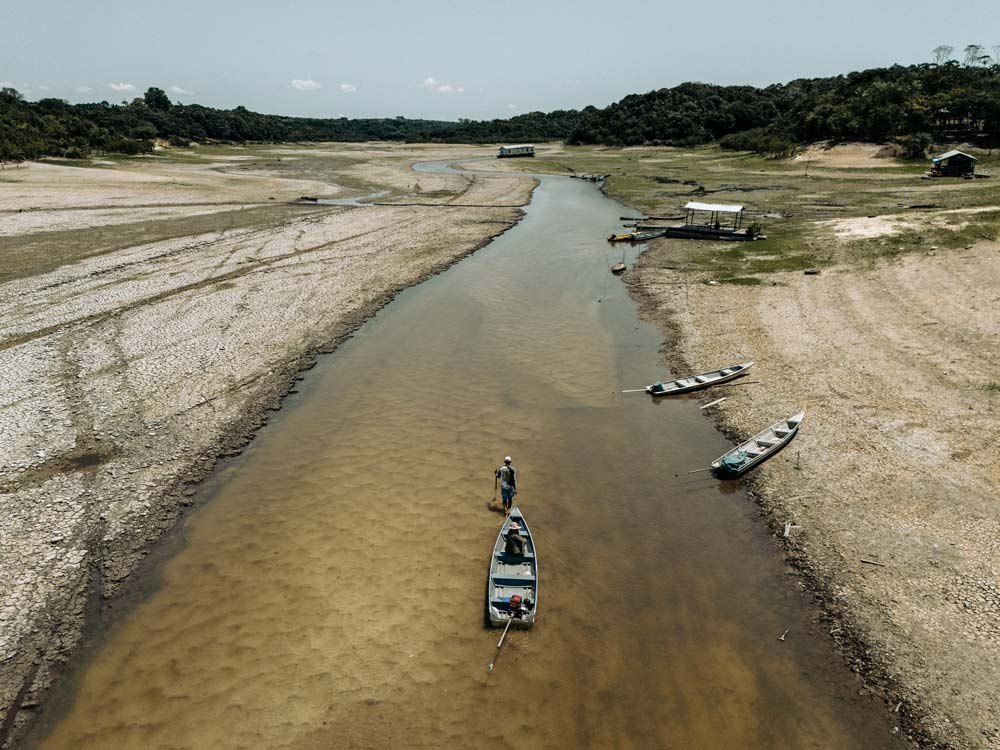
Droughts in the Amazon. © Musuk Nolte, Panos Pictures, Bertha Foundation. Winner, South America, Stories. A man drags a boat through shallow water near São Francisco de Marina. Drought has grounded floating homes and made travel by river nearly impossible. Manaus, Brazil, 4 October 2024.
Aircraft on Flooded Tarmac. © Anselmo Cunha, Agence France. Winner, South America, Singles. Anselmo Cunha, Agence France-Presse. A stranded Boeing 727-200 surrounded by floodwaters at Salgado Filho International Airport. Porto Alegre, Rio Grande do Sul, Brazil, 20 May 2024. Between April and June 2024, record-breaking rainfall in the state of Rio Grande do Sul, Brazil, led to the worst flood in the area’s history. More than half a million people were displaced and more than 183 died in the floods. According to scientists, climate change – driven primarily by the burning of fossil fuels, including those used in passenger air travel – almost certainly intensified the floods. In the larger context of the global climate crisis, this image of a plane suspended between sky and water becomes a foreboding symbol.
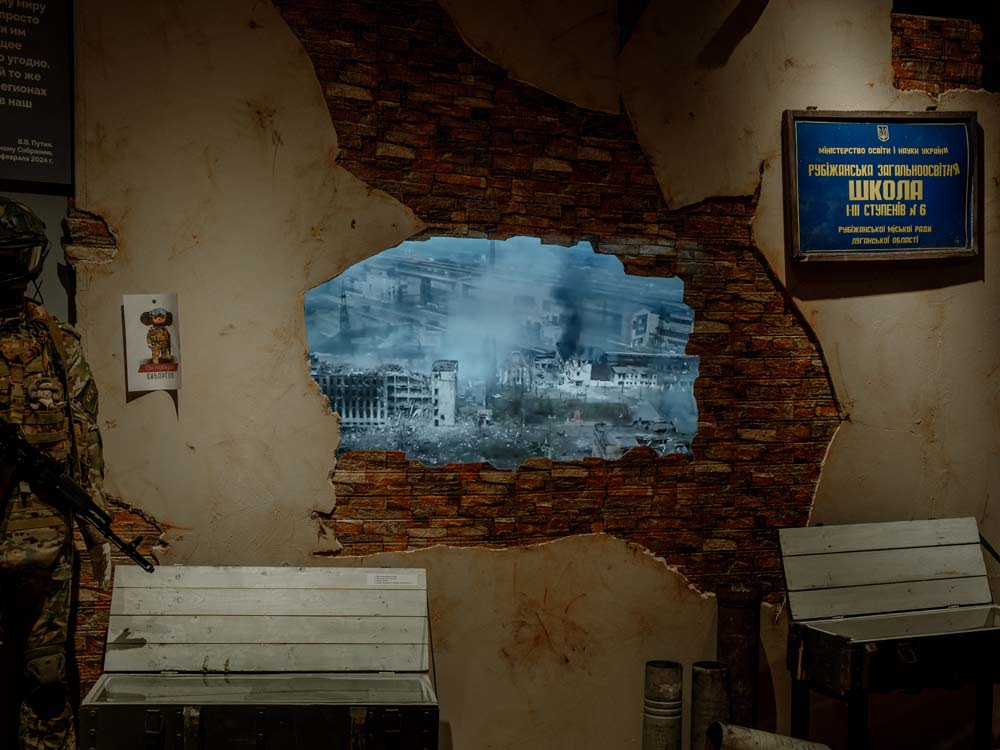
It Smells of Smoke at Home. © Aliona Kardash, DOCKS Collective, for Stern Magazine. Footage from a drone attack on a Ukrainian target is displayed alongside trophies from the front, in an exhibition at a Tomsk local history museum. Tomsk, Russia, 2 April 2024.
Attempted Assassination of Donald Trump. © Jabin Botsford, for The Washington Post. Butler, PA – July 13 : Members of the United States Secret Service help Republican presidential nominee former President Donald Trump off stage moments after a bullet from an attempted assassin hit his ear during a campaign rally at Butler Farm Show Inc. on Saturday, July 13, 2024 in Butler, Pa. (Photo by Jabin Botsford/The Washington Post)
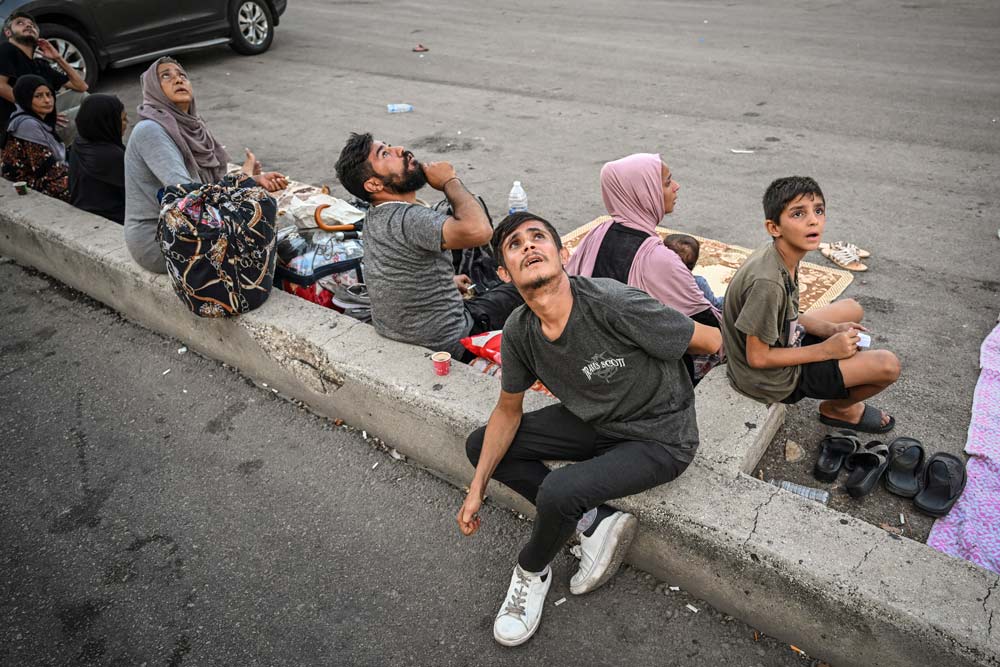
Drone Attacks in Beirut. © Murat Şengül, Anadolu Agency. People glance anxiously upwards during an Israeli drone strike, as they take refuge away from buildings in Beirut’s Dahiyeh neighborhood. Jets and drones often fly at low altitudes, causing fear and distress. Lebanon, 29 September 2024. Cross border attacks between Israel and Lebanon based Hezbollah ongoing since the outbreak of the war in Gaza escalated sharply in September 2024. Israel announced a new goal to eliminate the militant group, first launching airstrikes into southern Lebanon, and later a ground offensive. Beirut, initially a refuge for those fleeing airstrikes in southern Lebanon, itself came under fire as attacks spread northwards. From 27 September, Israel targeted buildings, including apartment blocks in Dahiyeh, saying that Hezbollah was headquartered in the densely populated suburb.
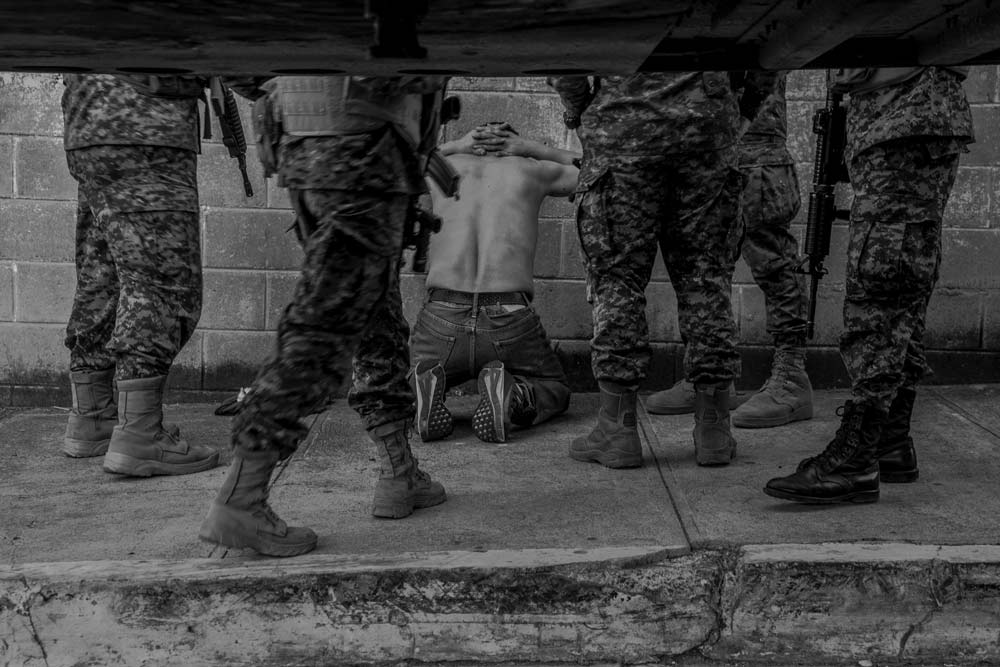
Life and Death in a Country Without Constitutional Rights. © Carlos Barrera, El Faro, NPR. In 2022, El Salvador’s President Nayib Bukele and its legislative assembly passed a law declaring a “state of emergency” that limited the rights of El Salvadorans to freedom of assembly, privacy of communication, and due process under the law. This temporary measure, designed to curb gang violence responsible for El Savador’s high murder rate, has been renewed 35 times as of March 2025, turning El Salvador into a nation where mass incarceration is the norm. Prisons in El Salvador have become severely overcrowded and reports of inhumane treatment, poor medical care, violence, and murder are common. This project focuses on the stories of individuals and affected families to show the private struggles behind public policy. A man is taken into custody by police on the day the El Salvadoran Legislative Assembly approved the “state of emergency.” Since that day, more than 80,000 people have been arrested. Santa Tecla, El Salvador, 27 March 2022.
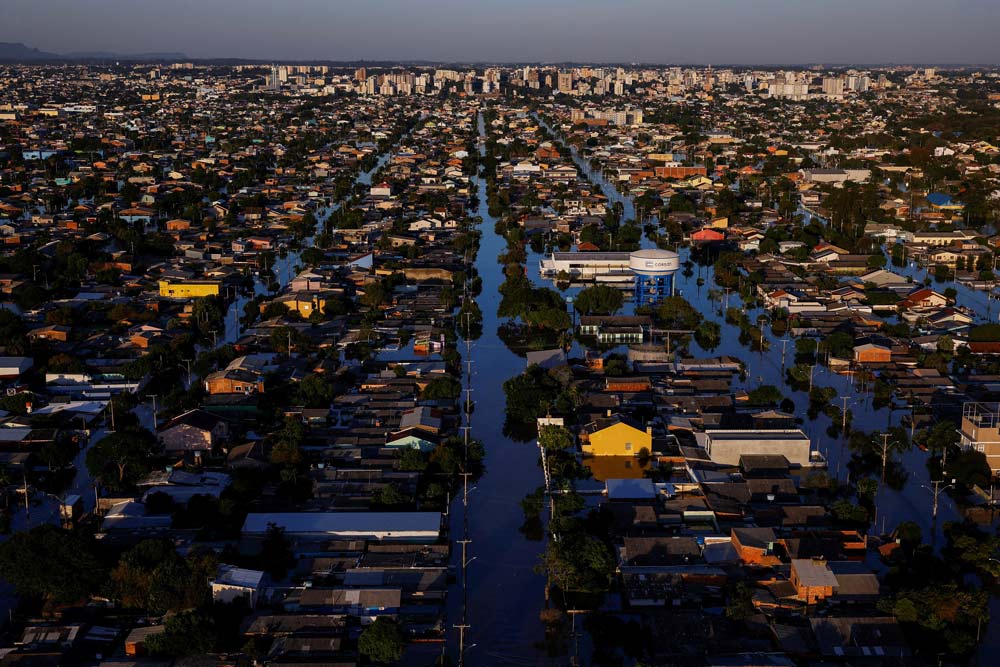
Brazil’s Worst Ever Floods.© Amanda M. Perobelli, Reuters. Water covers streets during floods in Canoas, in Rio Grande do Sul, Brazil, May 6, 2024. Record breaking floods in the state of Rio Grande do Sul, Brazil, have caused environmental devastation, the displacement of over 600,000 residents, and the death of 183 people. The government declared it the state’s largest climate disaster ever, with 2.39 million residents affected and major human, nonhuman, and economic losses. According to a team of international scientists, climate change, intensified by El Niño, made the flooding twice as likely. Experts warn that such extremely rare weather events, once expected to occur every 100 to 250 years, will become more frequent due to the burning of fossil fuels and other forms of environmental degradation. The floods have devastated local economies and communities. While some residents are leaving to start anew, others are choosing to stay and rebuild their lives.
It Smells of Smoke at Home. © Aliona Kardash, DOCKS Collective, for Stern Magazine. My sister Sanya is two years younger than me and lives a completely different life. She is a mother of two, I’m still about to get my Master’s degree. We rarely see each other, there has long been an unspoken consensus between us that we are too different to be friends. All the more important are these brief meetings in Siberia every three years. This time, in parting, she said to me, “You know, I’m glad I have a sister. Self-portrait with my sister in front of the house where we grew up. Tomsk, 05.08.23
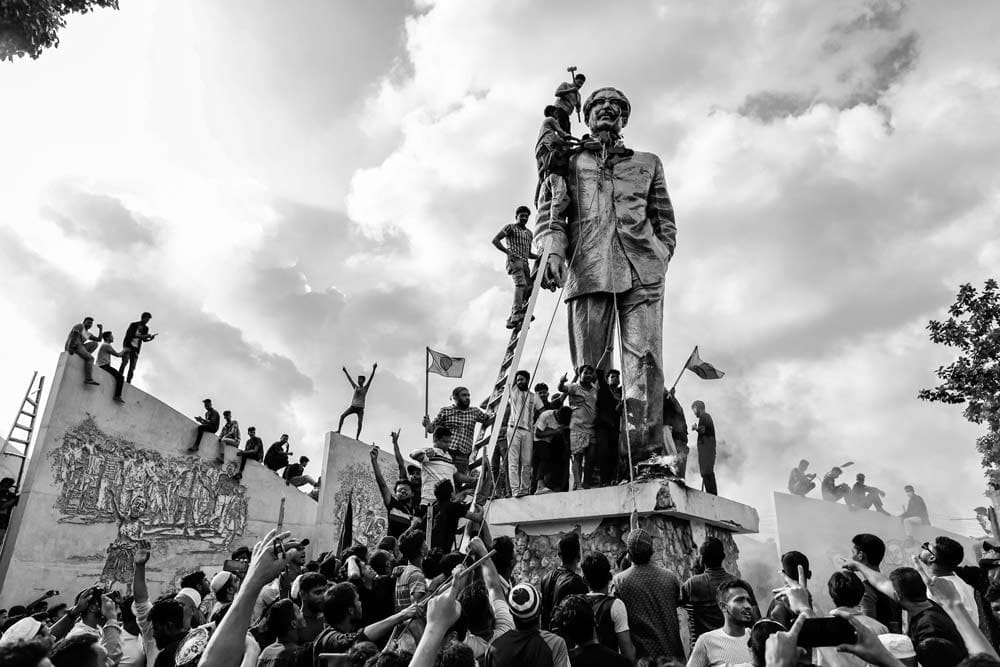
The Canvas of Power© Suvra Kanti Das, for The Daily Prothom Alo. People vandalize a statue of former Presdient Sheikh Mujibur Rahman, father of Prime Minister Sheikh Hasina, in Dhaka, Bangladesh, 05 August 2024. In an address to the nation, Chief of Army Staff General Waker-Uz-Zaman announced that Prime Minister Sheikh Hasina has resigned after weeks of unrest and an interim government will be formed to run the country. A July 2024 student protest against a restrictive government job quota scheme escalated into a mass uprising against a government accused of unlawful detentions, enforced disappearances, and widespread suppression of dissent. Unrest took place against a backdrop of struggles for fair elections, and a cyber-security law seen to erode freedom of speech. Although initially peaceful, demonstrations became violent after authorities and pro-government paramilitaries cracked down on protesters, killing atleast 1,400 people. By August the regime had collapsed. Prime Minister Sheikh Hasina resigned and went into exile, and army chief General Waker-Uz-Zaman announced the formation of an interim government.
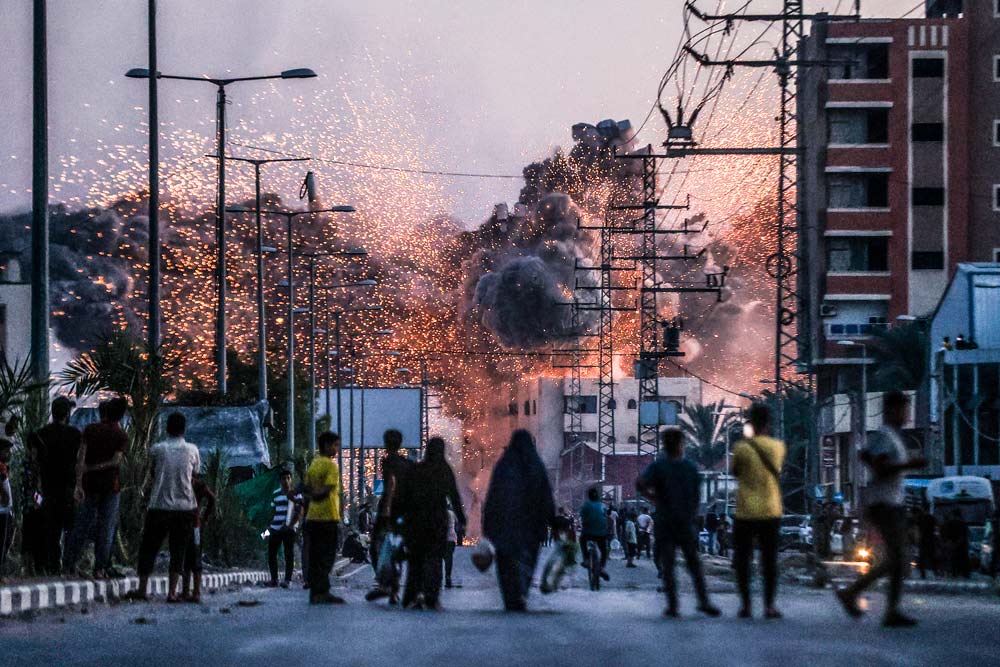
Gaza Under Israeli Attack© Ali Jadallah, Anadolu Agency. People watch as smoke and flames rise over a building, following Israeli attacks on Deir al-Balah. Israel bombarded the central Gazan city multiple times throughout the year. Gaza, 6 June 2024. Israel continued its war on Gaza throughout 2024, leaving much of it in ruins. The UN reports more than 60% of homes have been destroyed and 95% of hospitals are non-functional. Nearly two million people have been displaced amid acute shortages of food, clean water, and medicines, due to Israeli restrictions. With international journalists effectively barred from Gaza, local photographers risked their lives to document the war. The photographer, who has also lost family members, says: “Everytime I photograph a destroyed house, I remember mine. Every time the wounded and martyred are pulled from the rubble, I remember my father and siblings.”
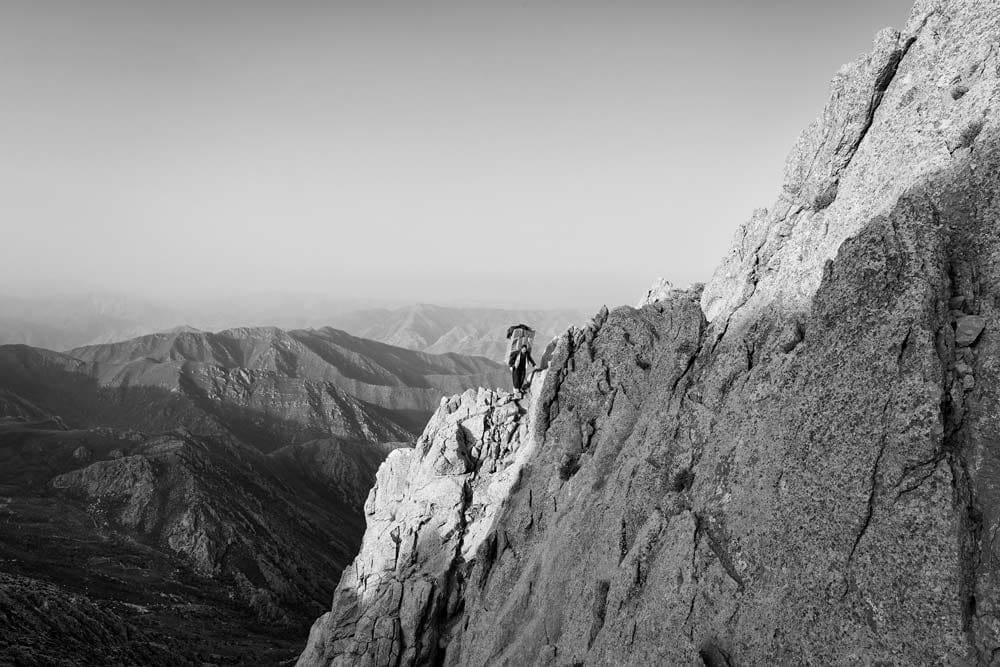
Bullets Have No Borders© Ebrahim Alipoor. One of the countless arduous crossing paths that the Kolbars have to take while carrying items weighing more than 50 kilograms for long distances. These passages are one of the main causes of the deaths Kolbars endure. Kolbars usually leave late at night for the border to make a crossing early in the morning. Kurdistan, Iran, June 2019. Kolbars(border couriers) carry goods, such as household appliances, mobile phones, and clothes, on their backs through treacherous terrain from Iraq and Turkey into Iranian Kurdistan. The Iranian government bans import of many such goods to protect local production and save foreign currency in the face of Western sanctions. Decades-long marginalization of Kurds means widespread unemployment in the region, driving many tokolbari. In addition, many kolbars see the activity as legitimate, as they feel ties with fellow Kurds across nation-state borders they do not acknowledge. However, kolbars risk being shot by security forces and border patrols.