
Bridging Both Brand And Need
As a kid I had a copy of the Guinness Book of Records, and a few pages were more thumbed than others: the world’s tallest man, the fastest time for running 100m and the world’s tallest building.
The 20th century saw increased activity in the latter with the Empire State Building grabbing the mantle in 1931, the World Trade Center claimed it in 1973 only to lose it the following year to the Sears Tower in Chicago. USA relinquished the title in 1998 when the Petronas Towers of Kuala Lumpur took it to Asia. Of course this title now belongs to Dubai with the Burj Khalifa which, at 828m, is almost double the height of its predecessor Taipei 101. The Burj is so ridiculously tall it can’t even be used fully so we’re unlikely to see any attempt at outdoing its height in the near future. The world’s tallest building race had always felt a bit like a big dick joke and the Burj’s status as being only partially functional served as the ultimate wry punchline.
Sky High Ambition
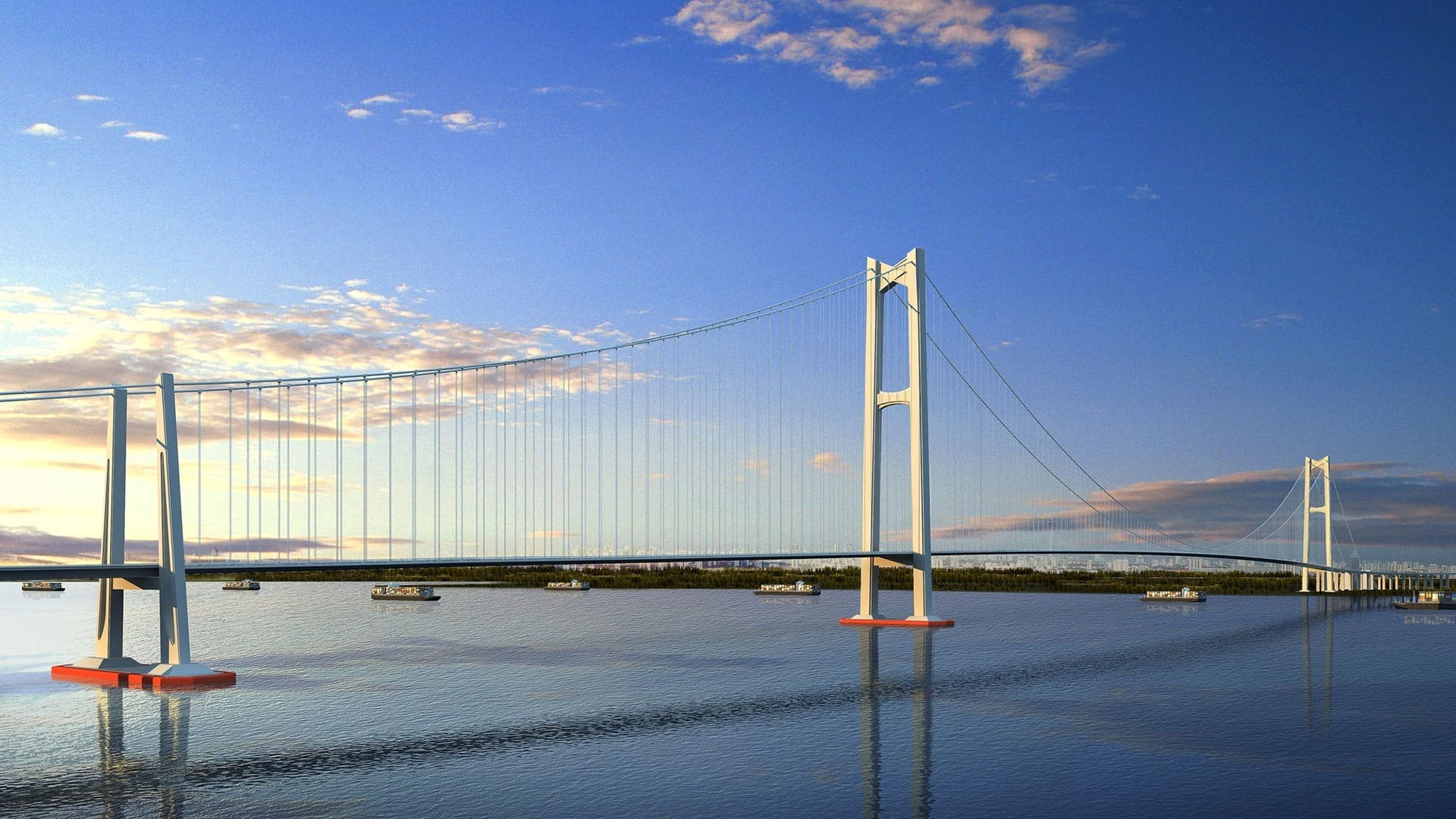
So if super tall buildings are out, what do you build instead? Bridges of course – they can still boast colossal heights yet will never suffer the same limp dick jokes as buildings as they’re so useful – they span gaps, move goods and people, connect regions and even create positive headlines too.
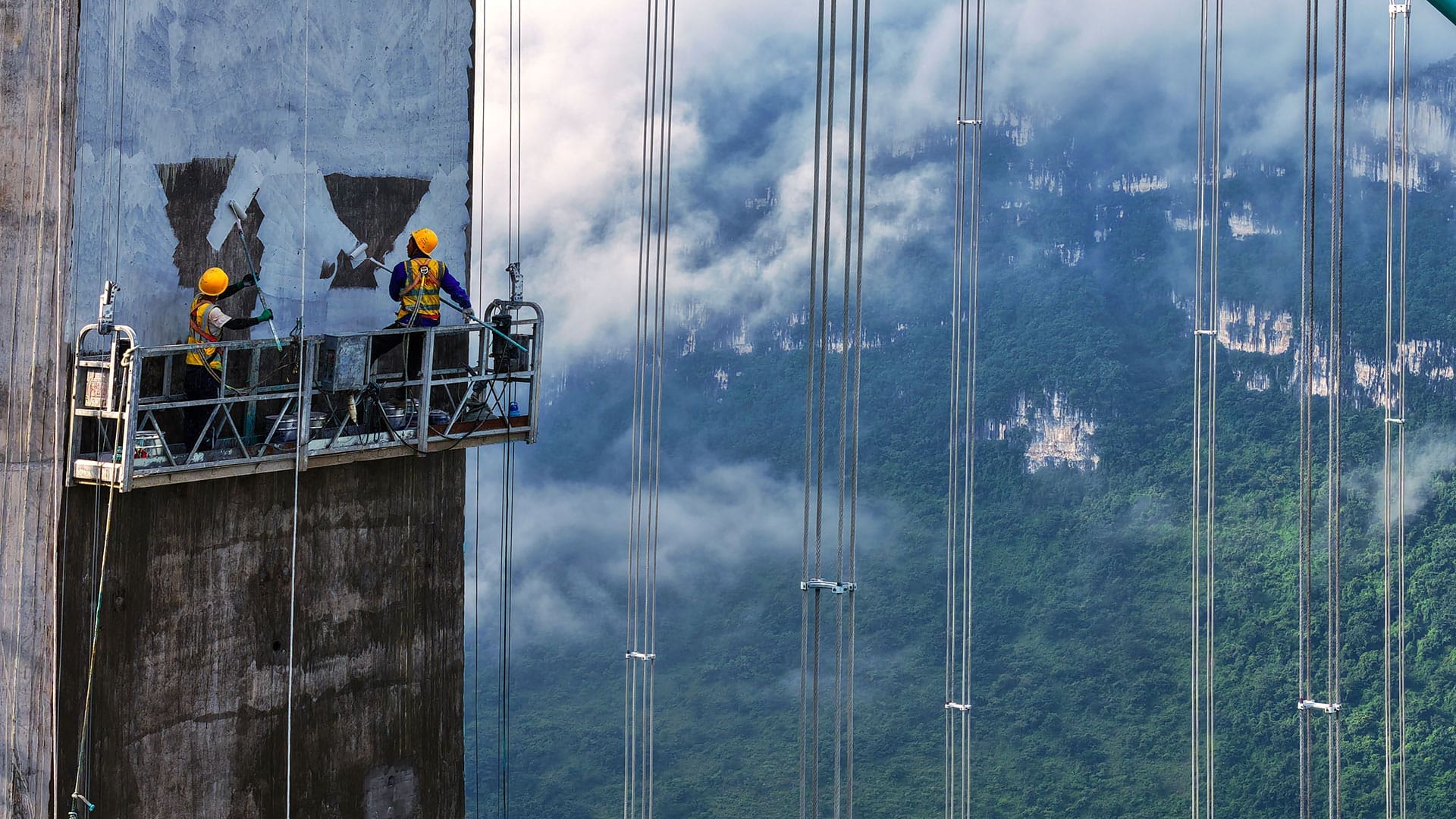
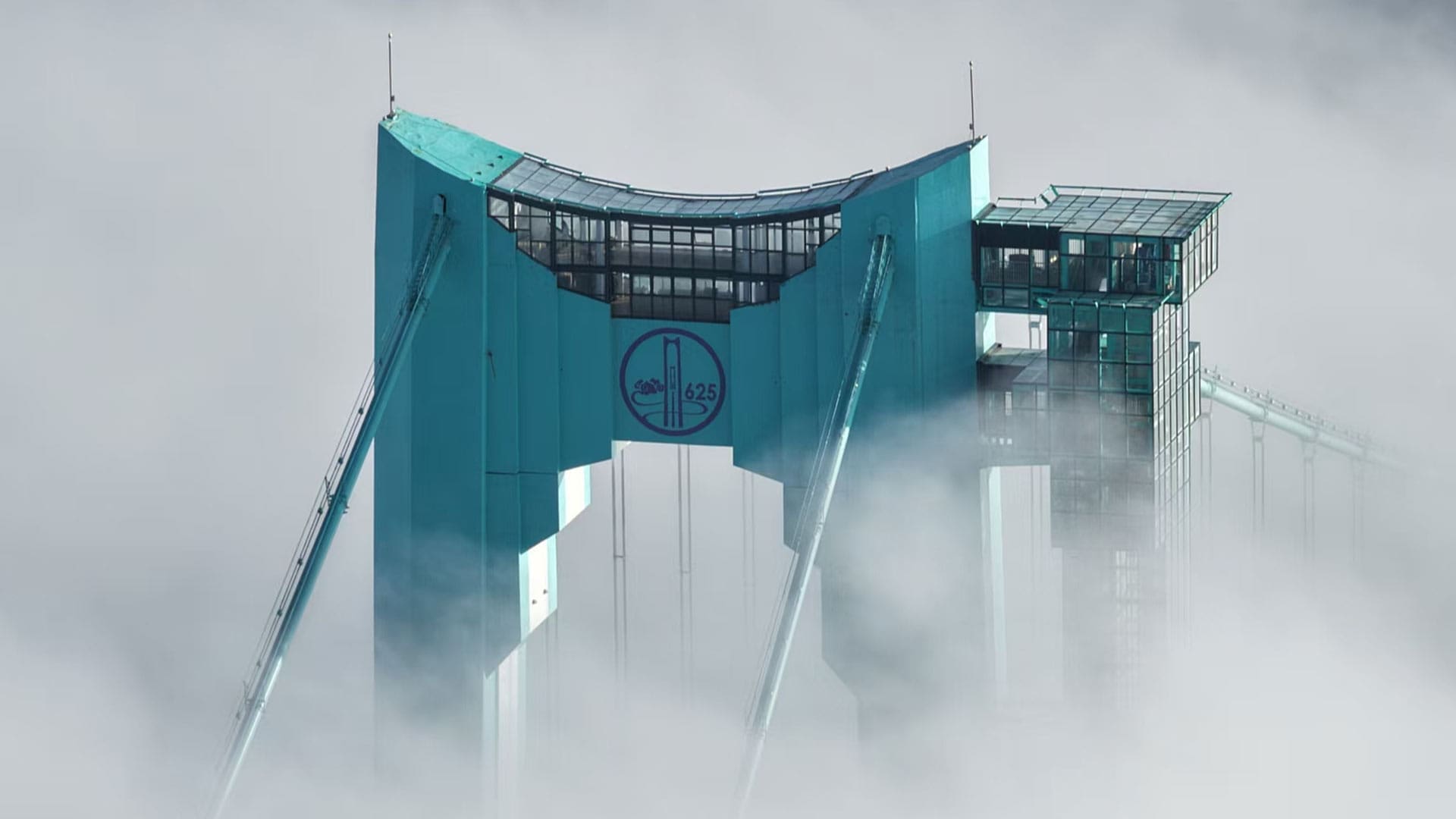
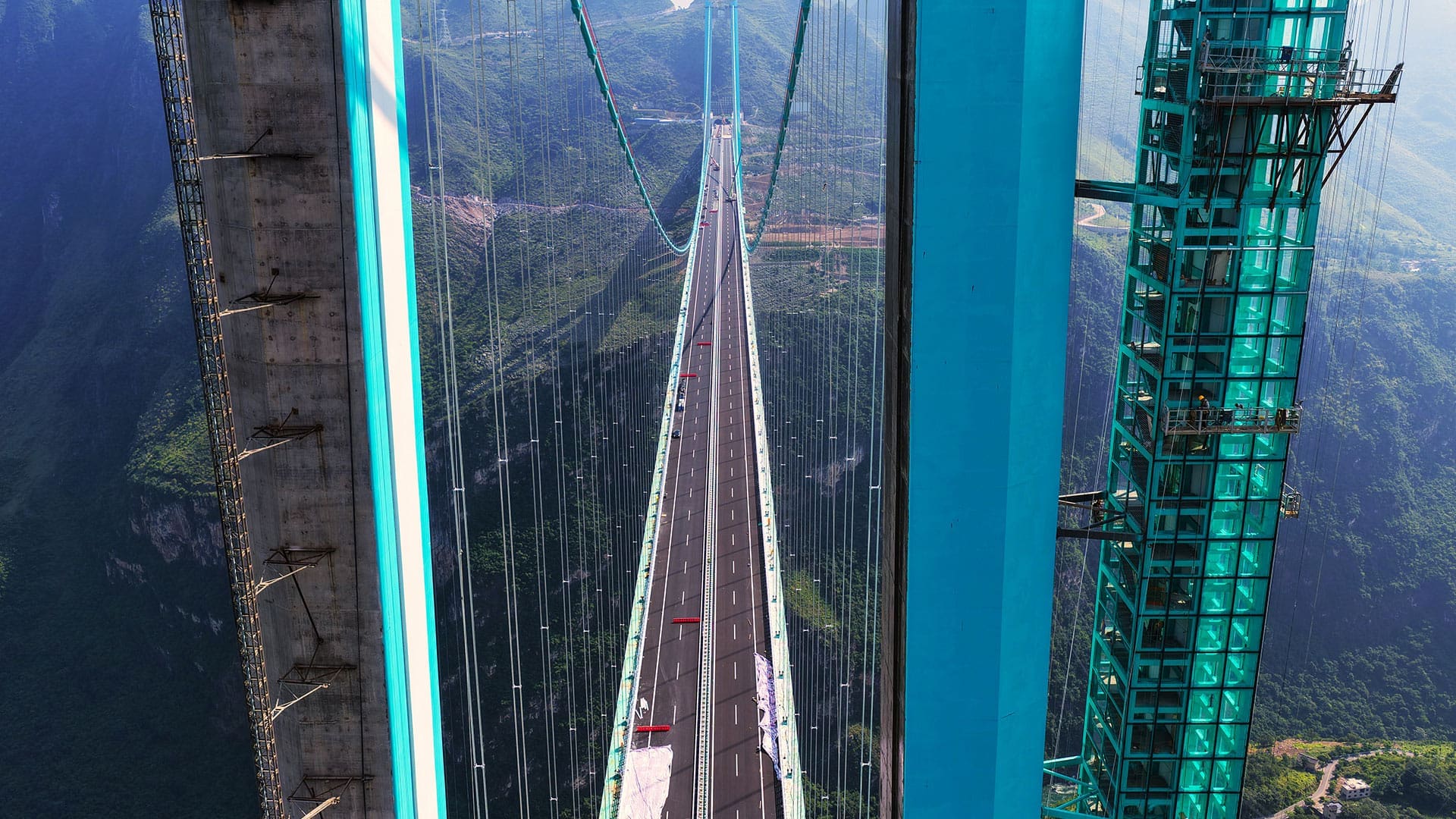
In late September 2025, the new world’s highest bridge – the Huajiang Grand Canyon Bridge – opened in southwest China. At 625 metres above the canyon floor, spanning 1,420 metres and reaching a total length of 2,890 metres, it is also staggering not just in scale but in over-delivery. But the really astonishing fact is the new Huajiang Bridge’s location: it’s in the backblocks; the nearest town is its namesake which only has 2,766 people – virtually non-existent by China standards. Even the parent Guanling county has barely 400,000 people, so this bridge isn’t servicing any mega city Urban Agglomeration. Sure, it delivers a massive time saving by cutting a two hour meander around winding canyon cart tracks down to a few minutes of straight road. But for how many vehicles? If we equate this to a Kiwi setting it would be like building another $3b Waterview Tunnel to improve driving times between Fox Glacier and Haast on the West Coast.
A Multi-Purposed Design
So obviously striving for perfection in mass transit systems is not the only factor behind the construction of such an impressive feat of engineering. Even a cursory glance at its gorgeous exterior gives us a clue while closer inspection of its features including glass walkways, observation platforms and bungee zones reveal a larger purpose behind its design. The Huajiang Bridge is a spectacle, with tourism appeal baked-in – along with an extreme-sports, science-education and sightseeing zone of more than 50 km² in the surrounding countryside. It also serves as a tangible signal for the world to see that China has the resources, skill, and confidence to build breathtaking artworks of infrastructure in even the most unforgiving terrain.
This didn’t come out of nowhere either. The Huajiang is just the latest in a growing series of Chinese record-breaking bridges – from the Beipanjiang (Duge) Bridge, previous world’s highest road deck record holder at 565 metres, to the Pingtang and Yachi River bridges, both mean feats of engineering combining raw height, gnarly terrain, and new construction techniques. Plus, each of these structures doubles as a tourist magnet and a showpiece of engineering mastery, reinforcing the country’s global brand as a leader in high-end infrastructure. Spot the pattern?
Engineering A New Confidence For China
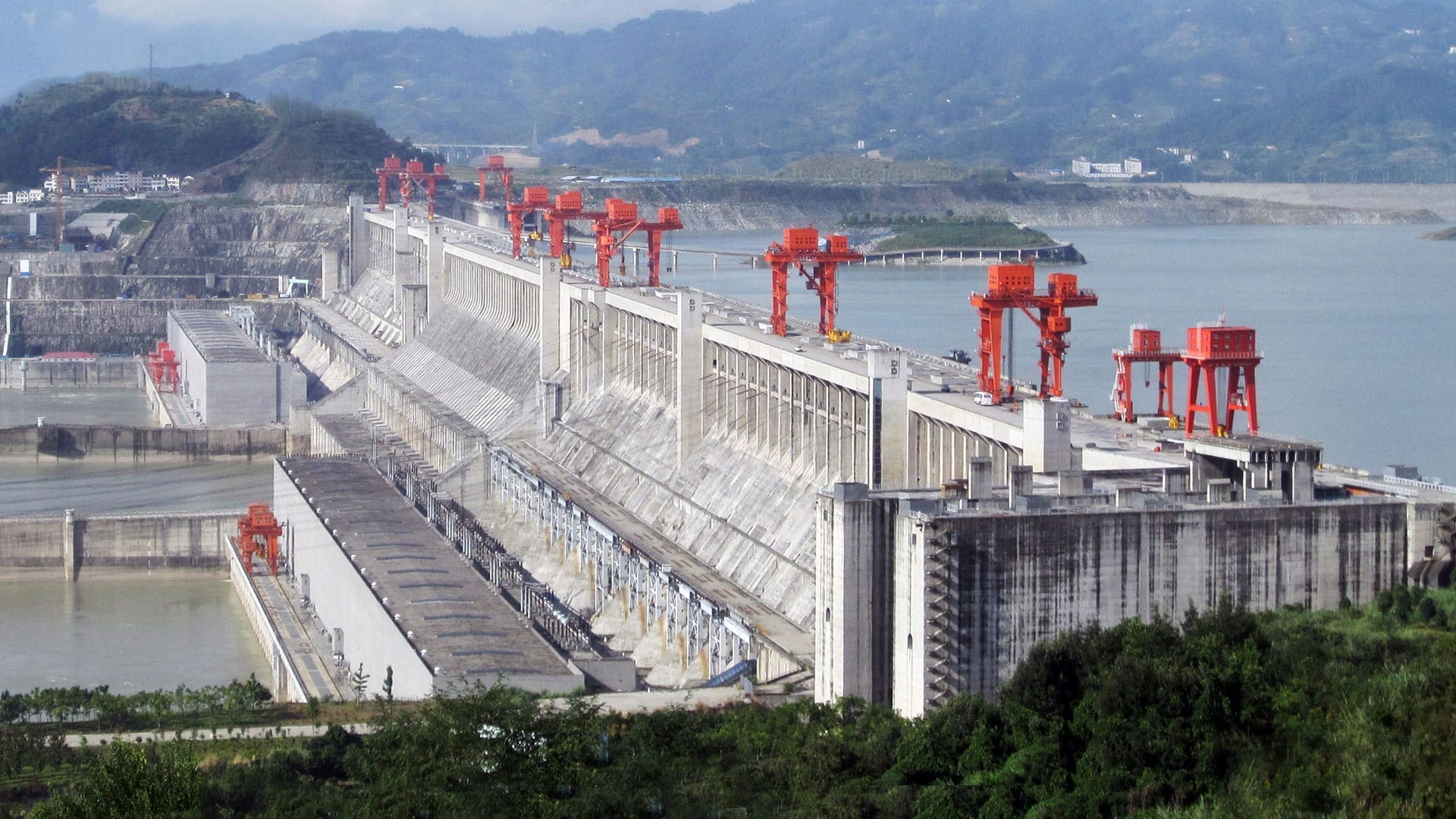
We can go even further back – to the seminal Three Gorges Dam hydropower project completed in 2012. Prior to this mega mega-project, China would often lean on imported engineering consultants for large-scale construction projects. Three Gorges broke this reliance and proved to the Chinese themselves that they could execute the world’s largest engineering projects, both domestically and independently. That confidence, plus the pool of trained engineers it produced, seeded the current generation of bridges, tunnels, airports, and expressways that now dominate the headlines.
A Boom For Bridger Buffs
For bridge buffs – a.k.a. ‘Bridgers’ – like myself, ever since I visited the epicentre of bridges in Osaka, Japan with its 808 stunning examples of engineering prowess, this is great news. Because recordbreaking is addictive. Like Sebastian Coe and Steve Ovett, who got addictive to breaking each other’s world 1500m record over the course of a few weeks in 1980, Chinese construction companies – and their counterparts in the UAE and Saudi Arabia – will be out there pushing each other to go higher and higher, ever bigger and better. Projects like the Zhangjinggao Yangtze River Bridge, which once complete will become the world’s longest suspension-span bridge at 2,300m.
But, unlike the old days of ‘let’s build the tallest dick substitute, these new megaprojects are all about connecting communities. And, in a world still riddled with geographical, economic and political divisions, surely that’s got to be a very, very good thing indeed.