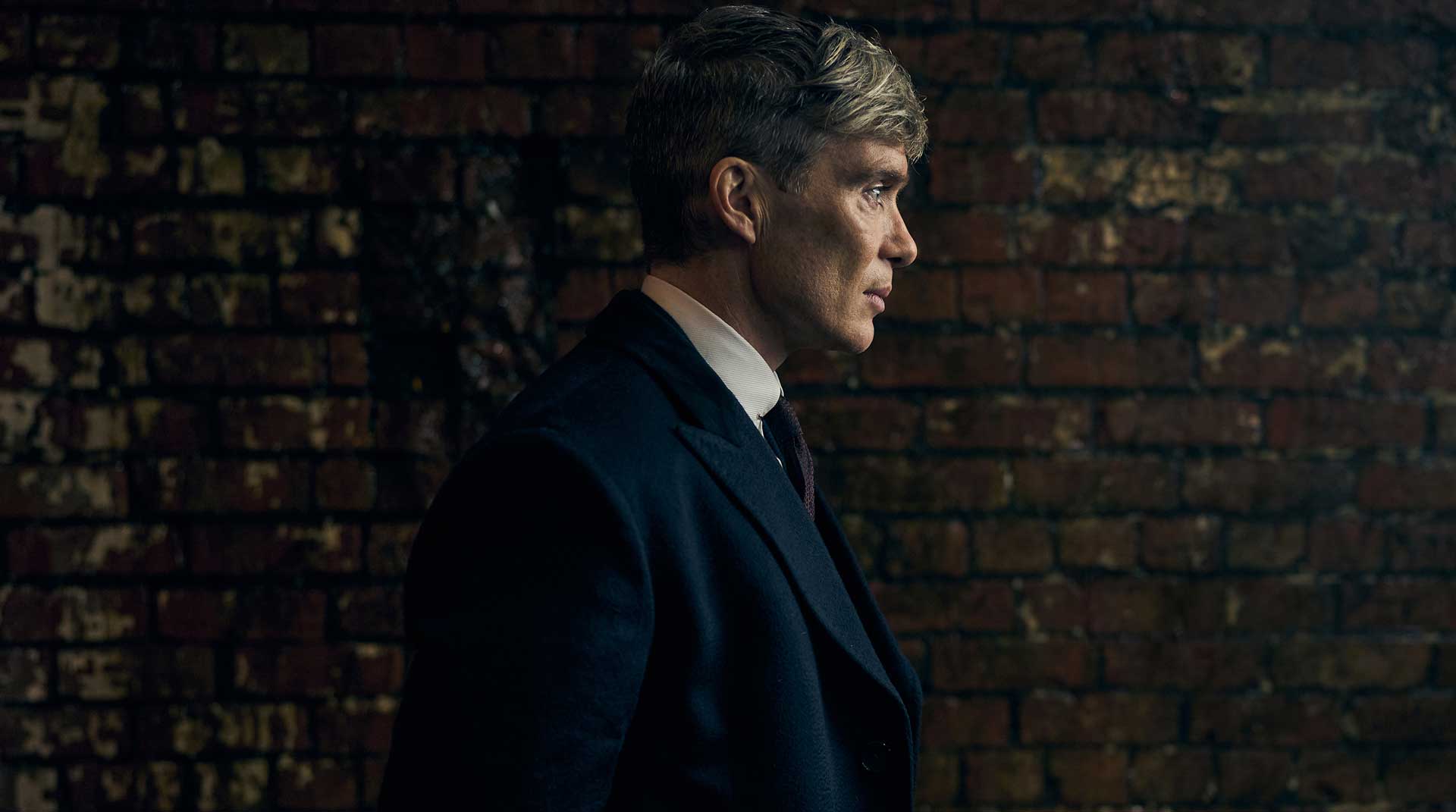
Cillian Murphy: The Creator Of An Icon
When Peaky Blinders first burst onto our screens back in 2013 we hadn’t seen anything like it for yonks. After a diet of glitzy shows like Madmen, OTT spectacles like Game of Thrones and beautifully costumed dramas like Boardwalk Empire – here came something genuinely gritty. Every scene seemed to feature belching smoke, thick fog, a grim yard or murky pub. And it was so stylish! – all slo-mo walks from characters wearing tailored 1920s suits, cheesecutter caps and THOSE haircuts. All to a carefully curated soundtrack featuring everything from the thunder of Birming-um’s own Black Sabbath through to the gloom-cool growl of Nick Cave. This show was a statement: Period pieces don’t have to be poncy erudite plays featuring landed ladies in lace gossiping over cups of tea, they can be about working-class men fighting towards the light.
But, best of all Peaky Blinders had Tommy Shelby. From the minute he rode in on a white horse in episode 1 we knew we were in for something special. In the story, Tommy was returning from selling stolen army guns to a Chinese gangster, but the choice of his transportation was something else. The sheer audacity of the director putting a Brummie ganglord on the same horse that kings like Napoleon, Washington and even Jesus rode was breathtaking. No pressure Cillian, but your character’s been set up as a king of kings – you’d better deliver!
Ah, but he did.
Cillian Murphy: The Creator Of An Icon
When Peaky Blinders first burst onto our screens back in 2013 we hadn’t seen anything like it for yonks. After a diet of glitzy shows like Madmen, OTT spectacles like Game of Thrones and beautifully costumed dramas like Boardwalk Empire – here came something genuinely gritty. Every scene seemed to feature belching smoke, thick fog, a grim yard or murky pub. And it was so stylish! – all slo-mo walks from characters wearing tailored 1920s suits, cheesecutter caps and THOSE haircuts. All to a carefully curated soundtrack featuring everything from the thunder of Birming-um’s own Black Sabbath through to the gloom-cool growl of Nick Cave. This show was a statement: Period pieces don’t have to be poncy erudite plays featuring landed ladies in lace gossiping over cups of tea, they can be about working-class men fighting towards the light.
Words By Cy Sinderson
Photography By Robert Viglasky/Netflix
But, best of all Peaky Blinders had Tommy Shelby. From the minute he rode in on a white horse in episode 1 we knew we were in for something special. In the story, Tommy was returning from selling stolen army guns to a Chinese gangster, but the choice of his transportation was something else. The sheer audacity of the director putting a Brummie ganglord on the same horse that kings like Napoleon, Washington and even Jesus rode was breathtaking. No pressure Cillian, but your character’s been set up as a king of kings – you’d better deliver!
Ah, but he did.
Years Of Turning Heads
Cillian Murphy had been around a long time before Peaky Blinders. Like Samuel J Jackson he was one of those actors who’d been around the traps several times before getting his big break. After playing the feral, obsessive Darren (Pig) in the play Disco Pigs, Cillian was called in to reprise his role in the 2001 movie. This performance caught director/writer Danny Boyle’s eye and he cast Cillian as Jim, the man waking up to a post-apocalyptic London in 28 Days Later – the movie that rebooted the ‘zombie’ genre for the next decade or so.
Murphy’s proven ability to carry a film and his fearless attitude to playing the dark side of our natures saw him snapped up by other directors like Christopher Nolan keen to create characters that stayed in the mind long after the credits rolled. Cillian’s take on the sinister Dr. Jonathan Crane and his disturbing alter ego The Scarecrow from Batman Begins were exactly the sort of combo to give even the bravest of us viewers nightmares. Cillian’s unctuous rendition of Dr. Crane’s façade of smug calm, intellectual authority and concerned professionalism set up the horror of his repulsive Scarecrow who traded in Room 101-like fear projection.
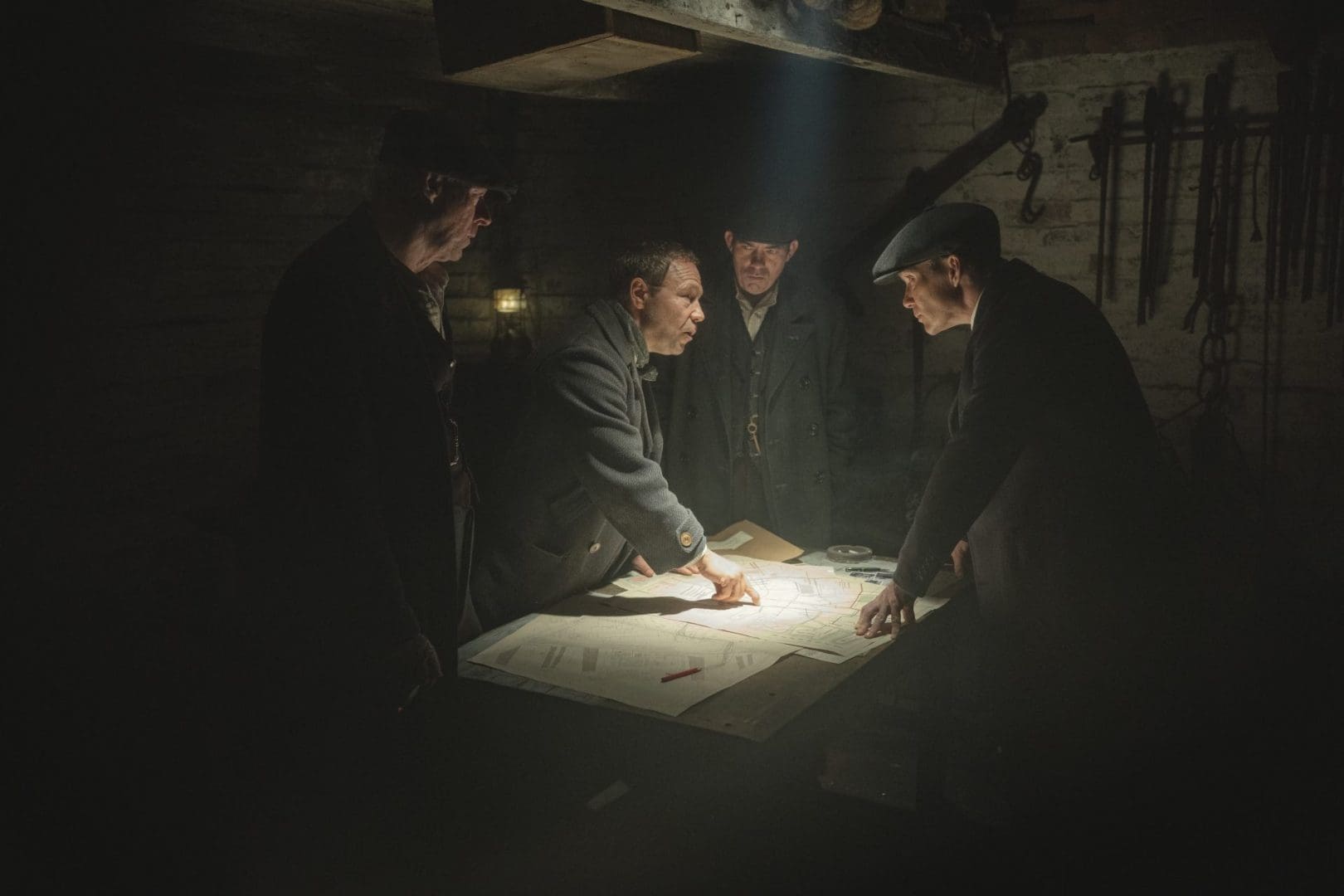
Nolan was so impressed with Murphy’s performance in Batman Begins he brought him back for both The Dark Knight and the Dark Knight Rises as well – making Cillian’s creation the only villain to appear in all three of Nolan’s Dark Knight Trilogy.
The cultural phenomenon of the Dark Knight movies made Cillian Murphy recognisable to mainstream audiences the world over. But he still needed an even more earthshattering performance to shift him in audiences’ minds from; ‘oh yeah, that guy again’ to; ‘Cillian’.
It was Steven Knight’s obsession with the power Cillian was able to project with his eyes that made Murphy his ‘first, only, and non-negotiable choice’ to play Tommy Shelby in his new show Peaky Blinders.
Crafting An Icon
To create Tommy Shelby, Cillian built his persona piece by piece. First came the walk – a physical therapist helped him develop the ‘Peaky Blinders strut,’ carrying wounds from the freshly completed World War One the character refused to acknowledge. Next came the voice; pitched lower than Murphy’s natural register, finding a tone that suggested authority without demanding it. Tommy Shelby wants to be obeyed. The ‘By order of the Peaky Blinders’ line became a meme because men heard in it something they craved: the sound of absolute authority delivered without raised voice or visible effort.
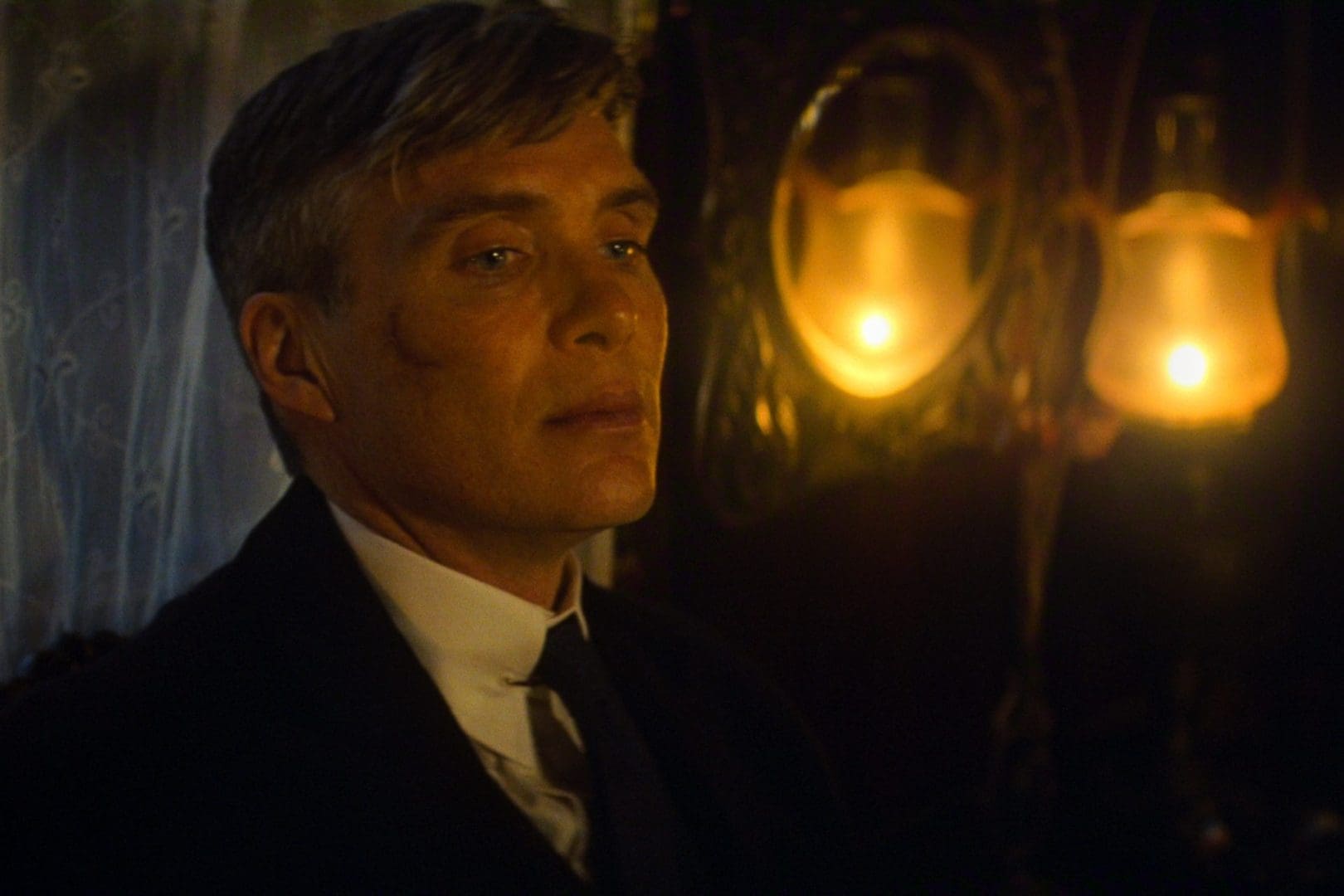
The cigarette smoking started out simply as something for Cillian to do with his hands while his eyes did the real work – then it became perhaps the strongest show for Tommy. The aggression with which he smoked revealed the passions his face declined to reveal.
Those eyes that got him the part in the first place were trickier. Early on Cillian did too much, possibly overacting the trauma with the twitches and visible shaking. But he learned that less is more and trained himself to ‘do nothing’ with his eyes. By the end, Tommy Shelby’s damage was visible only in what he refused to show. The stillness was the performance.
Then there was the famous wardrobe: the tweed cap, the razor-lined collar, the three-piece suits. Murphy and the costume designer built a visual language that was aspirational for the time. Not flashy. Not expensive. Just the uniform of a man who has figured out exactly who he is and sees no reason to vary.
The Two Kinds of Cool
Watch a few modern movies and it soon becomes obvious there are two distinct different types of male hero. On one side you have the fantasy – where the genetically gifted, superhuman figures of Arnold Schwarzenegger, Alan Ritchson, The Rock and Henry Cavill loom. These are men who look like they were carved from marble by Michelangelo, who occupy space like a threat and whose bodies are the spectacle before they even open their mouths.
It is impossible to become these men no matter how much we try. You can only watch them. They represent escape, not aspiration: ‘Cripes, just look at what that dude can do!’
On the other side you have the earned; the ordinary guy who becomes heroic purely through his actions, focus and willpower. This is the realm of guys like Steve McQueen, Clint Eastwood, Russell Crowe and now Cillian Murphy.
Steve McQueen was 5’9″ and slight, a reform school kid who learned to ride motorcycles in poverty and constructed his ‘King of Cool’ piece by piece with the Persol sunglasses, Harrington jacket and the quiet minimalist acting that suggested depths he never had to explain. Clint Eastwood was knocking around as a TV bit player until his 30s, a nobody who became a mythic ‘Nobody’ through silence and by implying violence rather than performing it. Russell Crowe’s Maximus was a simple farmer who became a gladiator while his Aubrey in Master and Commander inspired via competence and moral certainty, not physical dominance.
Cillian Murphy too is not a big guy. He’s only about 5’7” (170cm) and so slight he makes his similarly heighted peer Tom Cruise look positively burly. His face too can look almost feminine in certain lights. His natural voice is soft, his accent gentle Cork. He is not a physically dominant specimen at all. Yet he was also: ‘Tommy f**king Shelby!’
These were guys you could theoretically become. They don’t have colossal macho muscles or the imposing height we lack – they just have presence. Watching them we marvel: ‘Look at what he made of himself.’ Then we can say: ‘I could do that too.’
Creating A Man’s Man
Yet even that doesn’t fully explain Cillian’s deep appeal to ordinary men through his masterpiece of Tommy Shelby.
In the 21st century’s current jumbled morass of sexuality, where any sign of traditional male strength is greeted with fervent chants of ‘toxic masculinity!’, several actors have danced an impressive path through the swamp. They’ve managed to attract both fans of both sexes by projecting strength in some ways and an emotional availability in others. Pedro Pascal crying on red carpets. Ryan Gosling, the handsome man who pretends he doesn’t know it, performing feminine-adjacent gestures without fear. The handsome Ryan Reynolds who’s turned self-deprecating humour into a suite of successful businesses. They are ‘Kens’ in this current Barbie world, clever enough to both have the pretty girl on their arms – and to steal her movie too.
But where does that leave the hard men, the self-constructed, the emotionally unavailable? Murphy’s Tommy Shelby doesn’t cry on red carpets. He doesn’t do self-deprecation. He doesn’t like women in the accessible way – he uses them, loses them then mourns them in private. The character’s appeal is precisely that he doesn’t perform his emotions for audience approval.
A working-class World War I veteran with PTSD and an opium addiction, Shelby is not a superhero. a criminal empire through intelligence, restraint, and the strategic application of violence is not a superhero. Frequently beaten, often outmanoeuvred and ultimately destroyed by his own need for control. Men admire Tommy not because he wins – as he loses everything that really matters – but because his power is architectural. He built it, so he can just as easily knock it over too. That fragility is the whole point – a counterpoint to the artificial conceit of the ‘invincible’ superhero motif.
Signs that men had heard Cillian’s message were all over the internet; the memes, the quotes, the copycat haircuts, the phone wallpapers – often even in silhouette, so strong was Murphy’s characterisation. The self-appointed masculinity coaches heard it too, turning Tommy Shelby into a ‘sigma male’ icon, some sort of self-help guru for men who believe competence and emotional unavailability are the same thing.
But they’re missing some of Cillian’s subtlety: the tragedy. Tommy Shelby’s control destroys everyone he loves so his arc is not about empowerment; it’s a warning of disaster. Murphy knows this himself; he has said the character is ‘defining’ but not ‘definitive’. He has played other characters, will play more. But he also knows that for a certain generation of men, he will always be Tommy Shelby. The construction was too complete.
Winning An Oscar
Then there was Oppenheimer. Director Christopher Nolan bypassed his usual go-to lead actor Christian Bale to give the titular role to the man who’s surpassed him: Cillian Murphy. Nolan needed an actor who could withstand a three-hour relentless, introspective close-up. Who could embody genius, ambition, guilt and charisma – often just with his eyes and voice.
Hm, sounds like a job for the guy who created Tommy Shelby! And that’s what Oppenheimer was – a theoretical physicist rather than gangster, but who knew more than everyone else, who suffered for his knowledge and who couldn’t connect his intelligence to his emotions. An intellectual ‘tortured genius’ rather than a street-level one. Tommy Shelby in a 1940s suit.
Murphy played it perfectly delivering J. Robert Oppenheimer with the same technical precision he brought to Tommy Shelby: the walk, the voice, the eyes that suggested depths of guilt and ambition without ever quite revealing them. So well in fact he picked up the Best Actor Oscar alongside six other wins for Oppenheimer at the 2024 Academy Awards. Whether the film itself deserved the honour is debatable; a dense, talky, three-hour, nonlinear structure is absolutely not for everyone – including me. But we’ve seen this story before; Ordinary People, Crash, Shakespeare in Love and The English Patient have won Best Picture Oscars before too, yet no one talks about them anymore. Oppenheimer may or may not stand the test of time, we’ll have to wait and see.
Relax, Your Work Is Done
However, we do know one thing: Tommy Shelby who, like Frank Bullitt, the Man With No Name and Maximus Decimus Meridius, will be with us forever because he’s iconic. He speaks to us in a language far beyond acting craft or exorbitant marketing budgets that makes committee-selected prizes irrelevant, we know for ourselves he’s a great character – we don’t need any official stamp of approval.
Cillian Murphy created Tommy Shelby and, for that alone, he will live on in legend – for all time. Winning his Oppenheimer Oscar will give him untold freedoms to create whatever characters he wants in future. We don’t necessarily need another Tommy Shelby clone; he’s already given us that. But if Cillian can create yet another character that swims against the tide of social acceptance – we could certainly use that!