
Homegrown comes home and Hamilton delivers the goods
Seven stages, a marathon of Kiwi music, a dead camera, a missing car and one very sore photographer. Homegrown’s return to Hamilton was never going to be a quiet day out.
For someone who has spent 45 years photographing live music in New Zealand, it felt almost absurd that this was my first Homegrown.
Still, there was a fitting symmetry to it. As I put the finishing touches on a book built around decades of concert photography, reviews and interviews, Homegrown 2026 felt like the right event to help close the circle. My first festival photographs were taken back in 1981 at Raw Rock in Hastings, a one-day gathering from a different era, smaller, rougher and gloriously local, with acts like Screaming Meemees, Blam Blam Blam and The Newmatics. Homegrown, returning to Hamilton after 18 years in Wellington, felt like the giant modern descendant of those scrappy beginnings. Only now the beast had seven stages, a huge crowd, and enough artists to require military planning and the knees of a 22-year-old.
A festival that demands commitment
My wife had been enlisted as backup, a second camera had been hired, and we arrived early to do a full lap of the site before the first rush began. The plan was simple in theory and ridiculous in practice: map the stages, identify the likely traffic bottlenecks, and somehow cover as much of the lineup as possible before the evening schedule turned into organised mayhem.
By the end of the day I had clocked close to 30,000 steps. Considering my usual average is closer to 3,000, this was less a music festival than a full-body endurance test with guitar solos.
We opened at the City Stage with the Jordan Luck Band, and there are worse ways to begin a long day than with a pile of genuine Kiwi classics fronted by a man who still attacks the stage like it owes him rent. Jordan Luck was in his element, bouncing through the set with the sort of swagger that turns nostalgia into something alive.
From there it was across to the Park Stage for REI, one of the day’s early standouts. Performing largely in te reo Māori, he brought a modern, self-assured energy that felt both intimate and expansive. It was a reminder that Homegrown works best when it reflects not just New Zealand’s past, but also its changing present.
Written By Wolves on The Rock Stage changed the temperature completely. Loud, punchy and cinematic, they hit with serious force. They were one of those bands that make you wonder why you had not seen them earlier, then make sure you will not forget them again.
Seven stages, countless choices
One of the strengths of Homegrown is also one of its hazards: there is always something happening somewhere else.
On the way to David Dallas we stopped at the Dance Stage, a compact and vibrant corner of the festival with scaffold seating and a central breakdance arena. It was one of the day’s most uplifting spaces, packed with young performers giving everything they had while family and friends cheered them on. It felt less like a sideshow and more like a snapshot of local culture renewing itself in real time.
David Dallas on the Fusion Stage was all authority. He remains one of the sharpest and most commanding figures in New Zealand hip-hop, and his set had the confidence of an artist with serious depth in the catalogue. Racing followed on The Rock Stage, and live they proved more muscular than their radio reputation might suggest, turning recognisable songs into a sharper-edged proposition.
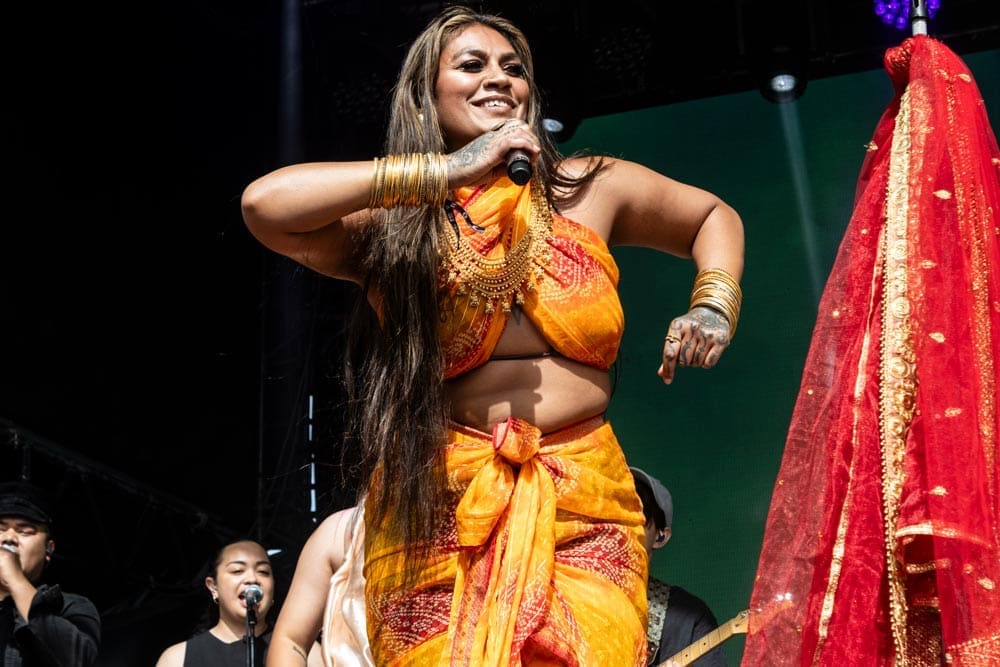
Back on the City Stage, Stellar* rolled out a set full of songs that have long since graduated into the local canon. Then it was off to the Park Stage for Katchafire, whose hometown connection added extra warmth to an already crowd-pleasing reggae set. From there the pace accelerated. The Datsuns delivered their usual blast of Waikato-bred garage-rock snarl, Aaradhna brought smoky soul and emotional class to the Fusion Stage, and The Black Seeds turned the City Stage into a giant groove machine.
By now, somehow, it was still only about 4pm.
That felt like a practical joke.
Painkillers, pot smoke and pop surprises
At that point I was operating on hope, prayer and half a dozen heavy-duty painkillers. Everywhere we went the smell of marijuana drifted through the air like an unofficial sponsor. Hamilton had become one giant herbal weather front.
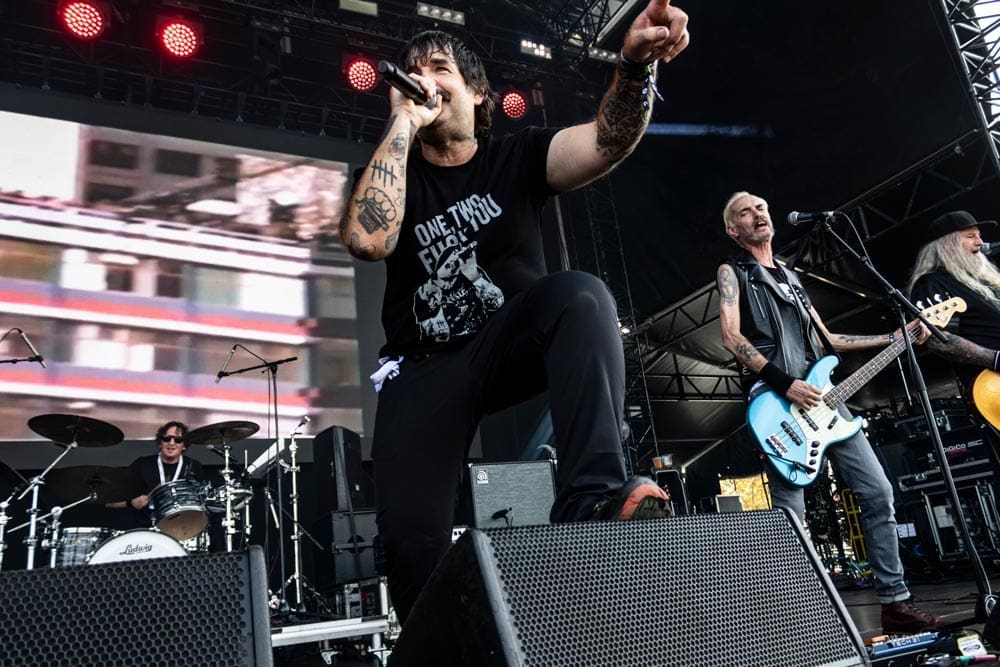
Sons of Zion kept the Park Stage swaying, while Head Like A Hole on The Rock Stage removed all subtlety from the afternoon with a set that hit like a demolition order. Frontman Booga Beazley remains one of the great uncompromising figures of Kiwi hard rock, and the band thundered through their slot with all the grace of a pub brawl in steel-capped boots.
Ladi6 brought a complete change of mood on the Fusion Stage, all sleek control and cool intensity, before Fly My Pretties assembled on the City Stage in their current all-star form, still sounding like a musical collective built to turn abundance into atmosphere.
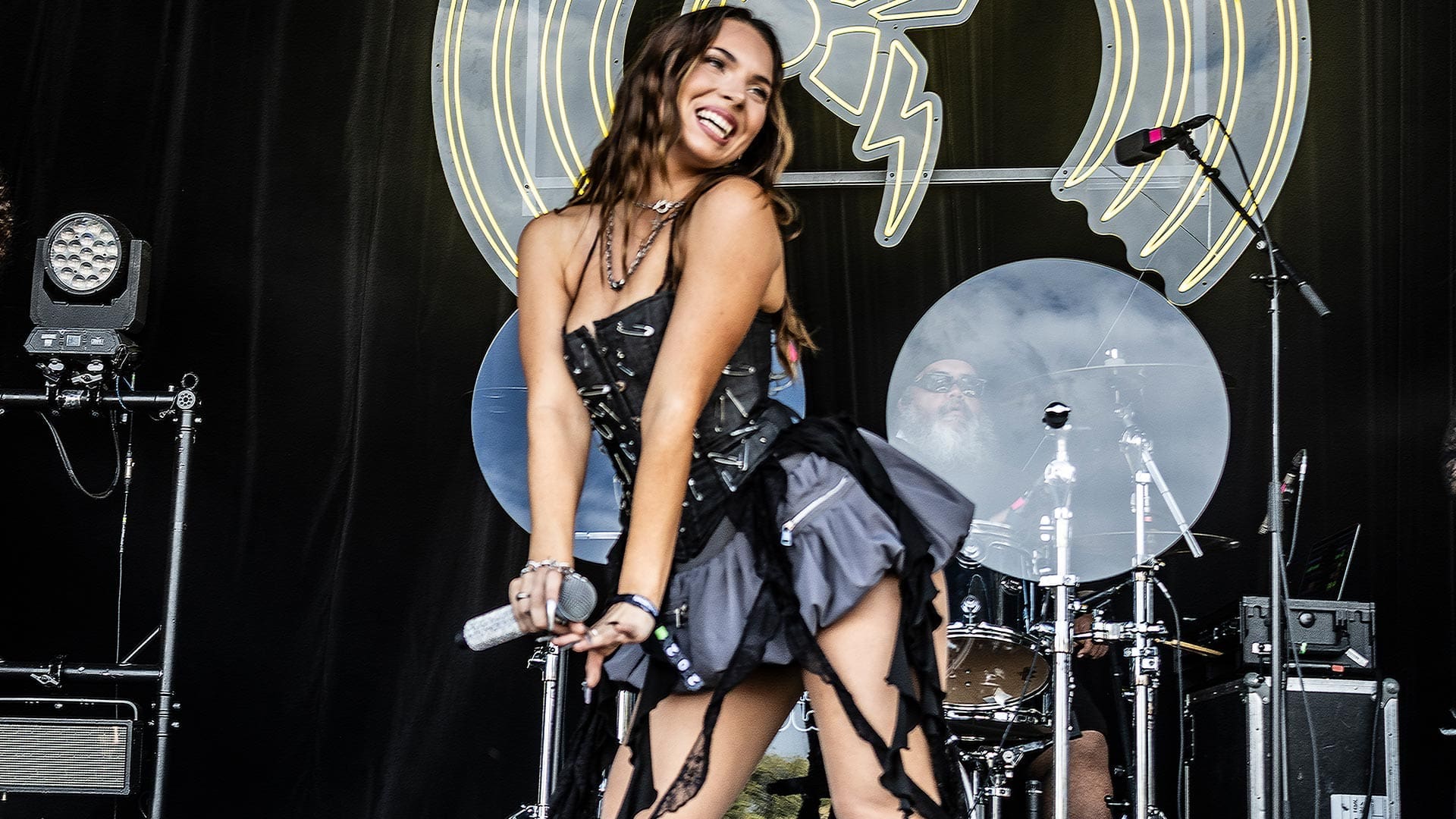
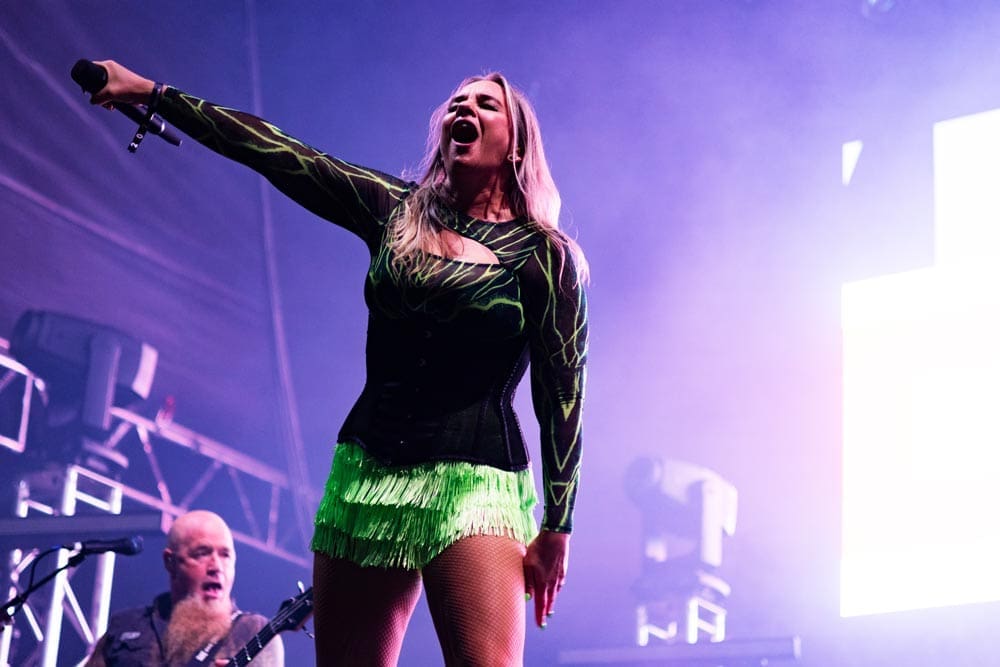
Corella on the Park Stage were another pleasant discovery, all polished summer groove and easy-flowing roots-pop energy. Then, between the Park Stage and The Rock Stage, we stopped at the new Nexus Stage and caught Verity, one of the day’s most intriguing younger artists. Performing in a corset-and-underwear stage outfit with dancers and a live band, she delivered a tightly constructed set of pop songs drawn from an upcoming album about her ex, including the unreleased single “Casual”. The tone was witty, cutting and emotionally direct. It had a faint Taylor Swift flavour, but with enough local identity and bite to suggest she could carve out a lane of her own. Most of the songs led to one unavoidable conclusion: her ex-boyfriend sounds like an absolute muppet.
The crowd thickens and the wheels come off
Savage was one act we simply could not get near. The crowd was enormous and any hope of proper photography disappeared in the crush. Sometimes the festival wins. Shepherds Reign on The Rock Stage, however, made a serious impression, bringing a thunderous Polynesian metal presence that felt genuinely distinctive and proudly grounded in Pacific identity.
Hello Sailor then turned the City Stage into a mass singalong. Even in its current form, with only one original member remaining, the songs still carried the spirit and songwriting stamp of Graham Brazier and Dave McArtney. It was one of those moments where the audience does not just watch, it joins in out of obligation and affection.
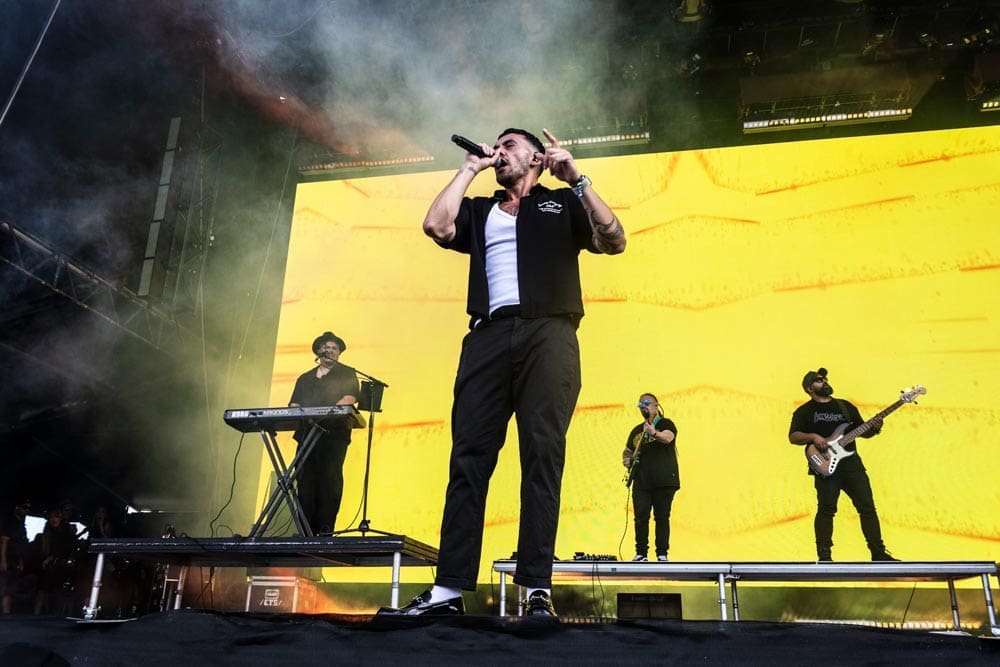
Villainy followed with a sharp, radio-hardened rock set, but by then the true scale of the site had fully asserted itself. The distances were longer than they looked, the crowd density was increasing, and the dream of neatly hopping from L.A.B to Devilskin to Six60 and back to Blindspott was collapsing under the weight of reality.
Then came the equipment disaster. The hired camera gave up the ghost around 4pm, which meant choices suddenly became harsher and far less artistic. We took a breather at the Dance Stage and watched more breakdance action, trying to regroup. Then I made the fateful decision to head out to the car as the wind began to pick up.
The car, however, had developed other plans.
A vanished car and a fiery recovery
We had parked outside the venue. I had seen the no-parking signs. I had simply chosen not to believe they were relevant to us, which is a fine philosophy right up until your vehicle disappears.
Sure enough, the car was gone.
At the information counter I was told it had been towed, which, on reflection, was exactly what the sign had promised. There are moments in life when you must simply admire the precision of your own stupidity.
Back inside, Devilskin hit the stage with pyrotechnics and brute force, and suddenly life seemed warmer in every sense. Jennie Skulander led from the front as the band pounded out a set full of songs that have become modern Kiwi rock staples. They were fierce, tight and fully committed, exactly what was needed as evening dropped over the site.
At that point we made the call to walk home. Thankfully we live just across the bridge from Claudelands, but after the day we had already had, it felt less like a stroll and more like a heroic retreat from a mythic battlefield. By the time we crossed the bridge and bought KFC, I had found my second wind. Back home, I changed into warmer clothes, borrowed my wife’s car, and headed back out.
A ridiculous decision, perhaps.
Also the correct one.
Blindspott brings it home
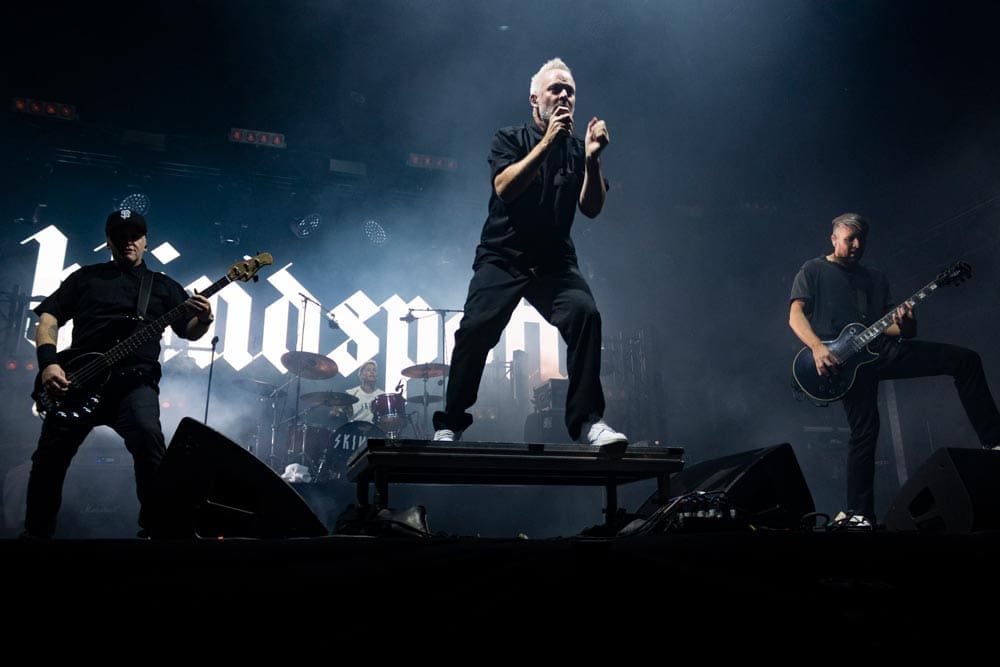
Blindspott rattled my cage.
They were always my pick for the final images I wanted for the book, and catching the last half hour of their set proved the effort was worth it. They were immense, the perfect closing blast to a huge day, and I got the image I had come for.
As for the missing car, the final twist turned out to be unexpectedly generous. It had not been impounded at all. The organisers had simply had it moved as a courtesy to another street near the stadium. On Sunday morning we walked across and picked it up with no fee attached. Towed, technically. Punished, not really. A merciful ending to a self-inflicted subplot.
Homegrown 2026 was big, chaotic, exhausting and absolutely worth it. The lineup was immense, the atmosphere was strong, and Hamilton more than held its own as the festival’s returning home. Even with the dead camera, the sore legs, the impossible scheduling and the briefly missing vehicle, I would not have missed it for anything.
If you made it this year, good on you for supporting local music.
If you did not, put it in the diary for next year.