Improving Health & Safety with AI to Compliment Existing Programmes, People and Teams
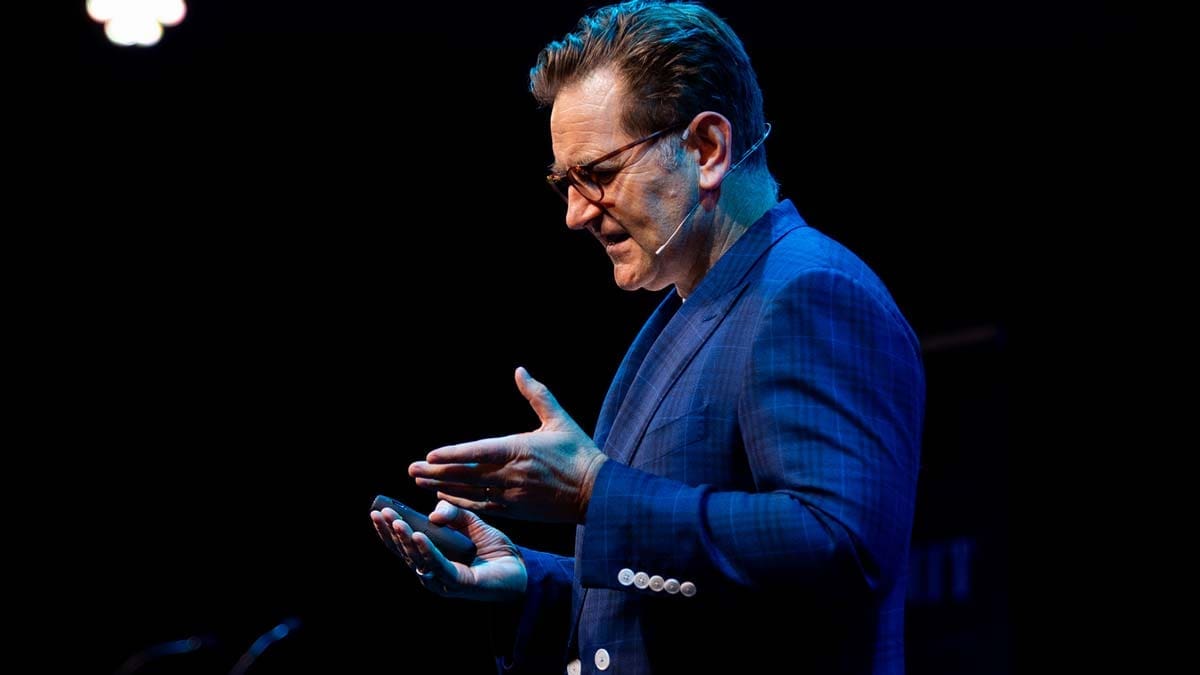
Bede Cammock-Elliott, Founder, seeo.ai & seedigital
Since 2003, seedigital has become a world-leading interactive remote video monitoring company, protecting over $5.5 billion worth of assets for some of New Zealand’s most iconic brands and organisations through integrated CCTV, intrusion detection, audio, and access control technologies.
Bede Cammock-Elliott’s keynote is a blunt reminder that AI in the workplace is not just about productivity, it is about whether people get to go home alive at the end of a shift. As founder of Scio, a computer vision health and safety platform, he frames his mission in three words: saving lives, limbs, and liability.
Bede starts with the legal and moral baseline. Using the Port of Auckland / Tony Gibson prosecution as a reference point, he highlights three obligations every business should take seriously: independently verifying “work as done” rather than just “work as imagined”, demonstrating ongoing attempts to improve, and maintaining continuous assurance. Policies, SOPs and beautifully written risk registers do not count if they are not reflected in what is actually happening on the floor.
He then challenges the traditional “safety pyramid” idea that lots of minor incidents slowly stack up into a serious one. In reality, when you mix people, forklifts, cranes and trucks, you can jump straight from an ordinary day to a fatality in a single moment. Scio is aimed at that base layer of near-miss events that normally go unseen and unreported. By using the CCTV cameras businesses already own, Scio detects when critical controls are being breached in real time.
The origin story is stark. Bede also runs C-Digital, a remote video monitoring company that protects around $5.5 billion in assets each night. One Friday, at a customer site, a 16-year-old climbed on a forklift to join in what had become a regular “racing” culture. There was a makeshift track, a cardboard leaderboard, and peer pressure. The teenager lasted 40 seconds before rolling the forklift and dying instantly. Months later, the CEO of that company sat in front of Bede in tears and asked, “How did I not know?” Scio was created as an answer to that question.
Bede walks the audience through how most health and safety is still done. A critical risk is identified, controls are defined (for example, “keep three metres between pedestrians and forklifts”), someone might stand with a clipboard for a few hours to observe, incident data is collected when something goes wrong, and the cycle repeats. With computer vision and AI, that loop looks very different. Critical risks and controls are still defined, but from there Scio continuously verifies whether those controls are being followed, surfaces near-miss events, feeds them into improvement tools and coaching, and provides ongoing assurance and data insights back to management.
He illustrates this with real footage from client sites. Truck loading zones where exclusion areas are ignored and pedestrians walk under curtains while trucks are moving. People and forklifts mixing in zones that were supposed to be separation only. A worker entering a shipping container and a forklift following, trapping them in a crush zone. Staff climbing on the outside of expensive guarded walkways instead of using them. Someone sitting on a metal ramp between ground and container. Workers “skitching” on forklifts for a laugh. These are the kinds of moments that never make it into incident logs but are exactly where fatalities begin.
Under the hood, Scio uses neural networks trained for common scenarios such as people and forklifts, and it integrates with other data sources like conveyor and robot guarding systems. The platform can recognise when a packing robot is live while a person is inside a guarded area, then trigger real-time responses. Bede explains that once you turn this on you move from “not knowing” to “knowing too much”, so Scio uses a collection of AI agents in the background to help customers focus on what matters.
In his product walkthrough, he shows safety scores by site and control, an “Ask Scio” feature that answers questions like “where should I focus this week?”, event dashboards, and the ability to query how often a specific risky behaviour has occurred in the last 30 days. The system lets H&S leaders turn events into annotated clips, build video-based toolbox talks via an integration with Nobe, log who attended, collect feedback and track follow-up actions. On the assurance side, Scio charts event trends, compares facilities, and shows the relationship between coaching activity and event rates, with exportable reports for management.
The most powerful slide is not technical. It shows one customer’s near-miss events over time. On one side of a dotted line is a national operations manager who never really engaged with the platform. Event numbers stayed high. After he left, a new manager embedded Scio into daily operations, ran coaching, and involved staff. The event rate drops off a cliff. Another customer saw 45 near-miss events in the first three days, and estimated that about 15 of them could have resulted in a death if a person had been slightly closer. For Bede, this proves that success is “10 percent technology and 90 percent change leadership”.
He finishes with some simple principles. Engage workers at every stage rather than imposing a system on them. Build the tool into daily standups and routines, not as an occasional project. Focus on changing the work design – layouts, guarding, traffic flows, procedures – instead of just blaming or retraining workers. Integrate with other data sources so health and safety is part of the wider operational picture, not a silo. AI, in his framing, is not there to catch people out, it is there to stop you ever having to sit across from a grieving family and say, “I did not know.”
Action points:
Revisit your legal and moral obligations
Ensure you can demonstrate independent verification of “work as done”, evidence of attempts to improve controls, and ongoing assurance, rather than relying only on policies and manuals.
Map your critical risks involving people and plant
List where people interact with forklifts, trucks, cranes, robots and conveyors. Be explicit about the controls you believe keep them safe, such as exclusion zones or barriers.
Audit the gap between work imagined and work done
Spend time on the floor observing, talking with workers and reviewing video. Assume there is a gap between your procedures and reality, and look for it deliberately.
Turn existing CCTV into a safety asset
Explore computer vision solutions that can analyse your current cameras for near misses, especially in high-risk zones, instead of treating CCTV as something you check only after an incident.
Assign a visible change leader
Make one senior person accountable for embedding AI-assisted safety, reading the data, running coaching and reporting back. The difference between “do nothing” and “lean in” leadership is dramatic.
Integrate safety data with operations
Connect near-miss analytics with machine lockout logs, maintenance records, incident reports and training completions so you can see cause and effect across systems, not in isolation.
Track proactive KPIs, not just lagging ones
Add near-miss rates, safety scores and coaching activity to your regular dashboards, alongside lost-time injuries and claims data. Treat near-miss reduction as a core performance metric.
Design out risk, instead of only training it away
Use what you learn to redesign layouts, change traffic routes, improve guarding and adjust workflows so the safest behaviour becomes the easiest behaviour for frontline staff.
Involve workers in solution design
Ask frontline teams how they would fix the risks the system highlights. Co-designing responses builds trust and makes it far more likely that new controls will actually be followed.