
Rebuilding Our Most Famous Brand
So, Scott ‘Razor’ Robertson has been sacked as All Black coach. Wow, that doesn’t happen very often. In fact, this was a first. Sure, previous coaches have not had their contracts renewed when they would obviously have liked to have continued; Ian Foster, John Mitchell and Wayne Smith being recent examples. But all those prior terminations were at the end of agreed tenures, not bang smack in the middle of a four-year contract. So we are in green fields indeed.
Yet we shouldn’t really be surprised, firing a coach is completely normal in professional sport. Football, American football, even the NRL, do it all the time. If a team is in an extended trough of losses, often the best medicine is to fire the coach and get in another one. Usually it works wonders and doesn’t necessarily mean the previous coach wasn’t any good, it was just that the chemistry wasn’t there between the coach and that particular group of players. Like a failed relationship, things just didn’t work out spiffingly.
What’s really surprising is that it’s taken 30 years for rugby union to fire a pro coach here. Previously there seemed to be an uneasy halfway house between the matey old school amateur ethos of standing by your mate through thick and thin – and the kind of ruthless decisionmaking you see in other pro sports. Until now, if a coach seemed to be struggling like Ian Foster was, the Union wouldn’t get rid of him, they’d get in some extra ‘help’ like Joe Schmidt to ‘assist’ with the planning while Ian fronted for the media.
A New Broom
However the arrival of David Kirk as Chair of the NZ Rugby Board has changed all that – along with the dreaded ‘learnings’ from the previous administration’s bungling of Foster’s term. As a former World Cup-winning All Black captain and successful businessman, Kirk is the perfect man for the job; he understands both the players’ needs and those of running a successful business/club. Upon reviewing the 2025 season and getting feedback from the current players, he wasted no time in biting the bullet and sacking the coach.
But why sack Razor? He won 20 out of 27 Tests! That’s a win percentage of 74%, better than Foster, Smith and Laurie Mains and they weren’t given the boot. In fact, his percentage is close to the All Blacks’ overall win percentage of 76.7% over 120 odd years!
A Great Team In Name Only
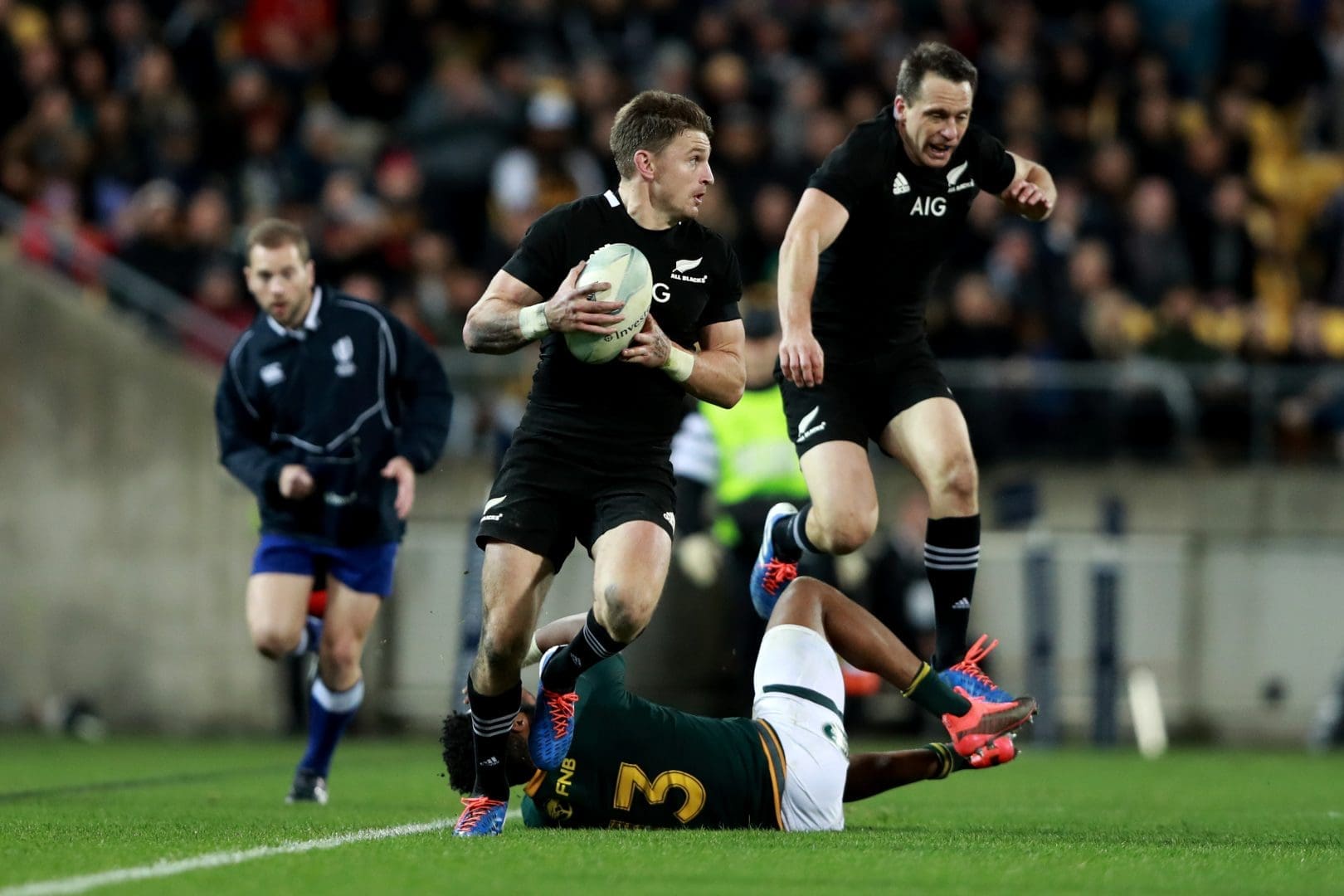
Brand damage is why Razor had to go. It wasn’t the losses per se, it was how they were losing. Four losses in a row to the Springboks, losses to Argentina both home and away (for the first time) including a record score by them, yet another loss to the Boks which doubled as the worst ever defeat for the ABs (43-10) here in Wellington(!) and an absolutely awful defeat to the English at Twickenham (33-19).
Sure, the All Blacks had lost before, but never so badly, so regularly and often without even firing a shot in the second half, traditionally the period of a match owned by the ABs in yesteryear. And we’d never seen the All Blacks give up like they did in Wellington or have an English opponent lick his lips in contempt during the haka. Obviously teams no longer feared New Zealand and were turning up and expecting to beat them. And that’s not good if your brand is largely about being ‘invincible’.
The highest win ratio in sport
Some international sporting teams are virtually synonymous with victory like the Brazilian football, Australian men’s Test cricket and U.S. basketball teams. There were periods when these teams were nigh on invincible; the U.S. Women’s basketball team won 50 matches straight over 10 years, twice the Aussie cricketers won 16 Tests in a row and the Brazilians remained undefeated for 35 consecutive games between 1993 and 1996.
But all of these teams have also had their struggles; though Brazil has already qualified for the 2026 World Cup, they did so with their lowest ever points tally. The Aussie Test cricket side lost more than they won in 2008/09 and the U.S. Women’s basketball team has even dropped games to Belgium, Serbia and Australia over the past three years.
Yet there is one international sporting team out there that doesn’t have highs and lows. Just a steady winning percentage of just shy of 80% – and it has held it not for a year, 10 years, 20 years, 50 years but for over 120 years. The All Blacks won 11 of 14 tests in their first decade, the 1900s, for a winning percentage of 78.57% – virtually identical to what it is today. Then for the next century or so they have kept that percentage. Even the measly 10 wins from 13 matches garnered during Razor’s ‘miserable’ 2025 season stacks up to this percentage at 76.9%.
The Power of Brand Excellence
How on Earth did the All Blacks do it? They built a brand of excellence, consistency and, above all, of winning that had the Test half won before the teams even took to the field.
Former rugby internationals talked about being irrationally intimidated upon seeing the black jerseys over on the other side of the halfway line before a match. All Black great Dan Carter even admitted that putting on his black jersey was like putting on a suit of armour. Not due to its defensive qualities but because the legacy of achievements by your precursors seeped into your soul and allowed you to perform feats beyond your normal abilities.
Wallaby Michael Lynagh said it was as much a mental battle as physical. Playing the All Blacks was like ‘climbing a mountain that keeps growing’. Springbok John Smit agreed, saying that in order to beat the All Blacks, ‘you had to play the perfect game… and even that might not be enough.’ He said that even if you were ahead with only a few minutes to go, you couldn’t relax as the All Blacks would always ‘find a way’ to win. Irish legend Brian O’Driscoll described the feeling as ‘a tough day at the office… you’re chasing shadows.’ He said the All Blacks always seemed to be able to absorb pressure and then; ‘bang, bang, bang – 14 points and the game is over.’
For decades, the All Blacks weren’t just a team you played; they were a psychological issue you had to overcome. The men in the infamous Black Jerseys facing you weren’t just sportsmen or athletes, they were devout disciples of a mystical cult that seemed as difficult to defeat as Shaolin Monks. The fierce haka; the sinister black uniforms; the unsmiling faces; the hive-minded forward packs that hunted as one; the unhalting production line of unearthly backline talent; but above all the world’s greatest win ratio of any sport – it all added up to a mystical opponent that scarcely seemed human.
Add in the fact the team came from an obscure mist-covered corner of the Earth otherwise known only for sheep, peculiar musical acts and the odd mountaineer, and a myth was born. Like the Ghurkas from Nepal, the French Foreign Legion and the 300 (Hippeis) of Sparta, the All Blacks were a feared elite force with its own murky laws and internal traditions. Legends sprang up about the dark deeds of men like Kevin Skinner, Colin Meads and Buck Shelford who were willing to do what was necessary to ensure the treasured All Black legend lived on.
The Yardstick for Excellence
But possibly the most astonishing thing about the All Blacks has been their consistency in excellence. Not that quality is exclusive to New Zealand, Rugby has always had great players all over the world and throughout time, names like Bennie Osler, John Eales, Brian O’Driscoll and Pablo Montera come easily to mind. Yet the All Blacks always seem to have had more than their fair share of legends, and not just great players but guys who shaped the game too. Other nations would have great periods like Wales in the 1970s, Australia in the 1990s, England in the early 2000s and South Africa in the 1920s and especially over the past decade. Yet New Zealand have always been up there in quality, if not the absolute best, then breathing on the neck of the champions. For over a century.
So the All Blacks have never had to worry about replacing the irreplaceable – oh no, what will we do once Billy Stead or Dave Gallaher retire? No worries, we’ve got Mark Nicholls and Maurice Brownlie to replace them. Then we’ll get Ron Jarden and Kevin Skinner to sub in. Once they’re done; Don Clarke and Colin Meads are ready to go; then Stu Wilson and Murray Mexted; Jonah Lomu and Zinzan Brooke; Dan Carter and Richie McCaw; Beauden Barrett and Brodie Retallick. On and on and on and on and on and on. And those are just the über legends, around them was a scarcely comprehensible list of ball-playing freaks like Bryan Williams, Michael Jones, Jeff Wilson, Christian Cullen and Ben Smith amongst many, many others just to fill out the team.
It was this astonishing consistency that saw the All Blacks used as a yardstick – especially by the Springboks – with which to measure their own ability. If you only lost narrowly, drew or – whisper it now – actually defeated the mighty Men in Black then you must really be a good team yourself. Plays were written about those magical days when a rugby team actually managed to topple the All Blacks. In Ireland they still talk about the 1978 Munster team that beat the All Blacks almost 40 years before the national team managed it. In Wales they still toast the 1953 team – the last side to do it – and meanwhile other Tier One nations like Scotland STILL haven’t managed to snatch the All Blacks’ cap, 130 years later.
Now? Well, just about everyone has beaten the Men In Black. Nations like Argentina and Ireland have not only broken their long-awaited ducks but regularly beat the All Blacks. After decade upon decade of frustration and heartbreak, these teams now run onto the field fully expecting to win against New Zealand. And, should they fail, then questions are asked of the captain and coach rather than of the Lord Above.
Can David Kirk And A New Coach Rebuild The Broken Brand?
Of course they can. Despite New Zealand’s small population and lack of money, we still churn out quality players by the dozen. The difference being, they have not had a high-functioning team with a clear gameplan/attitude to operate in for some time. Fix that and you’re halfway there. Then there’s the tradition of innovation that seems to have become overlooked in recent times…
Traditionally the All Blacks have been innovators. Pre jet aircraft it took ages to get anywhere – or get any news – so there wasn’t anyone else to copy. Therefore you ended up developing your own unique styles of play. One of these early innovations was the 2-3-2 scrum which left a man over to play as a wing forward – the great grandaddy of the openside flanker. When the All Blacks toured the UK in 1905 and in 1924 the quick heel ball from the 2-3-2 scrum and harassment of the opposing flyhalf by our wing forward were major influences in the invincible nature of both sides. These innovations were so effective England wasted little time in outlawing them both with their 3-4-1 scrum becoming universally adopted in 1931.
In the pre-professional 1980s the All Blacks decided to try and get an edge in fitness by calling in Auckland trainer Jim Blair who introduced new concepts such as meshing fitness and ball-handling skills at training. He also brought in a level of intensity to training certainly unlike most other ‘amateur’ sports of the 1980s.
Innovation was also a strong strand of John Mitchell’s brief tenure in the early 2000s. He first introduced the ‘Triple Threat’ mantra of making the All Blacks equally adept at all three facts of the game; running, passing and kicking – as exemplified by the playmaking freak of that era, Carlos Spencer. Though it was not a new concept, Mitchell also bucked the possession-based focus of his precursors for a position-based kicking game, which was further refined by his successors Graham Henry and Wayne Smith. The latter also perfected the ‘Total Football’ style of play where every player was expected to be able to put a teammate into a gap with a well-executed pass instead of only designated playmakers as personified by stout forwards such as Joe Moody and Brodie Retallick.
Back To The Future
The 1905 Originals shocked the Brits with their brazen abilities, innovation, intensity – and, above all, winning record. England hadn’t expected anywhere near as much fight from mere colonials. The Brits were better prepared in 1924 when the All Blacks came again, yet the Invincibles left their shores going even one better – undefeated.
This set the standard by which the All Blacks are judged even today, 100 years later. Invincibility. Former AB coach John Hart talked about the difficulty of meeting such standards set by earlier teams, ‘the winning ethos was so fundamental to the culture and had been ingrained for years… the belief by players in what happened before. Winning was something that was an absolute focus.’ Little wonder Hart was so gutted by his team’s early exit at the 1999 World Cup, he had tried desperately to live up to those standards and come up a little short, his largely positive legacy cruelly tarnished.
The All Blacks’ legacy is a tad tarnished at the moment – but it is only inaction that will stop it becoming all lustrous again. David Kirk’s speedy jettisoning of Razor Robertson is a huge step in the right direction. If he and his new coach can marry innovation with some of the traditional All Black strengths then there will be little to stop the sacred Men in Black from putting a few shiny trophies back in the cupboard in the near future.