
Super Interesting Future Stuff and When to Expect It
The future’s always sneaking up on us, ready to leap out when we least expect it. Today we can be happy slurping away at a milkshake through a plastic straw, yet tomorrow we might just as easily get arrested for not using a sipper made from micro-woven hemp husk.
But the future’s not always woke or scary, sometimes it turns out to be like a really cool new mate you randomly meet at the pool hall. Here’s a list of super interesting stuff that’s being worked on out there, and our best guess for when it’ll actually intersect with our lives:
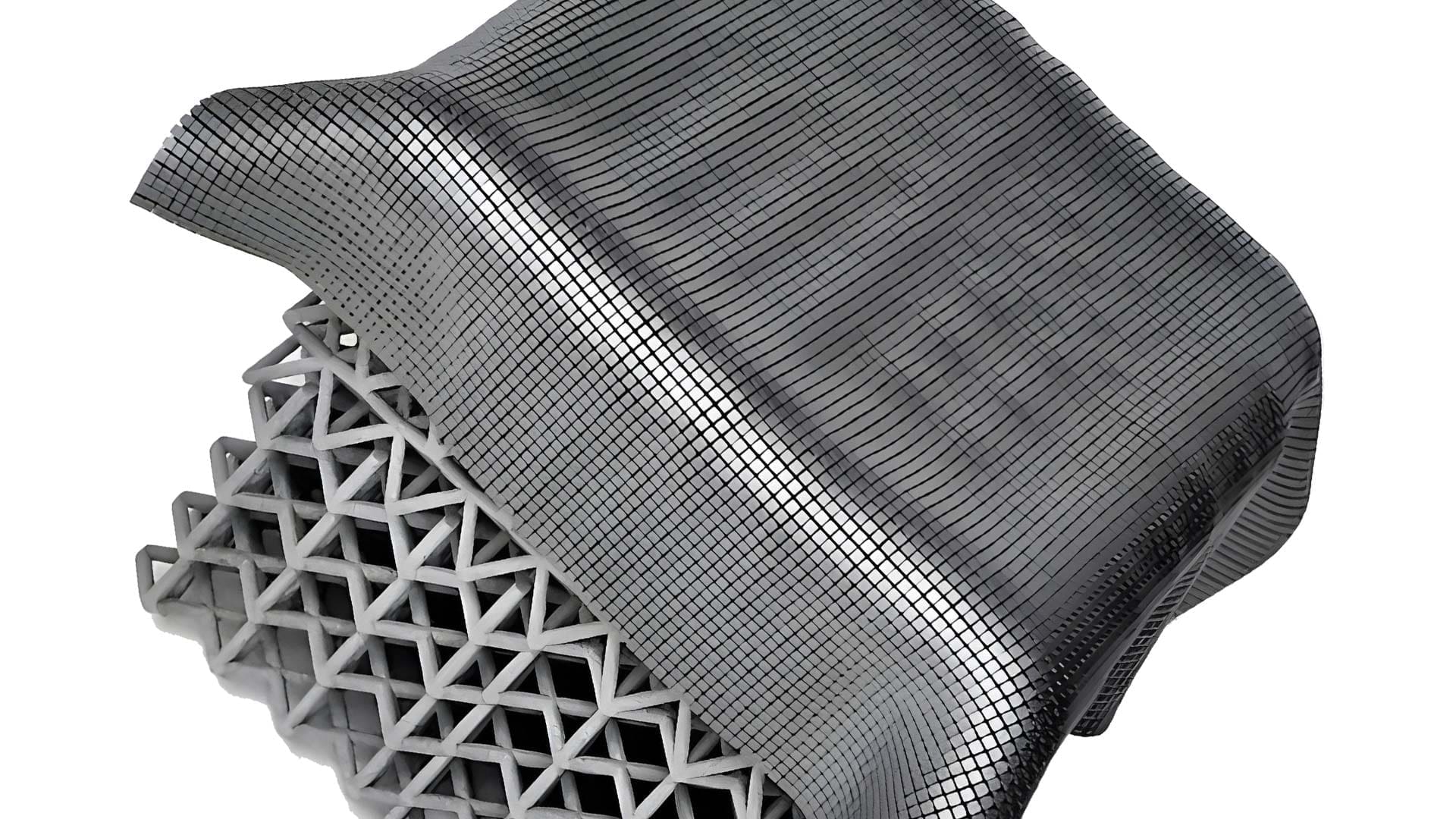
3D Printed Titanium Cloth
Workplaces are extremely dangerous places – and I’m not talking about North Sea Oil Rigs, coalmines or even bullfighting rings.
Even the humble office so many of us slave away our daylight hours in are hotbeds of potential ultra violence. Each day we trudge in under the corporate logo, we are putting ourselves into mortal danger. We need to be on instant high alert for being thrown under a bus in a meeting, backstabbed in the boardroom, shot down in flames during a presentation or sucker-punched in front of a client. Heck, we can even get ambushed at the water cooler!
So what we really need are suits that not only look sharp, but that can protect us from both enemy and friendly fire alike…
From Harry To Harry
This newer product follows the natural cycle of ever greater refinement over time and is now so sophisticated it’s more likely to be worn by Harry Styles than Harold Godwinson. Colossal advances in micro-linking and fine titanium wire spinning mean you can now have a draping metallic fabric, not just stiff mesh. Perfect for high-end clothing like party shirts or suits.
And yes, it is stab proof! But not bullet proof, you’ll have to wear several suits to stop the bullets fired by today’s weapons. It won’t rust either as titanium is corrosion proof, it’s hypoallergenic, non-magnetic and is relatively light too. This titanium material is about 40% lighter than its steel equivalent, but it’s still obviously heavier than cotton. What isn’t? A lighter weave option will also be available that is closer to denim in weight but you’ll be sacrificing a bit of strength in this case.
If you already have a Damascus-steel kitchen knife made from old paperclips or a carbon fibre wallet then a shirt or suit made from titanium chainmail is definitely your next present to yourself.
Bringing Back Disco
Luckily 3D-printed Titanium Cloth is just around the corner! Though it looks silky, it’s actually chainmail – just like what King Harold I and chums wore when they got wasted at the Battle of Hastings. Though it looks like something from the glory Disco days of John Travolta, its actually the 21st century’s finest tech yet, aerospace-grade alloy, powder-fused layer by layer into a fine, flexible titanium micromail lattice and 3D printed.
Titanium chainmail clothing isn’t new itself – it has actually been around for a long time. You’ve probably seen butchers wearing gloves made of it to protect their hands from sharp knives flying off slippery bones. Divers too sometimes wear titanium gear to protect themselves from shark bites. But these are from the more crude ‘industrial safety’ sphere of clothing design. If you wore a suit made from such titanium mail you would be seen as making a very blunt statement indeed.
Lab-Grown Blood
Apparently you’re supposed to look after your blood so keep some sort of semblance of health. You know, eat offensive green leafy crap like silverbeet and kale, not drink so much booze.
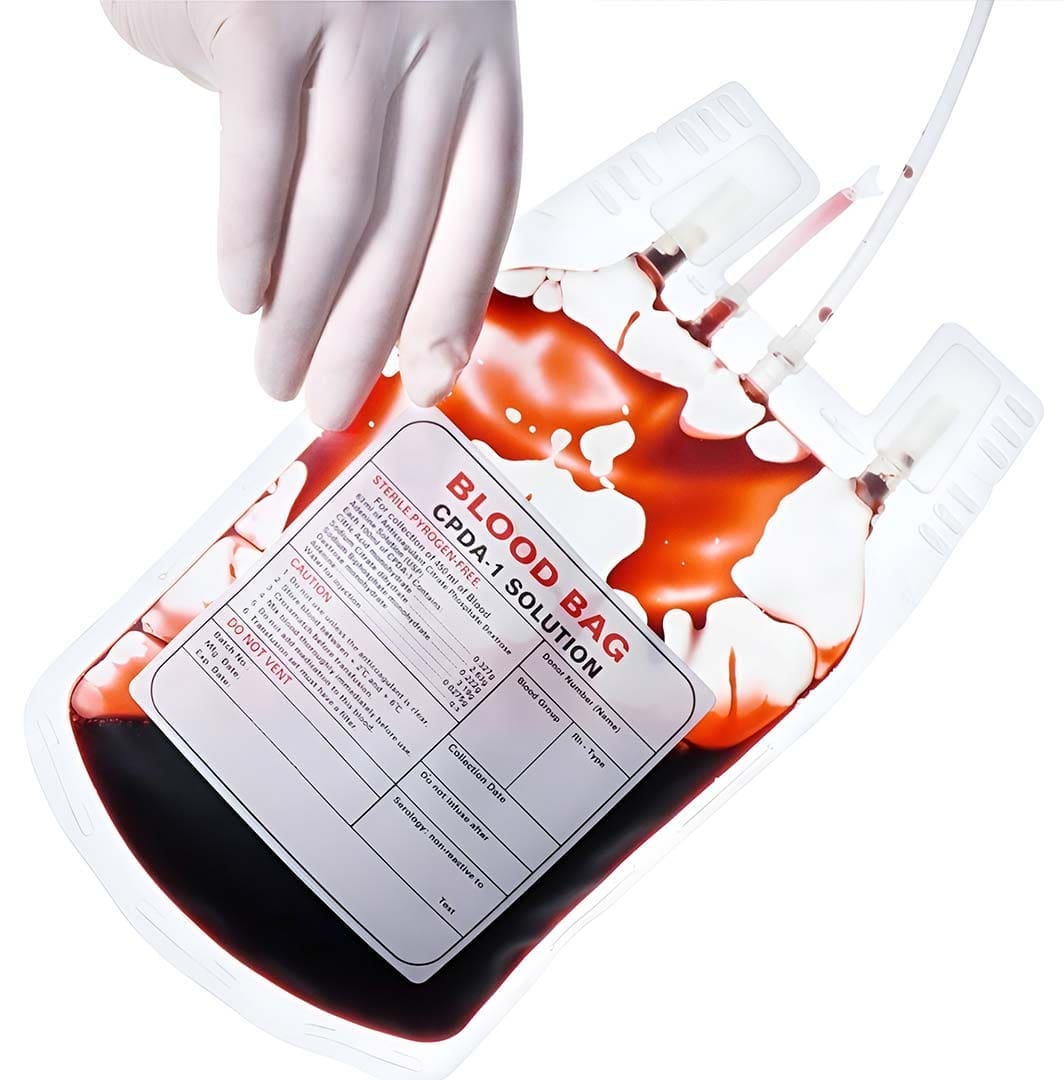
But not for much longer! Lab-Grown Blood is just around the corner so we can carry on living our naturally lazy, self-indulgent lives not giving a hoot about our blood health. Then, when it gets a bit jaded from abuse and neglect, just pop into the doctor’s for a quick transfusion – boom! Straight back to peak health. Just like taking your car into the local garage for an oil change.
Such good news! Though, on the down side, those marvellous long-suffering real blood donors will have to source their own cups of tea and bikkies now as they’ll be out of a gig.
Out With The Old In With The New
The way lab-grown blood works is the researchers take stem cells and grow some new red blood cells in bioreactors. This new artificial blood will be so useful all that Type A, B, AB and O nonsense will be irrelevant in most cases too. So it won’t matter what your blood type is, you can just flush out the old stuff with a pack of fresh plasma. Just check the expiry date.
This is ultra good news if you’re unfortunate enough to have a rare blood type like AB negative as you will no longer need to hang around a repository of compatible blood should anything go wrong. It will also mean hospitals and paramedics only need carry smaller amounts of blood to deal with emergencies and, having worked in logistics, I know how difficult it can be to ship perishable goods off to obscure locations super quickly.
War Anyone?
When will this miracle happen? Right now, lab-grown blood is in the ‘serious clinical trial’ stage which, given the regulation and litigious-heavy nature of global medicine, still means it could be a few years away yet. Of course, this could be reduced massively should a major Western power officially send soldiers into a warzone, which is always on the cards to some extent with the world leaders we currently have. Lab grown blood is the exact type of invention that will suddenly become the universal standard overnight during a wartime scenario.
Mass production will help push the costs down too as currently lab-grown blood costs about its equivalent in Chanel No.5. But, even if it stayed at that price, it would still be worth not having to get out of bed to go for a damn run in the rain, drink spirulina or eat silverbeet. Count me in!
Last Mile Delivery Bots
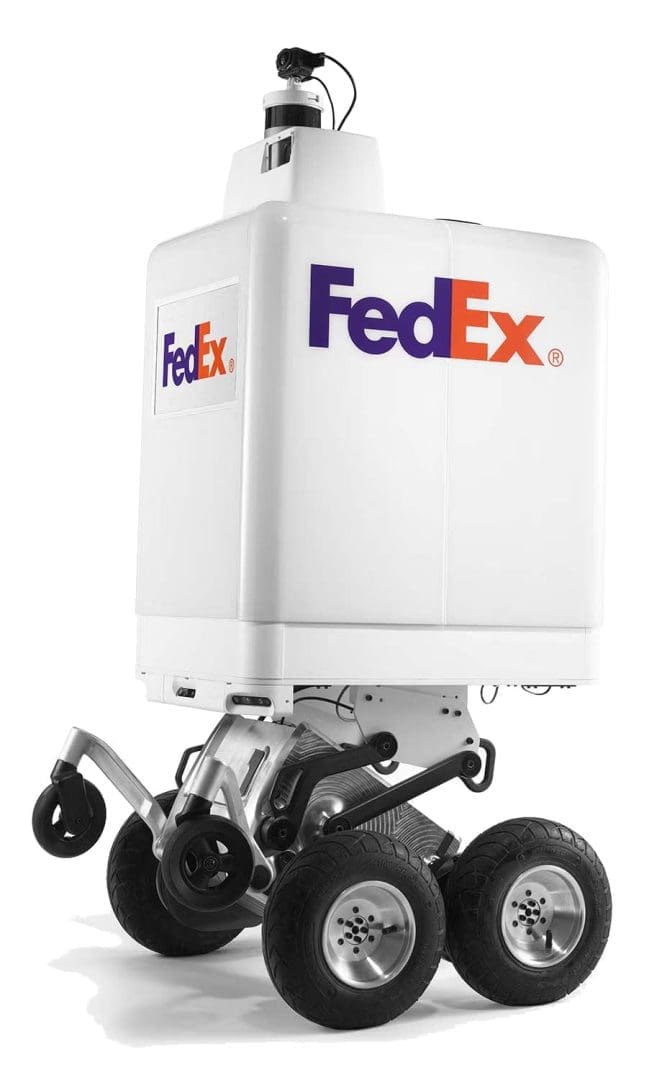
Order a mobile phone in Shenzhen, China and there’s a high likelihood of it being delivered to your apartment door by some sort of whistling R2D2-like delivery robot. Is there any chance of a similar Shenzhen-style robot delivery service taking off here?
The Economic Drivers Are There, The Human Ones Aren’t Possibly more than you think – and potentially sooner than you think too.
A big driver is, naturally enough, economic reasons: Online sales here are going off with more than 13% of all retail purchases being made this way and that figure isn’t likely to level off any time soon. A big whack of this is cross-border shopping especially from China via platforms like AliExpress, Temu and Shein. Much of this traffic is small/light packages which are delivery bot-friendly.
At the other end of the equation, it’s getting harder for courier companies to find willing staff and rising fuel costs are squeezing profitability.
These factors are compelling, currently it costs around 6c a kilometre for a delivery bot vs $1.20 per km for a human/van combo. Only around 40% of the latter is wages, the rest is on things like fuel, insurance and vehicle maintenance. Plus, there is always the possibility companies like Temu and AliExpress could subsidise the uptake of the new tech – in a similar manner as to how Uber bought market share when they started out here.
Key Chokepoint – Auckland Airport
Of course, one of the key points that will decide whether any sort of robo-delivery in NZ clicks – or clogs – is Auckland Airport. Though robots are the ones actually navigating the mean streets of Herne Bay and Karori, they won’t have anything to deliver if the logistics hubs haven’t scrubbed up digitally as well. As the vast majority of air cargo (86%) comes into New Zealand via Mangere if George Bolt Memorial Drive isn’t capable of handling the logistics any delivery bot service could fall over before it even starts.
Luckily for us, Auckland Airport is currently gearing up for a 21st century with its ‘Master Plan’ for the future. If you’ve been there lately, you will have seen new terminals, carparks and the like. What’s not so easy to see from the drop off lane is the digital-first philosophy behind it. This means; they’re working on developing smart parcel halls that can scan, sort and track in real time, autonomous corridors, wide lifts and V2X beacons every so often. All necessary equipment/environments that will help allow Auckland Airport to transition to exactly the kind of major automated hub New Zealand will need to make bot delivery a realistic option. The Airport’s not fully robot-ready yet but logistics giant DHL have seen enough to roll out their first New Zealand-based goods-to-person (GTP) robotics warehouse nearby – which will be a handy adjacent ecosystem for future last-mile delivery bots. NZ Post’s Processing Centre is also nearby.
Though it’s easy to argue there’s a lot more to automated last mile delivery than just a centralised logistics hub, having Auckland Airport as robot-friendly means that an unbelievably big obstacle is out of the way – and it sets a tone and standard for the rest of New Zealand’s logistics industry to meet.
As with anything else, New Zealand’s vast sectors of sparsely-populated and/or hilly terrain will make a universal delivery bot service unlikely as it wouldn’t be economically viable. But the CBDs, Universities and larger urban centres like Auckland, Wellington, Christchurch, Hamilton plus possibly Palmerston North and Napier/Hastings could feasibly see footpath delivery bots or road-based pods within the next handful of years. Already Christchurch has been testing autonomous buses, so robots aren’t a big leap from there.
The Future’s Already Here, We Just Don’t Know It Yet
That’s the thing about the future; it doesn’t come on stage to the sound of an epic guitar solo, it just sits down next to you on the bus. Before you know it, the life you know now will be as strange as a life set in the 17th century seems now. And, if this future includes stuff like the above, then I for one can’t wait!
Holographic Telepresence Rooms
If there was a silver lining to that bizarre black hole of time and space we call ‘Covid’ it was Zoom. Not necessarily the program itself but the freedom it gave us from having to get dressed in uncomfortable clothes and drive through horrendous traffic just to sit in a room full of bores talking about dumb stuff that could have been covered just as easily in an email.

A 3D Version of Zoom
Thankfully Covid’s gone and, unfortunately for Zoom, they may be off soon too as Holographic Telepresence is on its way. This is basically a 3D version of Zoom where you won’t have to sit squinting at a wall of postage stamp people on your computer screen; life-sized holograms of your fellow callers will appear in the room with you just like they would if you were having a real meeting. And all without needing to wear any dorky VR headsets or lug about bulky hardware either.
As good as Zoom is, it’s still 2D and it only really allows us to see a small percentage of our meeting attendees – their head and maybe shoulders, even less if there are a lot on the call. Which may not seem like such a big deal on the surface – but that’s the problem, we’re only getting the surface comms. A lot of what we do in meetings is read the signals our fellow attendees are sending us – even if we don’t realise it. Holographic telepresence will let us read our fellow attendees body language, including all the body parts normally cut off by the head or head/shoulders shot. Like if someone’s arms or legs are crossed in denial or if their foot’s tapping in impatience.
No More Frozen Necks
The Thousand Yard Stare will become a thing of the past too. The current mason wall of postage-stamp people forces you to stare fixedly at a screen for ages – sometimes hours at a time. Looking away is regarded as an insult, or you aren’t taking the speaker seriously. The best break you can hope for is to move your eyes a millimetre or two this way or that to look at someone else’s mug. That ain’t a natural pose! In fact, it’s closer to the mindset of a prisoner in an interrogation room or a victim caught up in a bank robbery than being in a productive business meeting.
In real room-bound meetings we never sit and stare fixedly at our fellow meetees, we occasionally look down at our pens, glance out a window or even consult our notes. If you don’t believe me, watch a recording of a meeting. Actually, on second thoughts, just take my word for it as it doesn’t get much more boring than rewatching someone else’s meeting. Surely you’ve got a million things better to do than that!
Such real meeting behaviour is tolerated because we label it internally as ‘thinking’, ‘processing’ or ‘absorbing information’. This is because we’re not just looking at their faces, we’re taking in a plethora of other body language signals too, including what their hands are doing and which way their feet are pointed. So one ‘rude’-looking gesture isn’t necessarily indicative of the attendee’s attention span. When taken in context with the other signals, a true conclusion of actual interest/focus can be drawn. A feat that is almost impossible to achieve during a 2D Zoom call.
When Can We Expect It?
Lots of tech companies like Cisco, Meta and PORTL are working on Holographic Telepresence which is good for us as, like everything, the first to market will get the lion’s share – so the motivation’s there. Helpfully, a lot of the foundational tech is already live too, like ultra-low latency 5G/6G networks, lighter real-time volumetric capture systems and smarter AI compression. Exactly when the first holo rooms will appear is less certain.
Frankly, the sooner I don’t have to smell all my fellow meeting attendees the better!