
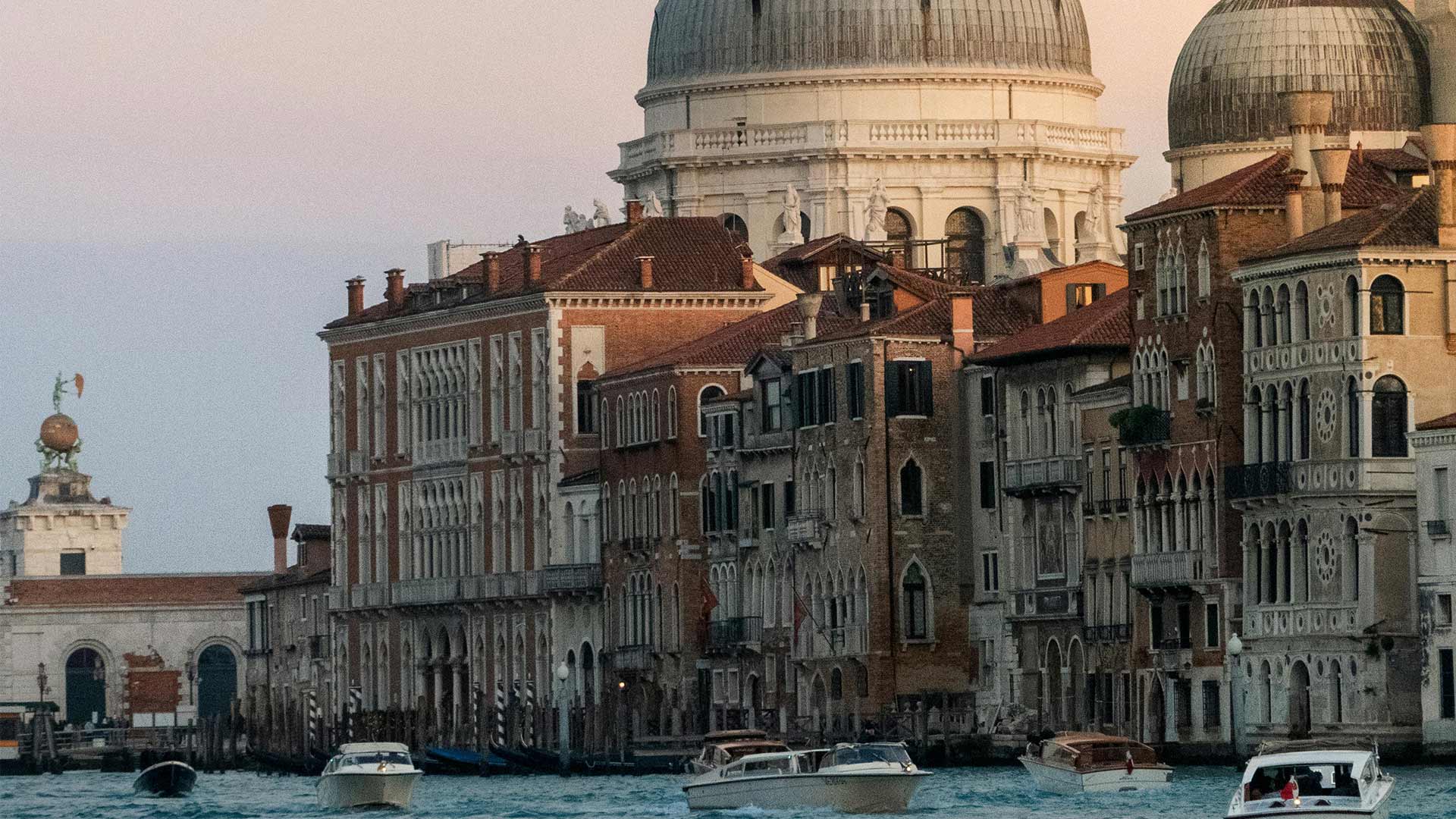
Venice: A City So Innovative It Invented Itself
There are people who are really good at what they do; Usain Bolt dominated race sprints, Adadeus Mozart knew how to write music and Steve Jobs was pretty good at innovation.
Then there are people who are really good at several things at once, or polymaths. One such is C B Fry who captained England in cricket, represented the Three Lions in football, set a world record in the long jump, wrote on politics, was a diplomat – oh yes, and could reverse jump five feet up onto a mantlepiece too.
Venice the Polymath of Cities
You can say the same for cities as well, as some are world famous for their unique specialties; London has long been a financial powerhouse, Amsterdam has canals instead of roads and Tyre was an impregnable island city fortress for over 500 years.
Then there is Venice which was, and is, all three at once. The Wall Street of the world for hundreds of years and a completely maritime city too with no roads, just canals. Plus, though it was coveted by every major empire for two thousand years, unlike Tyre (which finally fell to a very determined Alexander the Great) Venice has never been militarily conquered. Ever.
As if this wasn’t enough to make Venice a must-see for any traveller, it has also always served as one of the most innovative centres on the face of the planet. So, forget San Francisco, Venice was the original Ideation Frontier – right from the very beginning, over 1500 years ago.
When Defence Serves as your Inspiration
Venice is a truly unique place having been built in the 5th century as a response to the incessant invasions of various aggressors – including the infamous Huns – in the area we know today as northeastern Italy. These disgruntled early settlers came primarily from the Roman cities of Padua, Aquileia, and Altinumin that were all in the region of Venetia et Histria; thus giving them the name for their new home.
Not wanting to get sacked again, these new Venetians decided in 421 AD to make a new city somewhere where invaders couldn’t set up their siege engines. Some marshy islands off the coast appealed for this reason, so they cut down some oak trees in Croatia and drove the logs down into the soft, gooey soil of the lagoon. This piling drove out all the water and stabilised the ground enough to build a city on top. Interestingly, when submerged in water and deprived of oxygen, the wooden piles didn’t rot. Instead they petrified into stone over time and are still there propping up Venice today – over 1500 years later.
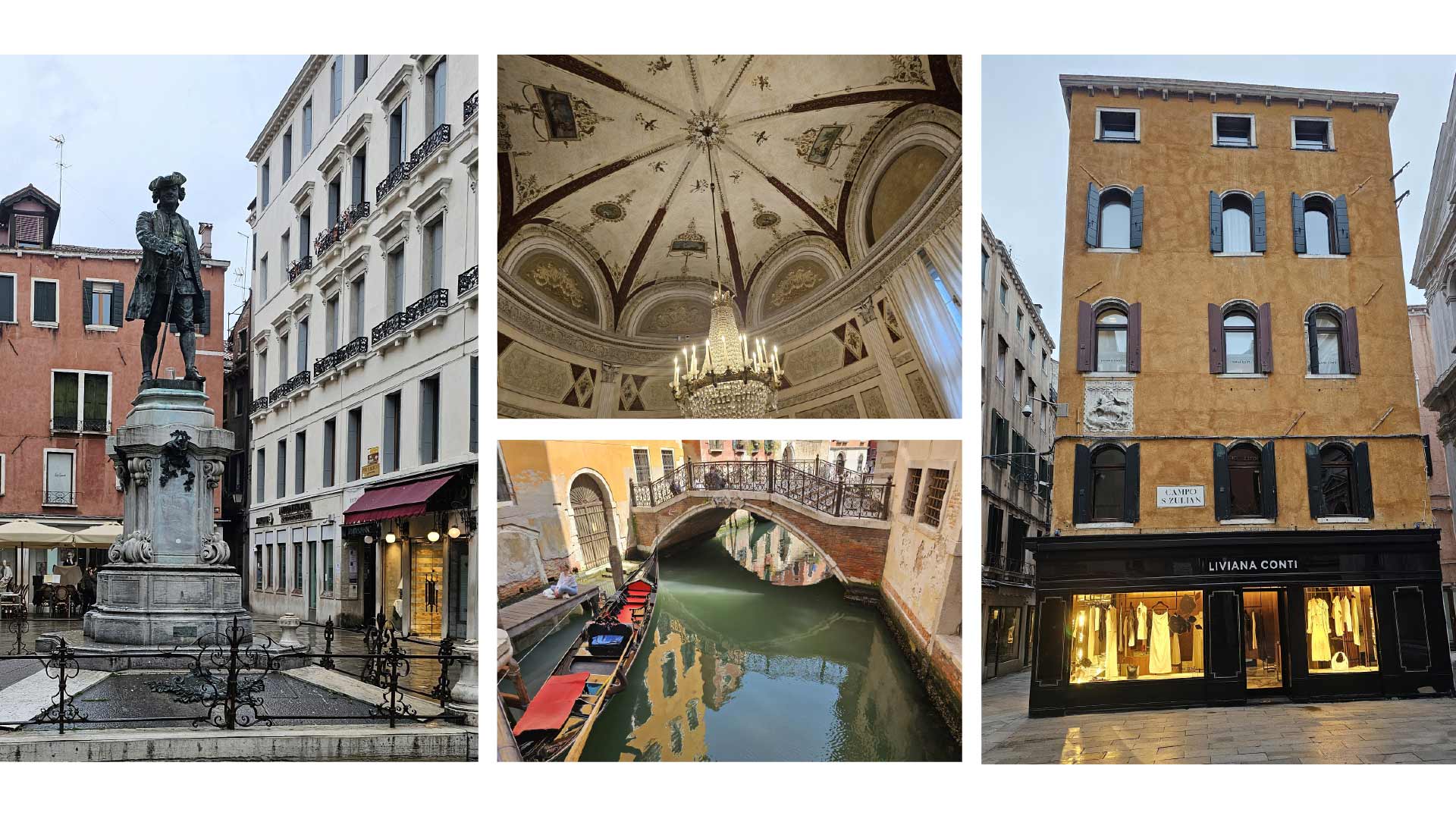
Sustainable Before Their Time
Of course this led to what Venice is most famous for: its canals. As this new home had no roads, the water became the city’s streets – and was used for everything; transport, trade, even sewage. Managing tides, floods, and silting was a constant battle however, as was finding fresh water.
The salty lagoon made wells useless, so the Venetians had to get creative. At first, they shipped barrels of fresh water in by boat but this was a hassle so eventually they had the bright idea of collecting rainwater. Every square or courtyard was designed with stone paving that sloped toward a central well, beneath which sat a sand-filled cistern to filter the rainwater ready to drink.
As for boats, again necessity bred innovation with the Venetians dreaming up a whole new fleet to suit their needs: the flat-bottomed batela was perfect for shallow canals, while the gondola was better at navigating tight turns with a single oar. There were also bragozzi for fishing, peote for transporting goods, and the bucintoro, a flash ceremonial barge only used by the Doge.
The Original (and cool!) Doge
Doge? What’s a Doge? Well, the Venetians were getting a taste for innovation by now and decided to invent an entirely new kind of ruler for themselves: a Doge – rather than go with the usual hereditary monarch or religious leader like a sultan or pope. This Doge was an oligarch elected by the elite for life which perhaps explains why Elon Musk finds the term so inspirational, although the Doge’s chances at absolute power were always checked by councils and laws – which Elon probably wouldn’t like so much.
Though he was no king, the Doge still needed a palace however and so the Venetians obliged with a splendid effort that is still around today. This Gothic masterpiece is more than just a building though, it’s a monument to a 1000 year empire that changed the world. That history is represented in its blend of Byzantine, Moorish, and Gothic influences while many of the statues around it were ‘traded’ with fading superpowers from around the Mediterranean over the centuries. There is far too much history to go into here so I’d definitely advise booking a guide or tour beforehand. Do this online and you can meet your guides and/or pick up your Skip the Queue tickets from the people in bright T-shirts hanging around the winged lion statue in St Mark’s Square.
The Bridge of Sighs

Not only did the Doge’s Palace serve as the seat of government for the republic by housing its Great Council, Senate and courts – it was its jail too. There’s not a lot of famous Venice opulence here though as the cells are pretty gruesome. There is an amazing bridge that gets you from the Palace to the jail however called The Bridge Of Sighs. So named for its windows being the last time condemned prisoners could glimpse the beauty of Venice before being locked up in the bleak cells on the other side.
This melancholic thought has captured imaginations around the world and so the original Bridge of Sighs has been replicated many times around the world so romantic versions can be found in Lima, Peru; Heidelberg, Germany; Ljubljana, Slovenia and in both Oxford and Cambridge Universities – while more crass copies have popped up in Las Vegas and Dubai too.
Success Via Innovation in Trade – and Shipbuilding!
Though initially part of the Byzantine Empire Venice emerged as its own entity in the 8th century. Taking advantage of its geographical position between East and West, Venice became a key trading hub as the terminus of the Silk Road from India and China. Venetian merchants became ubiquitous throughout the Mediterranean making fortune from heavily marked-up spices, silk, and precious metals.
The secret to this success was a strong navy. Rather than waste their money, men and energy on internal wars like most other European nations of the time, the Venetian rulers focused on making money. They did this via banking and credit, inventing the first bonds (prestiti) and insurance. They were so commerce-savvy their golden ducat became the ‘dollar of the day’ being used throughout the Known World. Venice also protected their commerce by becoming experts in shipbuilding for both merchant galleys and warships. Their Arsenal was Europe’s first industrial-scale shipyard and was capable of producing a new ship in a single day.
The Venetians used their warships to good effect too, defeating all local challengers and even keeping the mighty Ottomans at bay for centuries. Their maritime prowess even allowed Venice to create its own empire of sorts with the ports of Crete, Cyprus and parts of Greece being under their control by the 13th century.
A Soft Landing
Of course, all good things come to an end and Venice’s 1000 years as a superpower were definitely winding down by the time Napoleon Bonaparte started strutting about Europe in the late 18th century. The opening up of trade routes to the New World and by sea to Asia reduced Venice’s dominance as a trading hub. Still, Venice remained independent until 1797, when it surrendered without a fight to Napoleon and was thus absorbed into Austria, then Italy. Today, it is one of the premium tourist destinations in the world – and rightly so, Venice has had an outsized influence on the world. Especially considering how small it is when compared to other ancient European cities like Rome, Paris and London.
Have a magical day in Veniceland!
Venice’s tiny size and heavy tourism numbers has put the city in real danger of becoming a kind of Disneyland as locals are being pushed out due to the lack of residential properties. With such high tourist demand and such limited supply, landlords can earn far more by converting homes into apartments or Airbnbs than by renting to long-term residents. As a result, many workers have been forced to move to the mainland to commute in. These days, you rarely see Venetians outside of behind a shop counter or restaurant stovetop, which can make the city feel strangely soulless – as if everyone you pass in the alleyways is just another visitor, like yourself. It’s the same eerie dynamic you find in Anaheim.
Authorities are aware of the problem however. The city has introduced measures such as capping the number of new short-term rentals and trialing a daily entry fee for day-trippers to reduce the strain on local infrastructure. Whether that will be enough remains to be seen, but at least the conversation has begun.
Venice by Vaporetto
With no roads, how do you get around Venice? Water taxis are one way but if you want to get right across the city, you can always catch the Vaporetto. This is a ferry operating more like a bus – or is that train? – that pulls in a series of floating pontoon stations along the canals. You’ll see a host of them in action all along the Grand Canal, through some of Venice’s labyrinthine waterways and outer islands such as Murano, Burano, and Lido.
Named ‘little steamer’ after the engines that powered the ferries when they first came out back in the 19th century, the Vaporetto is no tourist gimmick as plenty of locals use it for their daily commute too. Riding it is an experience and a half as a boat is a heck of lot harder to dock repeatedly than a bus or train – and seems to involve gunning the engine, then cutting it and allowing the ferry to crash into the pontoon to stop it! Insanely popular, you’ll be lucky to get a seat and, for goodness sakes, don’t be like me and try taking your luggage on with you! There just isn’t enough room for that although early morning and evening voyages are far less packed. Tickets and multi-day passes make hopping on and off easy.
Dining Tips

As you might expect, Venice and Italy in general, is one of the great countries to visit if you like dining out. Venice, not surprisingly, is known for its speciality in seafood but there are a multitude of other cuisines to choose from. A unique quirk to Italy is the range of restaurant styles. You’ll see these names in the windows of most restaurants – and they’re not just an arbitrary name for the establishment:
Trattoria
‘Trattoria’ means a casual family-run restaurant that may have been in the same family for generations specialising in homestyle regional dishes.
Osteria
‘Osteria’ historically meant a wine-focused tavern but now often means a cosy eatery with a focus on local wines paired with simple, hearty dishes. May have communal tables.
Ristorante
‘Ristorante’ is the more formal, upscale dining option that specialises in refined regional or modern Italian cuisine. The waiters here are more ‘professional’ than friendly.
Enoteca
‘Enoteca’ is a wine bar with tapas or cheese/charcuterie boards.
Pizzeria
‘Pizzeria’ is exactly what you think it would be.
Plus – Italians take their dining a little less casually than many of us do back home so make sure you wear a button shirt to dinner – particularly to a ristorante