
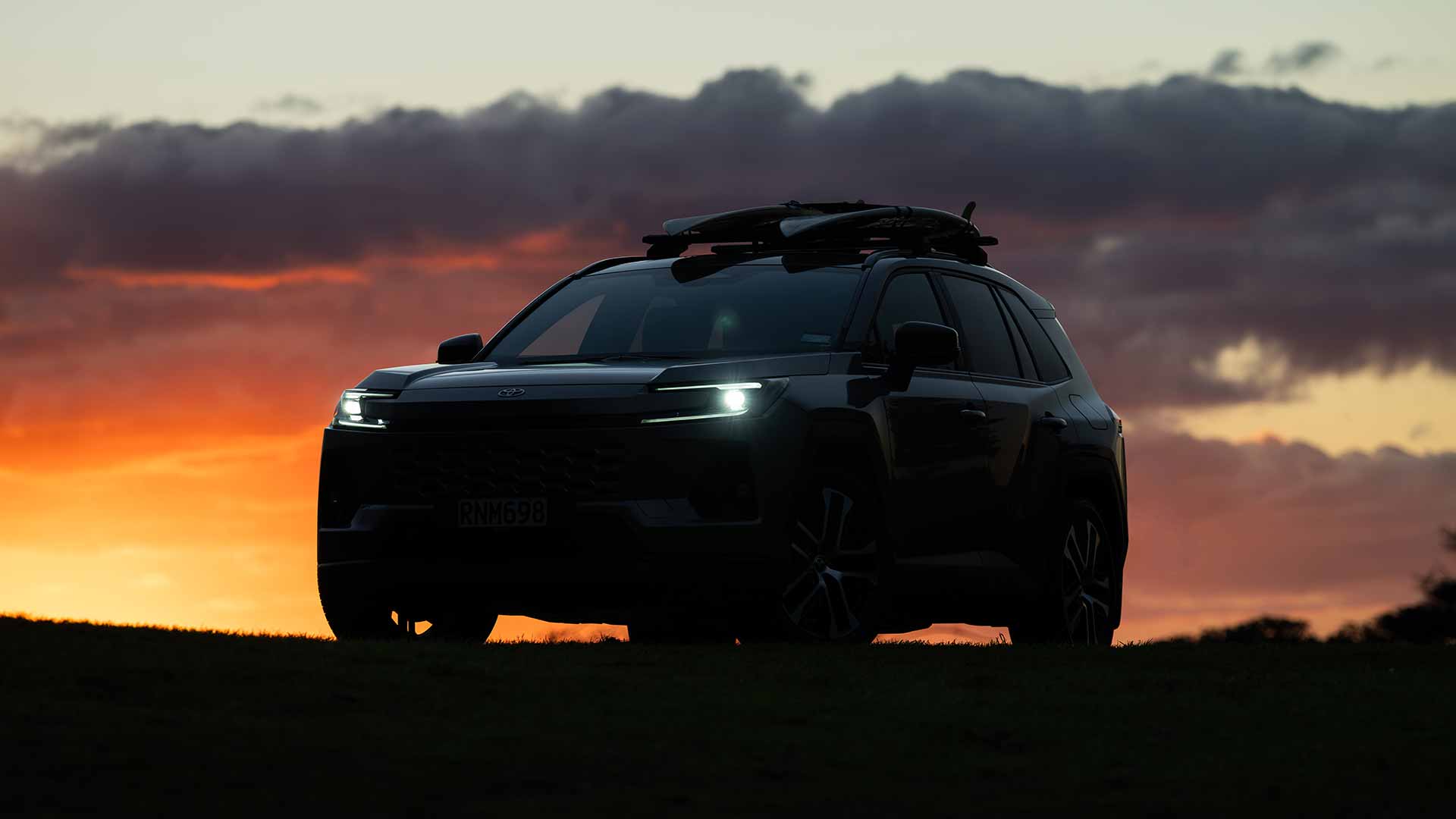
2026 RAV4: A Global Benchmark
The sixth-generation RAV4 brings New Zealand its first plug-in hybrid rav4, the most powerful rav4 Toyota has ever built.
Thirty years and six generations have turned the RAV4 from a funky compact three-door into something else entirely.
Maturity has replaced the playful youth, but it hasn’t lost any fun. The car has improved in nearly every measurable way. Thirty years into its development cycle, the RAV4 is close to impossible to fault.
Toyota dropped the petrol-only option in 2023. Now it has put something at the top of the range we’ve never been offered here before: a RAV4 you can plug in and drive electric-only.
Which is one branch of a much larger bet. Toyota runs what it calls a multi-pathway strategy, developing hybrids, plug-in hybrids, battery-electric vehicles, diesel and hydrogen in parallel rather than picking a winner. The point is choice, and cutting emissions in a way that’s practical and achievable instead of theoretically ideal.
It makes more sense here than almost anywhere. Driving in central Auckland is a completely different proposition to rural Waikato or central Otago, and one technology isn’t going to serve all three well.
The PHEV runs Toyota’s sixth-generation plug-in system, which is a full generation ahead of the hybrid gear in the rest of the range. It pairs a 2.5-litre petrol engine with electric motors and a 22.7 kWh lithium-ion battery. The front-wheel-drive GXL makes 201 kW. Choose all-wheel drive, in the XSE or GR SPORT, and output rises to 227 kW.
Toyota quotes NEDC-tested electric-only ranges of 154 km for the front-wheel-drive GXL and 144 km for the all-wheel-drive grades. For most people, that’s a week of commuting between charges.
And what happens when the battery runs out? Nothing. The car just carries on as a hybrid. You don’t press anything, you don’t plan for it, you might not even notice. Charging is optional. That’s the whole difference between this and an EV, and it’s why Toyota is comfortable putting a plug-in at the top of its biggest-selling nameplate instead of parking it in a corner as a specialist thing.
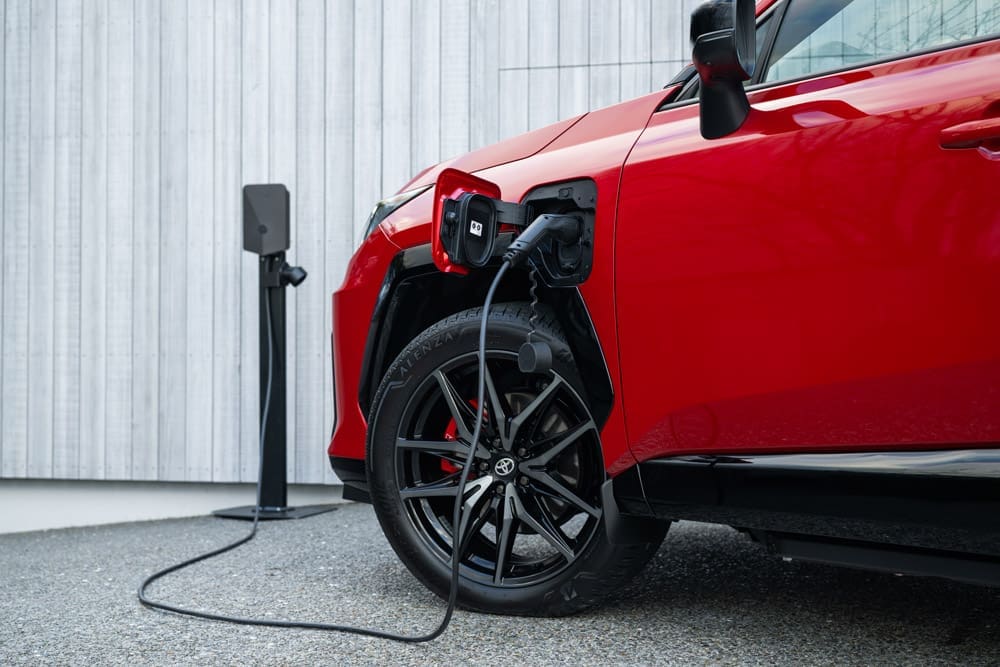
Charge it from a normal wall plug at home, a proper home charger or public infrastructure. The plug-in grades support AC charging and DC fast charging. Plenty of mainstream plug-ins still offer only single-phase AC with little or no DC capability. The plug-ins work the other way too: they carry a 220 V, 1,500 W household outlet for small appliances.\
There’s a load of structural and engineering work that the bigger battery demanded. The underfloor was reworked to take it. The pack sits low in the chassis, which drops the centre of gravity and explains why the PHEV grades feel more planted than the hybrids. Toyota also stiffened the powertrain and the transmission to kill noise at the source rather than soak it up afterwards, added rigidity around the rear hatch opening to cut body flex under load, and fitted acoustic glass and more sound deadening. The result is a car quieter than the hybrid sitting below it, which isn’t how it normally goes when you add weight and complexity.
The launch put nine or so of us on a pre-programmed route, followed by free-driving time. That is where you really learn about the car.
On the highway it glides. Then the seal runs out and it gets happier, which isn’t what you expect. On gravel it stays composed and gives you enough feedback to place it confidently. Body roll control is excellent, and that’s the quality that lets you take it almost anywhere without thinking hard about it.
None of that rests on the traction control. It drives well naturally, the way a good car does, and the electronics sit on top as a layer rather than underneath as a substitute.
Given that my job is to find the limits of a car rather than treat it with cotton wool, I drove diagonally through a ditch. I reached halfway and began to totter a little bit. I thought I had it fooled, but without me choosing a special setting, it just gathered its thoughts and slowly drove me out of the precarious position I had placed it in. It handles angles, medium ditches and a good deal more with the composure of a car leaving an ordinary driveway.
The built-in navigation beats your phone. You’ll understand why the first time you lose service somewhere remote and have to navigate from memory. Losing reception makes a good story, but it also makes for a slow journey.The control layout is the usual Toyota genius. You can work almost everything from muscle memory, because in this country Toyota is the standard and the Japanese brands share a logic. Stalks, wipers, indicators, temperature buttons, all where your hand already expects them. Fan speed lives on the screen, though leave the climate on auto and you’ll rarely go hunting for it.
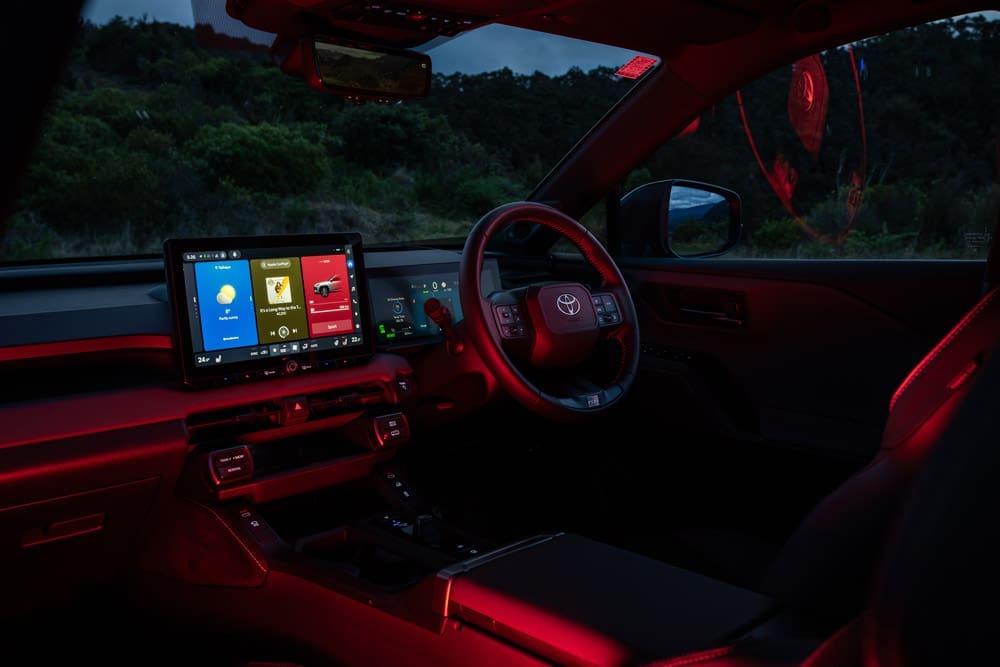
Depending on the grade, there are up to five drive modes: Trail, Snow, AWD, Normal and Eco. The EV button is the one to know, though. It can hold electric mode at up to 140 km/h, while also letting you choose EV running in low-speed places where emissions are least welcome, such as the school pick-up line.
Another noteworthy addition is Toyota Connected Services. Quietly working in the background, it can provide support in an emergency, following a serious crash, or if the vehicle is stolen. An SOS button links occupants to Toyota’s 24/7 emergency call centre, Automatic Collision Notification can automatically call for help when required, and Stolen Vehicle Tracking can assist Police in recovering a reported stolen vehicle.
The myToyota Connect app shows fuel level and, for plug-ins, battery state of charge; finds, locks and unlocks the car; alerts you to open doors or windows; remotely warms or demists it; schedules climate and charging; and sends multi-stop routes to the navigation. Essentials is complimentary, Connected Multimedia for six years and Connect+ for four, after which some services require a subscription. Toyota says neither it nor its dealers can track the car; location is shared with its emergency call centre only when a connected safety or security feature is triggered.
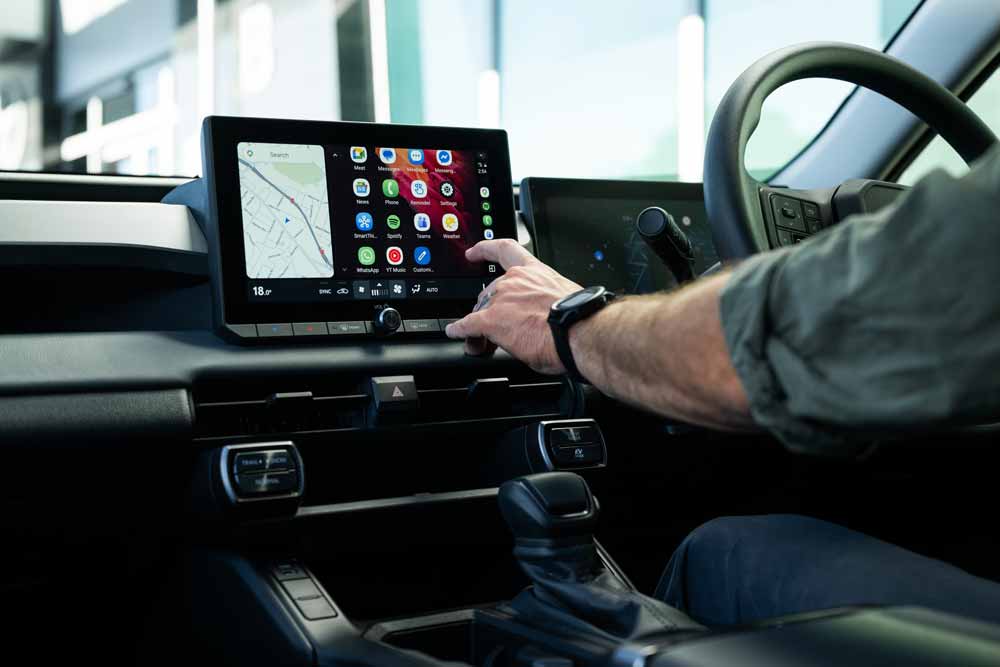
The multimedia system is new, with touchscreens up to 12.9 inches, a customisable home screen, faster voice recognition, cloud-based navigation, wireless Apple CarPlay and Android Auto.
Toyota Safety Sense is standard on every grade: Pre-Collision System, driver-monitor camera, Dynamic Radar Cruise Control, Lane Tracing Assist, Front Cross-Traffic Alert, Proactive Driving Assist, Emergency Driving Stop, Road Sign Assist and automatic high beam. The Limited hybrid gets adaptive high beam. Blind-spot monitoring, Safe Exit Assist and Parking Support Brake are available on every grade. ISOFIX and airbags are where you’d expect.
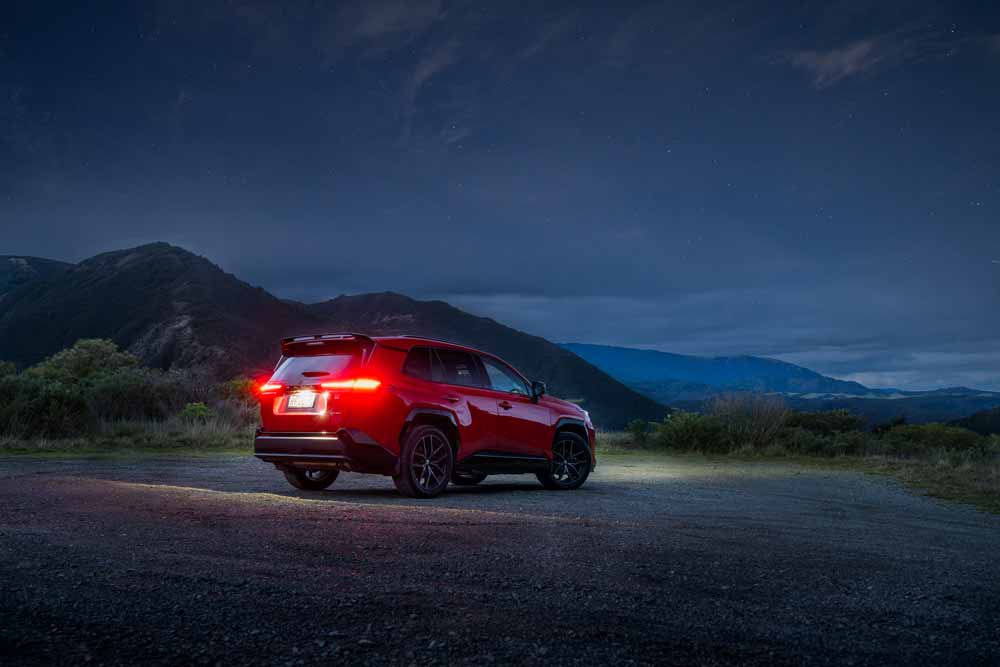
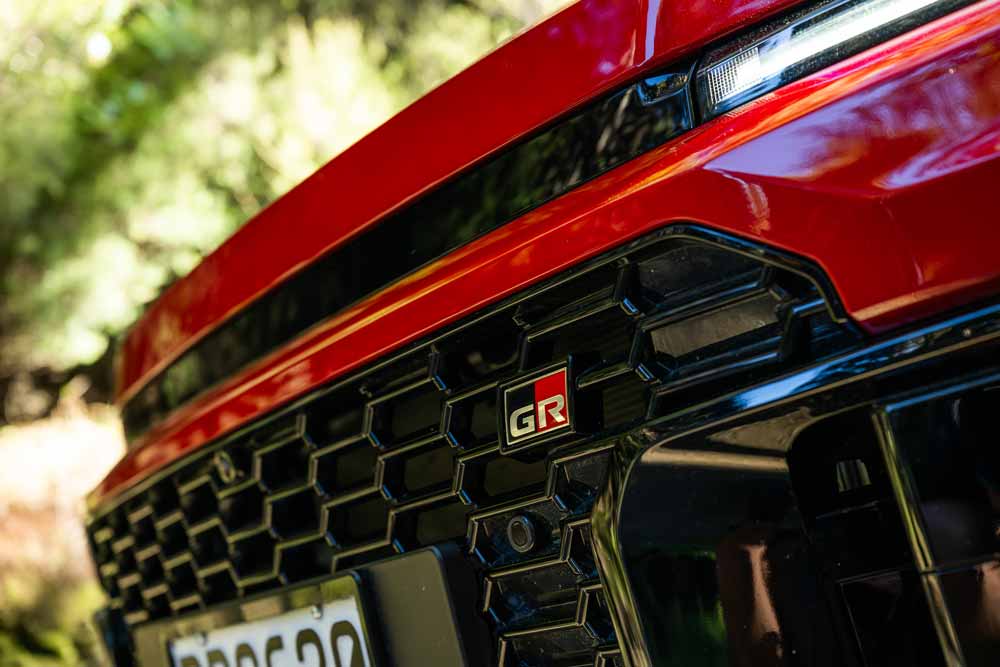
There are six grades across three styles, and Toyota has done something most manufacturers can’t be bothered with. Each style gets a genuinely different face. Core wears a honeycomb grille. Adventure gets a tougher snout to match its wider stance. GR SPORT looks like exactly what it is.
Core carries three of the six and covers almost everyone. GX and GXL hybrids come with front-wheel or all-wheel drive; Limited is all-wheel drive only. All make 143 kW and return 5.0 L/100 km with front-wheel drive or 5.1 L/100 km with all-wheel drive. Limited brings 20-inch machined alloys, a panoramic roof, head-up display and a nine-speaker JBL system that’s a real upgrade rather than a badge on the standard head unit.
The Core plug-ins are where it gets interesting. The front-wheel-drive GXL makes 201 kW; the all-wheel-drive XSE makes 227 kW, matching the GR SPORT, and adds 20-inch alloys, two-tone paint, a moonroof, heated and ventilated seats and a panoramic-view monitor.
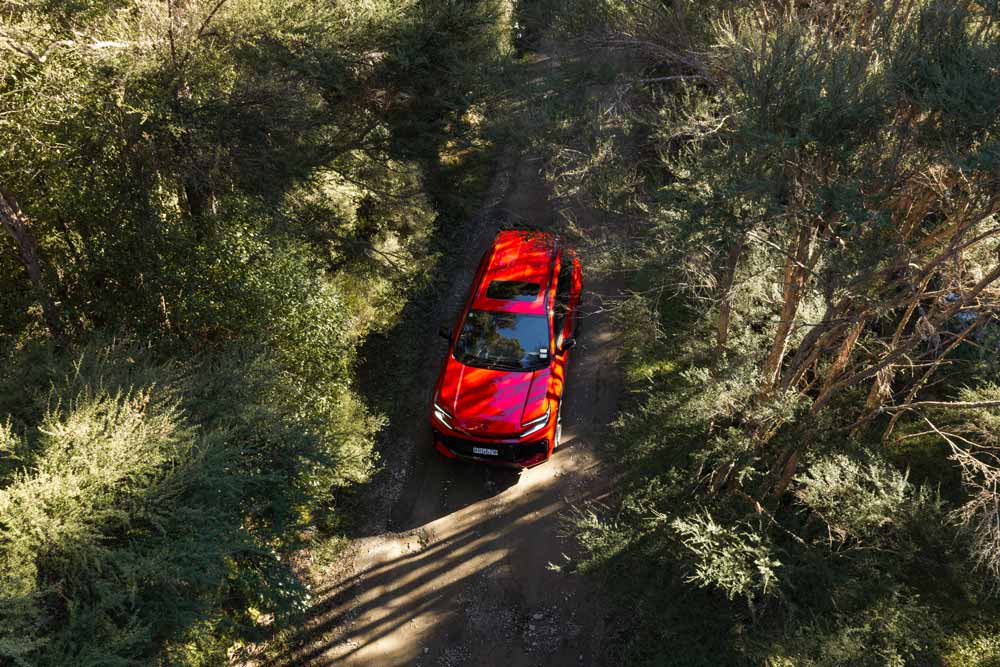
Adventure is a single all-wheel-drive hybrid grade. It gets a specific bumper and grille, bridge-style roof rails, reinforced wheel-arch mouldings, 18-inch matte-grey alloys and a powered tailgate. Inside are synthetic leather, heated front seats with extra support, and a rear seat tuned for comfort on long trips. The interior comes in black or the exclusive Mineral colour.
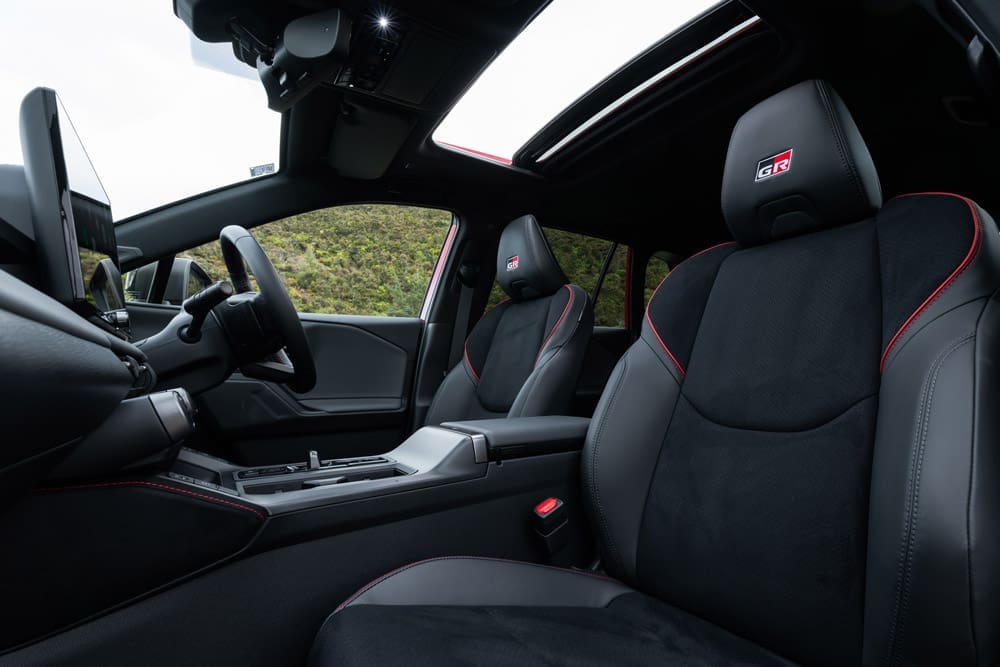
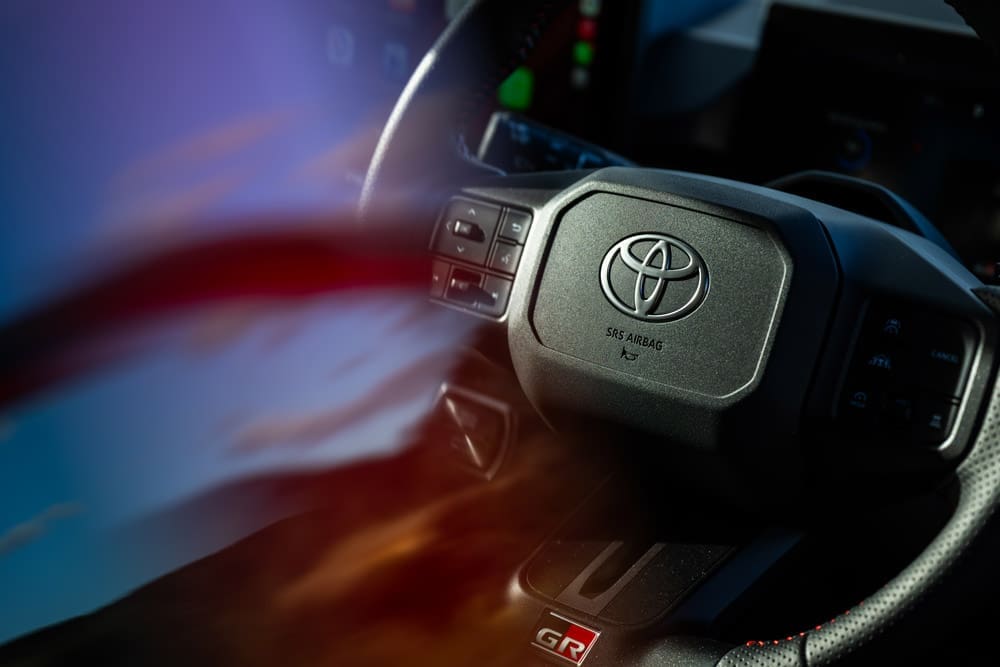
GR SPORT is the plug-in flagship and the first GR SPORT RAV4 in six generations. Toyota threw 70,000 extra development hours at it. The track is 20 mm wider. The dampers are high-performance items, the rear suspension gets a stiffer brace, and the power steering is recalibrated. Those 20-inch black and machined alloys are 2.2 kg lighter per wheel than the XSE items, removing unsprung weight from all four corners rather than serving as a styling exercise. Red calipers carry the GR logo. Inside, it’s GR synthetic leather and Brin Naub microsuede, a heated GR wheel with paddles, aluminium pedals, shift-by-wire selector.
Toyota New Zealand chief executive Tatsuya Ishikawa calls it “the most dynamic and performance-focused RAV4 we’ve ever introduced to New Zealand”. I agree.
The whole range is in showrooms now, plug-ins included.