
The Engineer’s Long Game
On the eve of releasing the new RAV4, Toyota flew the chief engineer of the world’s best-selling vehicle to New Zealand, along with the project manager who built it, and sat them down with the chief executive who sells it here. Tim warren asks what a career spent on one nameplate actually buys the person who ends up driving it.
Toyota invited M2 to the launch of this sixth generation. While we may be a small market by global standards, Toyota recognises New Zealand’s importance to the brand, and that relationship is built on more than six decades of shared history. We might be small, but we love cars, we love Toyotas, and we especially love RAV4s. We’ve become quite a special market for them.
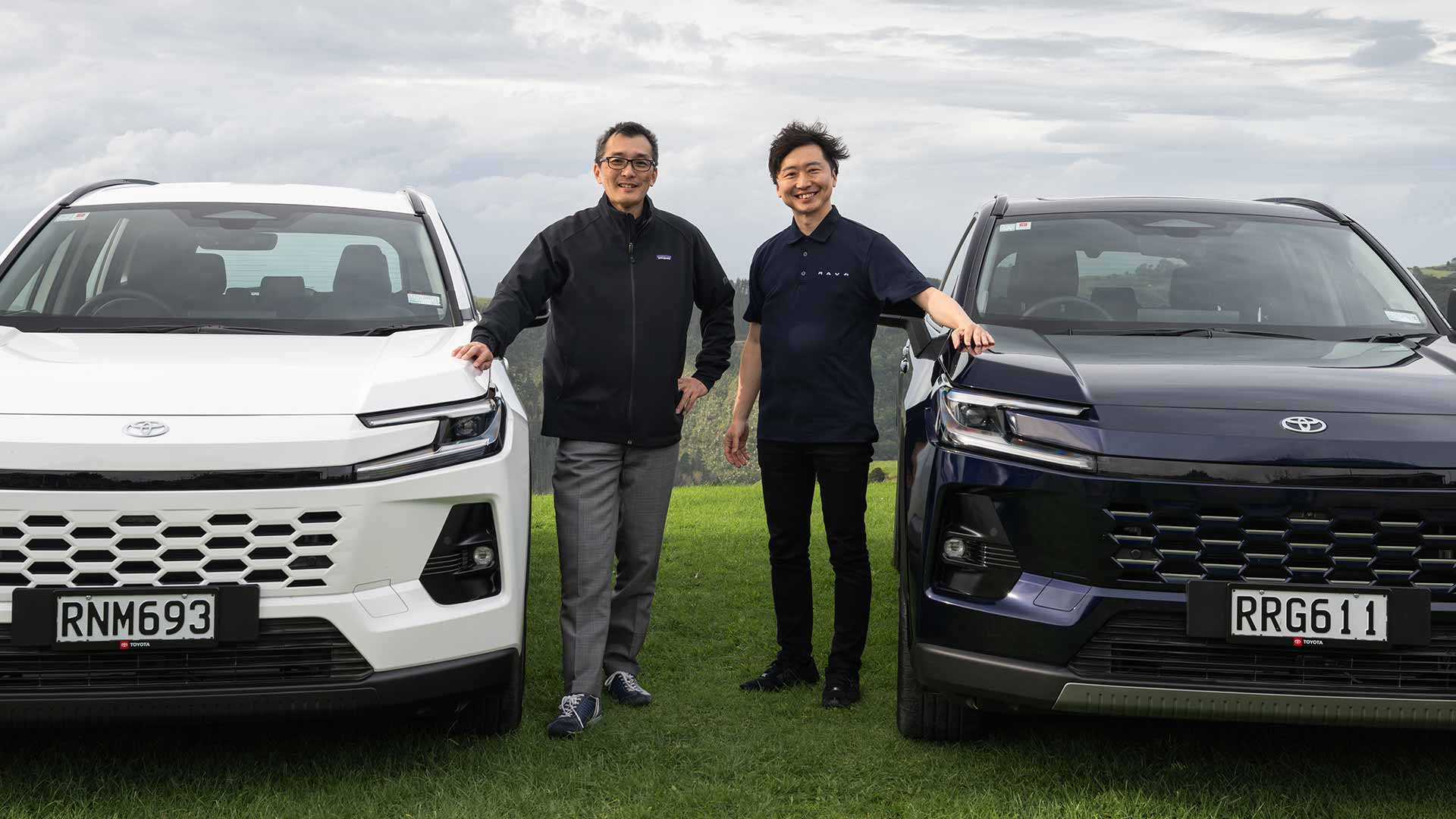
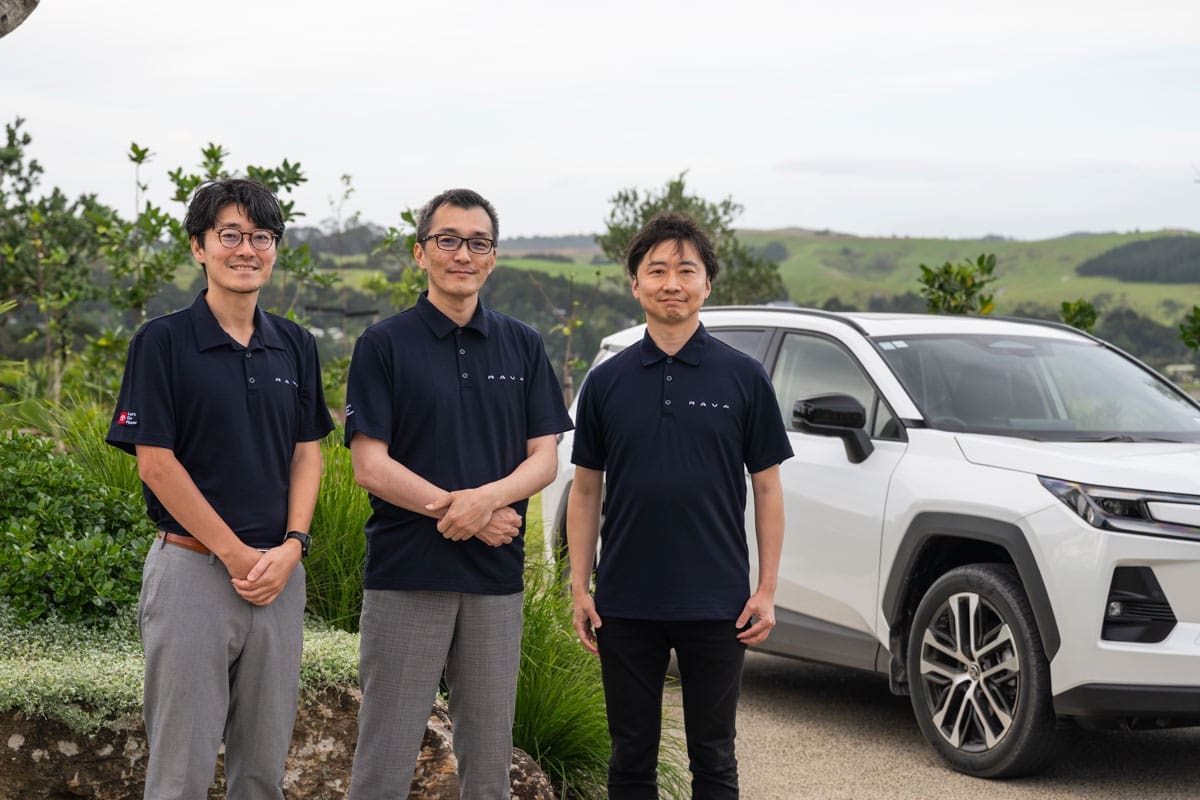
They underscored the relationship by bringing RAV4 Chief Engineer Yoshinori Futonagane to the country for the launch. Project Manager Hirofumi Yuge, the man responsible for executing the project, came with him. Toyota New Zealand chief executive Tatsuya Ishikawa completed the trio, and having all of them in one room was a rare chance to ask why any of it turned out the way it did.
Futonagane joined Toyota’s engine department in 1999. He moved on to the RAV4 in 2010 and he’s been there ever since, a living example of Toyota’s philosophy of kaizen, the focus on small, everyday improvements. More than fifteen years on a single vehicle is a unique career trajectory in such a kinetic industry, and it shows in the car he’s just delivered.
“This is a vehicle that is very dear to my heart and will be the third new generation model that I have worked on. Working across three generations of RAV4 has allowed me to see the vehicle, its technology and its customers evolve together. Every generation carries forward what we have learned, while preparing for expectations that are still emerging.”
The other thing to note about Futonagane’s career is the widening horizon of his work. It started in the engine department, which is about as narrow and deep as automotive work gets, and then broadened from there.
“My career has been a gradual widening of perspective. Early engineering work teaches you to concentrate deeply on one technical problem. As your responsibilities grow, you have to understand how thousands of those decisions come together to shape the experience of the whole vehicle.”
A car isn’t a collection of good components. It’s several thousand compromises that have to resolve into something you experience as one object, and somebody has to hold all of them in their head at once.
“Becoming a Chief Engineer does not mean moving away from engineering. It means taking responsibility for the balance of the whole vehicle and helping many specialists work towards one clear experience for the customer. A Chief Engineer must protect the character of the vehicle while also challenging the team to move forward. You are constantly balancing what customers already trust with what they may need in the future.”
This alludes to another interesting balance. When you’re responsible for the best-selling vehicle on Earth, you don’t necessarily want to rock the boat, but you still need to innovate and take risks.
“The RAV4 carries a great deal of expectation, but we did not want that responsibility to make us conservative. We approached the new generation with the mindset of a challenger and asked where we could make a meaningful step forward for the customer.”
Yuge is the man tasked with executing that commitment. He joined Toyota in 2005, spent his early years in safety, moved into project management, and started on this generation in 2021. Futonagane sets the direction while Yuge executes it, which in practice means refereeing between everything the engineers want and everything the factory, regulators and accountants will allow.
“We strengthened the platform and completed it by overcoming each challenge, one by one, with the engineers,” Yuge says.
Yuge describes the engineering target as “Confident Natural”.
“It is not simply about power or sharp responses. The car should move as the driver intends and give them confidence.”
Both men are Toyota lifers, and both got into the industry the way most people do. Not through an academic interest in the automotive sector. They just really love cars. The Japanese domestic market of their youth was an extraordinary place to pick up that habit, full of models strange and specific enough that an entire film franchise was eventually built on the enthusiasm they generated. Mention a Supra or a 2JZ and their eyes light up.
The brief for this generation was “Life is an Adventure”, which, of course, is fitting for this part of the world, but it’s still a complex brief. Futonagane describes a car that has to handle weekday commuting, the school run and regional travel, then turn around and carry a mountain bike or a surfboard out of the city on Saturday.
“One of the challenges of RAV4 is that there is no single RAV4 customer. It may be a family car, a work vehicle, an urban commuter or a way to pursue outdoor activities. The vehicle must be able to support all of those lives. We knew that some RAV4 owners wanted more than practicality. They also enjoy the act of driving.”
Futonagane is equally conscious of the balance between legacy and future.
“A new generation must move forward, but it should not discard the qualities that earned the customer’s trust. Our task was to preserve the strength and practicality of RAV4 while giving it new capabilities for the future.”
The third man in the room was Ishikawa. He joined Toyota Motor Corporation in 2005 with a master’s in engineering and started in project planning on the second-generation Yaris, work that took him regularly to the French plant building it. He moved into business planning and worked on the first-generation C-HR. He arrived here in 2023, took the top job in an acting capacity in June 2024, and was confirmed permanently by the board in March 2025.
The fact that Toyota New Zealand is now run by a Toyota Motor Corporation engineer is a good indication of how seriously Japan takes this market.
He’s also warmer company than that CV suggests: friendly, engaging and genuinely respectful of both the customers here and the market itself.
Ishikawa’s reading of the New Zealand customer is straightforward.
“Buyers here are informed. They research, they compare, they take their time, and they want honesty, value and performance rather than one out of three.”
It’s a market that punishes a car for being nearly right.
His explanation for why the RAV4 does so well here is equally straightforward. It hits the sweet spot for an unusual number of different drivers. The size suits families, couples and individuals who want a roomy SUV for an adventurous lifestyle and a week’s worth of ordinary errands. In a lot of ways, the RAV4 is the vehicular expression of this country, and that’s exactly why Japan treats us as a market worth the airfare.
Speaking when the company marked sixty years in New Zealand, Ishikawa put Toyota’s success here down to “listening to customers, understanding how they live and work”.
And it’s an approach that has worked. Toyota has led this market for 38 consecutive years and sold 33,019 new vehicles in 2025. The RAV4 was the country’s best-selling vehicle last year, with 11,295 units, finally shifting the utes off the top of the chart.
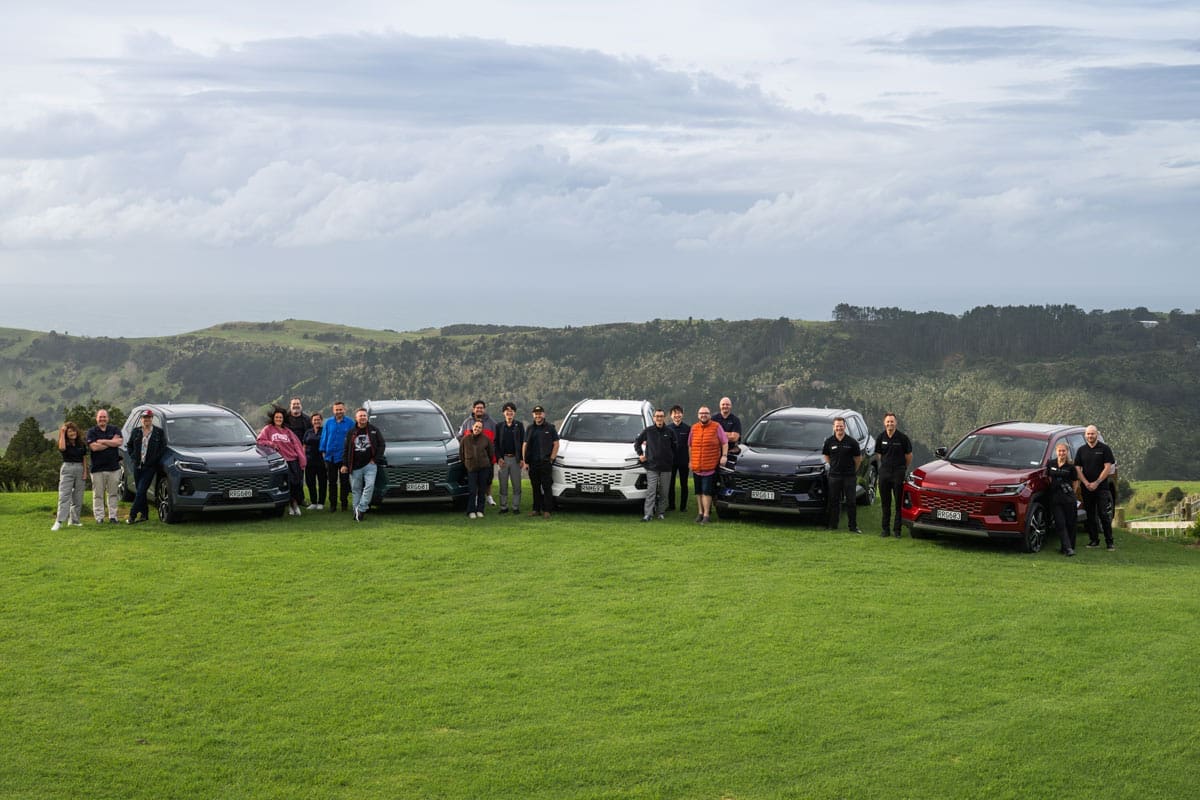
At the launch, held at the Muriwai Surf Club with a drive north to the Matakana Coast, Ishikawa summed it all up.
“The RAV4 has a strong connection with New Zealand customers.”
Futonagane echoes the sentiment.
“Engineering does not finish when the vehicle enters production. We continue listening to customers and watching how they use the car. Their experience tells us where technology is helping and where we still need to improve.”
And even after more than fifteen years with the RAV4, Futonagane is conscious of what time can do to an engineer.
“Experience helps you recognise patterns and anticipate problems, but it can also become a limitation if you stop asking questions. I try to bring the knowledge of previous programmes while still approaching every new vehicle with curiosity. RAV4 has accompanied a significant part of my career. Because I have seen it through several generations, I feel both a personal connection to the vehicle and a responsibility to ensure it continues earning its place in customers’ lives.”
That is the long game. Six generations in, the RAV4 is still earning its place.