
Simple and Effective AI Tools You Can Use Today
Jared Langguth followed with how he dragged his own busy, sceptical colleagues across the line, one workflow at a time.
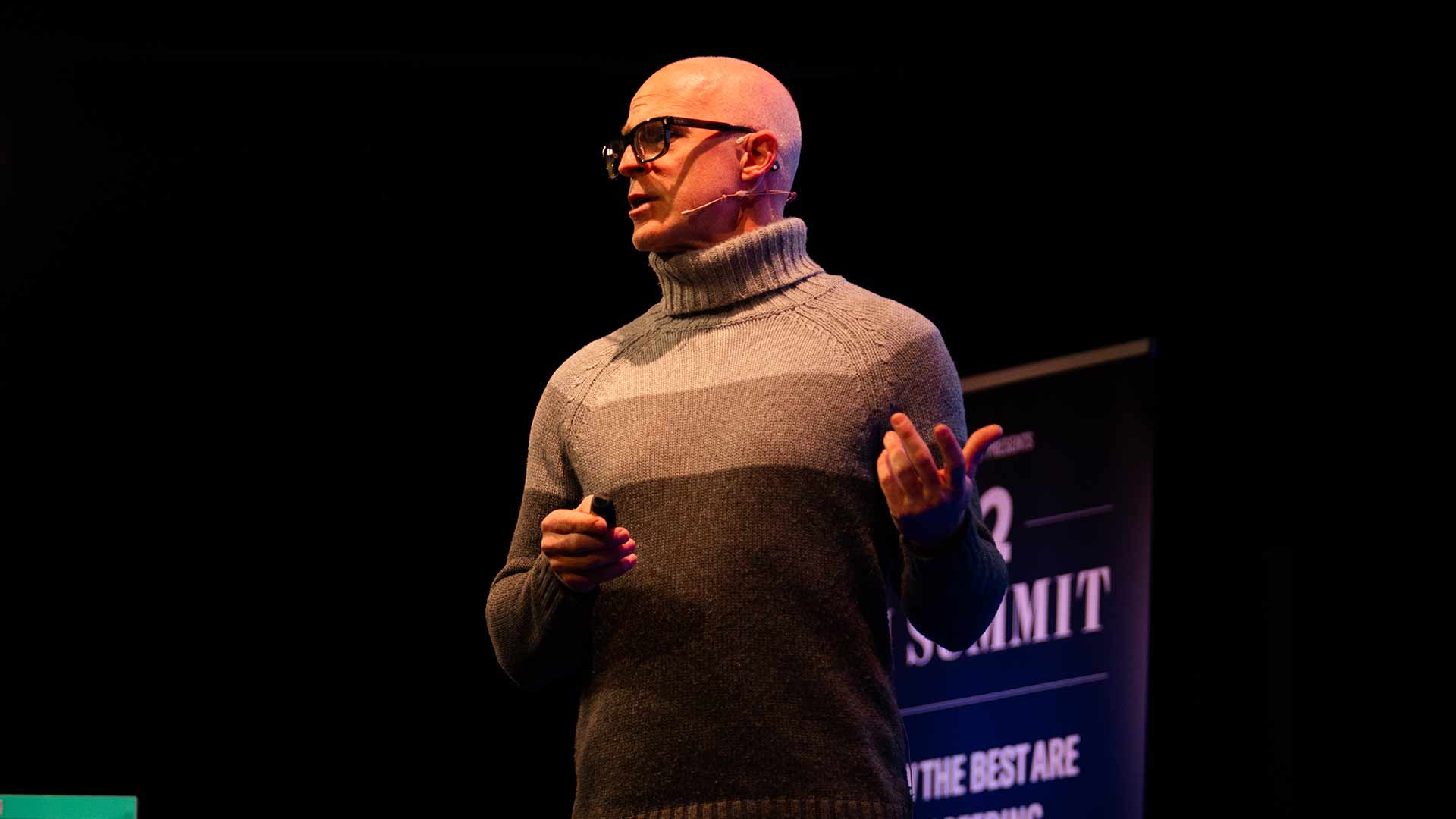
Jared Langguth skipped the usual show of hands. “Who’s actually using a large language model with a workflow to do a multi-step improvement at work?” he asked instead, and far fewer hands went up. Rather than parade client success stories, he decided to talk about his own company, “the things we tried with the skeptics, with the people who were busy, and how we got them across the line”.
He started with a confession of failure. For years his delivery squads had detailed manual workflows, all carefully documented “off to the side” in another system that nobody ever opened. When Notebook LM and custom GPTs arrived, the team got briefly excited, then carried on ignoring them, because the documents were still off to the side. So he parked the whole idea and went looking for a way in through people instead.
That way in was Reema, a non-technical “people person” who, when Gemini landed on every desk, couldn’t think of a single business use for it. So Jared went around the problem. Reema is an ice-climbing, Wanaka-dwelling outdoors fanatic who happened to be after new running shoes, so he had her run Gemini’s deep research, which trawls dozens of websites and comes back with a proper report. She bought the shoes. It “didn’t help the company too much”, he admitted, “but it did unlock her willingness to use research tools”, which she now turns on the actual job.
For the work itself, he offered a simple recipe: “classify, prioritise, and deconstruct”. List every workflow, which is just “a number of steps you do to complete a task”, tag them simple or complex, and let the whole team vote on what matters rather than “Jared going, hey, do that one”. Then pull the chosen one apart step by step into inputs, tools and outputs, which “gives you a blueprint of what you’re going to automate and lets you know where things might go awry”. His own lead-generation agent now wakes up on a schedule and works through browse, list, read, search and message on its own.
Some of his sharpest advice was about how agents actually behave. Feed them too much and they wilt: “we probably took it too far,” he said, because agents fixate on the first and last parts of an instruction and treat the middle as “a bit arbitrary, much like when you talk to a human for too long”. The fix is to be targeted, helped along by Anthropic’s “skills”, which let an agent practise progressive disclosure and only read the instructions for a task when it actually needs them. He also leaned hard on the human in the loop: his month-end agent flags what it got wrong and waits for “yes, no, yes” before it recategorises anything.
The payoffs were concrete. One automation built for an operations executive frustrated with inconsistent output “turned three hours into one minute, saving them hundreds of thousands of dollars a year”. Others were humbler, like an agent that collates everyone’s weekly status emails into one. And to stop knowledge living in a folder no one reads, his team built a wiki “for agents to look at, not humans”, stuffed with brand details, case studies and internal know-how, which an agent assembled in a single day and even tidies for duplicates.
None of it, though, mattered as much as the rhythm. The team still “struggled internally to get everyone over the line”, so they started fortnightly AI sharing sessions where, quite simply, everyone shares. “It’s only so long a human will turn up to a meeting and say, I’ve done nothing,” he grinned. “Eventually, they’ll start doing something.” That, more than any tool, is what carried the sceptics. Pick one thing, he said, “then pair it with a rhythm of talking about what you’re doing”, and you will get more productive too. The harder question, he conceded when pressed, comes next: deciding whether a workflow should exist at all. “Most people aren’t ready for that.”
5 Takeaways
- Start with the person, not the tool. Reema only adopted AI once it solved something she cared about, a pair of running shoes. Find someone’s real itch, scratch it, and the work use cases follow.
- Classify, prioritise, deconstruct. List your workflows, let the team vote on what matters, then break the winner into inputs, tools and outputs. That blueprint shows you what to automate and where it might break.
- Don’t drown your agents. They latch onto the first and last instructions and fudge the middle. Be targeted, lean on skills and progressive disclosure, and keep a human approving the calls that count.
- Build a wiki your agents can read. A single store of brand, process and know-how, assembled by an agent in a day, beats workflows filed “off to the side” where nobody ever looks.
- Pair one change with a rhythm. Pick a single improvement, then add a fortnightly session where everyone shares what they tried. Nobody wants to keep saying “I did nothing”, and that quiet pressure is what carries the busy and the sceptical.