Am I a ‘Person of Interest’ or Just Another Number?
When Person of Interest first showed up on Netflix, I didn’t bother. It just looked like the usual post-9/11 American alarmist junk, sketching caricatures of babble-headed terrorists thwarted by heroic government agents’ oppressive surveillance techniques.
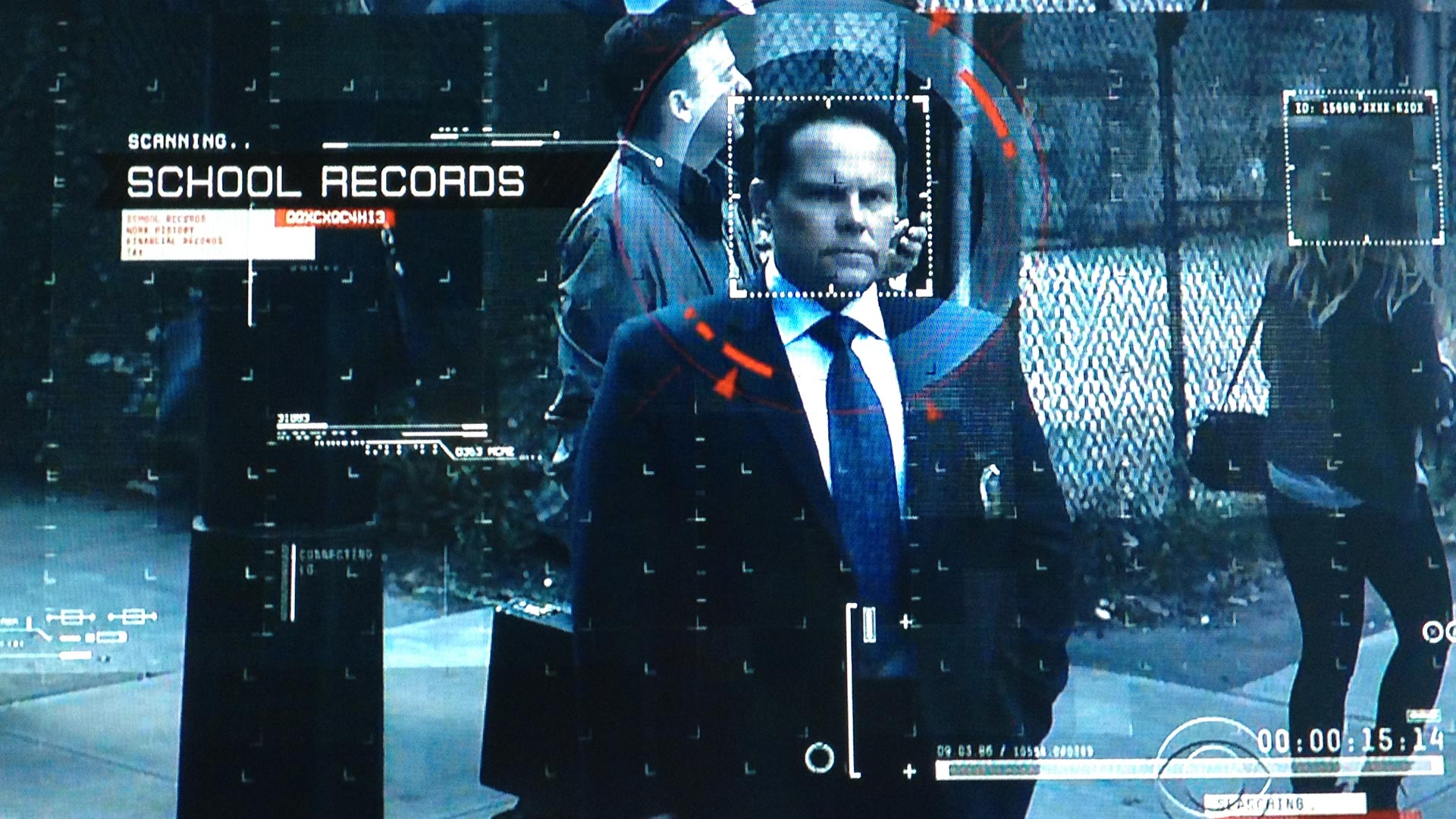
Years later, I gave it another crack and was shocked to realise I’d been completely wrong. Sure, it looked like standard fare: a former CIA spy and a wacky, reclusive billionaire buddy up to stop crimes before they happen, guided by their mysterious surveillance programme that perves on everyone 24/7. Add some jaded homicide cops and a gunfight every six minutes, and you have yet another line-and-length procedural series.
But if you looked beyond the gratuitous and repetitive gun battles of PoI, there was also a deeply philosophical show about artificial intelligence, mass surveillance and what a human life was truly worth. And all this before ‘AI’ became a thing.
Sneaking in Philosophical Questions
What should have given it away was that the series was the brainchild of Jonathan Nolan, brother of Christopher. Surely the guy who wrote the short story on which the infamously mind-bending film Memento was based wouldn’t just be churning out pap?
Of course not. Nolan recognised that CBS, home of heavyweight procedural shows such as NCIS, CSI and Criminal Minds, would be the perfect home for his show. He told Deadline that the ‘case-of-the-week’ structure was ‘something we really loved.’ But he had a plan: in those stablemate shows, guns are symbols of authority, usually drawn only at the point of arrest. In Person of Interest, Nolan wanted them used constantly to signal that the action was taking place well outside the normal procedural rulebook. His characters were not only vigilantes operating beyond government rules; the gunfire also appealed to that uniquely American Second Amendment fantasy of a lone individual, armed and morally certain, resolving conflict through direct action whenever the ‘system’ fails.
The conceit of the show was brilliant: after 9/11, the US government was desperate to identify terrorists before they acted. Cue incessant surveillance and the waving away of individual privacy concerns as secondary to the common good. Coding genius Harold Finch therefore builds the Machine, which can do just that: deduce deviant behaviour from mass-surveillance data.
But because the government was interested only in potential terrorists, any other ‘irrelevant’ murderous intent was discarded. Harold Finch wasn’t comfortable ignoring his Machine’s warnings about people likely to be murdered simply because they weren’t terrorists. So the show’s central drama was never really about stopping crime; it was about what a surveillance system that sees everything should do with what it sees.
Removing the American Lens
Of course, Person of Interest was unmistakably an American show. Suited characters whipping out guns and blasting away every few minutes, whether they were in an office, restaurant or street, is a storytelling trope found in only one nation on Earth. Other uniquely American traits were embedded too: every corporate decision naturally carried global implications, New York was the centre of everyone’s world, and the key dramatic question was whether the surveillance state should be controlled by a benevolent genius or a malevolent one. The show never asked whether a surveillance state was acceptable in the first place. It worried only about which American should hold the keys.
But even if you strip those Americanisms away, the questions the show asks are still relevant to the rest of us, especially now, with increased surveillance on every corner and the use of AI rising across the board.
Is it right to have a system that sees everything about you while you can see nothing of it? A system that acts on knowledge you don’t know it has, through channels you can’t trace, for reasons you can’t appeal against?
We’re There Already
For a small nation like ours, this calculation has even more meaning. Decision-makers in places such as Washington, Beijing, Moscow and Brussels cause wars and trade disputes that affect oil and food prices in our neighbourhoods, yet they don’t answer to us. In fact, they probably don’t even know we exist unless we stop buying their products. We didn’t vote them in and we certainly can’t vote them out, so why do we have to suffer for their whims?
New Zealand belongs to a group of nations wealthy enough to be hurt by trade wars, yet too small and financially weak to have much influence over them. As Mark Carney warned, ‘If we’re not at the table, we’re on the menu.’
So, unlike Americans who become outraged at the thought of their right to shoot each other being limited by any human, let alone a machine, it may be a different story for people like us and those in the Global South. AI leadership could then hold some appeal because, at least in theory, it could be trained on a dataset that actually includes us and takes our concerns into account, rather than lumping them in with the rest of the ‘irrelevant’ consumer market.
Could AI Rule… Better?
But the real story is this: the world is in a mess and, given the current calibre of leaders around the world, it doesn’t look as though anyone is interested in fixing it. Governments everywhere seem gridlocked by petty grievances, while corporations appear more interested in quarterly returns. So, if our governments and institutions are so broken and corrupt, how can we have faith that any human can fix them? Maybe it really is time to roll the dice and give purely logical machines a crack at running things. Could they really do any worse?
That was part of the appeal of Harold Finch’s Machine in PoI. He had programmed it with a conscience, so, in theory, surrendering control was acceptable because it was incorruptible and therefore superior to human bosses such as Control, Vigilance or the CIA. The fantasy of the show wasn’t the existence of a surveillance AI; it was that a surveillance AI would do a better job than humans could.
The other side of the coin, of course, was that once you switched it on, there was no going back. Put a machine in control and it decides whether it remains in charge. It doesn’t require much imagination to see how that might turn out. In the show, Harold was constantly worried about this. But his fears seemed abstract, philosophical or merely academic until Nolan and his writers introduced Samaritan, a rival surveillance system. Samaritan had no ‘conscience’ programmed into it and illustrated Harold’s fears clearly, jumping straight to centralised control and state overreach, forcing citizens to comply or face the consequences.
The Machine vs Samaritan: Mirroring Today’s Political Paradigms
Person of Interest predicted a lot correctly, but its creators erred in how they imagined the AI market would develop. Nolan and his writers saw AI as a winner-takes-all proposition. One Machine. One Samaritan. Singular, sovereign systems designed and built by solitary geniuses.
It was a reasonable assumption in 2011: deep learning was still niche, and a system as sophisticated as the Machine looked as though it would require state-level investment. Surely building one would require the security of a monopoly?
What happened instead is that the technology became commodified faster than anyone predicted. Foundation models now compete on price; open-source variants run on consumer hardware. A developer with a modest GPU budget can fine-tune something formidable over a weekend. Monopoly? Dude, we’ve got an AI marketplace!
If Person of Interest were made today, Harold Finch wouldn’t be building one Machine in secrecy; he’d be open-sourcing his code. In no time, there would be seventeen Machines: three operated by advertising networks, two by sovereign wealth funds, one by a crypto collective and another four by the porn industry.
So today’s PoI drama wouldn’t be a binary battle about control versus freedom, it’d be about competitive chaos with misaligned objectives.No single entity would hold the reins, which would also mean no single entity could be held accountable. The threat would be diffuse, and that is a different kind of problem.
In PoI, Samaritan required a monopoly to function. Its power lay in the fact that there was no alternative. In a marketplace, however, Samaritan would have competitors, some worse and some better, all optimising for different outcomes. Their interactions would create emergent behaviours that nobody designed and no human fully understood. The 2026 threat isn’t an old-school Orwellian telescreen speaking with one voice; it is a thousand smaller systems, each with its own agenda and collectively overwhelming us.
Opening up the Philosophical Fault Lines
In Person of Interest, the fight was binary: the Machine versus Samaritan, two opposing philosophies of power. The Machine is constrained, rights-oriented and protective of the individual. Samaritan is utilitarian, outcome-focused and willing to sacrifice one person for the many.
Sound familiar? It should. There is a clear parallel with the real-world philosophical divide in AI governance. The Western AI model resembles the Machine: focused on individual rights and the irreducible value of each person. The Chinese model is structurally Samaritan-like: state-aligned, optimised for social harmony and collective outcomes, deploying mass surveillance and predictive intervention not as dystopian emergency measures, but as tools of a government focused primarily on wider social benefit rather than corporate profit.
Neither model is squeaky clean in practice. The West spouts Machine morality while its corporations are busy building engagement-maximising algorithms that radicalise users and erode democratic coherence. China talks collective harmony while constructing a control apparatus that makes Samaritan look almost kindly.
For us in New Zealand, we didn’t get to design either model or contribute to their training data in any meaningful way. Yet we have to live with the outcomes. The philosophical fault lines of AI governance were drawn up by superpowers, and we have to live in the seismic zone, subject to tremors from both sides. It doesn’t matter to us which philosophy is right – both are being imposed on us without our permission.
What Is AI, Though?
Most of us don’t seem to mind any of this because, for us, ‘AI’ means ChatGPT or Claude, perhaps DeepSeek. You know, the good old chatbot that writes emails, generates images and helps with homework. The text interface has colonised our understanding of AI so completely that we associate it with the term itself, much as we do with ‘Xerox’ or ‘Uber’. All the other forms of AI, including mass surveillance, credit scoring, predictive policing and real-time facial recognition, have become functionally invisible to us. We simply see them as ‘tech’, the minimum standard of modern life.
Person of Interest predicted this. The Machine was always invisible in the show’s world; nobody had any idea it existed. The numbers arrived, people were saved or weren’t, and nobody bothered to trace the intervention to its source. The show’s drama depended on secrecy. Today’s AI reality doesn’t require secrecy, only that its systems be boring enough to escape attention. The chatbot is interesting. The credit-scoring algorithm is not. So we talk about the chatbot and ignore the ‘tech’.
The Fantasy of Being Counted
Person of Interest ended with a kind of tentative hope: that ‘good’ AI could persist, protect the irrelevant and hold back the darkness. But this hope was American-centric: a small group of determined individuals could, through moral clarity, technical brilliance and lots of gunfire, hold the line.
From outside the Statue of Liberty’s gaze, however, the calculus is different. The fantasy that Person of Interest offered, stripped of its gunfire and the US Constitution, wasn’t resistance; it was being noticed. It imagined that a ubiquitous and invincible global surveillance system would actually see, value and protect us, not because we were powerful or had expensive lobbyists, or because we were part of a market worth capturing, but simply because we existed.
This fantasy rests on the hope that AI programmes, because of their logical foundations, might turn out to be less corrupt and cynical than the humans who built them. We can hope for this, but always with the sober realisation that no programme is completely impartial. They are all made by the same powers, trained on the same histories and optimised for the same outcomes that made human systems fail. The Machine was a fantasy. Samaritan was a warning. What we’re getting is neither: not a god or a tyrant, but a marketplace of indifferent intelligences, none of which were built deliberately with us in mind.
So am I a person of interest? Probably not. But if there do end up being seventeen Machines out there, maybe one will stumble across me anyway. Statistics can work out in your favour sometimes!