

From Apprentice to Managing Director
When Daniel Berry joined Dalton Electrical as an apprentice, he expected to wire lights and power points. His first day instead involved helping relocate an asphalt plant. Nearly 20 years later, he leads an industrial electrical and automation business focused on New Zealand’s manufacturing and processing sectors.
Berry was about 18 or 19, and the plant sat in a former quarry, the new site still “basically like a hole in the ground”. He was helping fit a switchboard and bolt large copper bars together. “I was pretty wide-eyed,” he remembers, “going, ‘Geez, this is not what I was expecting to come into as an apprentice.’” What followed was a view of the trade that stretched across plastics, food and beverage, factory machinery and automation. “You get to see how everything’s made, just about, which is pretty cool,” he says. “You learn a lot of other mechanical things along the way.”
That first job introduced him to the work at the centre of Dalton Electrical: industrial and manufacturing projects, rather than the domestic electrical work many people associate with the trade. The work ranges from urgent service calls when a customer’s machine stops to longer projects involving factory relocations, new process lines and production machinery. “Some of it is service-based work, people calling out, ‘Hey, my machine’s not working, send someone in a hurry, come fix it,’” he says. “Through to longer-term projects where we might be relocating an entire factory or installing a new process line.” He also talks about “working with customers to build machinery … that then gets installed into a factory either locally here in New Zealand or abroad.”
Across those sites, the equipment changes, but common systems include motors, conveyors, valves and controls, all underpinned by wires, circuits and cables. The challenge is understanding how each part fits the process around it, whether the job is on a food packaging line, a factory system or an asphalt plant. “By default, every problem is electrical until you can prove otherwise,” Berry says.
His route into the trade was not entirely planned. After leaving school, Berry enrolled at university, but soon realised it was not right for him. “To say that I was studying something might be a bit of a stretch,” he says. “I was enrolled in a course and very quickly realised that wasn’t for me at the time.” Practical by nature, interested in computers and aware of friends entering the trades, he was drawn to electrical work’s technical problem-solving and the chance to learn how machinery operates.
Over nearly two decades, Berry moved from apprentice to electrician, helped run the service team, joined the growing automation team, became General Manager of Operations and took on the Managing Director role in 2023. There was no single moment when he set his sights on the top job; the opportunity emerged as his responsibilities changed and he discovered that he enjoyed work away from the tools as well. “The more I went through the journey, the clearer it got that I was quite enjoying some of the not necessarily on-the-tools parts of the job,” he says. Each role gave him a different view of the business, from the pressure of service calls to the longer planning involved in engineering and automation projects.
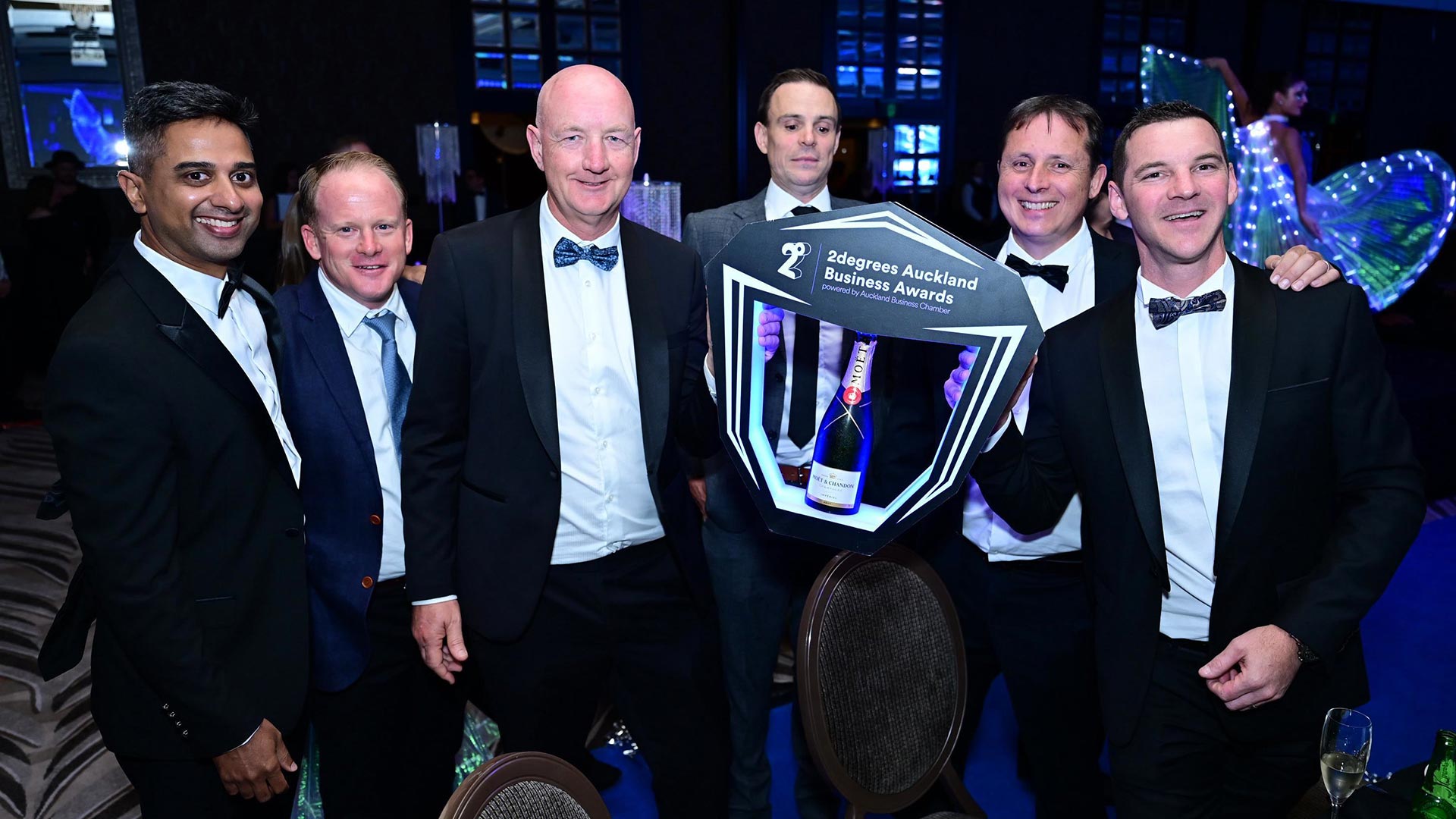
Berry’s own career shows how far an apprenticeship can lead. He began at Dalton Electrical as an apprentice through the Etco Group Employment Scheme (now operated via the Skills Group Employment Scheme and Skills Trades Training) and remembers staff being willing to teach him. Training coordinators also checked in regularly, giving him another perspective. “Having that external check-in regularly, I think, was quite important,” he says. The coordinators could ask questions he had not considered and help him stay open to learning.
Today around 500 apprentices are employed through Skills Group Employment-Etco, and at any given time about 30 of them are hosted for on-job training at Dalton Electrical, where Berry says they are treated as part of the team rather than as contractors. Their off-job block courses are delivered by Skills Trades Training. He recalls realising that the learning continues after qualification: “You sort of think when you finish your apprenticeship, ‘Great, I know it all now,’” he says. “But really, you kind of understand that you knew almost nothing. You knew enough to be able to absorb the rest of the information that was coming at you and continue learning.”
Berry describes Dalton Electrical as a service business: “We don’t make widgets and sell them. We are a service, like people are our product.” With around 170 staff, he says training, one-to-one coaching and mentoring support the company’s growth and give people room to pursue career aspirations without having to leave. Long-term employees and business partners who are also shareholders help shape the company’s direction.
Berry wants young people and their parents to see an apprenticeship as a serious first choice. His own university experience was brief, but he recognises that education and careers do not have to follow one route. “It’s not a second-rate sort of option,” he says. “You can come into a trade and then start your own business or become a project manager. The options are limitless.” His experience connects with two Skills Group white papers released this year. Multiple Pathways to Success calls for clear, valued routes from school into further learning and work; The Future of Apprenticeships argues for an apprenticeship model that keeps pace with changes in industry and technology and supports apprentices’ progression. Berry’s own route changed direction after university, and his focus on broad experience and continued learning brings those themes into an industrial workplace.
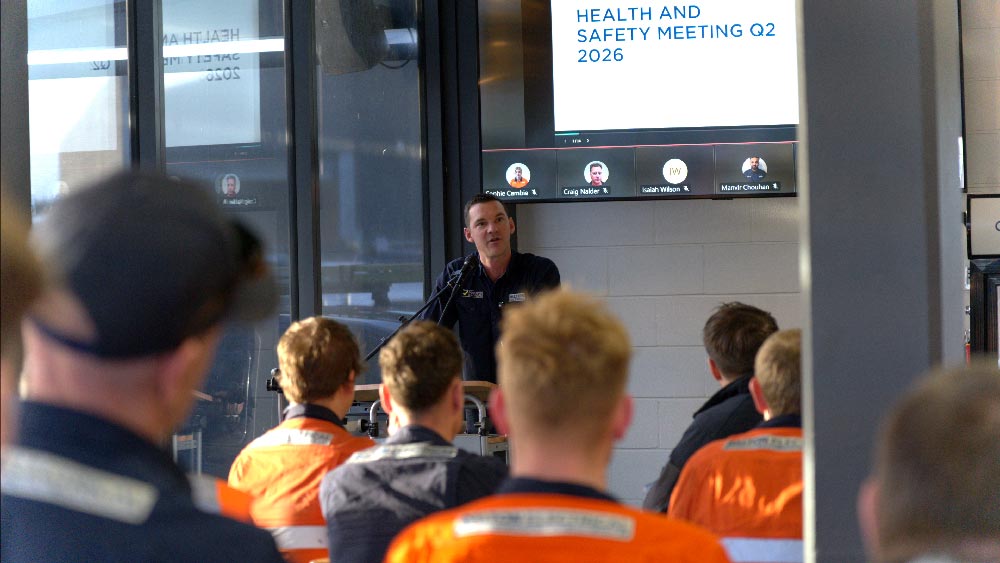
Once apprentices are at work, one challenge is ensuring that they build a broad range of skills rather than becoming known for a single task and being kept on it. Someone who is good at building control panels may be the first person asked to do panel work, but then miss out on fault-finding or other experience. Dalton Electrical uses a skills matrix to track what apprentices have done and, where needed, moves them between teams. “It would be a lot more efficient if we had this person doing it,” Berry says. “But they need experience in X, Y and Z. So let’s swap them between the teams.”
This approach to ensuring apprentices are exposed to opportunities to acquire a broad range of electrical skills aligns well with the Skills Group Employment-Etco model. One of the benefits of being an apprentice managed through the Group Employment model is how much variety and breadth they are exposed to during the course of their multi-year apprenticeship. Dalton Electrical plays a significant role in ensuring the apprentices it takes on really do get a broad cross-section of generalist and specialist jobs to work on. That breadth includes communication and organisation: planning jobs, managing site time, avoiding extra wholesaler trips and explaining work so customers trust it.
When hiring apprentices, Berry looks first for interest, punctuality and willingness to learn; technical skills can be taught. “Everyone here, I think, is more than happy to teach somebody who wants to learn.”
He also sees the need to adapt how people are taught. Some learn by watching a demonstration; others need verbal instructions or a chance to try the work themselves. Dalton Electrical spends time helping supervisors and managers understand different learning and communication styles. “There’s no one way that’s the right way,” Berry says. “You’ve got to be flexible enough to make sure that you bring all the team along with you.”
That same flexibility matters in how Berry leads technical people. Dalton Electrical’s leadership team has come through technical roles, he says, which helps them understand the work staff do and what customers expect. “I think you need to be a little bit technical to lead technical people.” Technical knowledge has limits, though: “You don’t know what you don’t know.” When the company needs expertise beyond its own, it brings in external consultants or facilitators. Berry sees leadership as a balance between understanding the work and recognising when someone else can add a useful perspective.
His approach to decisions is based on open discussion, not endless consensus. “It’s extremely healthy to have differing points of view and differing opinions so that we can make sure that we’re not all just sitting around a table saying yes to each other,” he says. “But there needs to be a healthy amount of debate.” He wants people to feel heard and able to challenge an idea, while keeping the team moving towards a decision. “If you try and committee everything too much, you don’t get anything achieved.”
Berry’s own learning continued after he had established himself at work. He returned to business study and completed the Institute of Directors’ Company Directors’ Course, finding it more useful than his early university experience because he knew what he wanted from it. “I knew what I wanted to do. I knew why I was there,” he says. “I’m here to get some tangible skills to come into work tomorrow and do something differently or better.” He valued the practical case studies and boardroom setting, which he compared to an apprenticeship.
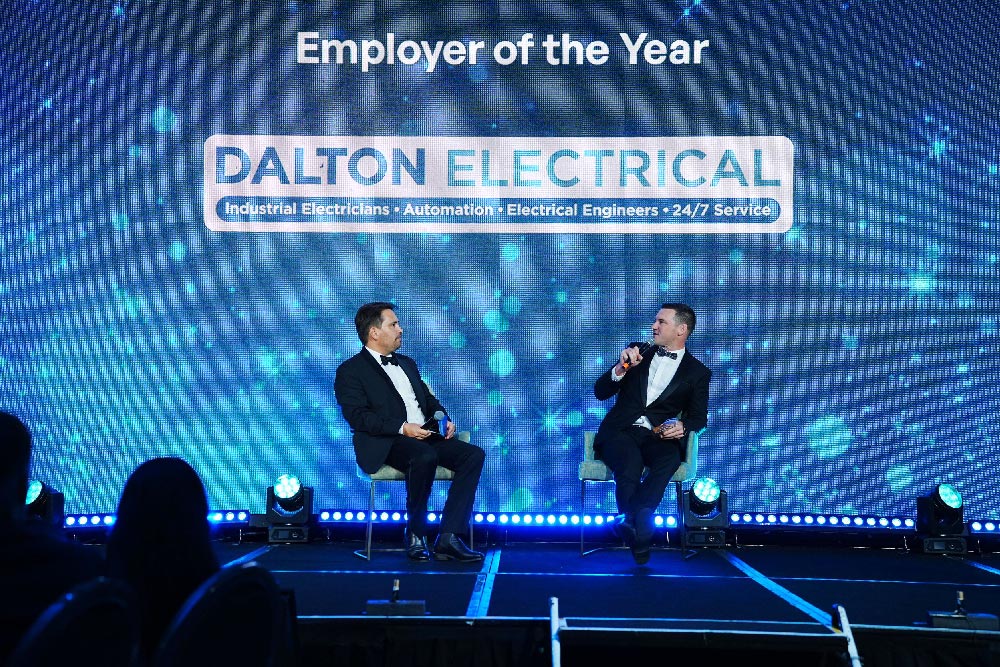
Dalton Electrical is celebrating 60 years in business this year, and Berry can name customers who have worked with the company for at least 40 of them. He sees that kind of longevity as the result of staying involved after installation, through maintenance, advice and planning for the next stage of a customer’s operation. “It’s not install a project and take off,” he says. “It’s install a project, look after it, and advise on what’s next.” The company’s aim, he says, is to become a “trusted long-term partner”. A project team might install and commission equipment, the automation team then integrates it, and the service team takes responsibility for keeping it operating. “We tag our service team in to look after the thing for the next 50 years.” That continuity matters when an unplanned shutdown can quickly affect production.
The work apprentices enter is changing. Around 2019, Dalton Electrical created a specialist engineering division focused on automation, instrumentation, electronics and related services. Berry says the business could see those capabilities becoming increasingly important to manufacturing in New Zealand. Today, the teams work with machinery that has operated for decades as well as new systems that generate data and can be monitored remotely. Older equipment often remains in use because, as Berry puts it, there is a strong “if it’s not broken, don’t fix it, don’t touch it” instinct. During COVID supply disruptions, parts were unavailable or too far away to wait for, so electronics technicians repaired components or found ways to keep equipment running. That practical response helped customers, while also highlighting the risks of relying on parts that may no longer be obtainable.
New technology brings further questions. Customers want real-time production data to understand machine performance, plan maintenance and identify possible improvements. Berry sees value in noticing changes in output, noise or temperature before a fault stops an entire line, but says connectivity needs careful management, especially when systems can be accessed remotely. Blanket rules can encourage workarounds that are less secure than designing a safe, properly segmented connection from the outset.
Berry expects electricians to need a wider understanding of connected equipment. “What at the moment seems like quite a niche role,” he says, referring to networking, IP addresses, routing and firewall security, “is going to be a base-level skill that every sparky is going to need to understand.” Data and AI can help reveal patterns that are hard to see in a single measure, but the value lies in using information to understand what is happening on a production line and where people should investigate. He sees automation and robotics changing the work rather than simply removing the need for people: “Not necessarily going to take people’s jobs, but just reallocate them into different or more interesting paths.”
For the apprentice who began in a quarry, those possibilities have included helping to lead the company that gave him his start. Asked what kept him at Dalton Electrical long enough to move from the tools into the Managing Director’s office, Berry points to the workplace and the people around him. “If this place wasn’t such a great place to work, I wouldn’t have stuck around for 20 years to try and get to where I am now.”