
How Far Is Far Enough?
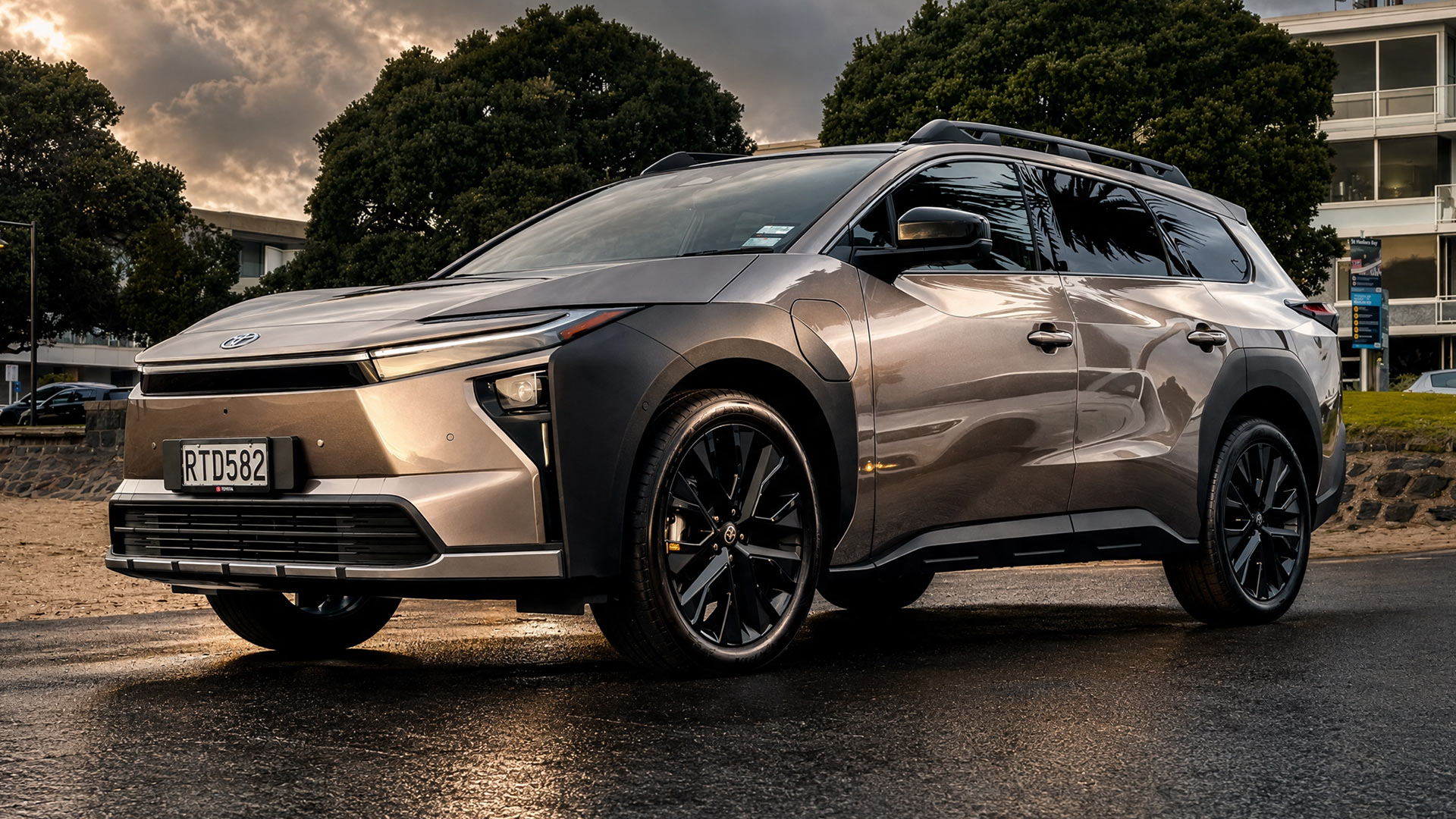
I wanted to see if I could take an ev away for the weekend and treat it like any other car. So, I booked the sealink ferry, picked up toyota’s bz4x touring and headed to waiheke. I had a few days planned at fleetwood and delamore lodge, and I wanted to see how the car handled everything from a load of shopping to the roughest track I could find.
The display showed just over 400 kilometres when I got in. I looked at it, then got on with the drive. I wasn’t trying to run the battery flat or prove a point. I wanted to see whether an EV could make for a relaxed weekend away.
The Touring’s official WLTP range is 488km, but that figure comes from a controlled test. In the real world, the weather, road, load, speed and driving style all make a difference. It’s useful for comparing cars, but I wouldn’t plan a trip on the assumption I’ll get the full number.
It’s easy to make the longest possible journey the test every EV has to pass. The more useful question is whether it fits the trips you actually make and how convenient it is to charge where you park. If you regularly travel long distances, tow, or drive somewhere with few reliable chargers, range matters more. If most of your driving is local and you can charge at home, the number on the dashboard becomes less of a daily concern.
For longer trips, a stop to charge can be part of the plan. On a public fast charger, the bZ4X is rated to go from around 10 to 80 per cent in as little as 28 minutes. That’s enough time to stretch your legs and have a coffee, assuming the charger and conditions are right. At home, you can charge from a household plug, though a dedicated wall charger is the more practical option. Plugging in overnight means you start the day with a charge, and off-peak electricity plans can help with the cost.
There are now more than 1,000 public fast chargers around New Zealand, which makes an EV road trip easier to plan than it used to be. I’d still check where the chargers are on the route, particularly if I was heading somewhere remote. It’s a small job before you leave, and better than discovering you should have stopped earlier.
The running costs aren’t simply “no petrol, no costs”. Light EVs have paid road user charges in New Zealand since April 2024. Electricity prices vary, and you still have tyres and servicing to think about. But there are fewer moving parts in an EV, so there is generally less maintenance than with a petrol car.
The Waiheke trip wasn’t a 488-kilometre endurance run. I was there to fill the boot, take the car on a weekend away and see what happened when the road got rough. The boot was an easy test. First, a full load of shopping. Then a few days away. It took both without a problem. It’s a good height for loading, and the integrated cover is handy for keeping the sun off whatever you’ve packed. It’s a boot, a trunk, whatever you want to call it. It works.
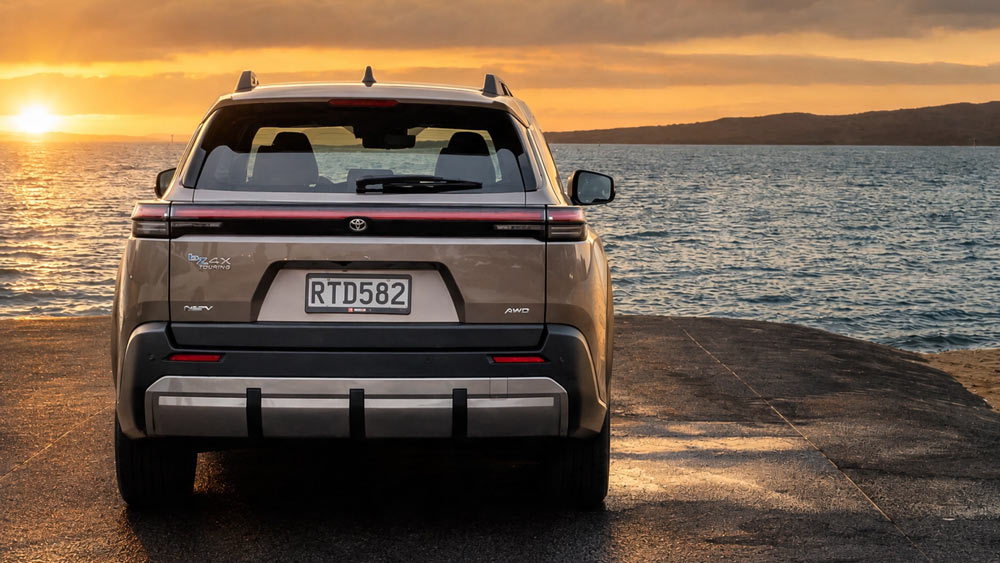
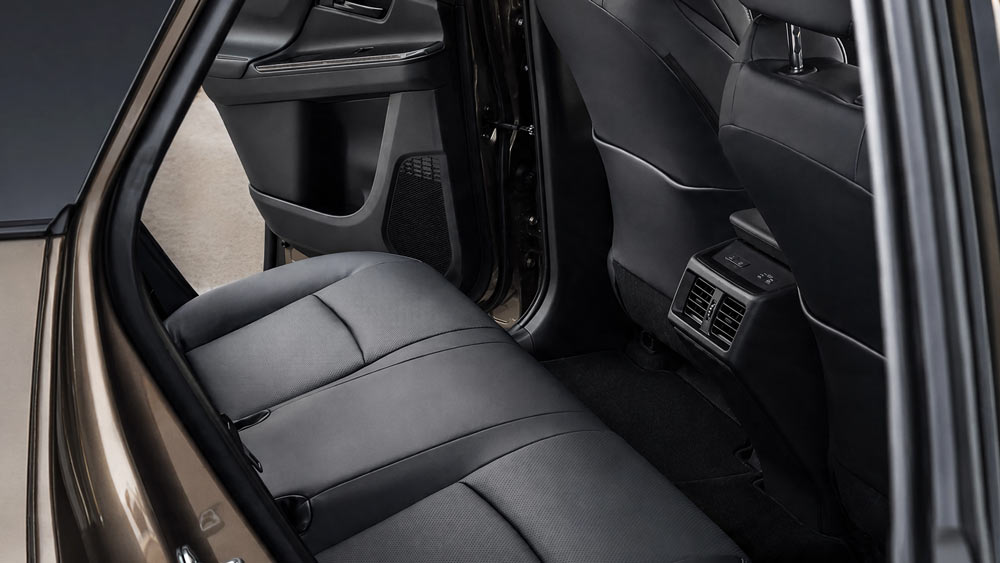
That extra space is what the Touring is for. Its longer rear body takes cargo capacity to 550 litres, and there’s more room for the gear that comes with a weekend away. The rear seats split 40:60, so you can make space for longer items without losing every seat. Sturdy roof rails can be fitted with crossbars to carry bikes, skis, kayaks and other gear.
The car is easy to drive. There are no gears to think about, and the weight sits low, so it doesn’t feel heavy through the corners. Where I could, I set the radar cruise control and let it take some of the strain. It behaved well. You need to keep a hand on the wheel, but a light grip is enough.
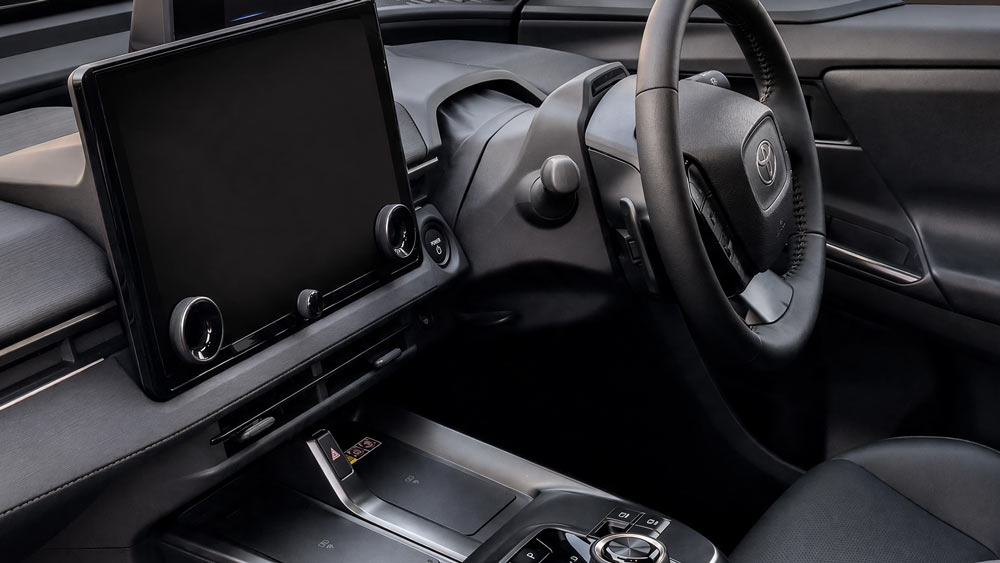
The bZ4X has a pre-collision system, dynamic radar cruise, lane departure alert, lane tracing assist, road-sign assist and adaptive highbeam, along with a camera that monitors the driver. I found the radar cruise useful. The lane-keeping system has a few different functions, and I’d need more time with it to get fully familiar. On the motorway, the lane management seemed well behaved.
Then I found the track beside Waiheke Distilling. It was narrow, steep and unsealed, with patches of mud. More goat track than road. I thought the all-wheel drive might finally give me something to complain about. Instead, the Touring just climbed up it. You barely noticed how rough the surface was.
I wasn’t trying to prove it’s a hardcore off-road vehicle. I wanted to know whether an electric family SUV could deal with the sort of rough, uneven road you might take to a beach or a place to stay. It could. On a rough track, the Touring felt composed, and the extra grip from the all-wheel drive was welcome.
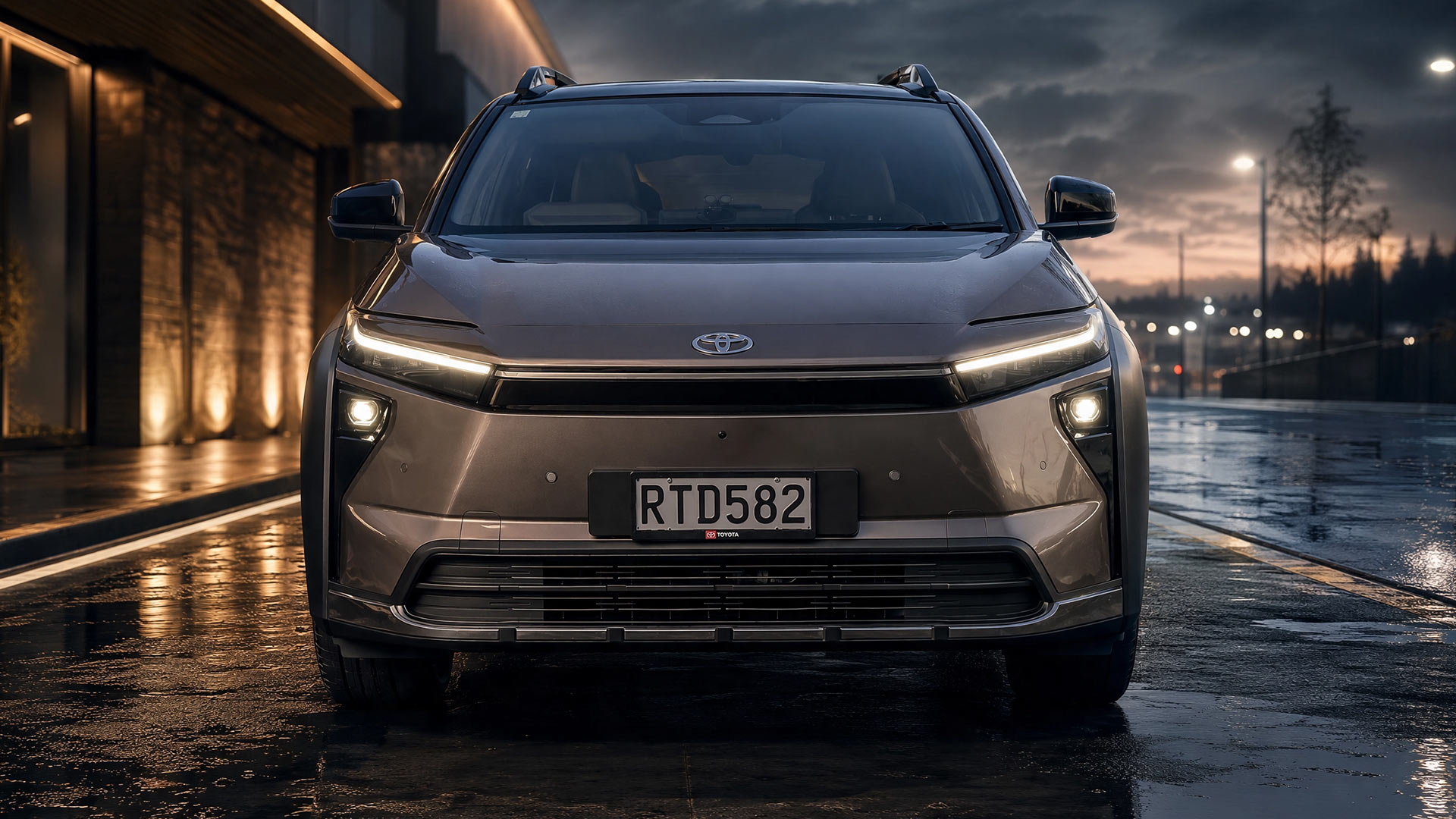
The colour helped the Touring get noticed everywhere I parked. It’s called Brilliant Bronze, and people kept asking what the car was and what the colour was called. I liked it when I first saw it. I liked it more by the end of the trip.
The New Zealand bZ4X range has three grades, all using the same 74.7kWh battery. The difference in range comes down to the motor setup, wheels, tyres, weight and body shape. The Pure has one motor and front-wheel drive. Motion and Touring have two motors and all-wheel drive.
The Pure has the longest range, with 167kW total system output and a WLTP figure of 591km. If most of your driving is on sealed roads and you want the longest distance between charges, this is the one to look at. Pure can tow up to 750kg. The Motion adds all-wheel drive and lifts total system output to 255kW. Its WLTP range is up to 517km, and it makes sense if you regularly deal with wet roads, gravel or uneven surfaces. It can tow up to 1,500kg with a braked trailer.
The Touring is the most powerful, at 280kW. It’s 140mm longer and 25mm taller than the regular bZ4X, with the extra space going into the boot. It gets unpainted black wheel-arch mouldings, black 20-inch wheels with matte black aero caps, higher bridge-type roof rails and a choice of black or khaki interior. It can also tow up to 1,500kg braked.
The Touring and Motion have heated and ventilated front seats, a panoramic roof and a 1,500W power outlet in the cargo area, while every grade gets a 14-inch screen, an updated cabin layout, multi-colour ambient lighting and a heated synthetic-leather steering wheel. Nice details when you’re spending a few hours in the car or loading it for a trip.
The battery is another thing people worry about when they’re looking at an EV. The bZ4X battery is covered by an eight-year or 160,000km warranty, whichever comes first, with the battery capacity warranty providing for at least 70 per cent of its original capacity under its terms. That offers some reassurance for buyers thinking about battery performance over the longer term.
Toyota took its time bringing a fully electric vehicle to New Zealand. The Prius made hybrid driving familiar to a lot of people, but the bZ4X was Toyota’s first battery electric vehicle to go on sale here, in 2024. Now the line-up has more choice, more power and longer range, with the Touring aimed at people who want extra room and all-wheel drive.
By the end of the weekend, I’d covered over 150 kilometres and still had 250 kilometres of range left. I hadn’t needed to think much about charging once, which was exactly what I’d hoped to find out when I set off.
Range anxiety isn’t silly. There are real situations where range and charger availability need careful thought. But the number on the dashboard doesn’t tell you whether an EV will suit your life. This trip was a reminder that a car is also the boot, the controls, the drive and whether it gets you down the road you want to take. The bZ4X Touring does all of that well, and I stopped thinking about the range pretty quickly.
It’s not perfect. Some of the menus take a little figuring out. But it drives well, looks good and does what you need it to do. What am I meant to say when a Toyota does exactly what it’s meant to do?
The bZ4X is good. Very good.