Horological Curiosities: Rolex
100 Years of Oyster
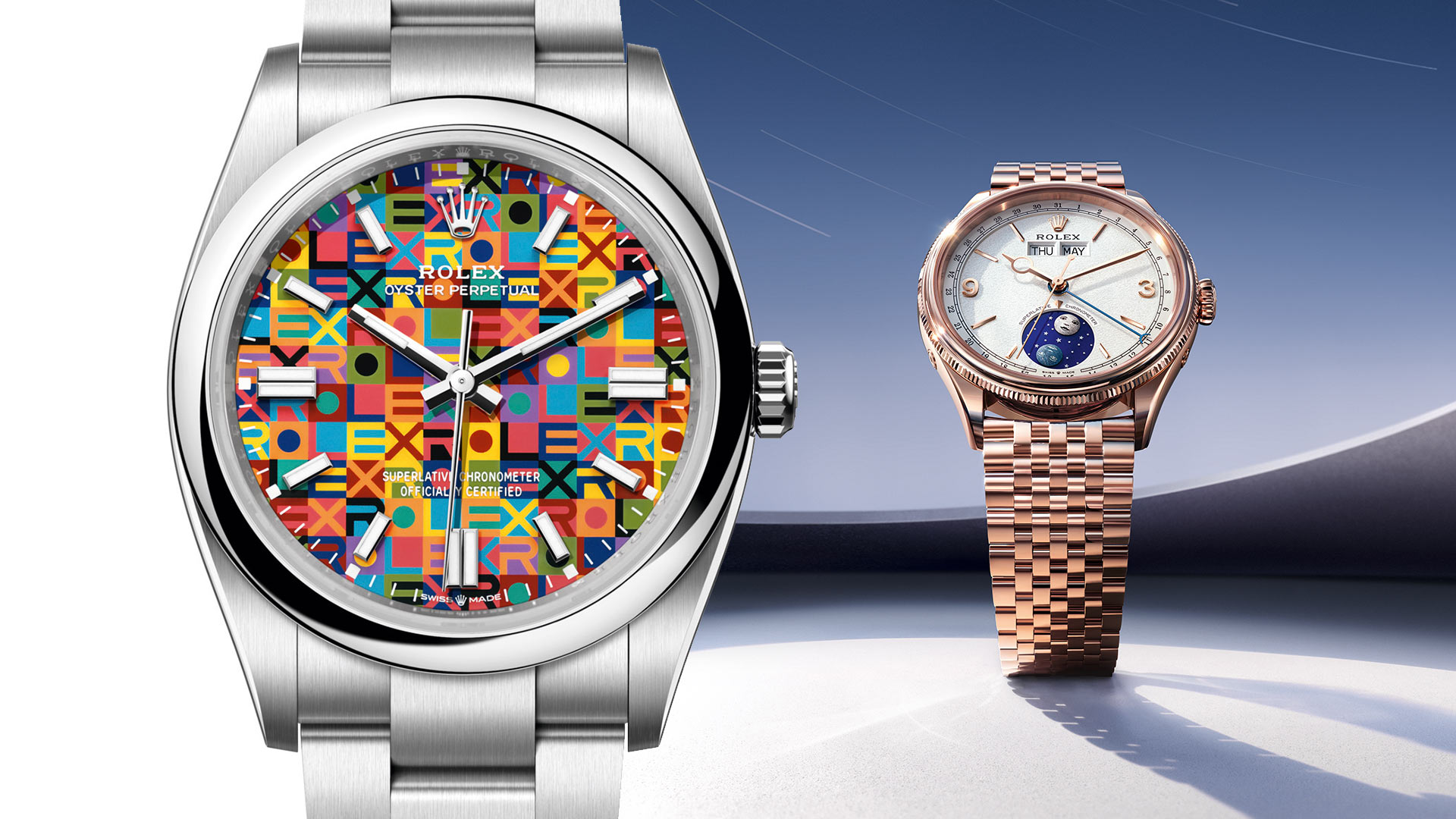
The Oyster Perpetual is usually a reserved, refined piece, a symbol of Rolex’s legacy. The Oyster Perpetual was literally crowned to symbolise the celebration of 100 years of Oyster, the first waterproof watch Rolex ever made. Rather than move into the centenary with quiet poise, Rolex is going in with a bang with striking and unexpected variants.
The most striking of these is the Oyster Perpetual 36 which displays a multicoloured lacquer dial decorated with the Jubilee motif drawn from Rolex’s own name. Each colour is applied one at a time, so absolute precision is required to ensure that all the shapes and letters making up the motif are positioned perfectly.
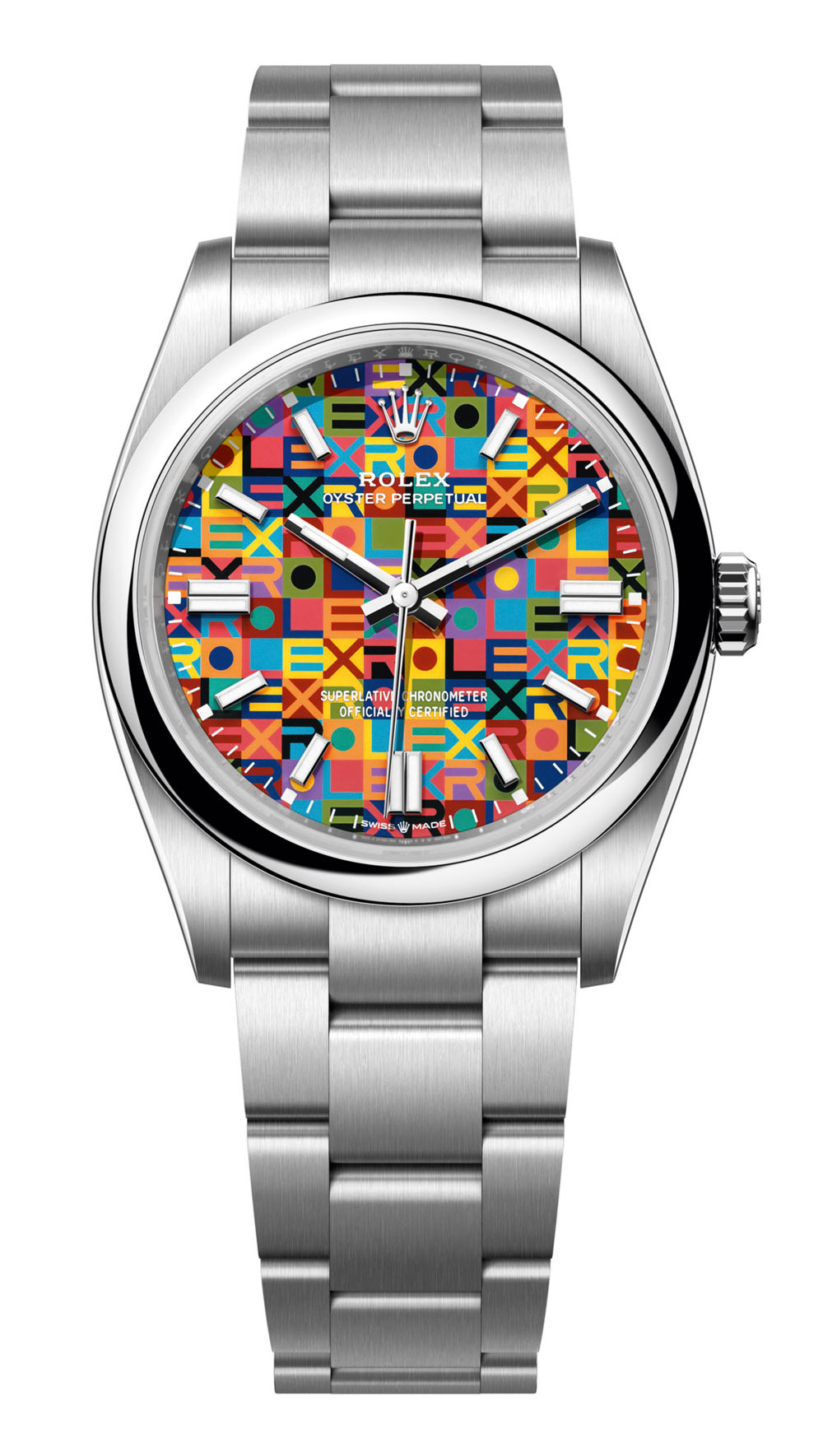
The Oyster Perpetual 36, whose number denotes its case size, is crafted from a solid block of Oystersteel, which is exclusively made by Rolex. This is an alloy from the 904L steel family, which you’d normally find in aerospace and chemical industries, pretty much anywhere you’d require steel that never gives up.
It also comes with the classic Oyster bracelet, developed to perfection in the late 1930s. It comes with an Oysterclasp and the familiar Easylink extension link if you need to instantly add another 5mm to the length.
As is tradition, the Oyster Perpetual 36 is waterproof up to 100 metres with multiple safeguards in place to protect the movement inside. That would be the precious self-winding calibre 3230 fitted with escapements and hairsprings resistant to strong magnetic fields. It’s also highly shock-resistant with high-performance Paraflex shock absorbers. The self-winding system is made possible by the Perpetual rotor which offers a power reserve of 70 hours.
Rolex has managed to create an eternally contemporary Perpetual 36 fit for a centennial.
Rolex Padellone
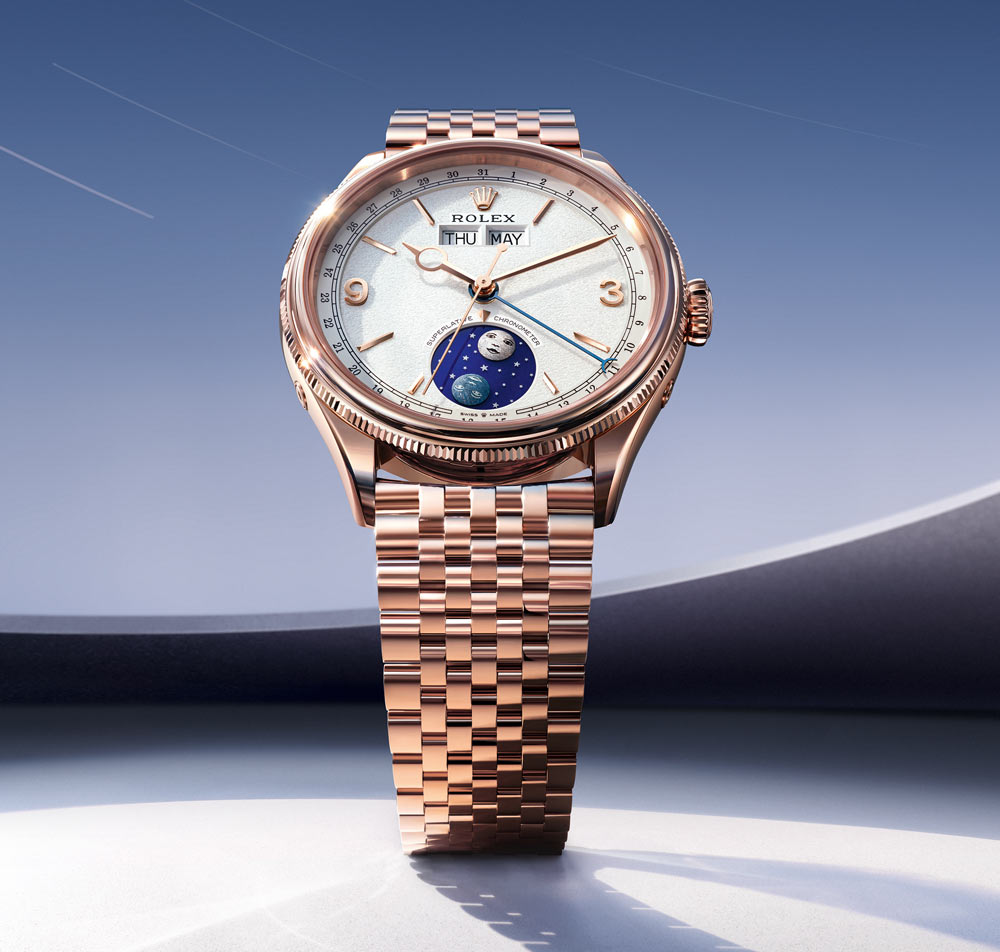
Inspired by the earlier reference 8171, known to collectors as the Padellone, the latest incarnation brings the addition of an instantaneous complete annual calendar, now known as the Perpetual Padellone. It displays the date, day, month and moonphase as well as the day-to-day hours, minutes and seconds.
Housed in a 39mm case, the blue centre hand with its crescent moon tip points to the current date. At 12 o’clock are two apertures that read the day and month. At 6 o’clock a blue enamelled disc does a full rotation each lunar month. Fittingly the two moons on the disc are made of literal meteorite. That’s the closest we’re going to get to having them actually made of the moon.
On the back you’re able to admire the movement embellished with their signature Rolex Côtes de Genève and a cut-out oscillating weight in yellow gold. The Rolex Côtes de Genève is the pearl finish overlapping circular graining effect you’ll find on the body of the movement.
You can get the piece in either 18ct Everose gold or in a 950 platinum version with a grained-finish ice-blue dial. In 18ct Everose gold, it is fitted on a Settimo bracelet or a matt brown alligator leather strap. In its 950 platinum version, the watch is paired with a matt black alligator leather strap.
Inside it uses the calibre 7190 beating at a frequency of 5 hertz. It’s particularly thin for a Rolex movement but not for lack of cutting-edge technology. The mechanism of the annual calendar integrated within calibre 7190 is particularly innovative and reliable. It is based on an entirely new system named Haplos.
I’m putting this piece squarely in the wonderful camp.