

Southland The New Centre of Our Economy
‘Recently I went to Invercargill on business…’ – say that intro in a bar or cafe and you have to pause out of courtesy, like a stand-up comedian, to allow your listeners time to insert their hoots of derision and/or region-specific jokes. I know the drill, I’ve heard it all before; I once spent a (very enjoyable) year working in Hamilton and got the same reaction from all my smug Auckland-centric colleagues. Most of whom had never even been there, I might add – not even for a hotly contested Blues/Chiefs match. Their loss.
The reaction to my opener was a little more muted than its Tron equivalent this time, however. Partly because things aren’t going so well for some here in Auckland at the moment and partly because a few Jafas haven’t heard of Invercargill before (south of Huntly? You’re taking the p***!). But the really astute amongst them were quiet, simply because they’re aware that there’s something afoot in Southland, and it could be quite good. For both the region and perhaps even our nation too.
Location, Location, Vocation
The internet, connectivity issues aside, has made geography irrelevant. No matter where you live in this big old world you can go online, buy new filters for your air conditioner from China, post political tirades on US websites and bet on cricket from your Indian account. Now, AI is making geography matter again.
Southland has something the world suddenly wants. No, not beaches, vineyards or an organic spirulina bar (although there’s a TANK in the Clyde St shopping centre and the Tuatara Backpackers Lodge does do a mean fruit and veggie smoothie), but it does have cold, water, cheap renewable electricity, lots of ‘empty’ land and soon a direct fibre cable across the Tasman.
Big deal? It is if you’re looking to invest billions in a data centre, as all of those physical attributes can come in real handy. And Southland has them all: New Zealand’s chilly, hydro-powered, underpopulated province is suddenly dreamland for the latest tech industry. For example, cooling accounts for around 30–40% of a data centre’s electricity draw – that’s not budgeting, that’s physics. Put a warehouse load of servers someplace warm and you’ll be spending nearly half your power bill just keeping them from melting. Put it in Southland and the local crisp, invigorating air does half the work – for free!
Splitting the Electron
Hang on, woah woah woah! This proposed Datagrid facility could eventually become New Zealand’s second‑largest electricity user – after the nearby Tiwai Point. And Tiwai already gobbles up to 572 megawatts of power when it’s really got its smelter going on. That’s about 13% of our national grid going into aluminium. Add another similarly sized chunk of data centre usage and we could be looking at close to a quarter of our entire national grid disappearing into just two energy-hungry companies.
But what about powering our homes? Factories? All these new grand electric train systems – and EVs too, as apparently they’re the future. (But not if there’s no power left to charge them.) How can we split our electron pile to keep everyone happy?
We can’t really, unless some new field of quantum physics jumps up to solve this paradoxical equation. Not impossible but unlikely in the short term. No, far more likely will be our politicians – and investors – having to make the tough calls, weighing waxing new industry against waning old ones. Once upon a time we had big electricity users like paper mills, meat processing and even an oil refinery at Marsden Point. Now, sadly – very sadly! – a lot of these power-hungry sectors are gone, or at least a shadow of their former glorious selves.
So what do we do now? Sit around the campfire singing mournful folk songs about how good our old manufacturing sector used to be – or do we get with the 21st century and wade into developing new ones?
This data centre in Southland won’t be exporting raw electrons, it’ll be upgrading them. Hydro becomes computing, computing becomes a service, and that service is sold to the world. Our old economy used to ship logs and frozen carcasses. Our new one could be shipping intelligence.
Assembling Infrastructure
But before we start carving pou for the facility entrance, we need to pause and reflect, as the future hasn’t actually been built yet.
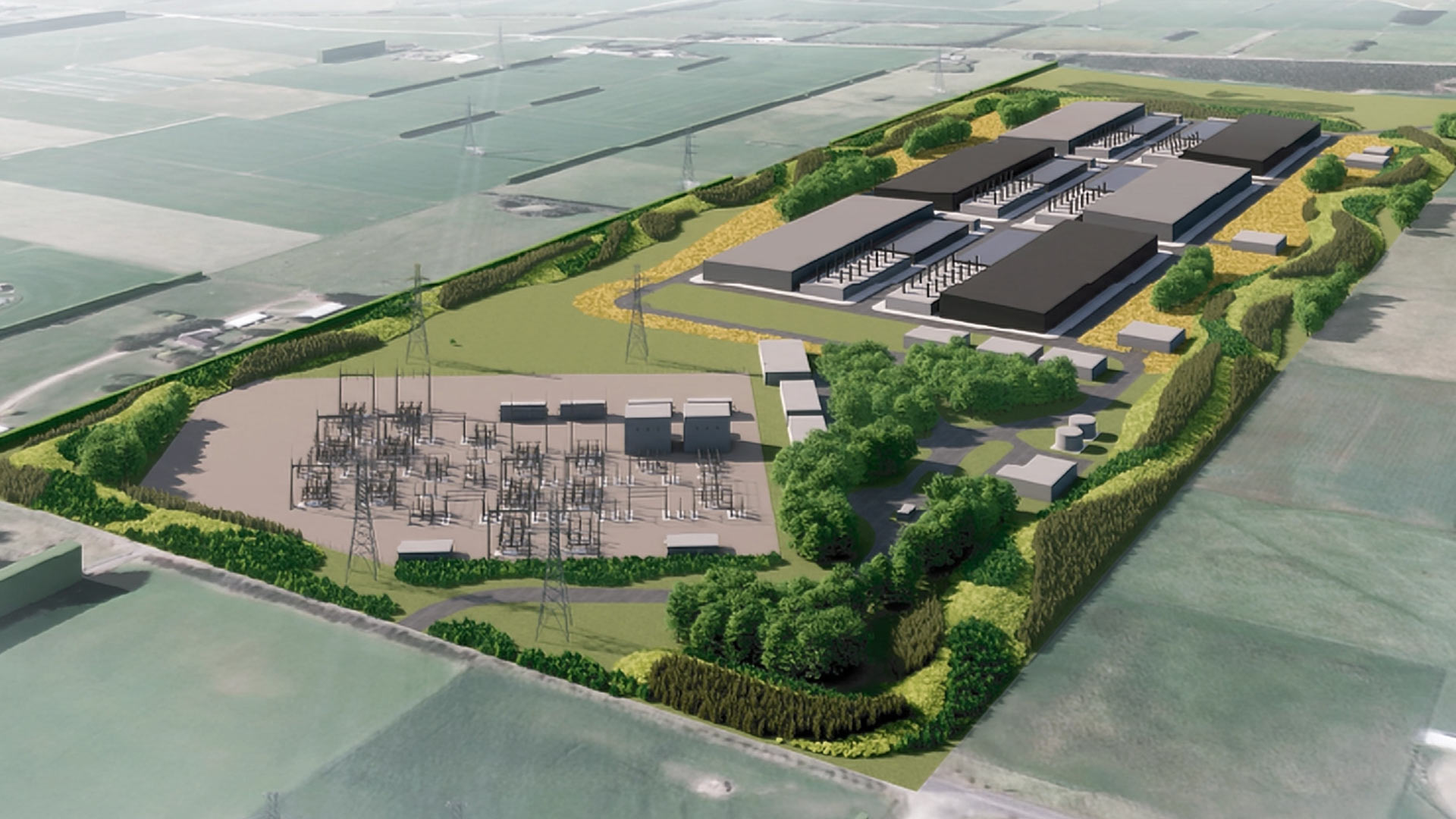
Sure, Datagrid has resource consent, land, a 140MW power purchase option with Mercury and, in July, Mercury bought a 12.7% stake in the company for about $53 million. Enough investment to allow site works to begin. But the really big moolah hasn’t been committed yet. A final investment decision on the proposed 360MW facility is expected later this year. So, until this money is found, Datagrid isn’t a giant AI factory humming away in Southland – it’s a bunch of pieces and an intention of becoming one. And that gives us some time to ask the questions that always come up whenever offshore investment is involved: ‘Do we need foreign investment?’
The answer is kind of ‘yes’, by default: Datagrid itself is a good example of how complex modern investment structures can be. The project started out with French and Austrian ownership, then Singaporean infrastructure investor BW Digital came in, and the project has since been restructured around founder Rémi Galasso’s interests. Now our own electricity company Mercury has come on board as both an investor and prospective power supplier. The reality is this kind of layered ownership with a bunch of overlapping roles is not uncommon in modern large-scale infrastructure projects. So simply saying ‘some foreigners are coming over to snatch our electricity’ is completely at odds with how projects are put together these days.
But Why Southland?
Sorry, conspiracy lovers, but it’s unlikely a cartel sat around a table cackling evilly while pronouncing that Invercargill should become an AI centre. The reality is a lot more humdrum: someone identified the electricity, another identified the land. Engineers looked at transmission and cooling. Someone planned the fibre connection. Someone supplied the finance. Someone approved the consent. Someone decided the risk was acceptable.
Then someone, somewhere, looked at the map and chose Southland. Pet peeve: we always seem to describe economic change as though it simply happens, e.g. ‘the market decided’, ‘technology’s changed everything’ and ‘AI is the future’. These aren’t natural outcomes like rain or daylight; actual humans made these decisions, usually lots of them, working independently and sometimes pursuing very different goals.
And sometimes, these decisions mean that an area that has spent decades being economically fringe can suddenly become strategically important. We’ve seen it before: Marsden Point for Whangārei, Wattie’s for Hastings, gold for Dunedin, even whaling for Banks Peninsula back in the day. And Southland isn’t the only one: data centres are springing up all over the world – often in offbeat places like Iceland, northern Sweden and icy old Canada. No points for spotting the obvious similarities!
Local Upside
So what do the locals get out of it? Does Southland get a giant building and little else? Or will the project drag in a huge array of engineers, coders and researchers, along with the suppliers, startups and new businesses necessary to maintain and support such an endeavour? Plus, will we as a nation become an owner and participant in the new industry, or just look on from outside the brightly-lit security walls?
The truth is, we don’t really know yet whether Datagrid will be obviously good or obviously bad for us. What is perhaps clear is that projects like this deserve a much bigger conversation than ‘boo, foreigners are taking our resources’ versus ‘yay, investment’. The internet was supposed to make geography irrelevant, yet these AI projects are reminding us that the cloud still needs a postcode.
Perhaps Southland is giving us an early glimpse of what that new map might look like.
Counterpoint
The data centre debate has been a heated one around the world. It’s been the only thing to unite the fracturing voting base in the United States in years. Nothing brings people together quite like tech oligarchs banging on about their LLMs being smart enough to take everyone’s jobs and then being surprised when the great unwashed push back on them wanting to build featureless cubes that push up power prices.
Green Party co-leader Chlöe Swarbrick has called for the handbrake to be pulled on new data centre builds, following the lead of New York and Australia. New York has put a one-year moratorium on new builds, while Australia is building out its own set of regulations around power and water consumption.
The European Union also requires responsible reporting from its AI data centres.
What would be the ongoing benefit to Southlanders? The most obvious immediate metric is jobs. At its height, Datagrid’s AI data centre will create 1,200 “skilled and technical jobs”, although this is only for the buildout. The 78,000-square-metre facility will reportedly need only 50–80 people once it’s humming along. Tiwai Point, by comparison, has “about 1000 fulltime-equivalent employees and contractors” at the smelter, with “a further 2200 people offsite employed indirectly”.
There’s also the data sovereignty angle. Currently all your requests are going overseas, including all the ones from our Prime Minister asking ChatGPT who in his cabinet is plotting a coup this month.
Either way, hyperscale data centres have a marketing problem. If they want to win public approval, they’re gonna have to really prove themselves.