
How to Increase Productivity with AI and Machine Learning
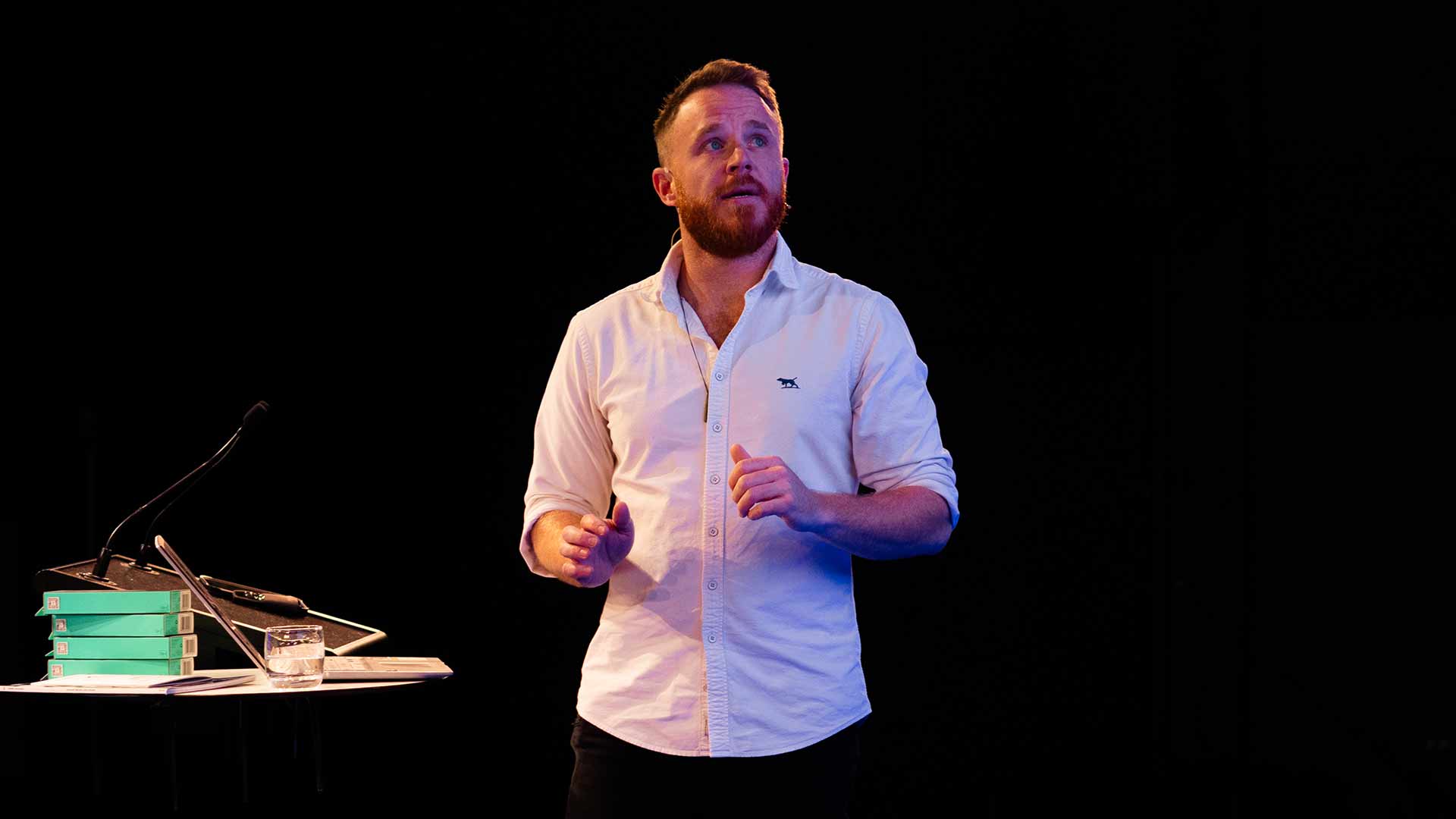
Avocado AI co-founder Cowan Henderson followed Diana Sharma with a figure he trots out a lot: AI productivity is “ten per cent about the tool” and “ninety per cent about leadership, capability and culture”. The rest of his slot was a no-nonsense guide to closing that ninety per cent.
“We’re educators, not consultants,” Cowan Henderson told the room, before rewinding a decade. The lesson that shaped everything landed when he was twenty-three, working at a fifty-person civil construction firm that was “entirely paper-based”. iPads had just arrived, and being “a curious person”, he fancied binning the paper and the “twenty-thousand-dollar A1 printer”. He spent six months buying the kit, setting it up and rolling it out to sites, handed the iPads over, and learned the hard way. “I’d done ten per cent of the work,” he said. “The other ninety per cent was actually bringing people on the journey to change the way they work.”
That gap, he reckons, is exactly what’s happening now. Avocado AI’s own enquiries tell the tale: a year ago about twenty per cent mentioned capability or embedding, now it’s eighty-one; mentions of tools already rolled out have jumped from six per cent to seventy-six. “The tools are installed,” he said, “but the capability is not.” The questions have flipped too. Where firms once asked “what is AI?” and “which tool should we use?”, now they say they have rolled out Copilot “but nothing’s changed. Help.” He pointed to one company of 650 staff across thirty countries that had dropped nearly four hundred thousand dollars on Copilot in a year with little to show, plus leaders “in their fifties” who want nothing to do with AI because “they think it’s going to be past their retirement”.
His fix is two capability engines. “Leaders set the conditions. Teams change the work.” Leadership has to model good use, set guardrails and, above all, create psychological safety, because people are scared about their jobs and scared of failing, scared they won’t look “as cool as Dave three desks down that’s steaming ahead with AI”. Teams, meanwhile, need to practise on their own real work rather than generic training, swap use cases across the silos of big Kiwi organisations, and review the output with a bit of judgement, given “there’s so much AI slop out there”. The payoff only comes, he said, when access becomes adoption and both engines move together.
None of that comes from one session, and he was refreshingly honest about events like this one. Borrowing James Clear’s marginal-gains maths, he said: “A one-off workshop can create curiosity, but it doesn’t create capability. The capability comes from a system of repetition, real work and iteration over time.” And no, there’s no “magic AI wand” that sorts everything overnight, “newsflash, it doesn’t exist”, however hard the marketing tries to convince you otherwise.
The meat of the talk was a prompting framework. “Good prompts start with clear thinking and the ability to define a problem,” he said, suggesting you picture explaining the task to a capable new intern. His six building blocks are task, role, context, limitations, format and reasoning, and reasoning is the one he loves. “Reasoning is where the useful thinking happens,” he said: the point where you ask the AI to be thoughtful rather than just do the job, prodding it with what am I missing, which option is best and why, challenge my thinking.
He proved it with a live demo, running the same messy meeting notes through a lazy prompt and a proper one. The lazy version “looks finished” and, in his words, “basically kisses your ass”, hiding weak evidence and leaping straight to “build a portal”. With AI now “getting better at making rubbish seem really good”, that slop sails out the door and dents your brand. The better prompt, with limits like “do not invent figures” and an order to challenge the portal idea, dug out the real problem and flagged what was missing. “The basic prompt creates suggestions, the better prompt creates a decision conversation,” he said. “That is the difference between using AI to write faster and using AI to think better.”
From there he reached for reusable assistants and a sharper question: “no longer what can AI write for me, it’s what could this turn into?” A policy becomes a checklist, a dull PDF becomes a game. He showed an app he’d knocked up in Claude from a single prompt, turning his partner’s AA driving feedback into a Duolingo-style coach. And his sign-off was the line he always ends on: “Stay curious. You’ve got to be like a cat. You see a new button, press it.”
5 Takeaways
- Ten per cent tool, ninety per cent people. Buying the licences is the easy bit. The real work, and the real payoff, is the leadership, capability and culture you build around the tool, not the software.
- Lead with psychological safety. People hold back because they’re scared of getting it wrong, or of looking slow next to the office show-off. Model good use, set guardrails, make it safe to muck about, or access never becomes adoption.
- Capability is a habit, not a workshop. A one-off session sparks curiosity; repetition, real work and iteration are what build skill. Treat AI as continuous improvement, not a three-month project with an end date.
- Learn the six building blocks. Task, role, context, limitations, format and reasoning turn a vague ask into a useful one. Reasoning especially, “what am I missing?” and “challenge my thinking”, moves AI from writing faster to thinking better.
- Ask what your information could become. Beyond writing, AI can turn a policy into a checklist or a boring PDF into something interactive. Pick something frequent, annoying, info-heavy, low-risk and clearly owned, then stay curious.