
Some Things Never Change. Thankfully Offices Have. The Bath That Time Forgot
There is a famous thought experiment in special relativity involving twins. One leaves Earth in a spacecraft travelling close to the speed of light, while the other stays behind. When the travelling twin returns, far less time has passed for him than for his sibling, who has grown old. Though the twins were born moments apart, Einstein’s special relativity means they can age at very different rates.
The same thing happened to me the other week. A couple of weeks ago, I installed a bath at my bach — one of those old-school things that looks like an enamel hot tub without the bubble jets. It was a new installation rather than a replacement, so that meant the full treatment: cutting hot- and cold-water pipes and a waste line into the existing plumbing. You know, hardcore stuff.
But, because I had not done pipework at that level for more than 40 years — since Britain went to war with Argentina over the Falklands — I figured I had better jump on YouTube. Surely four-plus decades of innovation would have rendered my ancient 1980s trade knowledge obsolete?
Uh … no. Not at all, actually. Watching the tutorials, my mouth fell open as the pipes looked familiar, the fittings looked familiar and the waste pipe looked familiar. Even the adhesive came in the same little pot with a brush built into the lid.
Basically, nothing had changed in 44 years. I could have stepped into a time machine in my overalls in 1982, zoomed forward to 2026, installed my bath, then gone back to watch the All Whites get booted out of the 1982 World Cup in Spain on Sport on One, and nobody would have noticed a thing.
What else has changed so little in 44 years? How about office work?
Ah, no … That has changed enormously. I know because I worked in an office back in the day too, and over the same period offices have become almost unrecognisable.
Back then, there were no desktop computers, there was still a typing pool — a separate room populated by young women with big hair — people smoked at their desks, and you had to wear a tie even as a gofer.
In other words, the old-school office is unrecognisable compared with today’s version — assuming you even have to enter one now that Zoom and working from home are genuine options rather than excuses for a mental-health day.
So, while one industry sector has become completely revolutionised after four decades, the other is virtually unchanged. Why is that?
The answer is simple: innovation doesn’t follow need – it follows incentive.
Do you think people such as Bill Gates, Steve Jobs and Jeff Bezos could not improve a copper-ring crimper if there were billions to be made? The problem is that the benefits of improving a pipe fitting by 10% are tiny compared with a similar improvement in communications, information, software or logistics, so nobody bothers. Silicon Valley turns a blind eye to the bathroom in its eagerness to conquer the boardroom.
Sure, some so-called innovations are little more than customer-fleecing chicanery: Apple removing the headphone jack so you are pushed towards its earbuds, Microsoft charging subscriptions for Office software you once bought outright, and cryptocurrency as a genuine financial tool — we are still waiting, guys.
On the other hand, some breakthroughs from the past 44 years are genuine game-changers, such as online banking. If you are from the Dark Ages like me, you are still dancing for joy at not having to queue at a bank during your lunch break just to pay the power bill. GPS and Wi-Fi have done away with hopeless paper maps and newspapers that turned to mush in the rain, while the camera in your pocket is better than anything a professional photographer would have owned in 1982.
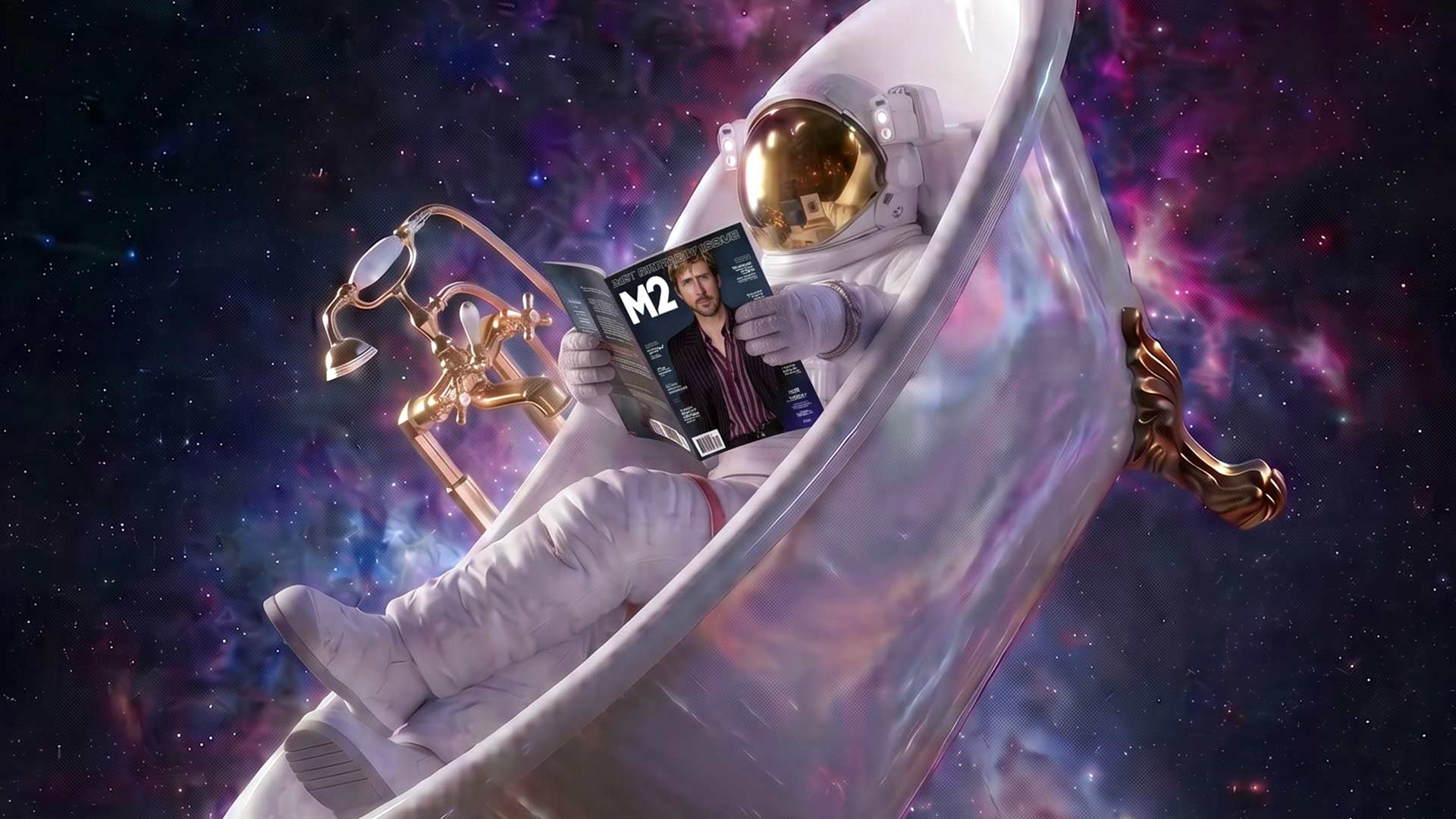
So, while I slid beneath the scented bubbles at my bach, I thought about those twins again. One had spent 44 years in a world of smartphones, Wi-Fi and dongles. The other still glued PVC pipes together in the same way people did when Rob Muldoon was prime minister. The irony was that the true time traveller was the one flying through space in a bathtub-shaped spaceship.
Einstein would have understood.