
The Apprentice Maker
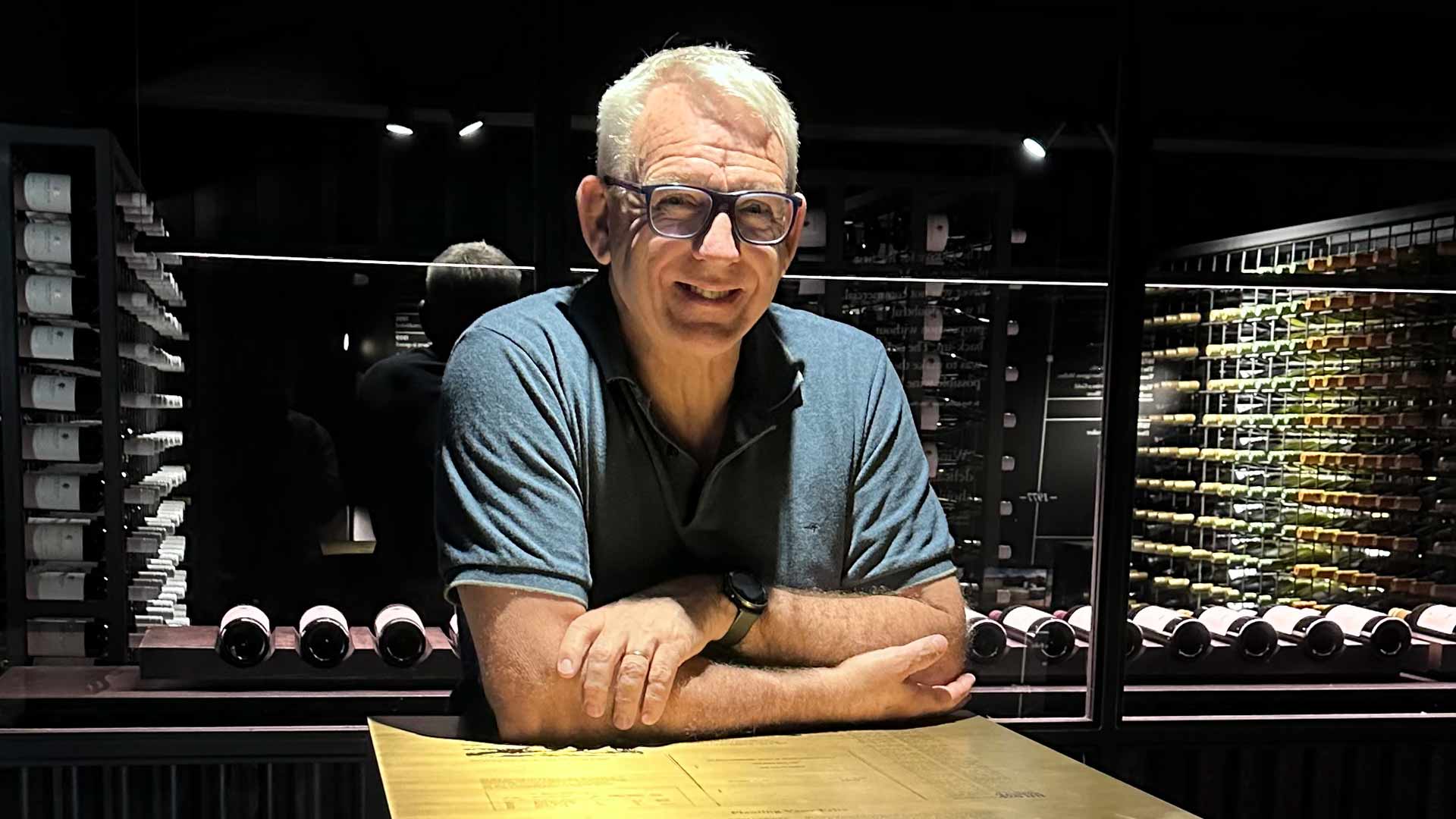
Peter Couchman grew up inside an older version of the trades: command, control, guarded knowledge and ‘do it my way’ rules. Today, after more than 40 years in the industry, he leads one of Wellington’s most respected electrical contractors and is helping to build the next generation of electricians.
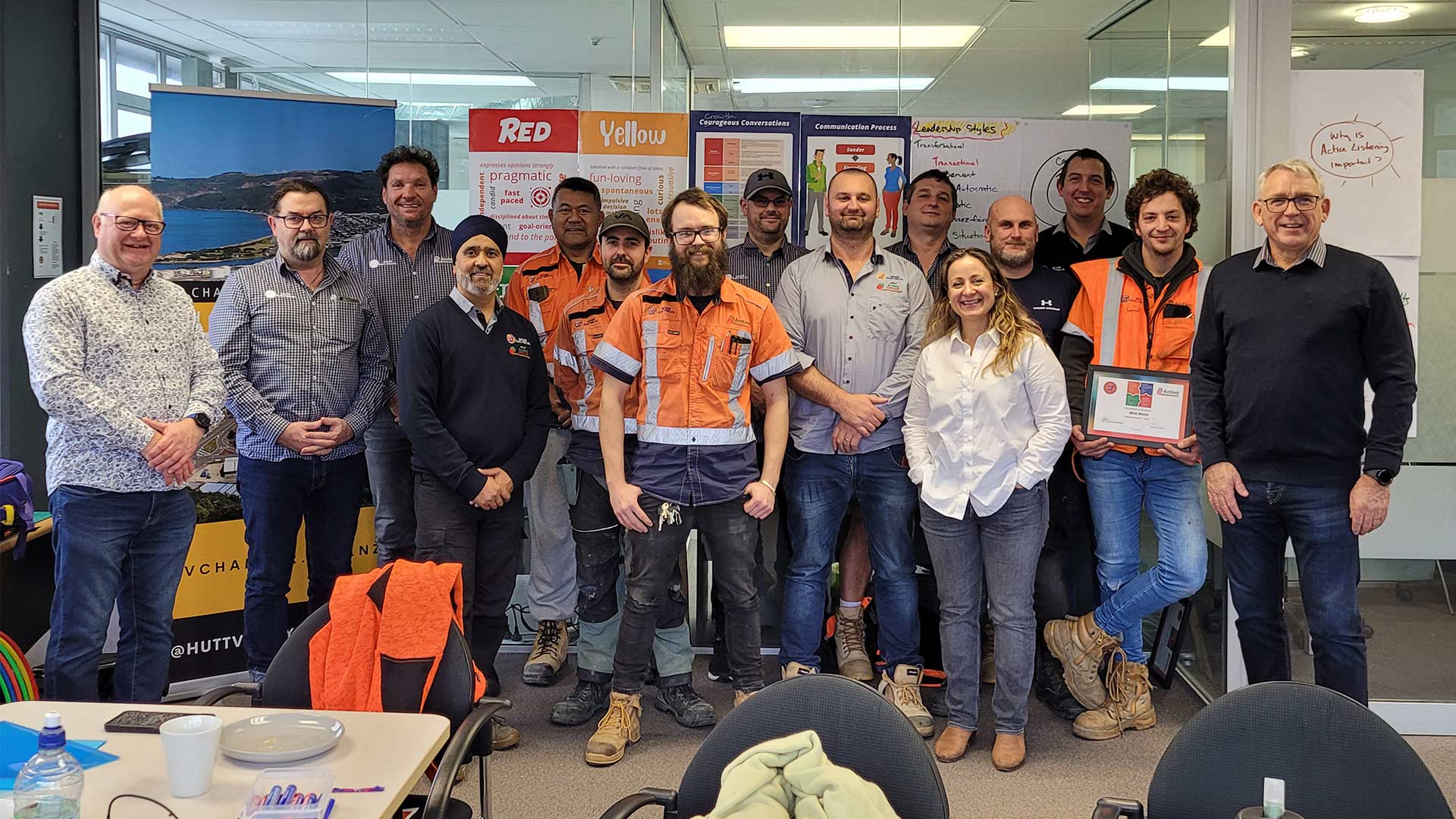
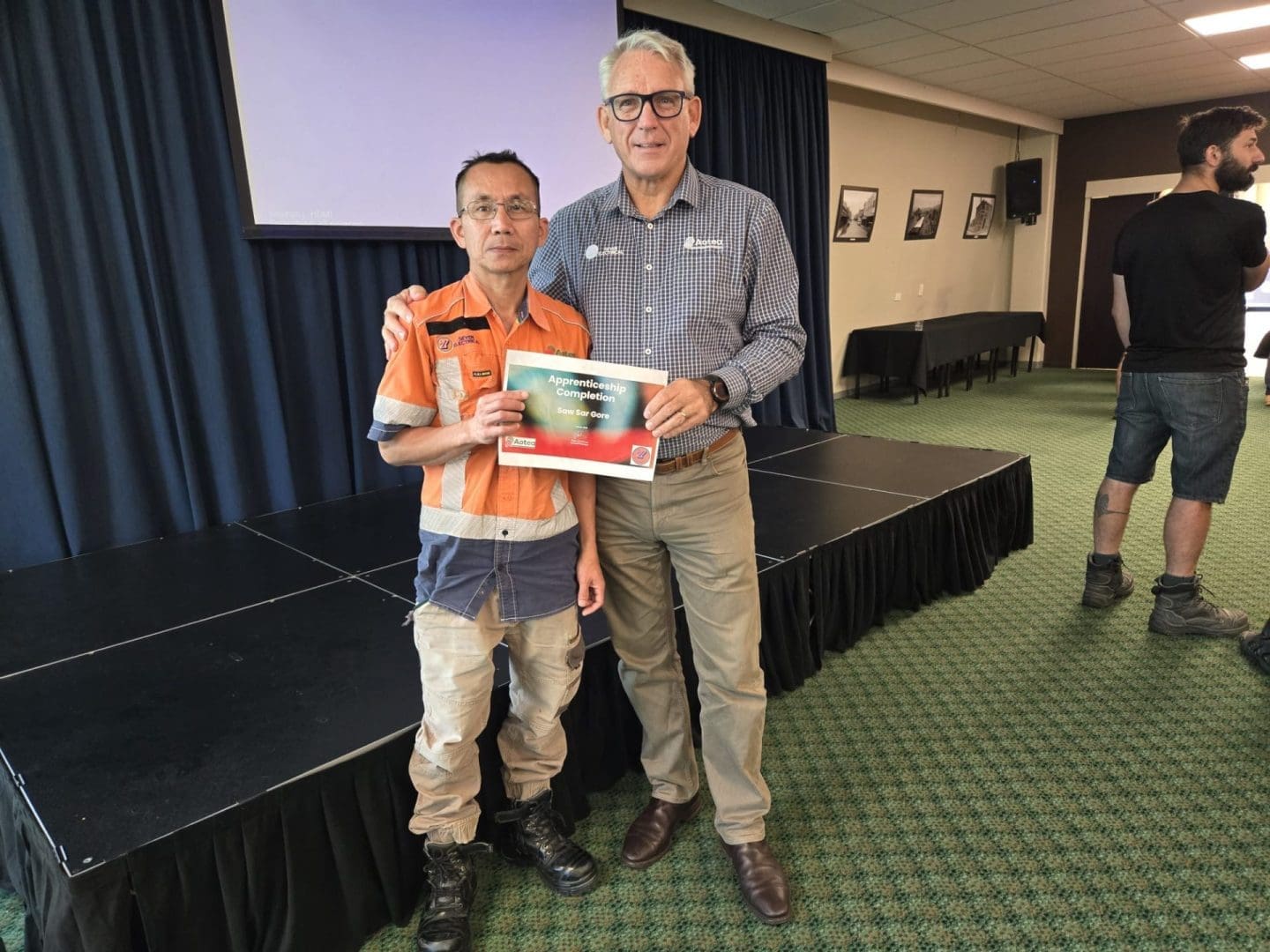
There were three electricians being acknowledged at Seven Electrical’s graduation in March. Their paths to qualification had not been straightforward. One of them, Saw Sar, had arrived in New Zealand four and a half years earlier through the Red Cross refugee resettlement programme, with no English and no electrical training. He is now, in the unhedged words of his general manager, going to make an exceptional electrician.
Peter Couchman, who leads Seven Electrical, was so chuffed that he was on the verge of breaking his own rule about rarely posting on LinkedIn. This is what a career in the trades looks like in practice: a young man with a qualification in his hand after four years of structured on-job and off-job learning through ETCO and Skills Trades Training.
It is also a case that needs making. Skills Group’s data points to a sharp fall in Electrical Level 4 apprentice enrolments through 2025 and into 2026. The country is short of electricians, plumbers, gasfitters and drainlayers, the very people who power our hospitals and schools and who, increasingly, install the solar panels and batteries that will run the next economy.
Couchman leads the 100-strong Wellington electrical contracting company, and he can trace much of that shortage back to a single sentence, one he would like to retire from the careers-evening vocabulary: “Oh, you’re too dumb to go to varsity. You should go get a trade.” He has, by now, spent more than 40 years on the other side of it.
“You come out of school, you get an apprenticeship and you’re earning from day one. We need smart people in the trades. I need smart people to take over from me, and to lead our businesses going forward.”
Couchman knows the old version of the trade intimately because he grew up inside it. His father ran an industrial electrical business in Palmerston North from the 1950s through to the 1980s, and the rules in that shop reflected the era in which it had been built.
“My dad was brought up through the Second World War and the Great Depression,” he says. “You think about the leadership in those days, it was: ‘Do it my way.’ I remember my father saying to me, ‘You keep the knowledge, because you’ll never leave the business. We don’t train anybody else, because they can leave.’ It was very much divide-to-conquer. We had three smoko rooms in our business, because that’s the way he ran it.”
Couchman, by his own admission, was no obvious successor. He took the long way: Polytech, then university, then back to run the family business, which was eventually sold. Then a stint in corporate land “to learn some lessons that don’t cost you houses,” and a long, deliberate apprenticeship of his own in leadership. Dale Carnegie courses, then Leadership Training for Managers, then qualifying as a Carnegie coach himself. He still recertifies every three years.
“If you aim for the moon and you don’t get there, at least you got into orbit.”
“I’ve been fortunate enough to be in that transition,” he says, “from ‘my way, the highway, divide-to-conquer’ to where I see leadership now: we set clear objectives, we hold people accountable, but there’s an open-door policy. I’m busy trying to remove fear from the workplace, so we can grow quicker, we can be more innovative.”
“We can dance faster. Because every day is a dance.”
Couchman has a sentence about why he does this that he treats as gospel.
“My ‘why’ is that every day, our people are safe, and inspired, and return home fulfilled by the work they’ve done. Safe is health and safety, go home the way you came to work, if not better. But safe mentally, safe to speak up. Inspired comes down to our leadership. When we get that right, we get the people studying on the weekend, looking for new tools and new ways of doing things.”
“I come to work on a Monday and the guys come in and say, ‘Pete, saw this on YouTube over the weekend. What about this?’ They want to have a conversation around discovering how we can make that happen. Because I don’t have all the right ideas. I don’t have all the answers. All the answers are out there. We just have to find a way of getting them, and do it fast.”
That hunger is the trait Couchman selects for ruthlessly when he is taking on apprentices, and Seven Electrical is now one of the largest electrical apprentice employers in Wellington. The bar to even start a trial period is clear: a pre-trade qualification, no exceptions.
“I know that they can read, they can write, and they actually want to do the trade,” Couchman says. “So we’re not wasting six months of our time thinking, ‘Oh, this is not for me.'”
The pre-trade is the door. ETCO, now part of Skills Trades Training under the wider Skills Group, runs the pre-trade course at training centres around the country: six months full-time or twelve months part-time, leading to the New Zealand Certificate in Electrical Engineering Theory, Level 3. It is the qualification that takes a young person from “I think I might like this” to “I’m ready for a first-year apprenticeship,” and at Sevens, it is the qualification that gets you in the room.
Couchman’s second favourite line on a CV is a stint at McDonald’s. He is not joking.
“People look down on McDonald’s. ‘You’re going to go flip burgers, okay?’ But what it says is, you went out to get some job experience. You’re in uniform. You have to follow the procedure. You’re turning up on time. If they’ve done six to twelve months there, they’ve learned some really cool life skills. Neat and tidy, follow instructions, be held accountable. Those are the skills I need.”
“And I need them to be kinaesthetic learners,” he adds. “They want to work with their hands. They want to go home with a sense of pride of something they’ve achieved.”
Once they’re in, Sevens builds its own structure on top of the formal apprenticeship. Pay is performance-based, not time-served. Every apprentice starts on the minimum adult wage, never the youth rate, because, as Couchman puts it, “it’s expensive to live here in Wellington.” They earn an extra dollar an hour for every six on-job modules completed, on top of inflation adjustments and pay bumps for exams.
“In the past, employers have said, ‘Oh, you’re a second-year apprentice, you get this amount.’ Well, by the time they get to their fourth year, they may only be as good as a first-year. We pay based on their performance. The ten-year apprentice has gone. They’re limiting.”
Every 90 days, every apprentice gets a face-to-face review. “Some don’t need any. Some need a big kick in the ass to get there. And we’ve had to let some go, because they’re just not making it.”
Ask Couchman how he picks an apprentice in the first place, and he doesn’t reach for a psychometric.
“My career is now well over 40 years, and I read hearts.”
“It’s their body language, their attitude, the effort they’ve made to understand us. We talk about craftsmanship. But if you come into an interview looking scruffy, well, you haven’t done your research, and you’re not what I’m looking for.”
The interview itself is, in his words, more conversation than examination. The big question is about motivation.
“Why do you want to be an electrician? What’s inspired you? Who’s inspired you? If they tell me granddad or dad told them it’s a good trade, they won’t get the job. If granddad or the father rings up and says, ‘I want a job for my son or daughter,’ they won’t get the job from me. These guys have to get off their own ass. They have to want it.”
He learned the lesson the hard way. A young apprentice rang one Friday to point out that the company’s Employee Assistance Programme phone number was wrong on the back of the newsletter. The fact that he had noticed meant he had tried to ring it. Couchman called him straight back. “I said, ‘So are you okay?’ And he goes, ‘Thank you for asking.’ He says, ‘No, I’m not.'”
The young man had been inspired into the trade by an apple-sorting machine in Central Otago. Seven Electrical does not go anywhere near that kind of work. “He was in the wrong business,” Couchman says. The young man is now at Rocket Lab. “We celebrate that. He went off and found himself a job at Rocket Lab, and we celebrated that.”
The Seven Electrical that young apprentices walk into today looks little like the trade shops Couchman grew up in. The phrase he uses most often is ‘psychological safety’, and the thing he is trying most actively to do is engineer fear out of the building.
“The screaming-skull-on-site, being-put-down-in-public, rule-of-fear style: people don’t learn,” he says. “The organisation doesn’t learn, because we don’t learn about the mistakes. People sweep them up, or they don’t own up to them.”
On an eleven-storey building, that has hard commercial consequences. “Somebody’s hidden a mistake, and it’s not until the week before practical completion that you find it. I want people to put their hand up and say, ‘I don’t know.'”
“I know I was brought up in that fear. I’ve lived in fear most of my life. And removing that fear is so important.”
“I can’t hold anybody accountable unless I care,” he says. “You think about this when you’re bringing up children. You love them enough that you say, ‘Hey, that’s not good enough.’ It’s exactly the same here at work. We can have that conversation and go have a beer afterwards. It’s not finger-pointing. If something’s gone wrong, we probably haven’t communicated clearly enough. We may not have given them the right tools. We may not have understood the time pressures. Because people just don’t go out there to make a mistake on purpose.”
It is the line he draws between two ideas he wants no one in the company to confuse.
“Leadership’s about the people. Management’s about the processes.”
“We all have processes. A hiring process, a firing process, an assessment process. But leadership’s about the people. And today’s about being an empathetic leader. How am I aware enough to catch somebody doing it right, rather than sitting there to kick them when they get it wrong?”
He gives an example. He was in Shanghai when an alert pinged on his health and safety app: one of his guys had cut himself badly on a Wellington job and was in A&E. “I just picked the phone up and rang him from China and said, ‘Are you okay? What can we do?’ He was blown away that I was ringing from Shanghai. But that’s the leadership. Leadership is all around people and how we care for them.”
“I’m the bulbous bow on the front of a boat. I’m there to clear stuff out of the way to make the boat go faster. And then sometimes I have to go to the back of the boat and clean up some messes, which I call the wake.”
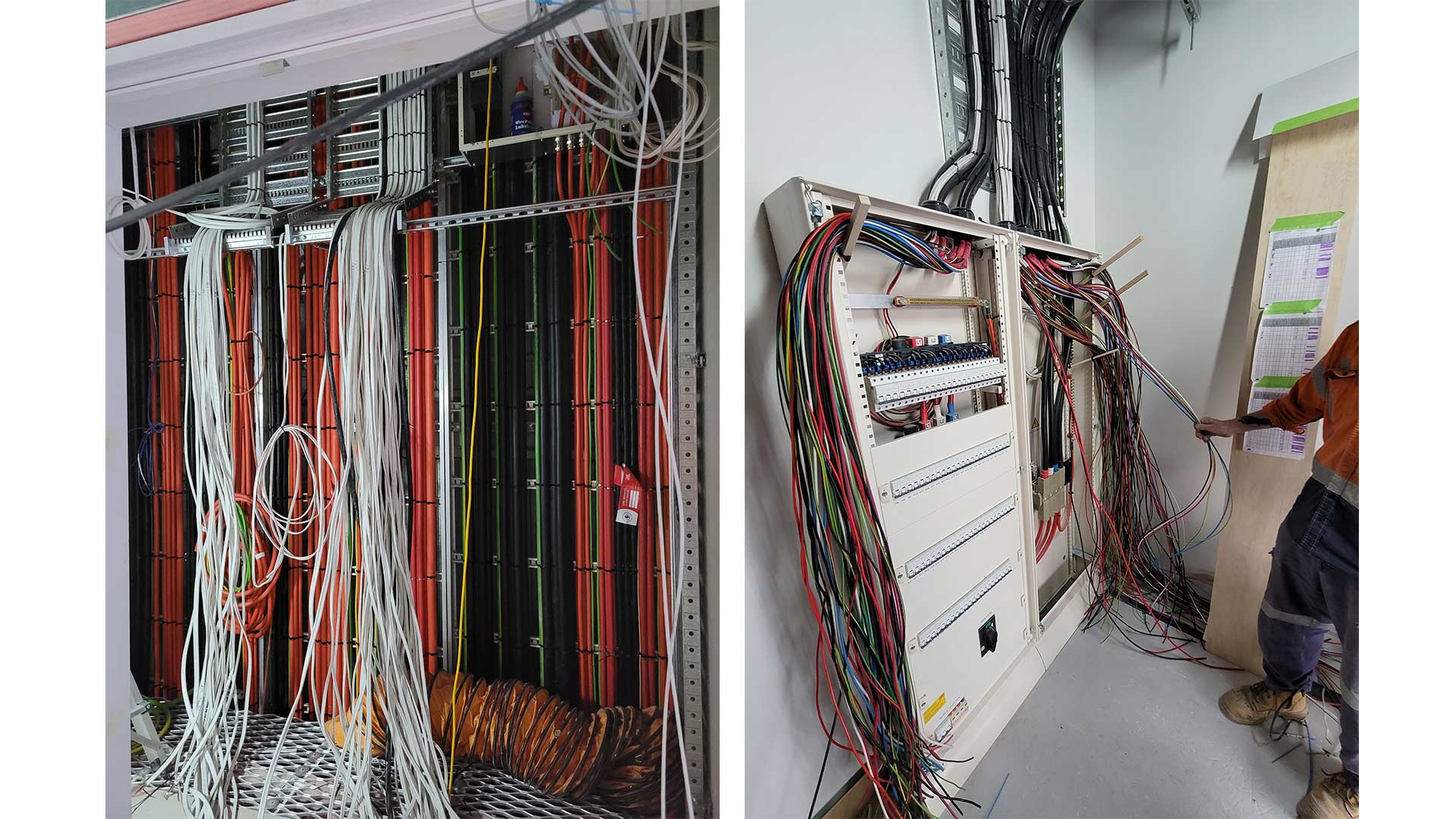
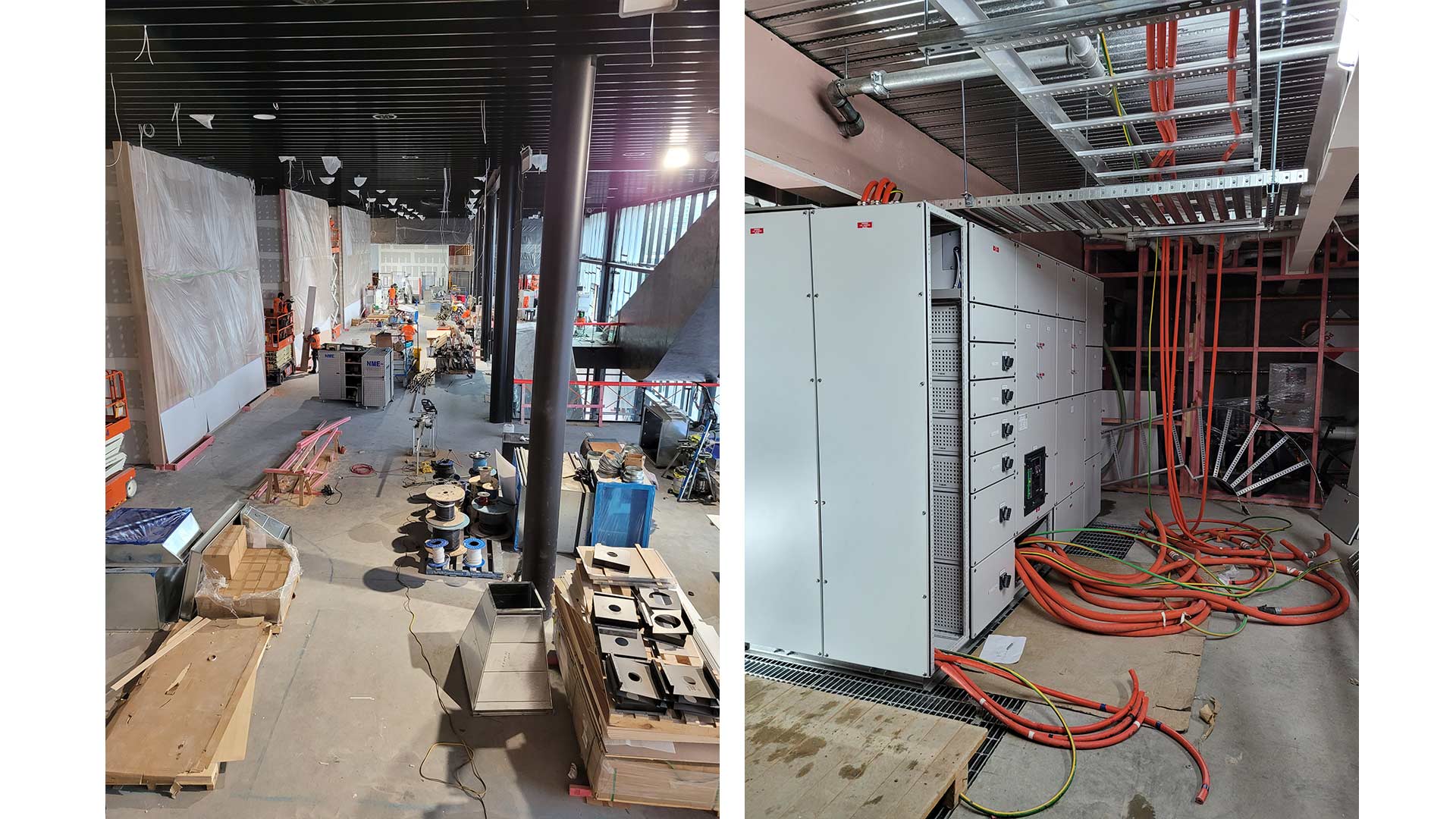
The same hunger for finding a better way that Couchman wants in his apprentices, he also wants in the tooling cupboard. Sevens worked on Tākina, Wellington’s convention and exhibition centre, a project that demanded precision, safety and high standards on site. Across the industry, tighter controls around hot works have also pushed contractors to rethink the way jobs are done. Couchman runs through the company’s recent investments like a man who genuinely enjoys them: a battery-powered die-set for cutting clean holes in switchboards; an eight-grand machine that shears Unistrut bracing in seconds with no sparks and no edge to file; portable cable crimpers replacing a two-man hydraulic operation.
“Things that used to take several hours are now down to seconds,” he says, “because somebody said, ‘Hey, how about we do this?’ What’s it worth? Eight grand. Okay, let’s go give it a crack.”
AI is being adopted in the same spirit. Solar design. Health and safety reporting. Apprentice assessments. Internal training programmes, including the Legacy course currently being run through his management team, a course AI helped him draft. “I went to three half-day workshops on how to grow my leadership team,” he says, “and in five minutes I got a course written.”
Couchman is clear-eyed about the moment. Wellington has had a brutal eighteen months.
“We’ve taken a double whammy. The slowdown in the economy, and then the government stopped spending. You take that headcount out, you’ve got buildings with empty floors. There’s only one tower crane out there,” he says, gesturing at the skyline, “and that’ll be gone shortly. We don’t see another in Wellington for quite a number of years.”
Sevens has responded by pushing out of region, including a recent merger in the Wairarapa under Aotea Group, the nationwide network of locally owned trades companies that Seven Electrical is part of, and by trying to fill the order book as far ahead as FY28. The downturn has made the apprentice conversation more important, not less. “We made promises to apprentices back in 2024 for last year. We couldn’t honour them because of the way the economy was.” The pipeline of pre-trade graduates coming through the Skills Trades Training network, in his view, is one of the country’s strongest assets, and one we need to keep funding through the trough.
Seven Electrical was founded on 19 August 1989, when, in Couchman’s words, “seven young men had the balls to go out and give it a crack themselves” after the construction giant Wilkinson Davies went into receivership. The receiver asked them to finish the buildings. They started their own company instead. The fourth employee on the books is still with the business. Several people have been there more than thirty years. The chairman, Ian Butturini, was there at the founding and is still in the chair.
“I often say that I stand on the shoulders of a giant of the industry,” Couchman says of Butturini. “He’s also like a big brother. I can ring him up and say, ‘I’ve got this big decision, I need to talk this through with you.’ Leading a business today is a very lonely space if you don’t have that support. It’s even lonelier if you think you know it all and can do it all, because you can’t.”
“Leading a business today is a very lonely space if you don’t have that support. It’s even lonelier if you think you know it all and can do it all, because you can’t.”
Founders Day is marked every year. Senior people are shareholders, with around eighty percent of profit returned as dividends. “If they’re spending money, they’re spending their own money,” Couchman says. “There’s a lot of think twice.”
Forty years arrives in 2029. By then, Couchman says, he needs to have replaced himself.
“That’s a big weight. But there’s a weight of whakapapa as well. We’re not tradesmen, we’re craftsmen. I want to leave the place, just like the All Blacks. I want to leave the jersey in a better place.”
Asked about his five-year plan, Couchman gets coy. “This is going to get published, so I’m holding it tight to me,” he says, but he is happy to describe its temperament. Over last Christmas he handed every member of his management team a letter and a book, with instructions to read both over the summer break. The plan they came back to has since been signed off by the board.
“It’s a ballsy plan.” The phrase he reaches for is Sir Peter Blake’s. “If you aim for the moon and you don’t get there, at least you got into orbit.” The other one he keeps returning to is more sobering. “What got us here won’t get us there.”
“I get impatient with the opportunity that sits in front of us,” he says. “There’s just so much out there. How do we make this happen?”
So what does the legacy look like? Not, in the end, the buildings or the contracts. “In five years’ time, there’ll be a lot of apprentices we brought through who will still be with us. We are making a difference, and we will continue to make a difference. Not only in the market, but in our people. Our people become better. Our people become better parents as a result of being here. That’s something they get that’s not in their pay packet, but it now starts to impact generations.”
Which brings us back to Saw Sar at his graduation, and to the sentence Couchman would like to retire from every secondary-school careers night in the country. The one that tells a kid the trades are what you settle for.
Forty years in, the message is the same as it was at the start. Read hearts. Catch them getting it right. Aim for the moon. And tell the kid in the careers office that a pre-trade qualification through Skills Trades Training is not the consolation prize. It is the door to a craft.