
You Can’t Play The World’s Smallest Violin
When one is given the unenviable task of entertaining some privileged belly acher with some music, it behoves one to find the world’s smallest violin. Only the smallest will be sufficient for playing the level of sad music required for a person you don’t give a single micron of organic fertiliser about.
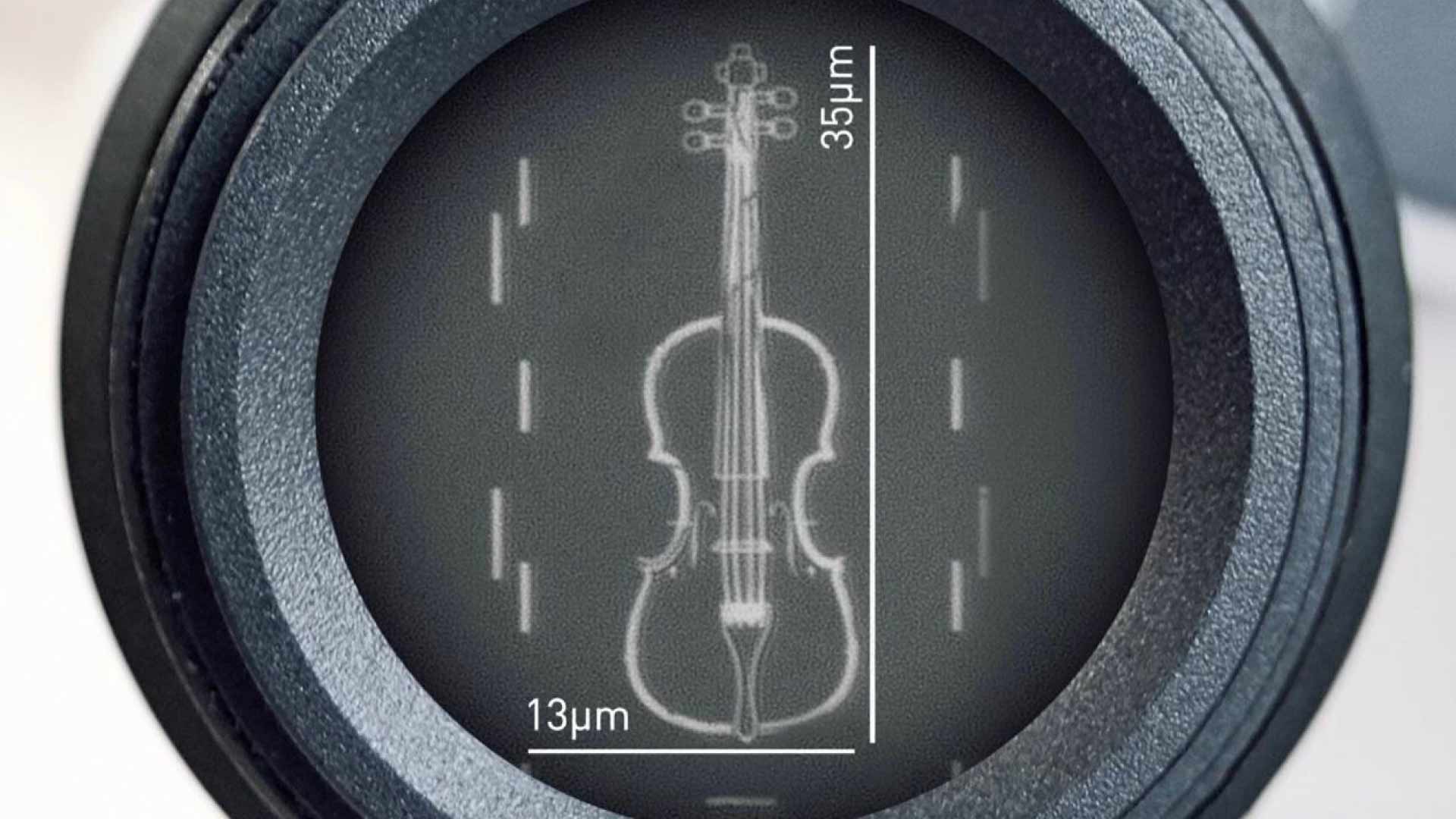
Unfortunately the world’s smallest Violin is still bigger than they deserve, measuring 356 microns tall and 13 microns wide. A human hair is anywhere between 15 and 120 microns wide. So you could draw the violin onto an average strand of hair. Unfortunately that’s what it is, a drawing, so no concertos for fleas anytime soon. It’s been etched onto a plate of platinum at Loughborough University test driving a new high tech nano-sculpting machine called a NanoFrazor. It uses Thermal Scanning Probe Lithography to etch down to a resolution of 2 nanometers. This tech makes it possible to fabricate quantum electronics, nanophotonics or even biometric substrates for cell growth.
For Loughborough University the system will support a variety of research projects aimed at identifying new materials and methods for developing the next generation of computing devices. By instead using heat instead of electrons and photons researchers are able to manipulate electronic materials in an unharmed state.
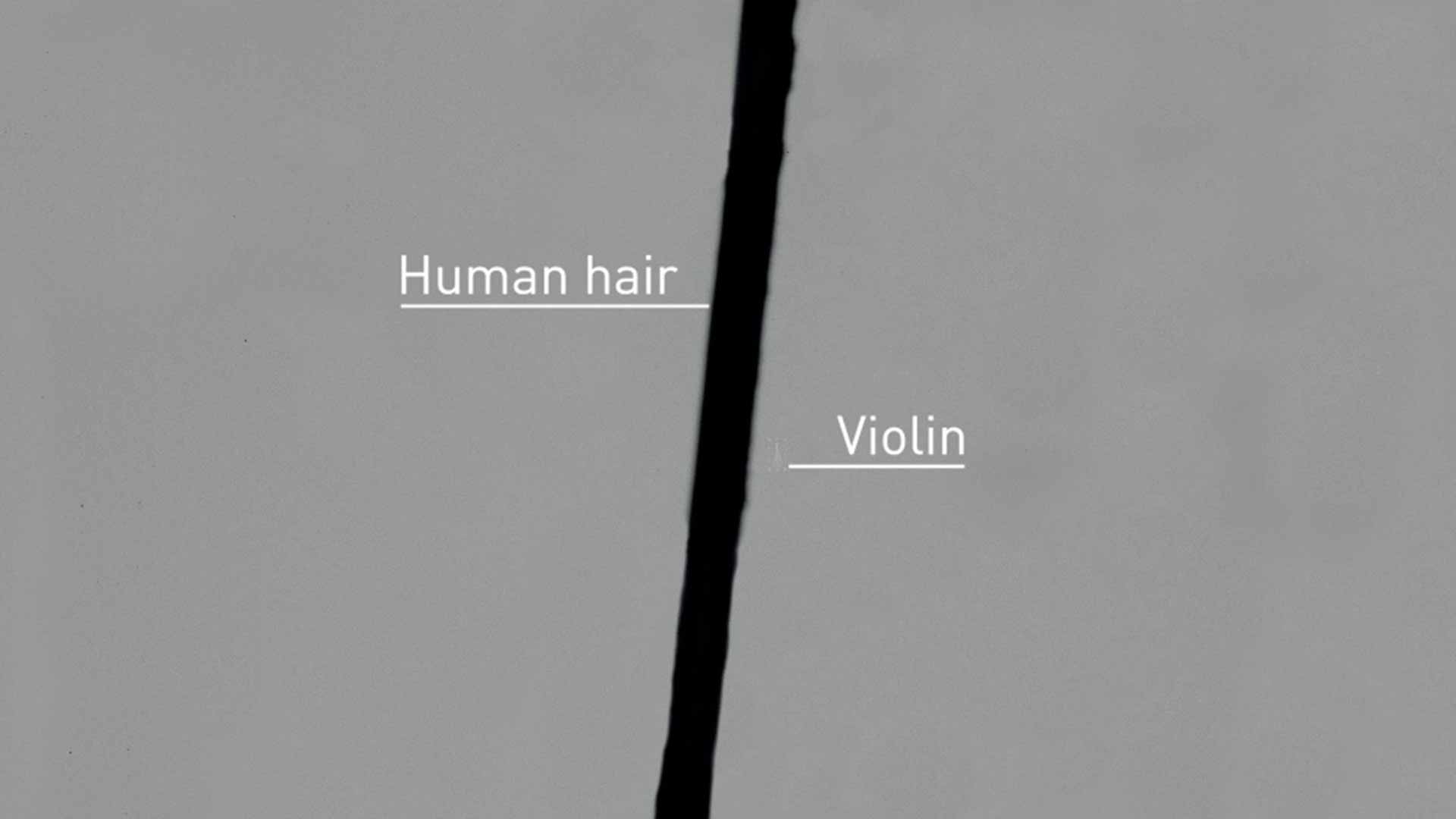
So why draw a violin? Because when you’ve unlocked new technology that could revolutionise nanoscale engineering nobody cares unless you can get a kitchy headline out of it.
“Though creating the world’s smallest violin may seem like fun and games, a lot of what we’ve learned in the process has actually laid the groundwork for the research we’re now undertaking”, said Professor Kelly Morrison, Head of the Physics department and an expert in experimental physics.
“Our nanolithography system allows us to design experiments that probe materials in different ways – using light, magnetism, or electricity – and observe their responses. Once we understand how materials behave, we can start applying that knowledge to develop new technologies, whether it’s improving computing efficiency or finding new ways to harvest energy.
“But first, we need to understand the fundamental science and this system enables us to do just that.”