
Best of Watches & Wonders 2026: Omega
O-MEGASTEEL, 18K Gold & Platinum-Gold
CONSTELLATION OBSERVATORY
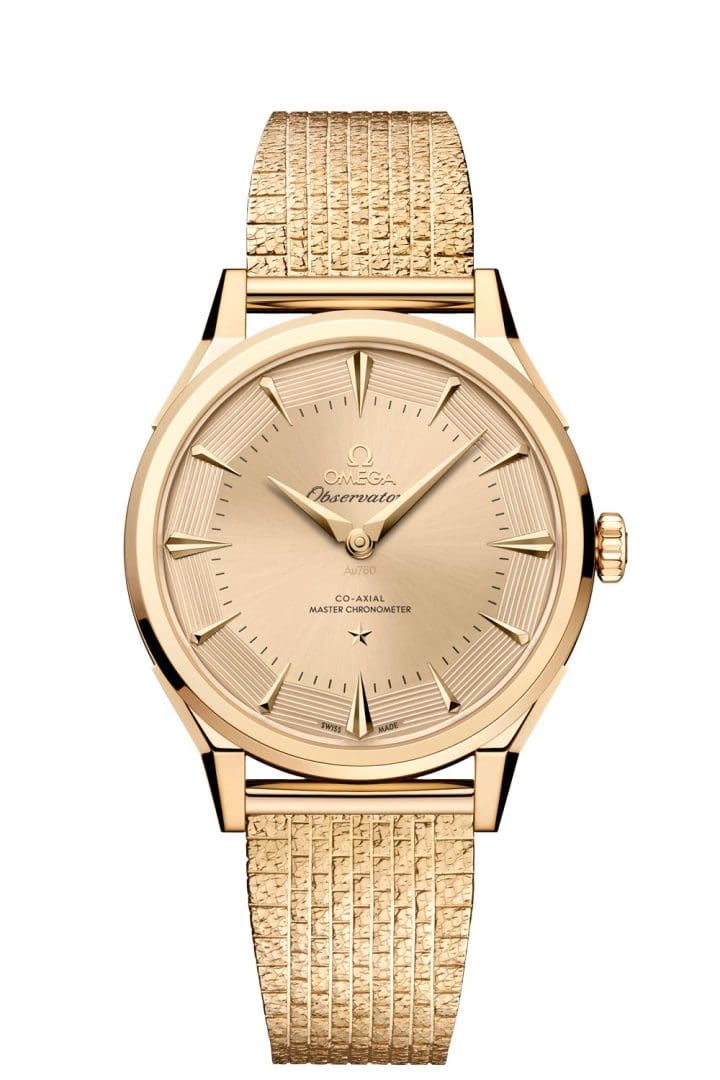
The Constellation Observatory takes its name from Omega’s observatory chronometer competition history of the 1950s and 60s, when the brand was submitting movements to Swiss and European observatories for precision trials with consistent results. The pie-pan dial, with its raised dodecagonal rim and stepped indexes, is a direct revival of that period’s aesthetic, and it sits closer to the archive than it does to a reinterpretation.
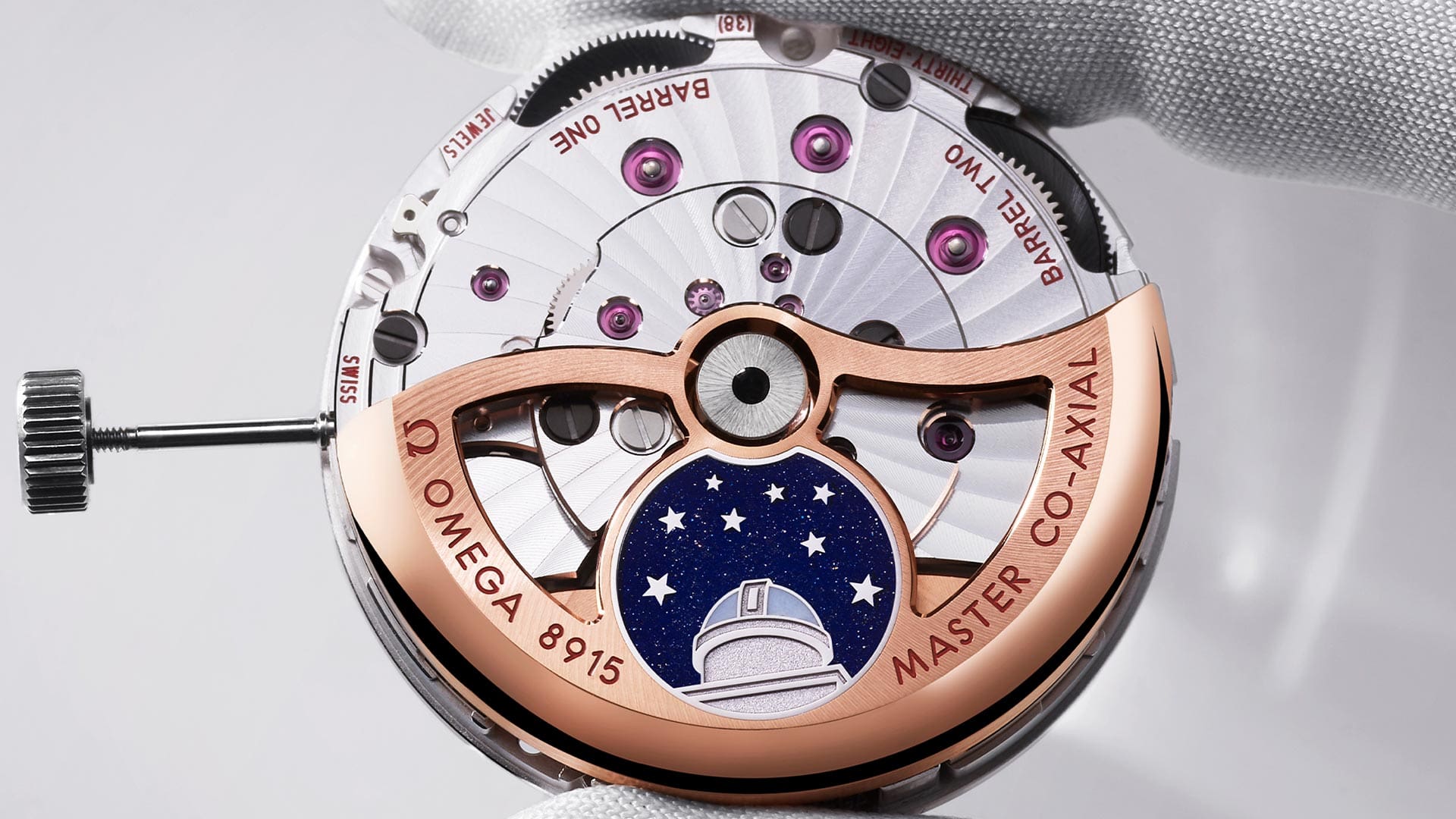
The collection comes in three material tiers. The O-MEGASTEEL version carries the Co-Axial Master Chronometer calibre 8914 in a polished 39.4mm case, with pie-pan dials available in black ceramic, PVD blue, PVD green or silvery opaline on leather straps. The 18K gold versions step up to calibre 8915 and are offered in Moonshine Gold, Sedna Gold and Canopus Gold, each with a matched dial in the same alloy carrying eight hand-guilloché grooves on the dodecagonal facets. Both calibres offer 60 hours of power reserve and meet Omega’s Master Chronometer standard, which includes resistance to magnetic fields of 15,000 gauss as tested by METAS.
The platinum-gold reference is the one to look at. The case is Omega’s proprietary Pt950Au5 alloy, 95% platinum and 5% gold, horizontally brushed rather than polished. The dial is in the same alloy with a PVD yellowish-platinum finish, the dodecagonal facets hand-guilloché in a matte finish with a sun-brushed centre. Total watch weight is 120.9g, of which 85.3g is platinum. The strap is dark grey leather with glittering golden scale lines, and the watch ships in a dedicated walnut presentation box. At 39.4mm with a 47.2mm lug-to-lug, it wears like a dress watch, which given where it comes from is the right call.
Fourth Generation
SEAMASTER PLANET OCEAN 600M
The fourth-generation Planet Ocean is the most significant redesign in the collection’s twenty-year history, and Omega has not been shy about saying so. The previous three generations, introduced in 2005, 2011 and 2016, shared enough visual DNA that you could trace a clear lineage across all of them. This one makes a clean slate of the past.
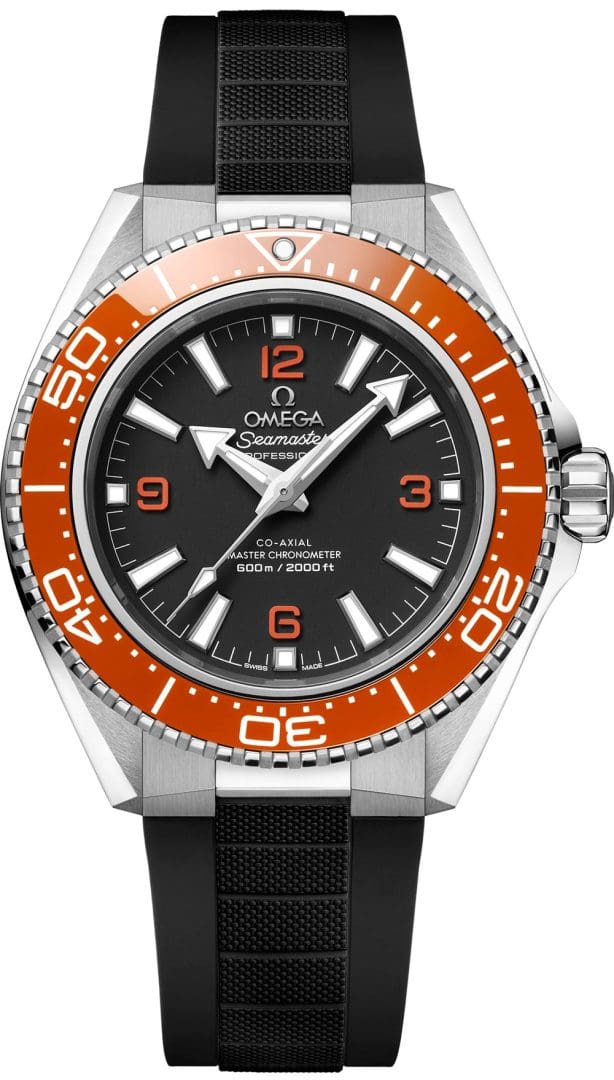
The curved lines and classic lyre-shaped lugs are gone, replaced by sharp edges and angular geometry. The case returns to the original 2005 diameter of 42mm, which is welcome, but the more meaningful number is the thickness. At 13.79mm, the new Planet Ocean sheds 2.31mm compared to its 16.1mm predecessor, achieved through a flat sapphire crystal and a solid Grade 5 titanium caseback. That is a meaningful reduction on the wrist, and it shows.
The helium escape valve is gone too, which will divide people along predictable lines. Omega’s position is that modern manufacturing makes its presence obsolete, and the watch retains the same 600m water resistance without the risk of helium build-up inside the case. In its place, an inner titanium ring around the crystal provides the structural strength required to seal the watch at depth, a functional update to what was previously a purely aesthetic detail carried over from the Seamaster 300 of the 1960s.
The movement is the Co-Axial Master Chronometer calibre 8912, offering 60 hours of power reserve and full METAS certification including resistance to magnetic fields of 15,000 gauss. Bezel options are black ceramic with white enamel diving scale, orange ceramic, and blue ceramic, all with the open-work Arabic numerals that reference the original 2005 references. The new bracelet uses flat links with two brushed rows and one polished row at the centre, slimmer than before and adjustable to six positions with a diver extension.