
From AI Hype to Real Workflows Lessons from Deploying Voice Agents into Real Businesses
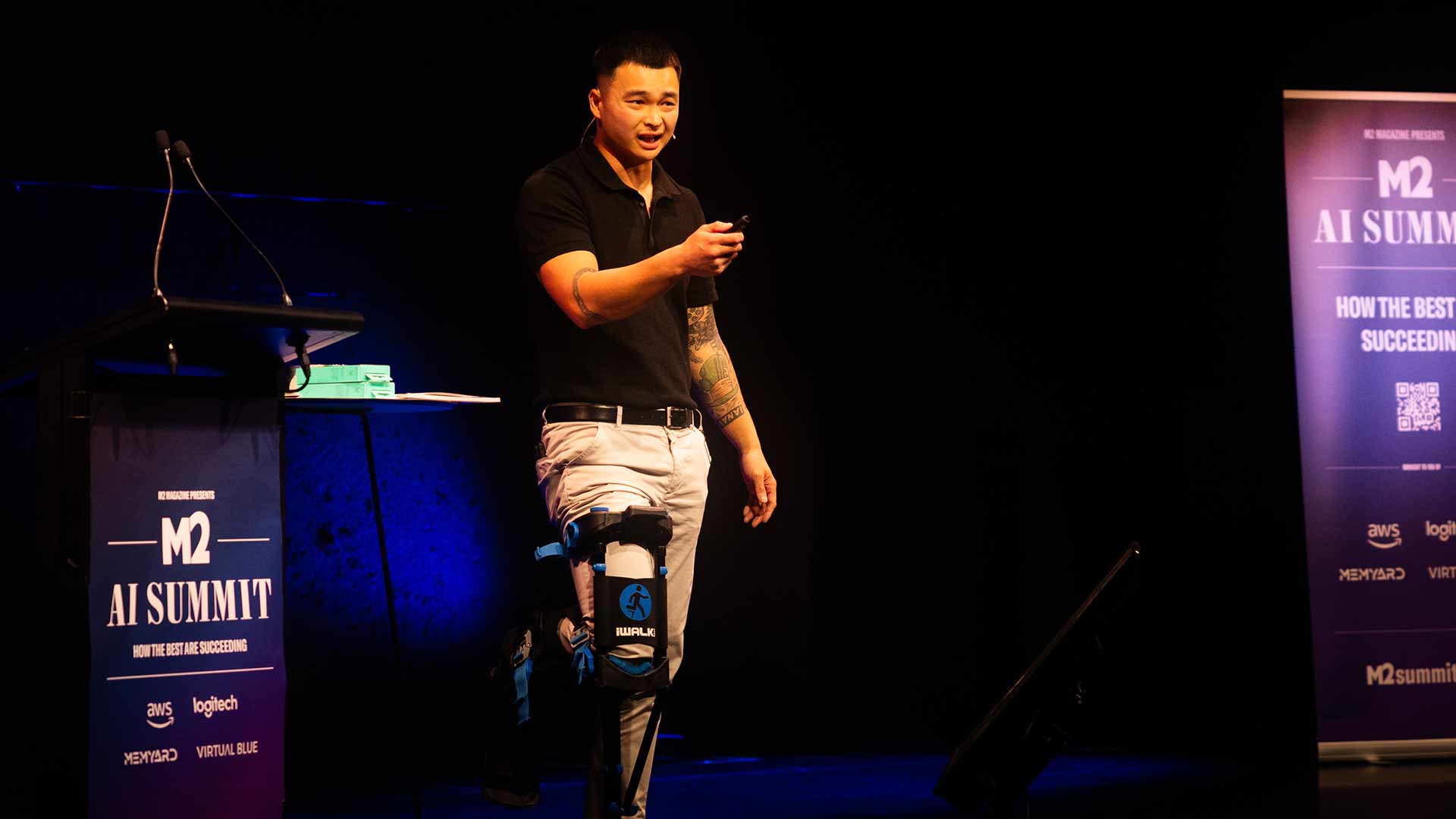
Owen Chau, hobbling on stage in a moon boot, ditched his polished deck for something more honest: what voice AI actually can’t do yet, learned the hard way from putting it into real businesses.
Owen Chau opened by binning his own presentation. He had planned to talk about GenAI workflows and “agents that work while you sleep”, he said, but “after the last seven speakers, you guys are all AI experts at this point”, so he proposed they skip straight to the networking drinks. The room said no. So, moon boot and all, he got “really serious” about the thing nobody sells you: “not just what AI can do, but what it can’t do, especially in the voice AI space”.
His starting point was a flattering one. “All us AI people,” he said, “besides being extremely good looking, we’re systems thinkers,” the sort who see a shiny new tool and immediately ask what outcome they can reverse-engineer from it. The best thing you can do at your desk tomorrow, he suggested, is “picture you have an apprentice that never sleeps, never forgets”, pick one task, and work out how you would explain it to that apprentice step by step. “The clearer you can conceptualise that, the closer you’re going to get to actually automating it.”
To structure that, he offered the ORDER framework: outcome, repetition, data, exceptions, and risk or return. Run a lead-qualifying job through it and you ask what result you need, how often it happens, where the information lives, where the process breaks, and what has to be protected (here, stopping leads being spam-called) against the upside of saving hours of outreach a day. Simple, bounded, and honest about its own failure points.
Those failure points were the heart of it. Common requests, he said, are easy; “trust is won in the exceptions”. A fast-food order of a burger, fries and a Coke is no bother, but “extra tomato, make it large, apply this voucher, split the payment, actually make that two” is where things wobble. He proved it live, against his own stated “personal vendetta against live demos”, calling a voice agent named Chloe to book a leaking tap. Chloe got there, but not before looping politely on “as soon as possible” a few times. “I tested this like five times beforehand,” he laughed, which was rather the point: “as soon as you give it to someone else, the way they speak, the speed, their accent, the order they say things in, it just opens up a Pandora’s box of different edge cases.”
Voice AI, he said, still has two unsolved bottlenecks: “balancing latency with intelligence”, because faster answers are dumber and smarter answers are slower, and plain old audio quality. The only real defence is live data plus “a system that works in the background that analyses every single call and then iterates and improves after each one”. Underneath sit three layers, he explained: the interface (voice, chat, SMS), the decision layer (the model, “the brain”), and the action layer (everything you do with a keyboard and mouse). Bolt all three together “and that’s when people actually start being scared about losing their jobs”. The real question has shifted, he argued, from “is there a tool for this?” to “can we describe the workflow clearly enough for AI to help?” The bottleneck, echoing Diana Sharma, is people, “but it’s also clarity”, and fear of AI “comes from ignorance” that using the thing quickly cures.
He ended on two warnings. There is, for now, “no accountability with AI”, so “you can’t just say to your customer, oh, it messed up because of AI”, which means a named human has to own the output and keep it current. And don’t bank on today’s prices: AI is cheap because the companies are still in their land-grab phase, “kind of how we saw with Uber”, where the rides were cheap until they had you, “and then everything changed”.
5 Takeaways
- Brief it like an apprentice that never sleeps. The clearer you can explain a single task, step by step, the closer you are to automating it. Clarity, not cleverness, is the bottleneck.
- Run ideas through ORDER. Outcome, repetition, data, exceptions, risk or return. It tells you fast whether a use case is worth building and where it is likely to fall over.
- Trust is won in the exceptions. The common path is easy; it’s the odd request, the voucher, the change of mind, that breaks things. Test with live data and have the system learn from every call.
- Keep a named human accountable. “It messed up because of AI” is not an answer your customers will accept. Someone has to own the output and keep up with the constant model changes.
- Don’t assume it stays cheap. AI is priced to get you hooked while the providers grab the market. Like the early days of Uber, the deal can change once you depend on it, so plan for that.