
Jamie Campbell Bower on Shape-Shifting Into Middle-earth
When looking at the craft of acting, some of the world’s finest actors just vanish, almost, into the lightness of their characters. Their presence on screen or stage seems otherworldly almost. For Jamie Campbell Bower he does exactly that. He seems to have a shape-shifting ability that has carried him from the glittered mythology of Twilight to the nightmarish, interdimensional wormhole of the Upside Down in Stranger Things, to the legendary fantastical continent of Middle-Earth in the third season of Amazon Prime’s, The Rings of Power. Born in London in 1988, Bower grew up in a household where creativity was paramount. With a music-industry mum and a dad who worked in marketing for Gibson Guitars, performance was never far from his orbit. Finding an early home in youth theatre, he took to the stage at just age 11 in Honk!, a musical adaptation of The Ugly Duckling for the National Theatre Company. His professional screen debut arrived in 2007, playing Anthony in Tim Burton’s Sweeney Todd: The Demon Barber of Fleet Street, a suitably macabre beginning for an actor whose career would repeatedly gravitate towards the strange, the beautiful and the unsettling.
Success came through a succession of worlds that became cultural phenomena. As Caius in The Twilight Saga, the young Gellert Grindelwald in Harry Potter and the Deathly Hallows: Part 1, and ultimately Vecna in Netflix’s cultural touchstone, Stranger Things, Bower demonstrated a particular gift for characters whose menace conceals something more complicated.
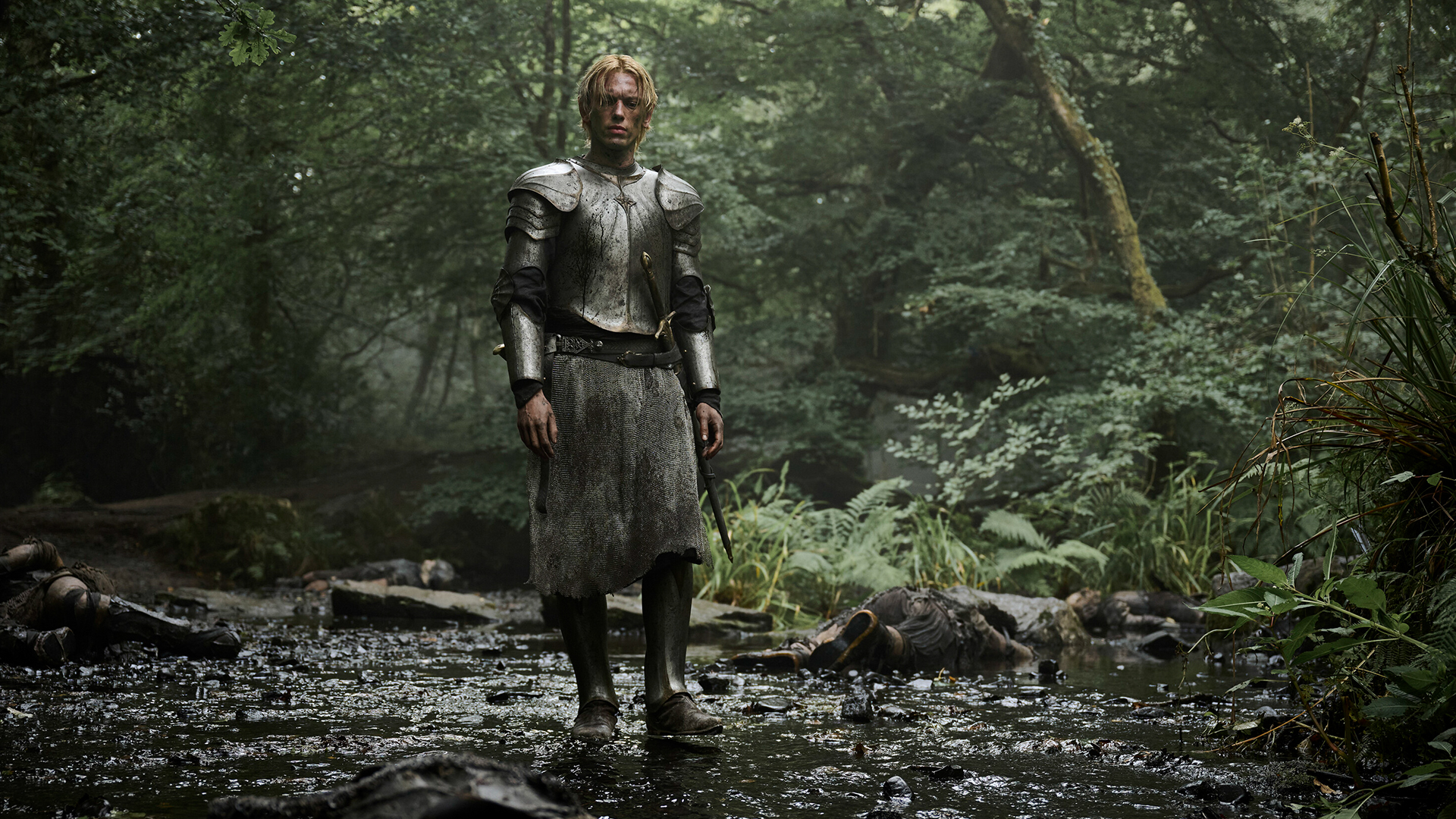
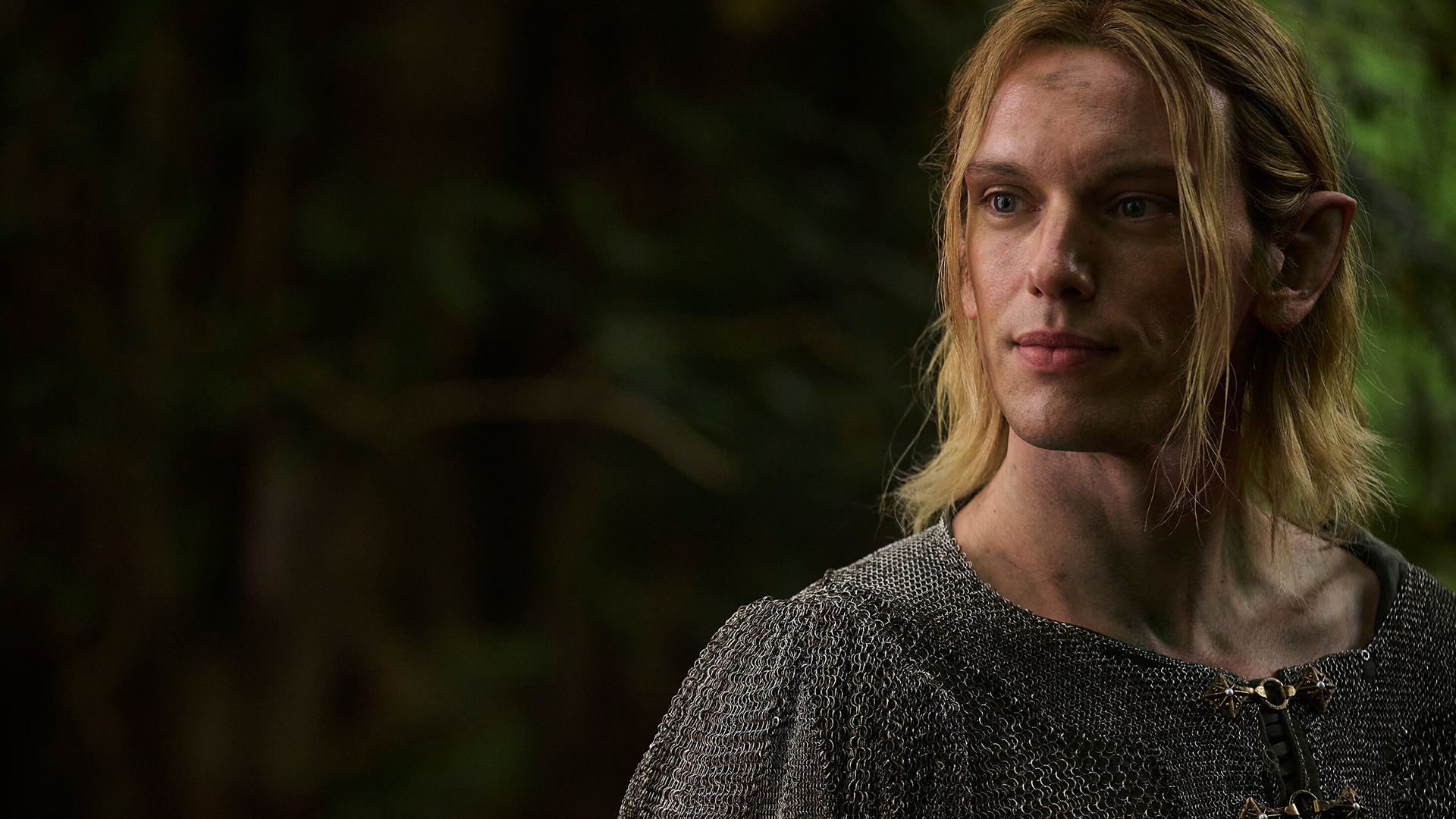
Now, Bower trades the Upside Down for Middle-earth. In the third season of The Rings of Power, he takes on Celeborn, the Elven lord and long-absent husband of Galadriel—a character whose return promises to open a new emotional chapter in the series.
Celeborn already carries a strong image from The Lord of the Rings, both from Tolkien’s work and the Peter Jackson films, where he was played by New Zealand’s own, Marton Csokas. The Rings of Power season three introduces him into a very different chapter of his life. How did you as an actor find the balance between honoring what people already know about Celeborn whilst creating a new version of him within this series?
What I wanted to try and do with Celeborn was understand how he got to being so wise, understanding the journey that he had to go on in order to be that way. I took what was available to me in the text. Celeborn, you know, is not as extensively written as a character like Galadriel is. She has a history that is way more documented than his. There are gaps, and within the gaps you could call it freedom or you could call it fear. It was about really finding the heart of who he is, the heart of him. I obviously used the text and music. I used Tolkien’s paintings as well. Conversations with J.D. [Payne] and Patrick [McKay]. Rehearsals were important and conversations too with Morfydd [Clark] who plays Galadriel whose history is way more documented than [Celeborn] is. There are more gaps for Celeborn in the First Age as he is battle-worn. He has an experience with him. He falls madly and deeply in love with Galadriel and then his world is blown apart. He goes missing, somewhat, and what I wanted to explore was what he was looking for and what kept him going. A central theme to this season is joy and what it means. Hope is talked about in Tolkien’s works and in the past seasons of The Rings of Power. But joy is something that is difficult to explore. It’s hard to fully understand. We came to this understanding, I think, that joy is not happiness. Joy is not affected by anything external. It’s affected by a choice. Joy is a choice. I really had to look for that within me.
I came across something that Nick Cave had written. He has this website, The Red Hand Files, where he writes to his fans. He’s obviously suffered a lot in his life. He was writing on the concept of joy, and Nick says that joy is not the absence of suffering, but the momentary leaps we take in spite of it. I really made that message home for me.
Celeborn’s also had to hold onto the image of Galadriel, and that has to be reframed and re-looked at. So I did as much rehearsal and as much considering as possible and then found it in the flow.
There’s an interesting contrast between the characters that you’ve played before. I’m thinking of Vecna in Stranger Things. Both Vecna and Celeborn exist on opposite ends of a big moral spectrum. Did playing a character fundamentally driven by goodness require you to approach darkness and anger or power differently rather than simply playing it as a core trait?
I think it comes from pure motivation. There was such resentment and pain with Vecna. He chose to act the way he did because of his pain. Playing a character, like Celeborn now, who even in the face of suffering chooses the other path, and chooses to see the world as a good place, to hold on to what is needed to survive, was deeply cathartic for me. I have grown with Celeborn, I think. Whether or not it’s my time of life or what, but doing this show has helped me to grow so much.
Growth and art is such a therapeutic thing, isn’t it? As an artist I am consistently looking for that feeling. I’m consistently looking for that feeling of connection, of the universe, of the Divine, definitely. Those moments can come out of nowhere. It’s like a bolt of lightning and you’re like: Oh, I see it now. It creates understanding and breath. That doesn’t mean that we can’t have our times and our spaces of darkness, of ennui, as they used to call it. That is something that I wanted to definitely bring to Celeborn was that he is both. He both has the joy and the beauty of life, but also understands what it means to suffer and to feel.
