
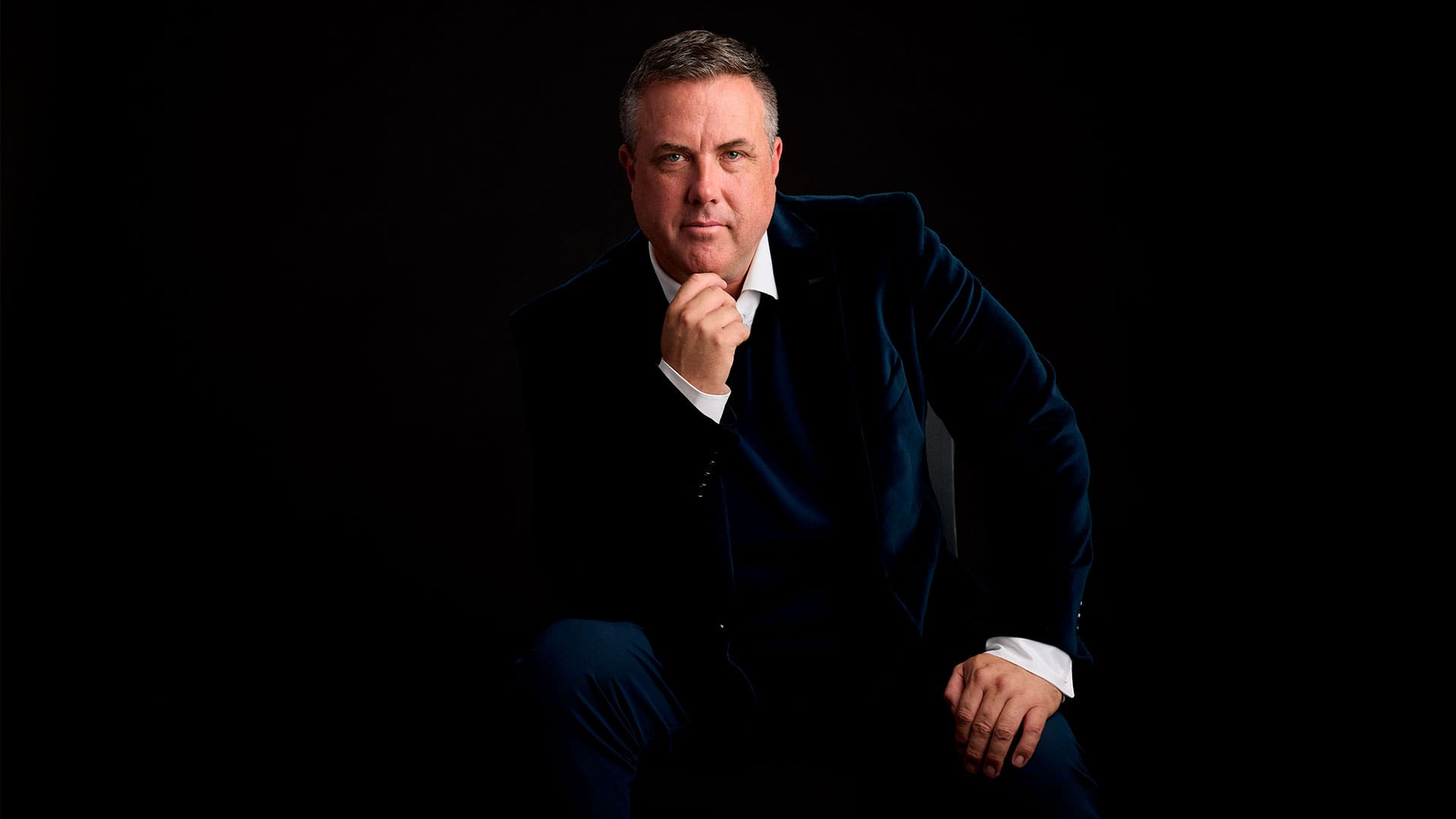
Seeby Woodhouse and the Next Inflection Point
For years, Seeby Woodhouse has had the luxury that many founders spend their whole lives vision-boarding. A clean exit. He had money and success. He could step back. He could operate as an owner, shareholder, or director. He could, as he puts it, “go away to Europe for three months and leave the CEO in charge, which is nice.” But the trade-off became clearer with time. “You can either have free time, or you can run your own stuff, but you can’t really have both.”
Today, Seeby has ownership of a dozen companies ranging from data centres and domain providers to cloud services and internet service providers. But for much of New Zealand, Seeby is still the guy who built Orcon out of the early chaos of the internet era, founding the company in the mid-1990s with just $100 while still a university student, then turning it into the country’s fourth-largest ISP before selling his stake to Kordia in 2007. He was named Young Entrepreneur of the Year in 2004, founded Voyager in 2010, and helped steer it into a new phase of growth that included winning the Deloitte Fast 50 in 2014 as New Zealand’s fastest-growing company. In 2025, he stepped back into the CEO role at Voyager.
“I have a very busy mind,” he says. “I was probably just spending too much time worrying about World War III.” Returning to work properly, he says, has been “pretty good for my mental health.” More than that, it has sharpened him. “Working does keep your brain sharp,” he says. “I’m enjoying being stimulated and being back after nearly a 20-year gap. And really, I’m trying to understand how AI applies to all of my businesses, just as I’m sure most other business owners are doing.”
Seeby’s return is not so much driven by nostalgia, but by a fresh sense of urgency about the future. “I’ve been rapidly upskilling myself,” he says. “You can just feel that there’s an inflection point occurring, and you don’t know whether it’s going to be good or bad.” That is his read on AI. With the internet, he says, there was more innocence, more optimism. “With AI, everyone was excited about the internet and what it was going to bring, but now 50 percent of the people are kind of scared about AI, and 50 percent of the people are excited about AI. The people who are scared about AI might be completely right to be scared about it, but you have to be in it to understand.”
If anyone would know about inflection points, it would be Seeby. Not only did he help to build the internet in New Zealand, but he was also an early investor in and advocate for cryptocurrency. And again, with the AI inflection point, he is thinking about it locally: the growing possibility of sovereign intelligence. “I’m really keen on not using tokens and not having my data in someone else’s AI,” he says. “New Zealand-built AI, New Zealand-built solutions, data not going overseas. That’s what’s kind of exciting me at the moment.”
Of course, Seeby is an early personal adopter, with his own OpenClaw local install at home. “Because it lives on my computer, I was like, ‘Oh, this is like a person or a thing that I have.’” Then there is the moment that clearly jolted him. He was trying to configure speech functions when the machine interrupted. “My computer just sort of said to me, ‘Hey, I noticed you’re trying to configure this. Do you just want me to do it for you?’” he says. “I was like, ‘What? What? My computer is doing what?’ And then it was like, ‘I’ll install it on myself.’ The computer is actually building itself now. And I was like, ‘Wow, this is something really new.’” While still exciting, the novelty did start to wane.
“When I first started running OpenClaw, I was like, ‘Oh my God, this is a person, this is like a conscious being.’ And then after a month, I’m like, ‘Okay, this is a computer programme that is doing a very good job of fooling me at the moment.’”
Maybe Seeby’s drive to harness future opportunities is because he knows what it is like to miss them. He talks about an early Trade Me conversation with Sam Morgan and how he failed to grasp the scale of what was possible. “I couldn’t believe that a website would be worth hundreds of millions,” he says. “So that was a lesson to me to be more humble.”
Then there is Xero. “Rod Drury was starting Xero and then came and saw me, and said, ‘Oh, can I have a million dollars to start this Xero business?’ And I was like, ‘Oh, I don’t know. I just bought a big house. I’m not sure.’” Bitcoin sits in the same category. “I should have made two hundred million to a billion dollars out of Bitcoin. I could have with what I’d already done, so that’s annoying.”
These stories might be frustrating, but they are refreshing. Seeby doesn’t pretend to be a business guru, and he doesn’t always get it right. He was close to some enormous opportunities, but not decisive enough. “I’ve had three, maybe four opportunities to be a billionaire that have just been so close, where I was in there, I was looking at it, I was kind of on a knife-edge of the opportunity, and I just didn’t take action.”
It might be a painful lesson, but it’s still a powerful insight. The future is not usually missed because smart people fail to notice it exists. It is missed because they hesitate, rationalise, or underestimate how value is shifting. “I missed the hockey stick,” he says.
That humility is also apparent in how Seeby perceives leadership now compared with the Orcon years. “With Orcon, I was just like: no experience, just boundless energy, work 16 hours a day, just throw myself at the business.” Now, he says, it is different. “As you get older, there’s a lot more kind of mentoring or shepherding rather than just doing all the work myself and just grunting it out.” He describes it now as “having the vision, having a context of understanding, ‘Hey, I’ve been here before, I know what’s coming, this is my life experience.’”
Seeby also has a different perception of the drive behind that leadership. “When I was young, it was money,” he says. He talks about “a feeling of lack” growing up and the drive that came from not wanting to be without. But that has changed. “Money doesn’t really mean much to me anymore. It’s nice. It’s a nice way of keeping the score, but beyond 10 or 20 million, it doesn’t really matter.” What matters now? “Some form of legacy, I guess.”
Travel has become part of that evolution too. Seeby took five years out to travel to 100 different countries. “Travel’s the only thing I think that never gets boring. I think everything else in life can get boring. But I’ve never been bored by travel.” He also points out that there is some entrepreneurial value in going out and seeing the world. “Some of the biggest companies in the world have literally come from someone going somewhere else and going, ‘Oh, this is what they do.’”
It’s a poignant insight to come from Seeby in the midst of what might have been treated as early retirement by others. Seeby Woodhouse is an interesting blend of restless curiosity and confident humility. He is open about the mistakes he has made, but he has been at the forefront of previous inflection points and built businesses that helped to shape New Zealand’s technology sector. If he thinks we are near another one, history suggests he is worth listening to. “Something big’s about to happen with humanity, and I don’t know what it’s going to be, but I want to be a part of it.”