
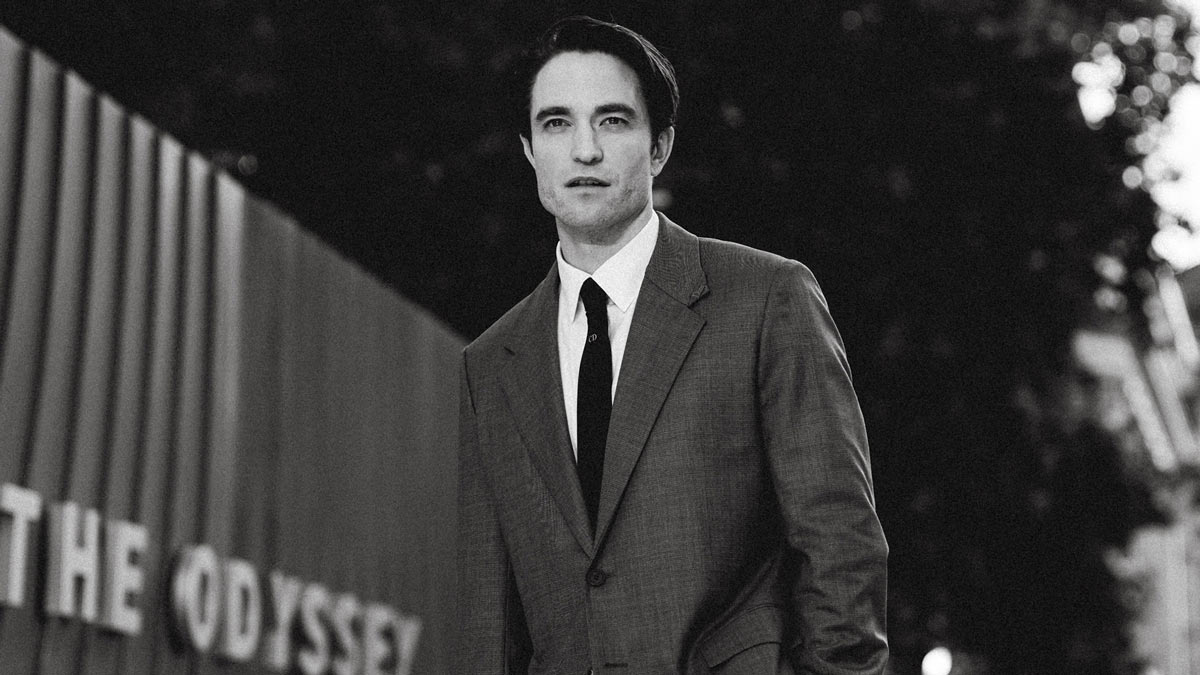
The Art of Sailing Close To The Wind
Robert Pattinson is so hot right now. Over the last year or so he’s been in everything from Bong Joon Ho’s sci-fi satire Mickey 17 to The Drama and Christopher Nolan’s The Odyssey, with Primetime and Dune: Part Three thrown in for good measure. Then there’s The Batman Part II just over the horizon too. So how did everyone’s favourite vampire get to be one of Hollywood’s busiest leading men?
Hollywood’s a tough gig. Even if you somehow, against all the odds, make it as a movie star, you still have no guarantee you’ll set off on a voyage to an acclaimed career. For every Robert Redford and Tom Cruise out there, there’s always a Rob Lowe or Jesse Metcalfe who just couldn’t shake the pretty-boy image – no matter how hard they tried. Even big stars like Hugh Grant and Matthew McConaughey took years to throw off their one-dimensional heart-throb images. So, while careers might start off well with photogenic jawlines and perfect hair adorning a multitude of teenagers’ bedrooms and offers flooding into the agents’ inbox, everything starts to wither after a while alongside the fading looks.
Robert Pattinson is one of the few, however, who has managed to navigate his way through the snags of fame. He’s managed to plot his own course to look more like the kind of acting career other less handsome stars like Tom Hardy or Christian Bale have managed to hammer out. How’s he done it?
Setting Sail on a Voyage of Self-Discovery
As I’m not a teenage girl, I’d never heard of Robert Pattinson until I watched the excellent The Lost City of Z. Even then Robert was hardly burning up the screen as he was Henry Costin, aide-de-camp to Charlie Hunnam’s Percy Fawcett, a real-life explorer. Pattinson did a great job of playing an eccentric sidekick to a main character who could easily be described as clinically insane – without detracting from Hunnam’s performance. Unlike many actors his age (or virtually any Gary Oldman performance ever), Robert knew better than to overplay his hand.
What Twilight fans already knew was that the 22-year-old Robert Pattinson was a bit of all right serving as Edward Cullen, the impossibly handsome vampire who launched a global fever. The five-film franchise turned Pattinson into an international celebrity, a walking billboard for adolescent longing. It also left him in a bit of a bind: with billions of dollars in box-office receipts alongside his name, an army of devoted fans, and a face that millions of people thought they already knew.
Uh oh. Though being rich and famous is kind of the big dream for aspiring actors, it can also very easily turn into a life sentence. The audience sees the character; the industry sees the market; and the actor can find himself condemned to sail the same route until his ageing ship gets scuttled and he sinks beneath the waves.
Pattinson could have stayed in safe waters. Instead, he began heading somewhere less predictable, working with directors whose films were unlikely to be mistaken for the latest instalment of a supernatural romance.
The Wrecks on the Chart
Robert Pattinson is hardly the first handsome young actor to discover that good looks can be both a ticket and a trap: Hollywood is strewn with former heart-throbs who’d aged up and lost their audience. The secret was to learn from those prior mistakes. Fortunately, Pattinson was willing to do so. He’s always been forthcoming about his desire to learn from other actors, telling Ciak Magazine how he ‘would like his career to follow the path that Leo’s career has taken’. Robert could see clear parallels with how Leonardo DiCaprio had been able to transition from a teen idol to a respected dramatic actor and figured he could do the same with his own career.
Brad Pitt is another obvious reference point. Like Pattinson, Pitt began as a conspicuously beautiful young man, but he was also able to build a reputation for choosing interesting projects, from 12 Monkeys and Fight Club to The Assassination of Jesse James by the Coward Robert Ford. He could be a conventional movie star when required, yet he could also play characters who were damaged, strange or distinctly unheroic.
Pattinson also looks up to Joaquin Phoenix, telling the Daily Beast, ‘I like what Joaquin has done. I’m always looking at his stuff – he’s been the most influential actor on me.’ These are more than incidental details. They suggest that Pattinson was looking beyond the immediate rewards of fame towards performers who had found room to manoeuvre inside the machinery of stardom.
Then there is Ryan Gosling, who created a public persona out of apparent awkwardness, deadpan humour and the willingness to puncture his own leading-man image. He made strangeness part of his appeal without making himself inaccessible. Pattinson found Ryan’s experiences most instructive for transitioning from a teen role to more serious work: ‘he’d done Young Hercules for three or four seasons – and then he did The Believer and everybody was asking about his craft. And it’s the most, most confusing thing.’ Robert chose Cosmopolis as an early step away from Twilight, specifically following the example of Gosling’s career choices.
Into Stranger Waters
In David Cronenberg’s Cosmopolis (2012), Robert played a billionaire cruising across Manhattan in a limousine while the world outside appeared to be coming apart. An icy, remote film, it focused on dialogue and ideas rather than the usual action fare of a Hollywood thriller. Pattinson later explained that the experience had freed him up. During Twilight, he had worried about being typecast, but making a movie so far outside his usual territory made him realise he could actually work in those films, too. ‘Beforehand, I didn’t consider myself to be an actor,’ he told French magazine Madame Figaro, ‘even with 10 years of acting under my belt. I’ve always felt out of place. David Cronenberg restored my belief in myself and changed the way I act and think about the industry.’
So, not only did he escape the chains of Twilight, but he proved to himself – as well as his fans – that he could do a lot more than brood intensely for the camera. Energised and inspired, he took on more non-Cullen roles, like Rey, a vulnerable and unpredictable young man in The Rover. In the Safdie brothers’ Good Time he really stepped out as Connie Nikas, a desperate criminal blazing away through a night of increasingly bad decisions. In a sweaty, frantic performance, Robert’s familiar handsome face was still there, but not how his fans had ever seen it before.
Then came The Lighthouse…
If you haven’t seen it, uh, try to watch as much as you can. It’s basically a black-and-white fever dream about two lighthouse keepers trapped on a remote island in the 1890s, going stir-crazy. If the subject material wasn’t bizarre enough, Pattinson’s co-star is Captain Crazy himself, Willem Dafoe. Together the two ‘wickies’ spend much of the film drinking, bickering, hallucinating and gradually losing their grip on reality. For Robert’s oldest fans, Twilight was far, far in the rear-vision mirror.
Tacking Against the Wind
Plenty of actors have played eccentric characters over the years, though traditionally they were separated into heroic and character actors with little crossover. Guys like Vincent Price and Christopher Lloyd became legendary for their portrayal of characters that could only be described as ‘eccentric’. In more recent years, however, some leading men have seemingly made it their mission to blur this line by making their characters more memorable than most. Johnny Depp and Nicolas Cage have led the way here by playing extremely mannered roles such as Peter Loew, Castor Troy, Raoul Duke and Captain Jack Sparrow.
Robert Pattinson definitely belongs to this new breed, saying that he finds it difficult to play a ‘normal person’ and that he is drawn to eccentric and/or intense roles. ‘It is actually kind of difficult to play a normal person when you’re used to playing freaks,’ he said while promoting Die, My Love. A glance through his filmography certainly bears this out: in The Lighthouse he plays a lighthouse keeper who masturbates to a wooden mermaid model. In Dune: Part Three he plays Scytale, a shape-shifting villain with a shaved, bleached-blonde haircut and no eyebrows. And in Mickey 17 he plays a meek clone with the ‘grating voice of a cartoon nerd’, a performance so memorable GQ noted he’d ‘cemented his place as modern cinema’s primo oddball’.
The Monsters Beneath the Waves
But it’s one thing to play an oddball onscreen and an entirely different thing to take that weirdness off-camera into the real world. Where’s the line between cool and dorky? It’s never that obvious – until you go too far, and then absolutely everyone tells you all about it. But there’s a big difference between making a bad joke down at the local pub and being a Hollywood actor and taking the wrong risk in the glare of the limelight. Now that can be career-limiting.
Joaquin Phoenix managed to survive his gaffe, but only just. As part of the promotion for his 2010 mockumentary I’m Still Here, Joaquin decided to push the conceit that he’d abandoned his career as an actor in order to chase a career as a rapper. Joaquin thought he was just challenging the audience’s perception of where the stage ended and real life began. Yet his appearance on Letterman, in character, dishevelled and unresponsive, proved a bridge too far. Whether he was a brilliant actor or not, everyone really thought he’d suffered a mental breakdown. That included Hollywood’s moguls: Phoenix noticed he immediately stopped getting good scripts. ‘people didn’t know if [the gag] was continuing… I would go in for meetings and they were not sure if I was [messing] with them or not.’
Shia LaBeouf was another to learn the hard way that ‘risk-taking’ as an actor can have very negative consequences. His extraordinary decision to go to the 2014 Berlin Film Festival wearing a paper bag over his head bearing the words ‘I AM NOT FAMOUS ANYMORE’ was very nearly prophetic. LaBeouf became an international laughing stock culminating in The Guardian running a piece asking ‘for the love of God let’s say absolutely no more about it.’ LaBeouf later claimed his action was driven by everything from an alcohol addiction to an ‘existential crisis’ but no matter what he said the general takeaway was that he was a complete and utter dickhead.
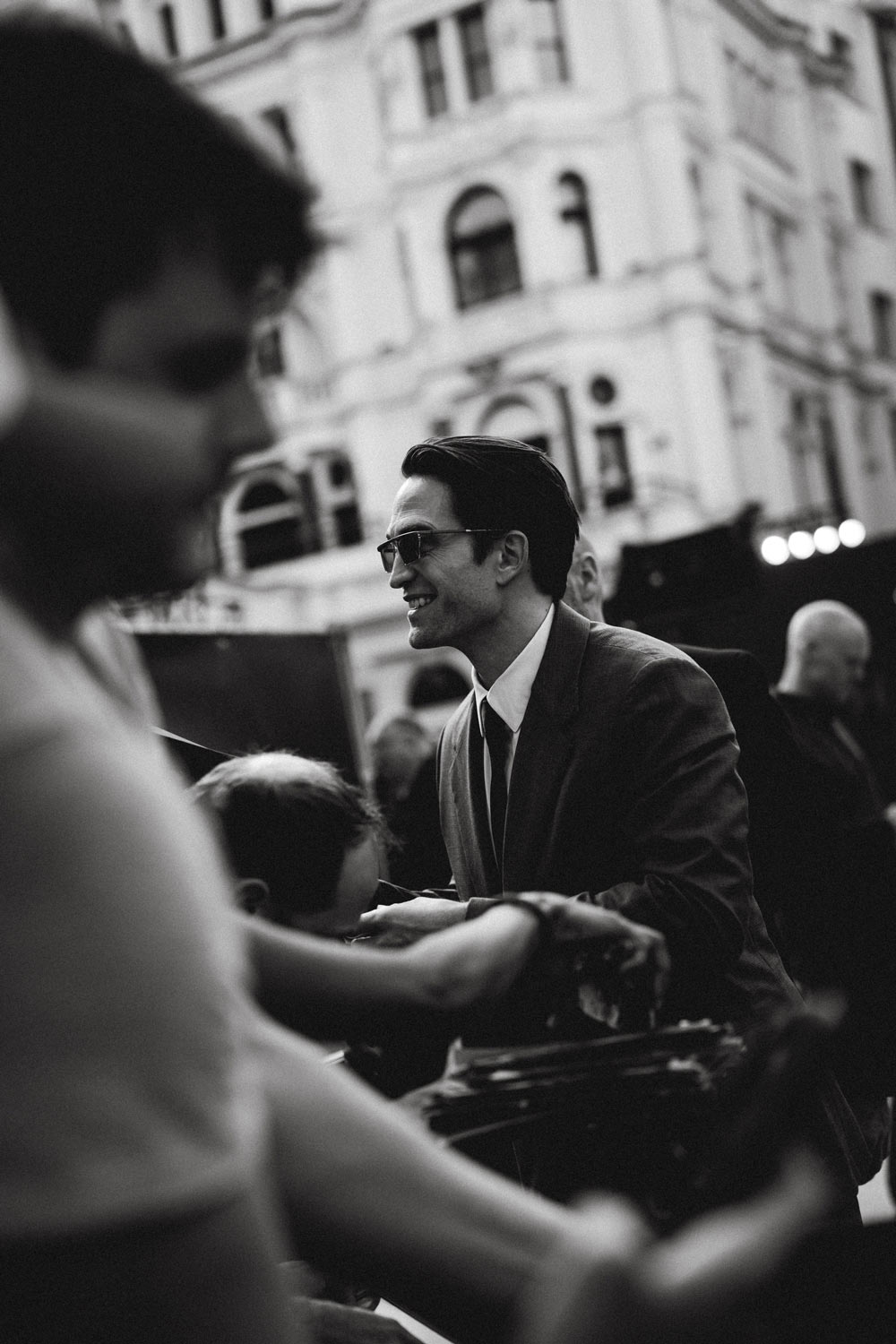
There is little chance of Robert Pattinson making the same mistake as actors like Phoenix or LaBeouf as he gives himself absolutely no airs offscreen, telling The Guardian he is ‘wholeheartedly committed to the concept of his ordinariness’ and that he only ‘knows how to play scenes, like, three ways’.
Self-deprecating or honest? It’s hard to tell. Either way, Pattinson seems to have found a useful position in Hollywood. He can be the oddball without having to advertise himself as one, and he can take a conventional leading role without looking as though he’s abandoned his more interesting ambitions. He’s like the latest version of Jake Gyllenhaal, who can switch casually between the orthodox hero of The Covenant and the creepazoid freak of Nightcrawler without raising a sweat or, more importantly, an eyebrow amongst his audience.
This proved handy when he was asked to don the famous cowl in The Batman, as the latest in a long procession of actors to have had a crack at playing the Caped Crusader. While it certainly proved Pattinson could still operate at the centre of a blockbuster, he added his own unique spin too. Robert dispensed with the socially acceptable ‘classy cool’ black-tie side of Bruce and made him more of a brooding obsessed loner hanging out by himself in a cave. Pattinson was in his element, playing a hero with eccentricities to the point of being psychopathic. All hinted at in previous iterations of Batman but never fully realised until now.
The Reward Is in the Journey
So is Pattinson’s success down to his careful plotting of a genius plan for world domination? Not at all. All his success has come from risk-taking – but it is a lot easier to take those risks when you have a Twilight-sized fortune behind you. Not every young actor can afford to turn down a safe commercial role in favour of a film that could play just once in a Greymouth experimental theatre on a Monday night. Pattinson had enough money, recognition and industry connections stacked up to allow him to take chances. His freedom to experiment was largely stumped up by the franchise he was trying to escape.
But he still had to risk everything he’d built. Plenty of successful actors are happy to settle into a comfortable groove, regurgitating what audiences already like about them until the returns begin to diminish. Pattinson appears to have remained curious about what else he might be able to do, even when the results are uncomfortable or downright peculiar.
For now, Pattinson seems to have cracked it. He still has the looks that made him famous, the commercial appeal that keeps the big studios interested, and enough curiosity to venture into waters where the safe route isn’t always obvious. Whether he’s a master navigator or simply a man with a good instinct for when to change course is difficult to say. But he has avoided the most obvious Hollywood trap: mistaking the role that made him famous for the only role he can play. Robert Pattinson’s still sailing close to the wind. So far, the wind seems to be on his side.
Can’t Escape the Bat
Since then he has been on a generational run salvaging this reputation and has, as a consequence, become a serious actor to be reckoned with.
For my generation Robert Pattinson ingrained himself in popular consciousness as “The Twilight guy” despite having a decent role in Harry Potter and the Goblet of Fire. Since then he has been on a generational run salvaging this reputation and has, as a consequence, become a serious actor to be reckoned with. Even with all the culture war back and forth about whether The Odyssey is good or not, everyone agrees that Pattinson’s villain role was one of the standouts (although good luck topping Samantha Morton’s Circe).
This year has seen Pattinson in four movies, setting a new record for himself. He must be running ragged just flying around the world going to all his own premieres. There was The Drama with Zendaya, The Odyssey also with Zendaya, and coming soon is Dune: Part Three… also with Zendaya. At the time of publishing, his A24 film Primetime, which dramatises Chris Hansen’s predator-catching TV show, is doing the rounds. If it wasn’t for a delay, the Netflix film Here Comes the Flood with Denzel Washington would also have been released later this year, but no dice.
His role in Primetime was a demanding one, and director Lance Oppenheim was impressed he stepped up to the challenge.
“Every day on set with Rob there was something new and unexpected in terms of the shock and awe he came up with as cameras rolled,” says Oppenheim. “In a way, it felt very similar to filming with a documentary subject – I wanted to observe him and adjust my plans around what he was doing. His performance, in many ways, shaped the tone of the movie; the project grew around him.”
“It was like he stitched parts of himself together with every version of Chris Hansen we’ve ever seen,” says Oppenheim, “on NBC, on YouTube, in South Park. And somehow, amid all that, Rob never lost sight of the humanity – the emotional toll this work has taken, and what it costs to live inside this world 24/7, hunting, as the character sees it, literal monsters.”
The people he’s catching aren’t the only monsters, though. Pattinson can’t seem to escape the vampire homages. One house had a dramatic staircase descending into the middle of a living room where Pattinson, as Chris Hansen, confronts one of the predators in the opening scene of the movie. “Lance had the idea that Chris would appear at the top of the stairs and descend into the frame like Count Dracula,” says production designer Alex DiGerlando.
Pattinson isn’t afraid of playing real people; he doesn’t take himself seriously at all, even if he takes the craft itself seriously. There are videos dissecting his attempts at dozens of different accents and affectations. He puts his whole body into it.
“Part of the reason Rob is one of the great actors of our time is his taste. He’s incredibly well-read and watches a ton of movies. He thinks like a filmmaker,” says Oppenheim. “I sent Rob and Brighton the Ren Faire series, which I was making at the time, and a work-in-progress of Spermworld. Rob told me he was frightened by Spermworld. I think he meant that as a compliment.”
Looking further ahead, Pattinson’s excited about what we’re going to be seeing in his next Batman films.
“It’s so ambitious. I mean, I sort of said the other day on something that the first one was a different take on a Batman movie, and this one is another… It’s a real left turn from the first one,” Pattinson told Collider, “but somehow it keeps elements of the kind of feel of it. But it just feels really ambitious, and I’m excited to see how it turns out.”
Apparently it’ll be pushing the envelope in terms of what we can expect from a Batman movie, and honestly, since I don’t think director Matt Reeves can do any wrong with the Batman franchise, I trust his direction.
“When you see it, the script is incredibly dense,” he says. “It’s like he’s just one of those directors who it’s really obvious that he has the entire thing in his head already, and so it’s unusual to be working with someone when you keep forgetting with little elements. There’s so much in it that it’s almost impossible to encompass the whole thing, but when you keep finding out, you’re like, ‘Oh, no, you know exactly what you want to do with this.’ There’s just something so cool about it.”
While he’s no longer the sparkly vampire of his youth, he’s never escaping the bats one way or the other.