
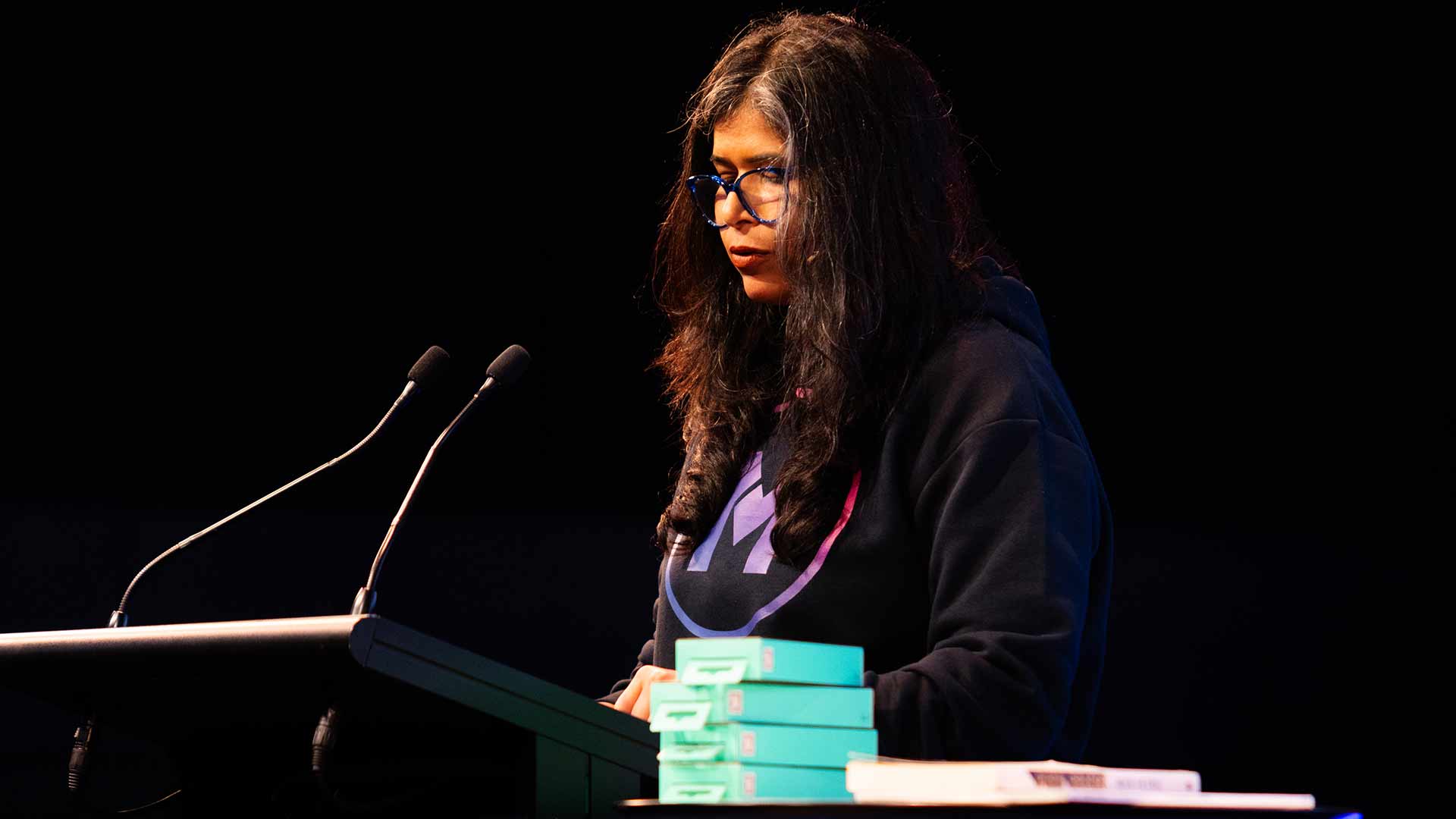
Unlocking New Zealand’s Future: Insights from New Zealand AI Adoption
Mission Ready boss Diana Sharma followed Nick Petrie with a simple, slightly inconvenient argument: AI adoption is a people problem, not a tech one.
Diana Sharma started with a recent story. A few weeks earlier, she said, a former chief executive of Google strolled into a hall of university students, announced that AI is the future, and got booed off. Not because this lot don’t get the technology, mind you, they’re about as AI-native as it gets. “They booed because they are afraid,” she said. “That the machines are coming and that the jobs are evaporating.” And that fear isn’t confined to lecture halls. “This is happening right now within your organisations,” she said. “People are feeling it silently. They’re feeling it politely.”
Then the stat she wanted leaders to squirm over. “Ninety-five per cent of enterprise AI pilots delivered no measurable return. Only five per cent created real value. Nineteen out of twenty, billions of dollars and nothing they could point to.” For effect she asked for a show of hands from anyone who had spent real money on AI, then told them to keep their hand up only if they could name “a number you can put in front of your board”: revenue, cost saved, hours back. Most hands sank. “We’re living through an era of extraordinary hype and a quiet crisis of actual results,” she said.
The easy move is to blame the technology. Sharma wasn’t having it. The real question, she argued, isn’t how fast we are moving but whether we are driving in the right direction. “Your greatest advantage in the AI era is human,” she said, “and the biggest brake on adoption isn’t a missing feature, it’s fear.” Before we tut at people for not being ready, she added, we should look honestly at the world we are asking them to be ready in: one full of layoff headlines with AI cast as the villain. “Fear doesn’t make people lean in, it makes them freeze,” she said, “and frozen organisations do not transform.” Her local red flag: fewer school students picking tech as a career.
“The role of leadership in this moment isn’t to push the technology harder,” she said. “It’s to change the story first.” Ask “how do I save money and costs by implementing AI?” and “what your team hears is cost cuts equal to job cuts”. Much better, she suggested, to ask “how can AI serve my team better so they can deliver higher value to our customers?”
Under the story sat the traps that sink the ninety-five per cent. Firms expect people to do two jobs, the day job plus an AI one bolted on top, with no time and no permission, just an instruction to transform while keeping the lights on. Incentives still reward the old behaviour, because “people follow the incentives, not the slogans”. The business itself isn’t ready, the data won’t talk, and the context that makes AI useful lives in people’s heads rather than its systems. And nothing sustains it, because adoption is treated as a launch, not a practice. Her verdict was flat: “None of these are technology problems, they are leadership problems.”
So what do the winners do differently? Not buy flashier kit, because everyone’s got the same kit. “They have access to exactly the same models,” she said. “What they do differently is this: they invest in capability before they invest in tools that scale.” They hand people time and permission, line up the incentives, drag the know-how out of people’s heads, and build the habits that turn a one-off pilot into how the place actually runs, all “while retaining and building trust”. Tellingly, “only fourteen per cent of companies are genuinely future-proofing their people while they roll out AI”.
The price of AI has fallen off a cliff, she noted, and yet most businesses’ bills keep climbing, because cheaper intelligence just tempts everyone to use more of it, badly. “The cost of AI is falling, but the cost of poor judgement isn’t,” she said, so the winners will be those whose people know when to use AI, how, and when to leave it well alone. Profit and purpose are not a trade-off, she argued; backing your people is the highest-return move you can make on AI. New Zealand, small enough to move together and connected enough to matter, is well placed to lead on AI for good: picture a provincial nurse handed back time at the bedside, or a kid in Kaitaia learning on the same tools as one in Remuera. Not the Silicon Valley way of breaking things and people, but something better. As she put it: “Everyone has the same tools. The advantage is people.”
5 Takeaways
- Fear is the real brake, not missing features. People are working to a soundtrack of layoff headlines, and fear makes them freeze. Leadership’s first job is to take the fear out and put people back at the centre.
- Ask a better question. “How do I save costs with AI?” lands as “job cuts” with your team. Flip it to “how can AI serve our customers and our team better?” and it stops feeling like a threat.
- It’s a leadership problem, not a tech one. Pilots flop because people are doing two jobs, incentives reward the old way, the data’s a mess and nothing sustains it. Fix the system around the tool.
- Invest in capability before tools that scale. The top five per cent don’t have better models, they have better-prepared people. Give them time, permission, sensible incentives and feedback loops, and a one-off pilot becomes the way you work.
- Profit and purpose are the same move. Backing your people is the highest-return call you can make on AI, and it is New Zealand’s shot at leading on AI for good. Get it right and the advantage, the one no shared tool can give you, is human.