We’re Drifting Lamborghinis on a Frozen Lake in Mongolia
Turns out the best way to understand a supercar’s four-wheel drive system is to point it at a frozen lake in Inner Mongolia and see what happens.
While most of us were going to work and pretending to care about interest rates, a handful of lucky New Zealanders were halfway across the world in Yakeshi, China, sliding Lamborghinis around a frozen lake at -20 degrees Celsius. Life is demonstrably unfair.
Lamborghini’s Esperienza Neve returned to Yunlong Lake in Inner Mongolia for its second edition in March. Yakeshi sits in the Hulunbuir region, one of the most remote and spectacularly barren landscapes on earth, a vast frozen steppe where temperatures plunge well below zero. Yunlong Lake, locked solid under winter ice thick enough to carve full racetracks into, becomes an unlikely but perfect proving ground.
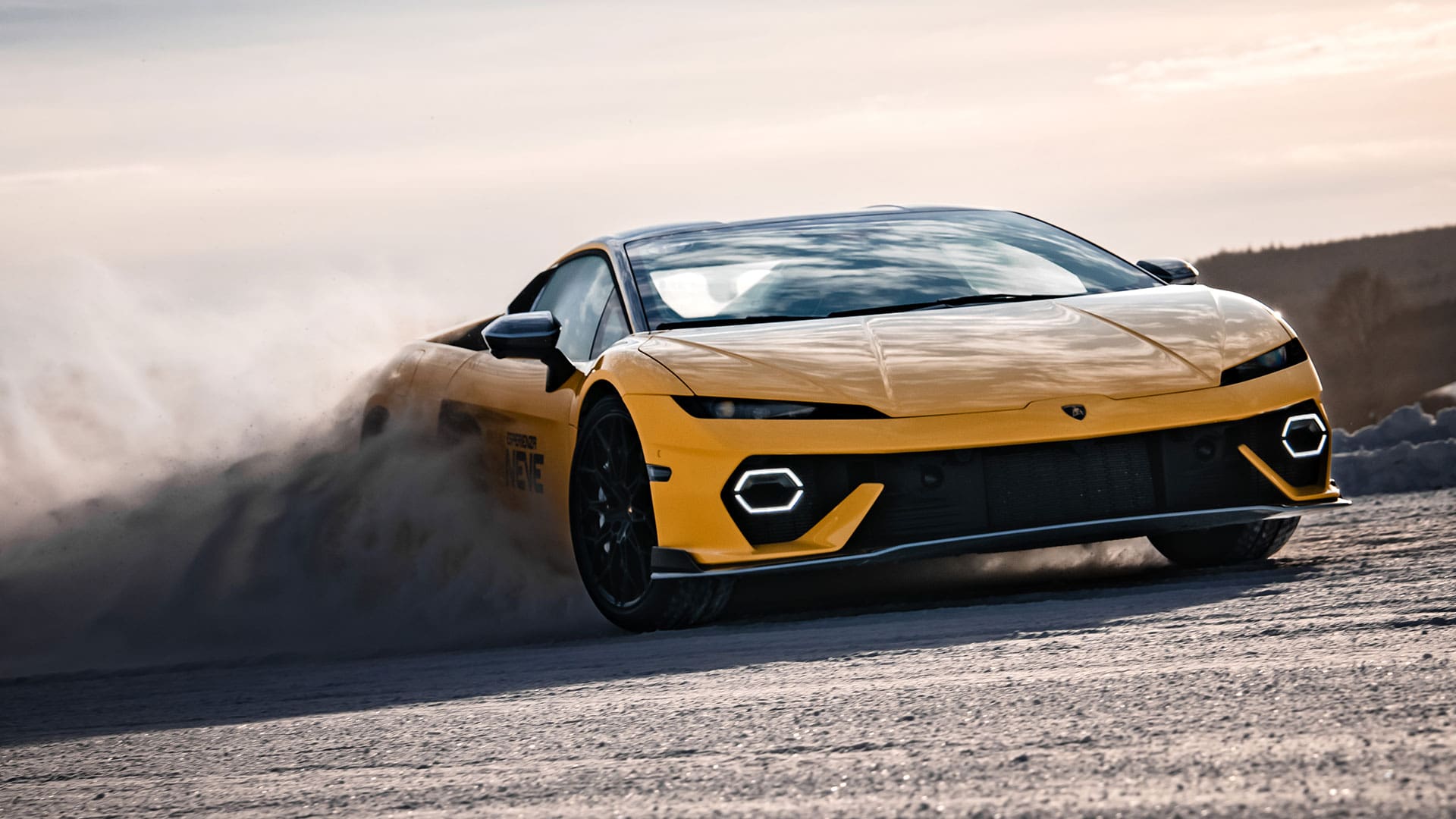
This year the brand went all-in, bringing its entire fully-hybridised lineup to the ice for the first time, including the headline act: the Temerario, making its Asian snow debut. The Temerario packs an entirely new twin-turbo 4.0-litre V8 working in concert with three electric motors for a combined 920CV, and it is the only production super sports car engine on the planet capable of hitting 10,000 RPM. That V8 sends power to the rear wheels while the electric motors handle the front axle, all managed by the Lamborghini Dinamica Veicolo 2.0 system, which distributes torque independently to each wheel in real time. On a frozen lake at minus twenty, that system earns its keep every single corner.
Among the international contingent spanning Thailand, Korea, Australia, and beyond was a group representing New Zealand, accompanying Lamborghini Auckland Brand Manager David Nilsson, who was kind enough to debrief us on proceedings from considerably warmer surroundings.
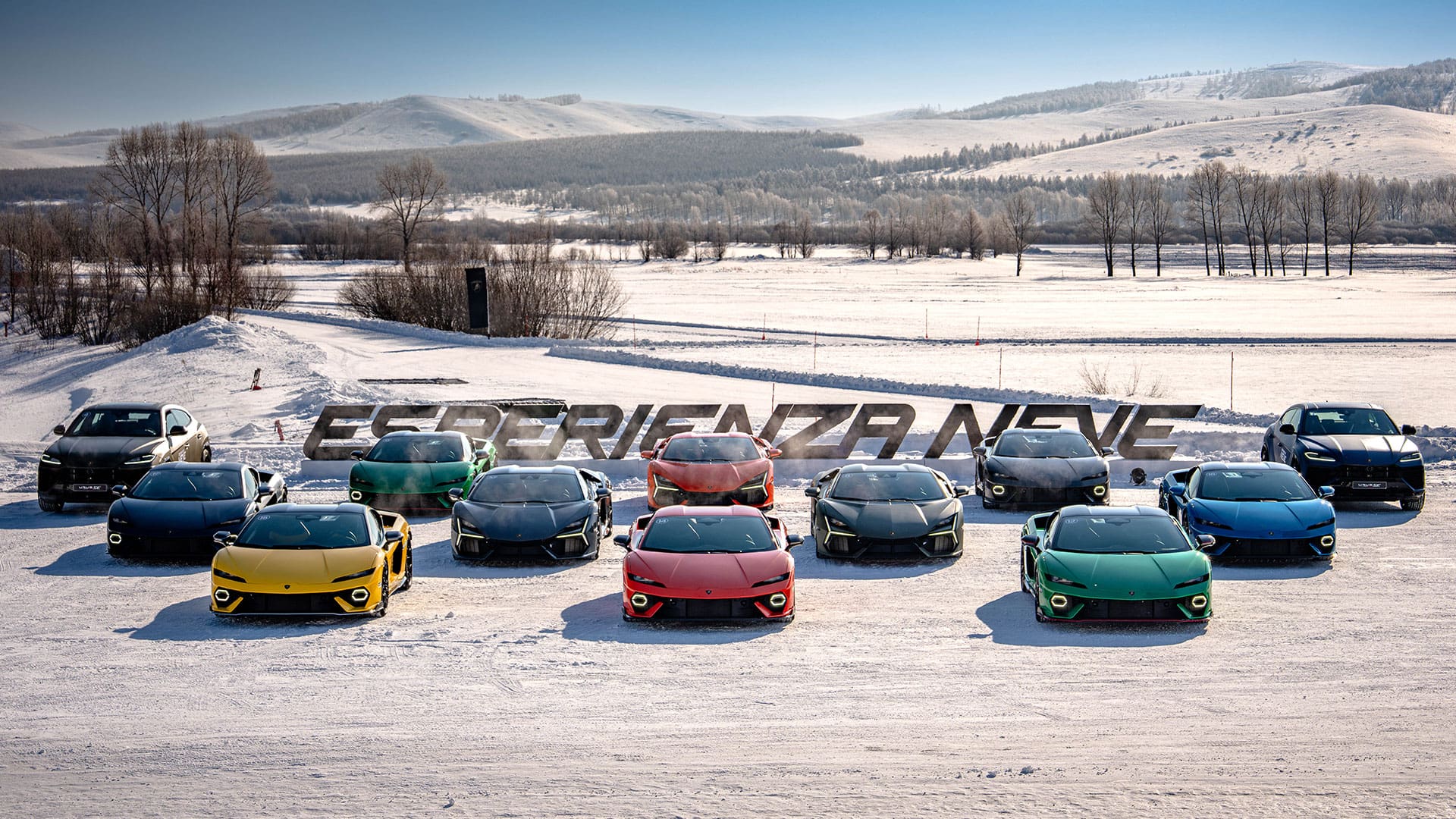
“They started with a figure eight slalom course just to get the hang of it, which you did in a Temerario,” says Nilsson. “Then they slowly progressed you up into bigger, full dug-out racetracks, huge, nearly kilometre loops dug in with big tight hairpins and sweeping esses.” The tracks were physically carved into the lake surface, banked and bordered by walls of compacted ice. So yes, proper stuff.
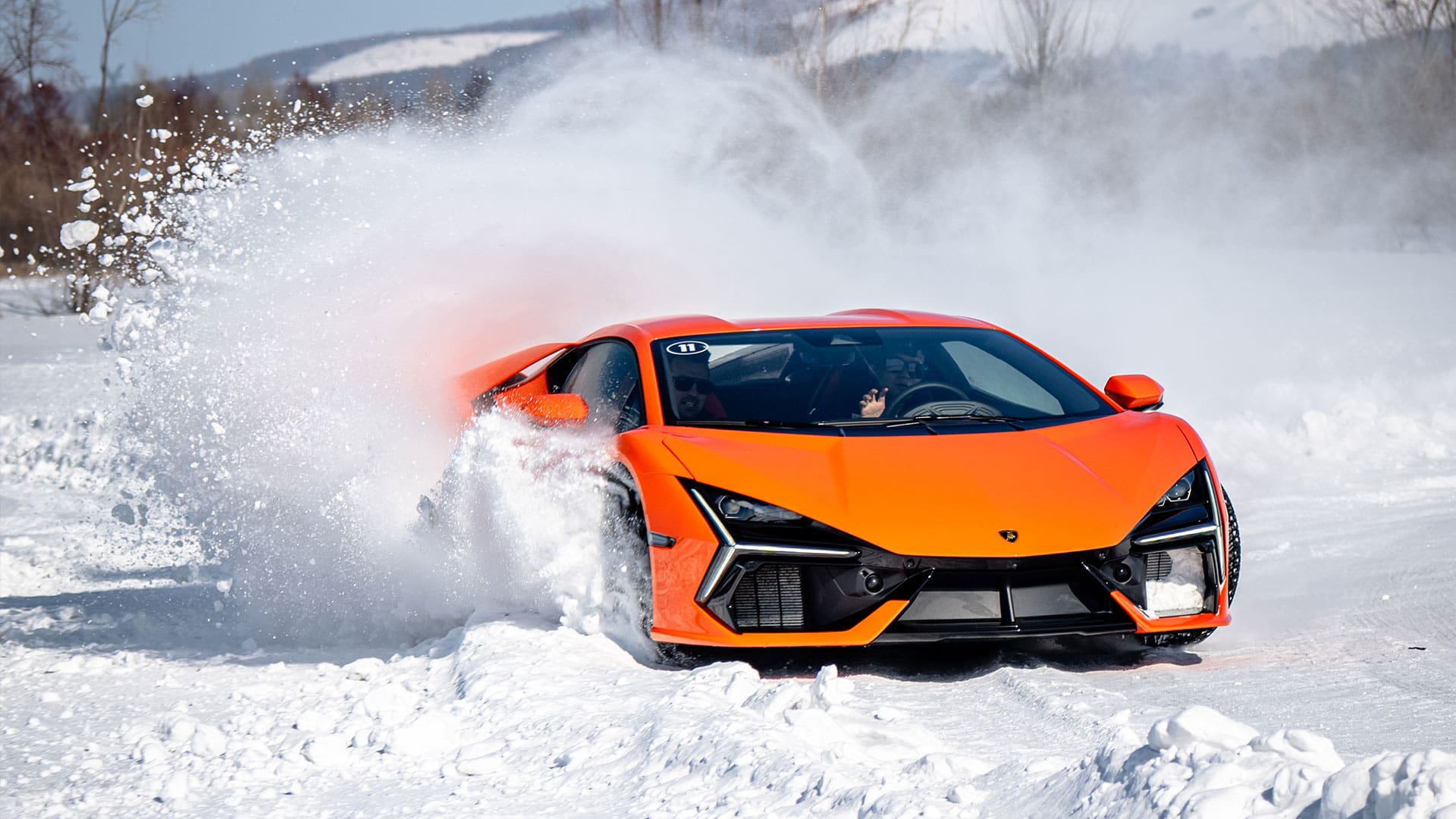
The ice turns out to be an extraordinary classroom for understanding what your supercar is actually doing beneath you. “You’d be coming into the corner and it’s starting to drift,” Nilsson explains. “If it started getting close to the front, all you did was accelerate and watch the four-wheel drive system pull you back out to the outside of the track.” On regular Auckland roads, all that sophisticated engineering invisibly goes about its business. On a frozen Mongolian lake, suddenly it is the most obvious and wonderful thing in the world. “The throttle is really controlled. You can control the angle of the car and everything just by throttle instead of steering almost.”
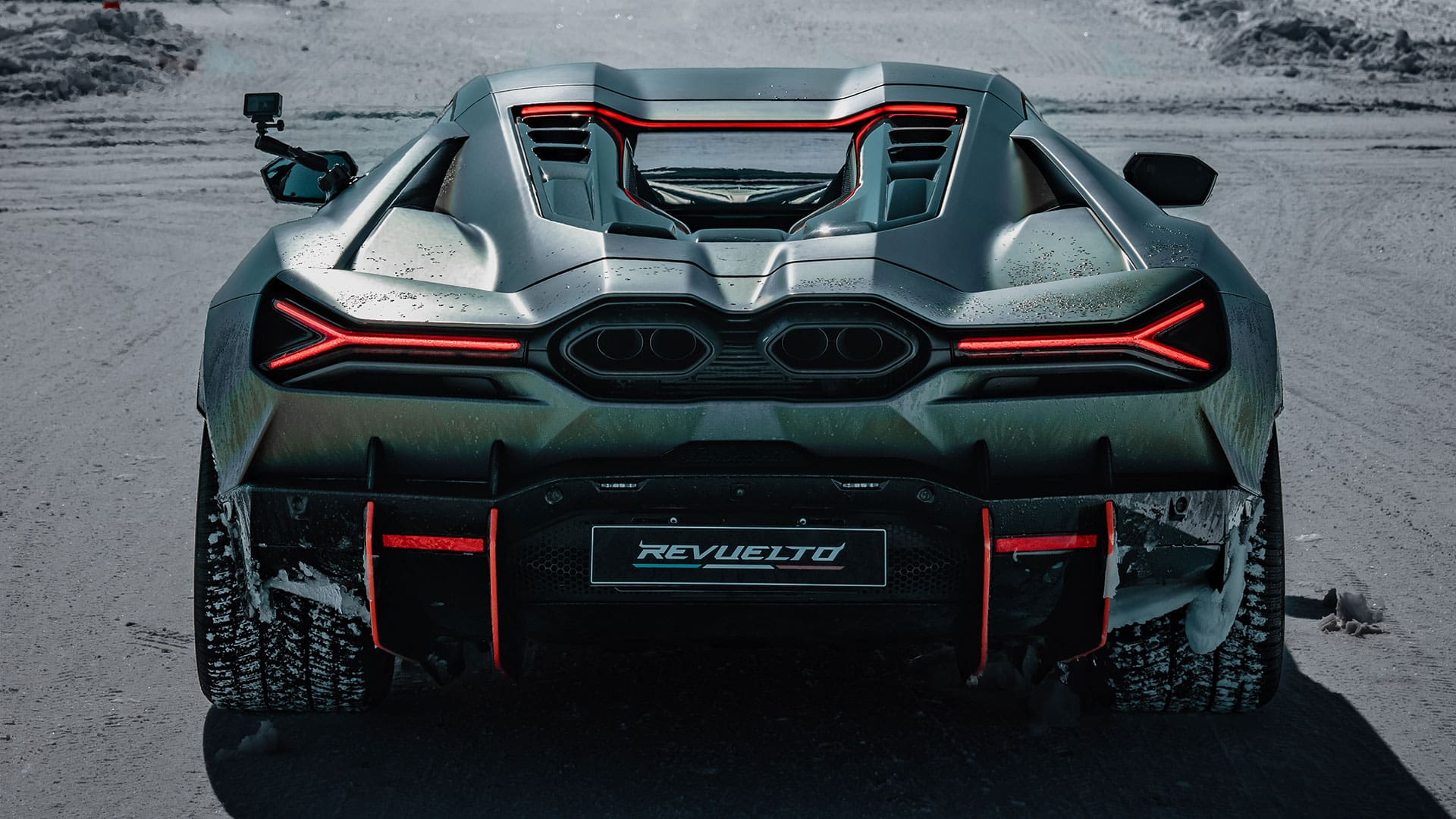
The Revuelto also featured heavily, and here the engineers have taken a different philosophical approach entirely. Where the Temerario is a twin-turbo V8, the Revuelto retains Lamborghini’s naturally aspirated 6.5-litre V12, now paired with three electric motors of its own for a combined 1,015CV. In drift mode on the ice, the car runs in a heavily rear-biased configuration, leaning on that V12 to power the rear wheels while the electric front axle waits in reserve. “In the Revuelto you had drift mode set, so it was very rear-wheel biased. You didn’t really notice the electric motors until you needed to correct or pull yourself through a corner a bit more. If you got the slide right, it just drives through the rear wheels.” The sound of a naturally aspirated V12 bouncing off a wall of compacted ice in the middle of Inner Mongolia is presumably not something you forget quickly.
Rounding out the fleet was the Urus SE, Lamborghini’s Super SUV, running a 4.0-litre twin-turbo V8 paired with an electric motor for 800CV total. On ice it delivered what Lamborghini describes as confident, firm control and sharp handling, which in Urus terms means it almost certainly made the proper sports cars look slow through the tight stuff.
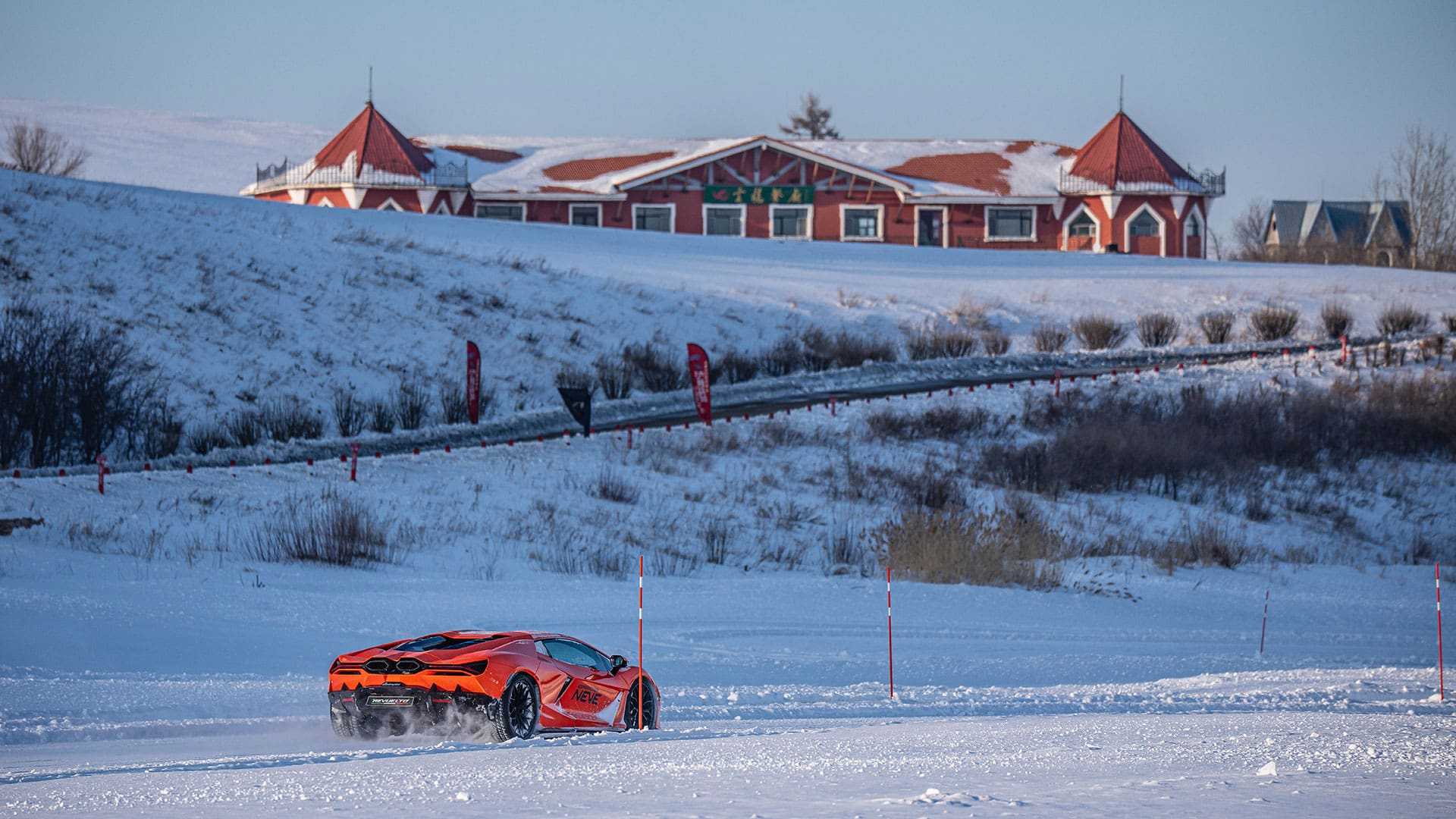
Now, about those Australians. We asked whether there was any international rivalry on the ice. Nilsson chose his words diplomatically, though his meaning was crystal clear: “The Australians definitely, how do I put it politely, believe in their ability.” The New Zealand contingent apparently needed only half a morning session to find their feet. After that? “Full noise in the Revuelto around big sweeping corners.” Of course they were.
Between sessions, Lamborghini had given as much thought to the off-track experience as the on-track one. At the centre of the frozen lake sat a traditional Mongolian yurt, complete with a fireplace burning in the middle, the kind of elemental warmth that feels almost absurdly welcome when you’ve just been sliding a 920CV supercar around in sub-zero temperatures. At the far end of the lake, a purpose-built heated glass structure housed Italian chefs flown in specifically for the event, a gelato station, proper espresso, and racing simulators for those who apparently hadn’t had enough. And at the end of each day, guests gathered outside around an open fire on the ice, mulled wine in hand, the Mongolian steppe stretching out to the darkness beyond. It’s the sort of detail that separates a car event from an actual experience.
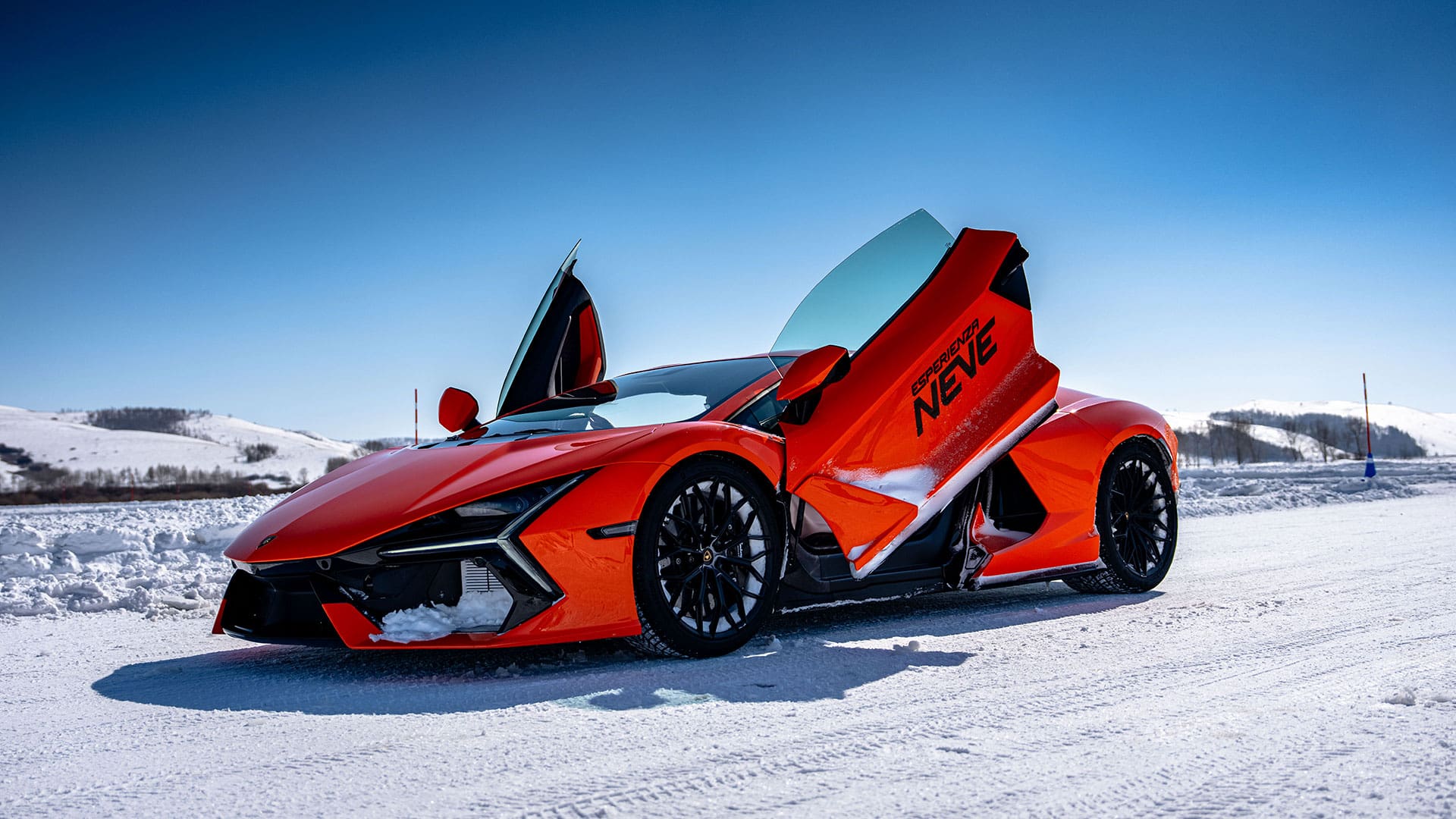
Back in Auckland, Nilsson is bullish on where the local market sits. The brand’s lineup is about as fresh as it gets, with the Revuelto having only landed in 2024, and more on the way. “There’s a new Urus Performante to be launched, so I’m sure that’ll get some more people talking.” In a market where most things have slowed to a cautious crawl, the appetite for a properly involving, genuinely extraordinary driving machine hasn’t gone anywhere. If anything, Esperienza Neve makes the case better than any brochure could: that what Lamborghini sells, ultimately, is not a car but a specific quality of aliveness and sometimes that just happens to be best served on a frozen lake in Inner Mongolia.
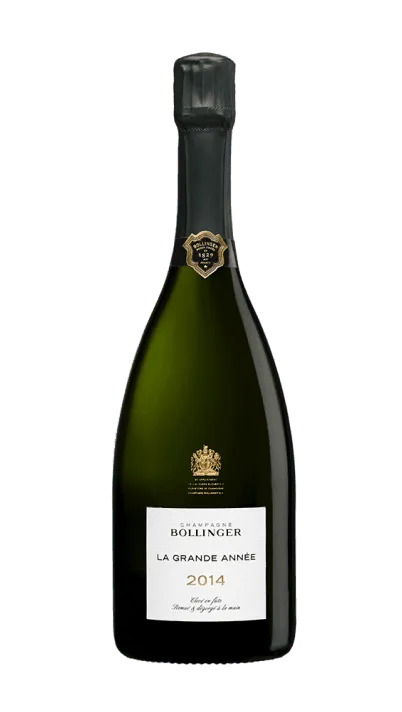
La Grande Année 2014
Vinification in barrels: expertise preserved by Champagne Bollinger
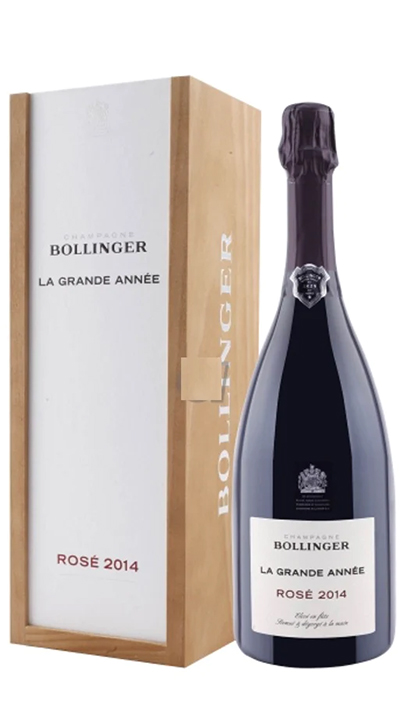
La Grande Année Rosé 2014
La Grande Année, a champagne craftmanship