
Beyond the Try Line
In Part One of this story, I told you about Kai Tak Stadium, 50 years of the Hong Kong Sevens and the run of Cathay Pacific lounges that bookended the trip. But Kai Tak was only half the story. Cathay Pacific and the Hong Kong Tourism Board had built a week around us that went well beyond the rugby.
Before I get into the day-by-day, there are a few practicalities worth sorting before you land, because Hong Kong runs on a slightly different set of assumptions from New Zealand. Get an Octopus card the moment you arrive. HKTB loaded ours with HK$200, and it covers the MTR, ferries, buses and most convenience stores, meaning you tap on and off and barely think about transport for the rest of the trip. Carry cash alongside it because, although Hong Kong is more card-friendly than it used to be, taxis, small eateries and market stalls often prefer notes. You’ll want small denominations on hand for the Cheung Chau ferry pier and the stalls on Pottinger Street in particular.
Pack a light rain jacket or compact umbrella rather than trusting the forecast blindly. April sits in the shoulder season, and I was caught more than once by a burst of rain that cleared 20 minutes later. Check the Hong Kong Observatory’s forecast on the morning of any outdoor plans, especially a ferry day, because conditions can shift faster than most apps update. Bring a three-pin UK-style power adapter too, because Hong Kong’s sockets differ from New Zealand’s and hotel front desks do not always have spares. For work travel, pack business cards. Exchanging cards still matters in Hong Kong business culture.

My first full day in Hong Kong didn’t touch the city at all. We gathered in the lobby of the Marco Polo Hong Kong at 9 am, took a coach down to Central Pier No. 5 and, by quarter to 10, were on a ferry pulling out of the harbour, bound for Cheung Chau Island. The fast ferry takes around 35 minutes and is worth seeking out specifically, because Central Pier No. 5 also operates a slower ordinary ferry that takes closer to 55 minutes. Both run regularly throughout the day, but check the timetable before you set off because fast and ordinary services take different times and do not follow the same schedule. There is something genuinely disorienting about watching Hong Kong’s skyline shrink behind you and, less than 40 minutes later, stepping onto an island with narrow lanes, no cars and a pace of life that feels decades removed from Central.
Cheung Chau is the kind of place that makes you forget how close you still are to one of the densest cities on Earth, and I’d recommend taking the earliest sailing you can manage. The island gets noticeably busier from late morning, especially on weekends, and having the temple and lookout largely to ourselves made the visit feel more like a discovery than a tour stop. We wandered past Pak Tai Temple, a squat, incense-filled shrine near the top of Pak She Street that has been the spiritual centre of the island for generations, its beams dark with decades of incense smoke and its forecourt usually busy with locals rather than tourists, before climbing to the North Lookout Pavilion. Wear proper shoes for this bit. The path isn’t difficult, but it is uneven in places, and jandals or sandals will slow you down. The payoff at the top is genuinely spectacular: a sweeping view over the water and the smaller islands scattered around Cheung Chau, well worth the short, slightly sweaty climb. From there, it was down to Tung Wan Beach: white sand, a scattering of local families and none of the crowds I’d braced myself for, even with the Sevens filling hotels across the harbour.

Lunch was at Hing Lok Restaurant, a proper local seafood spot on the waterfront near the ferry pier, where course after course of fresh catch arrived without much ceremony and without needing any. Bring cash for this too, because card acceptance drops off noticeably once you are away from the main ferry piers. It is the kind of meal that reminds you Hong Kong is not only a city of towers and neon; it is also a fishing village, or several of them, if you know where the ferry terminals are. With more time, bikes are the preferred way to get around the island because cars are largely banned; rental stalls are easy to find near the ferry pier and cost next to nothing for a couple of hours. And if your dates happen to line up, Cheung Chau’s Bun Festival runs in May, just after Sevens season. Check the calendar, but be warned that accommodation and ferries book out quickly around it. Sitting there with a full plate of prawns, it struck me that fresh seafood was about to become something of a theme for the week. Cathay’s hospitality at Kai Tak would keep the lobster and crab coming for the rest of the trip.

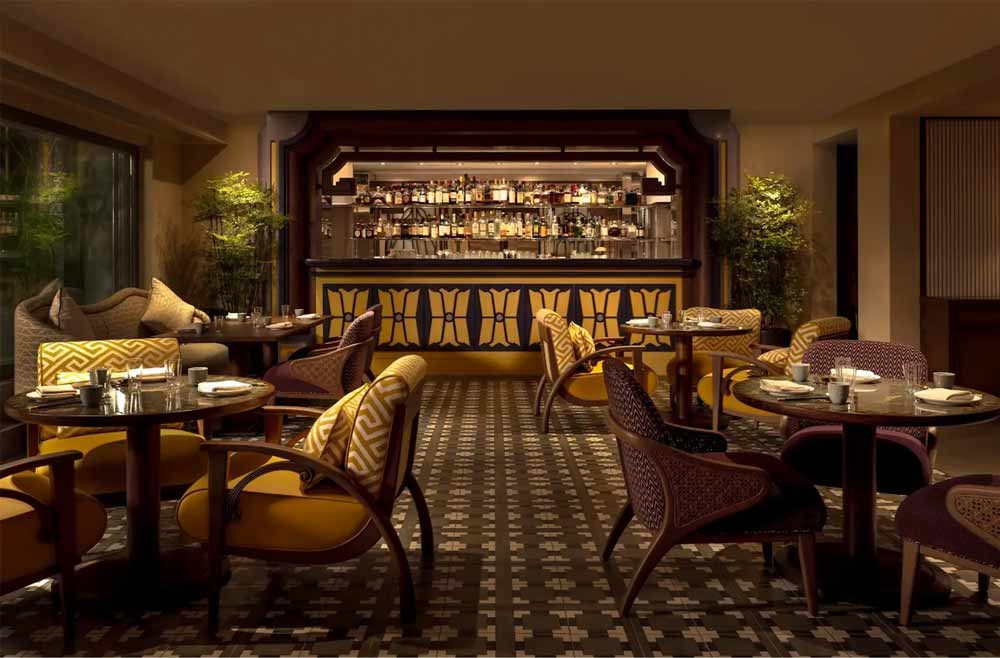
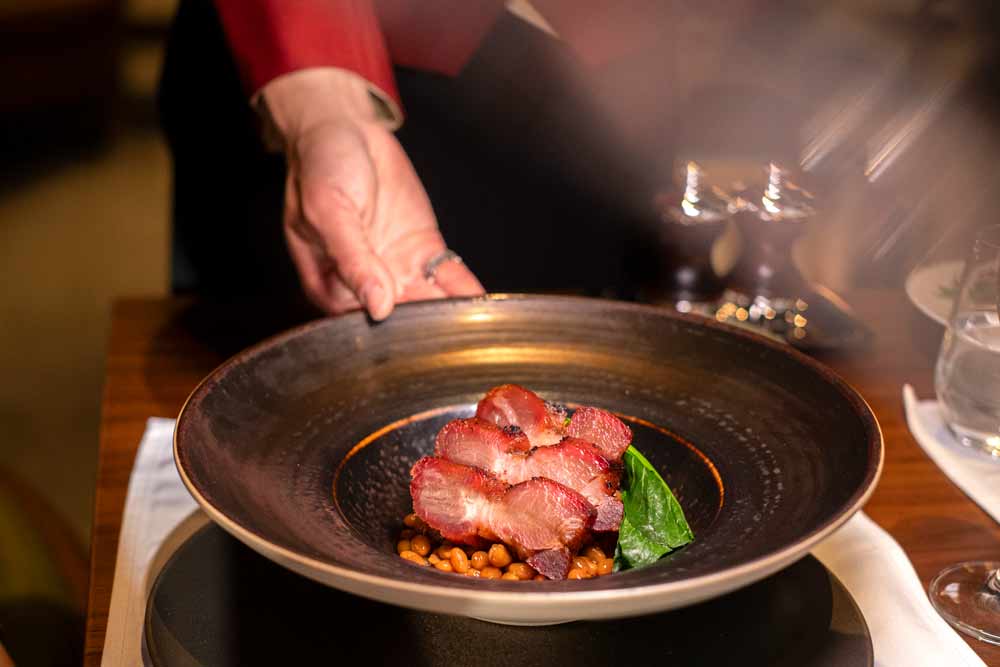
Back in Central by late afternoon, we regrouped at the hotel before heading out again for dinner at Duddell’s, tucked into the Shanghai Tang Mansion on Duddell Street. It is Michelin-starred and also, not by coincidence, Cathay Pacific’s in-flight catering partner. That meant the elevated Cantonese dim sum in front of me was, in a very direct sense, of the same standard as the food I’d eaten 35,000 feet in the air a few days earlier and would eat again on the flight home. Cathay builds these dishes into its Hong Kong outbound menus so the meals on the ground and in the air share the same DNA, and that connection was obvious the moment the first basket landed. Book well in advance, especially during Sevens week, because it doubles as a working art gallery and a restaurant, and tables, particularly for dinner, go quickly once the tournament crowd is in town. Order beyond the obvious classics; the dim sum menu is extensive, and the kitchen’s contemporary dishes are just as strong as the traditional steamed baskets everyone reaches for first. Smart casual was the dress code; smart casual undersells how good the food was, and I’d happily have stayed for another two courses had the itinerary allowed it.
From there, we climbed 45 floors to Cardinal Point, a rooftop bar and restaurant at the top of Gloucester Tower in the Landmark complex. Even with rain rolling through, the view over Hong Kong’s skyline held its own: an international menu, a raw bar, indoor and al fresco seating, and floor-to-ceiling glass that puts the entire harbour on display regardless of the weather. For the full effect, time your visit for 8 pm, when the city’s nightly light show begins across the waterfront below, with music and light synchronised across dozens of buildings. Cardinal Point’s windows give you one of the better vantage points in Central, under cover if the weather turns. Even from 45 floors up, with rain still spitting against the glass, it was genuinely something to see, and one of those Hong Kong moments that photographs never quite do justice to.
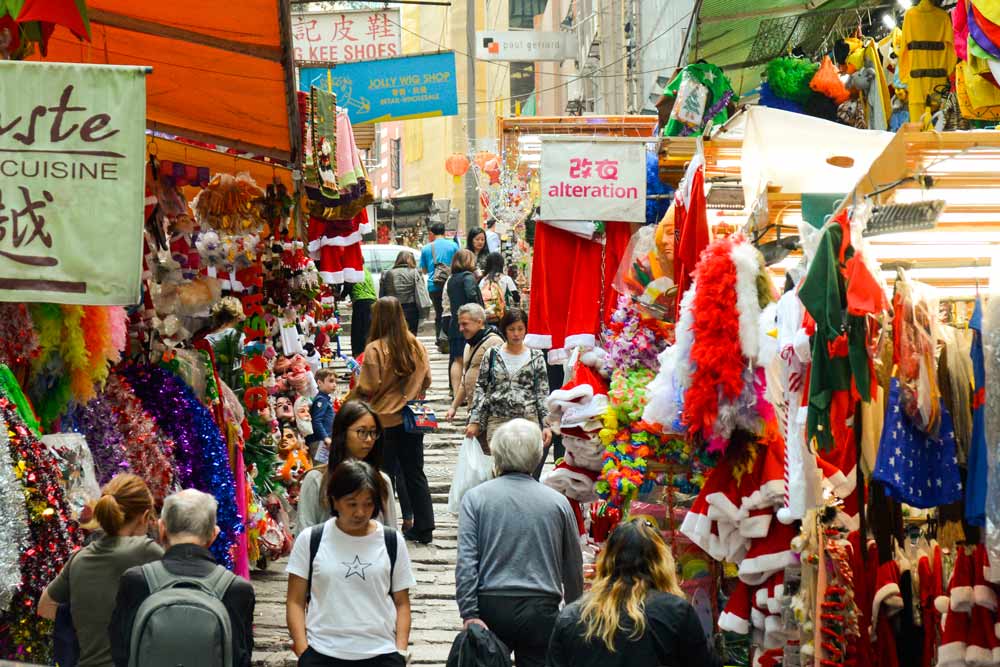
Saturday morning, before the rugby, our group was let loose on Pottinger Street, a steep, cobbled laneway in Central that runs down towards what used to be the city’s waterfront, lined with market stalls, costume shops and a version of old Hong Kong that is increasingly rare to find intact. If you are shopping for a Sevens costume, go earlier in the week rather than on the morning of the match, because stock of popular sizes and props thins out once the tournament begins. Bargaining is expected at the market stalls, though not at the fixed-price shops further down towards Hollywood Road, so read the room and do not be afraid to walk away and return later. Wear grippy shoes. The cobbles are attractive but genuinely slippery when wet, and Hong Kong in April does not always cooperate. I went in looking for a fancy-dress costume and came out with a far better sense of a part of the city I would otherwise have walked straight past. It is a small, dense pocket of history wedged between glass towers, and it is worth visiting even without a rugby match to dress up for. The stone steps alone, worn smooth by more than a century of foot traffic, are worth the detour, and the street connects neatly with the wider PoHo and Hollywood Road antiques district if you want to keep exploring on foot once the costume hunt is done.
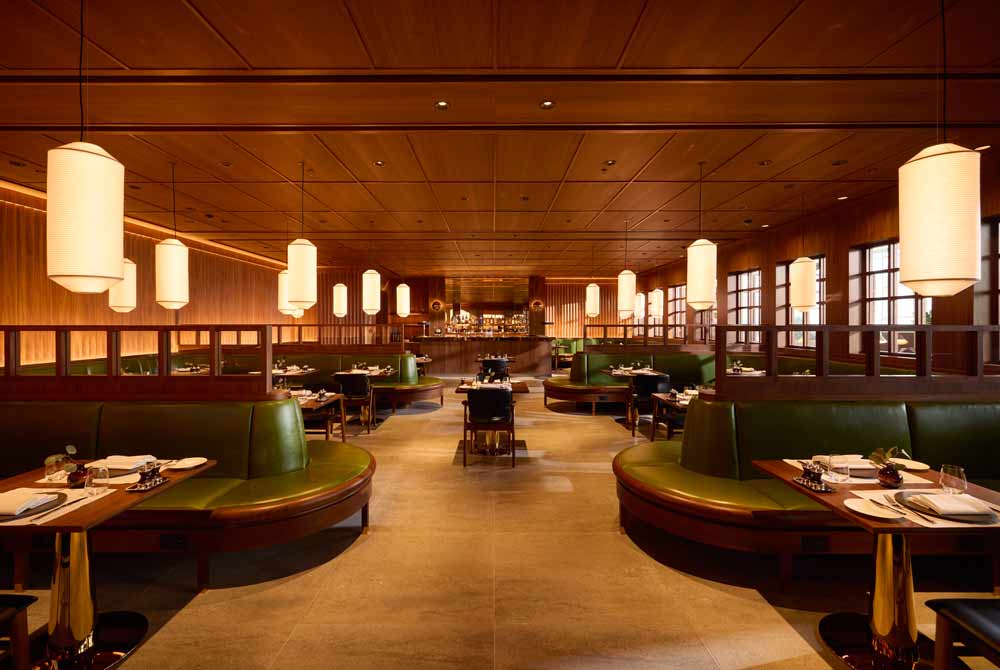
After Sunday’s final matches wrapped up at Kai Tak, where, as I covered in Part One, Cathay Pacific had lunch waiting for us on both match days, we made our way to Wan Chai for dinner at Lai’s Kitchen, a room built as a tribute to Hong Kong’s dai pai dong street-food culture, neon signage and all. The dinner menu ran deep into Cantonese stir-fries and claypot-rice dishes cooked to order, casual in the best sense of the word: the kind of place where nobody is precious about spilling sauce on the table, and the food is better for it. Go hungry, and do not fill up on starters. The claypot-rice dishes take a little longer than a stir-fry because they are genuinely cooked to order, but the crispy rice at the bottom of the pot is the point and worth the wait. Casual really does mean casual here. After two days at Kai Tak in fancy dress and match-day gear, this was the one dinner all week where nobody needed to think twice about what they were wearing. After two long days in a stadium seat, it was exactly the meal I did not know I needed, and easily one of the least fussy, most satisfying dinners of the trip. Wan Chai is an easy taxi or MTR ride from most Kowloon and Central hotels, and it is worth lingering afterwards: the neighbourhood’s older shopfronts and newer bars sit side by side in a way that rewards a slow walk back to the station.
With a free day later in the trip, I made time for M+, Asia’s global museum of contemporary visual culture, anchoring the West Kowloon Cultural District. Tickets were courtesy of Cathay Pacific, one more example of an airline that seems to think about its passengers’ time on the ground almost as carefully as their time in the air, and I’m glad I used them. Check the opening hours before you go, particularly on Mondays and public holidays, and book ahead if a particular exhibition is the drawcard. The exhibitions running at the time included Lee Bul: From 1998 to Now, Zao Wou-Ki: Master Printmaker and a genuinely absorbing sound-and-light installation, Ryuichi Sakamoto | seeing sound, hearing time. Give yourself at least two or three hours; it is a large building across multiple levels, and rushing it defeats the purpose. I wished I’d blocked out an entire afternoon rather than a couple of hours between other plans. It is a reminder that Hong Kong’s creative currency runs well beyond its skyline and kitchens: this is a city investing seriously in how it tells its own story, and M+ is where that investment is most visible. The building itself is worth visiting before you have seen a single artwork, and the West Kowloon waterfront promenade runs right past it, a good spot to decompress afterwards with a harbour view and considerably more space to breathe than Central offers.
Hong Kong rewards travellers who build in the days either side of whatever brought them there. I came for the rugby and left with a list: Cheung Chau’s beaches, Duddell’s dim sum, the view from Cardinal Point, the costume stalls on Pottinger Street, a dai pai dong dinner in Wan Chai, an afternoon at M+, and a run of Cathay Pacific lounges that turned two travel days into some of the best hours of the trip. None of it has anything to do with a scoreboard, and all of it is why I’d go back. For a trip built around the Sevens, my honest advice is simple: book the extra two days either side of the tournament. You’ll use every one of them.