
Rugby’s Wildest Weekend
I landed in Hong Kong at 9.05 pm, and by the time I’d cleared the terminal I understood why Cathay Pacific calls this city home. The airline I had just stepped off is marking its 80th anniversary this year, and every part of the journey, from boarding in New Zealand to touching down at Hong Kong International Airport, felt engineered around a simple idea: the trip should be as memorable as the destination. Skytrax ranked Cathay third among the world’s airlines in 2025 and, having spent the flight tucked into an award-winning Business-class suite, wrapped in Bamford amenities and working through a menu built around exclusive Michelin-starred dining partnerships, I wasn’t about to argue.
A seven-seater MPV was waiting for our group at Arrival Hall B, arranged by the Hong Kong Tourism Board, and 20 minutes later I was checking into the Marco Polo Hong Kong on Canton Road, Tsim Sha Tsui. Harbour City stretched out below, the lights of the harbour just starting to flicker on across the water. I’d arrived in Hong Kong for the 50th anniversary of its most famous sporting weekend, flying the same airline that has powered that weekend since it began. I didn’t yet know quite how much of the city, and how much of Cathay’s hospitality, I was about to get to know.
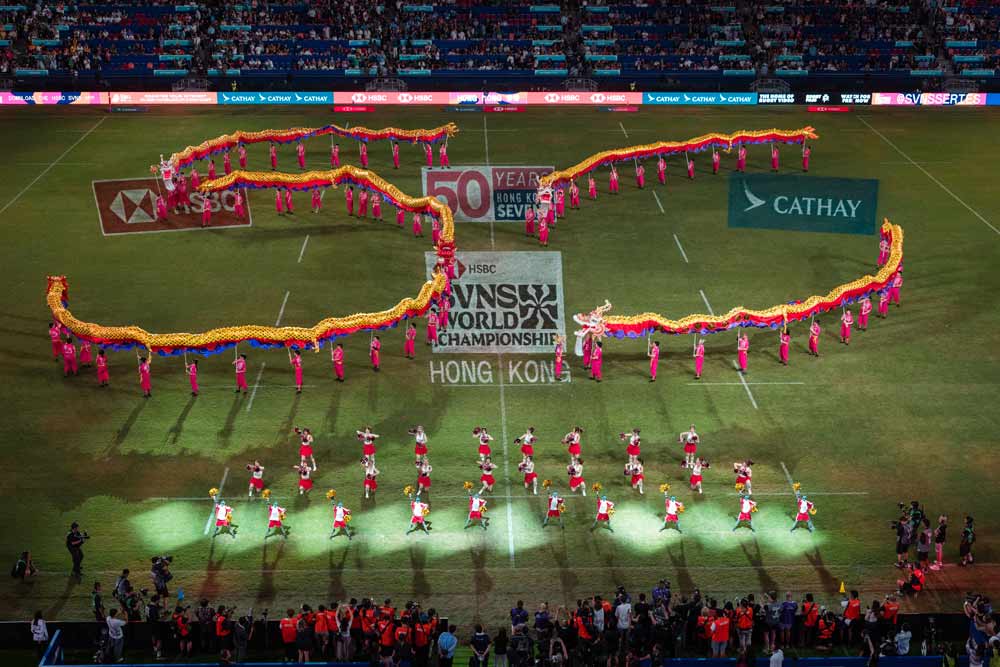
The Cathay/HSBC Hong Kong Sevens has been running since 1976, when it began as a one-day event in front of a sellout crowd of just 3,000 at the Hong Kong Football Club. Fifty years on, it has grown into a three-day spectacle that welcomes more than 100,000 fans and contributes close to US$100 million to Hong Kong’s economy in a single weekend. Cathay Pacific’s name has been attached to it for most of that history, a partnership almost as old as the airline’s presence at Hong Kong’s airport. This year’s anniversary edition carried even more significance than usual: as World Rugby builds towards the 2028 Los Angeles Olympics, Kai Tak Stadium hosted the first HSBC SVNS World Championship, the culmination of ten qualifying tournaments contested across five continents and three tiers of competition.
South Africa arrived in Hong Kong at the top of the men’s standings, having won four of the six HSBC SVNS Series tournaments, including three in a row. Argentina came in as defending champions, having become only the sixth nation in 49 years to win the Hong Kong title. On the women’s side, the Black Ferns Sevens rolled into Kai Tak off the back of five series wins from six, chasing a fourth consecutive Hong Kong crown. I’d read all the storylines before I arrived. Nothing quite prepares you for watching them play out from inside the stadium.
Saturday morning started with a costume run. Our group was taken to Pottinger Street in Central, a steep, cobbled laneway that tumbles down towards what was once Hong Kong’s waterfront, to pick up whatever fancy dress we could find before the coach ferried us out to Kai Tak. I went with a pilot’s uniform, epaulettes, cap and all, on the theory that if I was going to spend the week writing about an airline, I may as well dress the part. I wasn’t sure what I’d committed to until I was standing in the stadium bowl an hour later, surrounded by thousands of grown adults in costumes ranging from the mildly absurd to the genuinely spectacular. The front row that day belonged to a squadron of squids, who, for reasons I still can’t explain, did not appear to move from their seats for the entire day, beer in hand, undeterred by whatever logistics a squid costume presents for a bathroom break. I like to think my uniform got me a few extra nods of approval from the real Cathay crew working the corporate boxes, though nobody actually mistook me for aircrew.
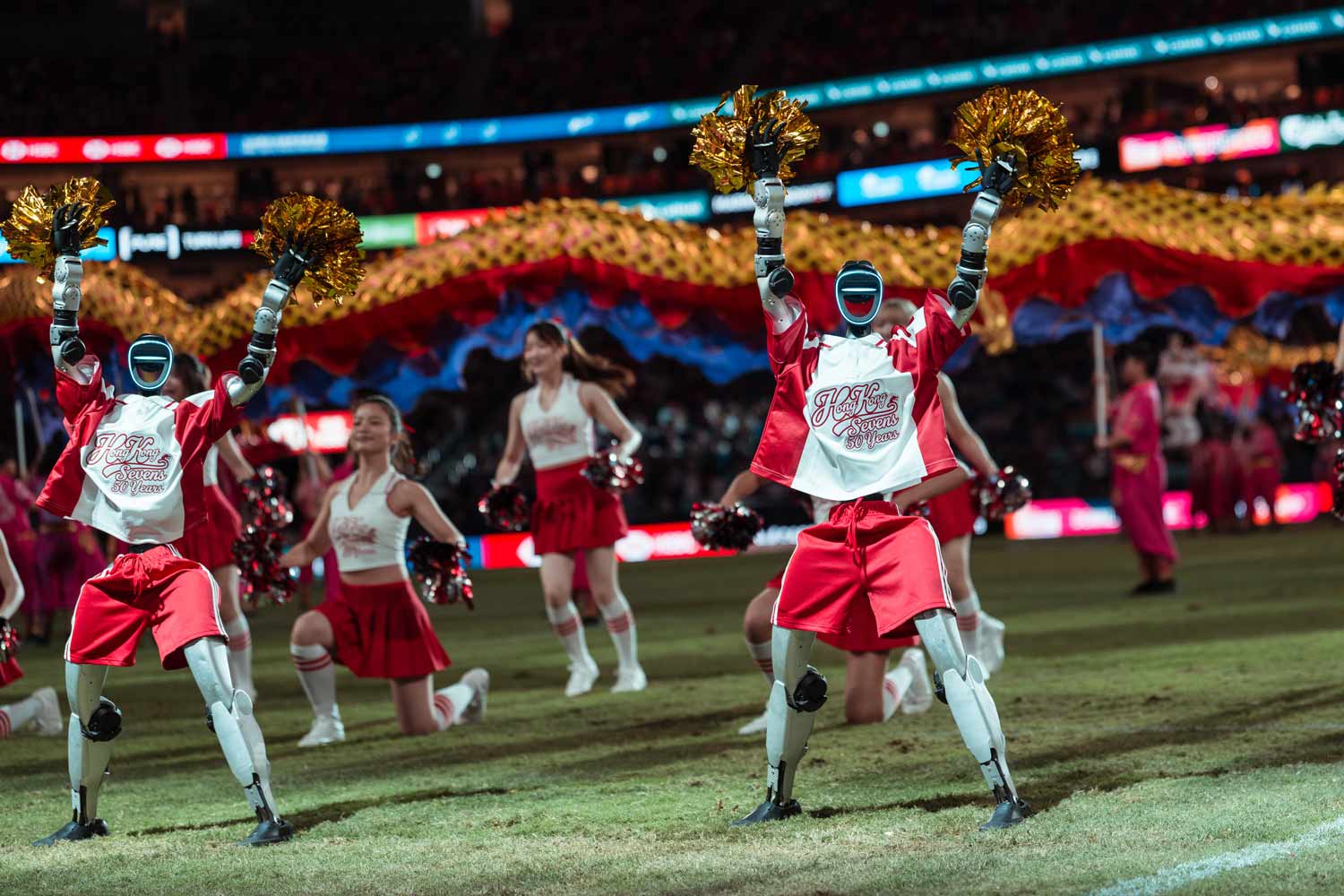
If you want to understand why the Hong Kong Sevens has the reputation it does, you need to spend an hour in the South Stand. It is strictly adults-only, and this year’s live act was the Vengaboys, playing under a closed stadium roof to a 34,000-strong crowd that nearly lifted it off again with the opening bars of “We Like to Party”. Jugs of beer flowed with none of the restrictions I’m used to seeing at a New Zealand stadium, and the noise never really let up, whether the rugby on the pitch was close or not.
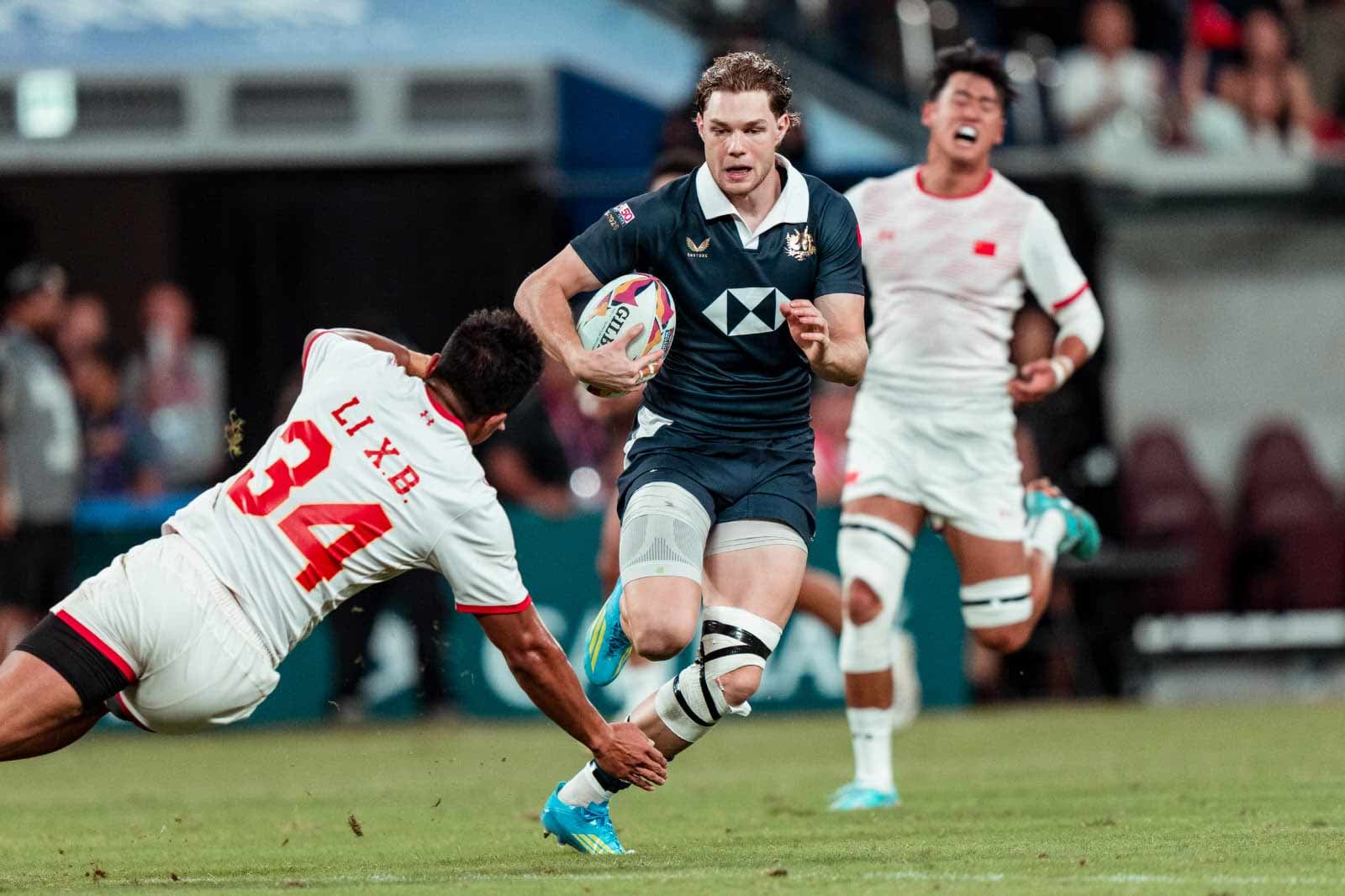
It mostly was close, right up until it suddenly wasn’t. South Africa’s men arrived in Hong Kong with the title the one major trophy missing from the Blitzboks’ cabinet, having reached four previous finals without lifting the cup, and they finally broke through in style. After a shock pool-stage loss to Spain rattled them early in the weekend, South Africa regrouped to beat Argentina 38-0 in the group stage, saw off New Zealand 26-14 in the semi-final, and then blitzed defending champions Argentina 35-7 in Sunday’s final in front of a heaving, sold-out Kai Tak. Tristan Leyds opened the scoring with a 70-metre individual try inside the first minute and was later named Player of the Final; Selvyn Davids finished with a brace of his own. “We made a bit of history today and it’s special to be a part of it,” South Africa captain Impi Visser said afterwards. “Hong Kong is basically where sevens rugby started, and it’s just amazing to get over this hurdle while celebrating 50 years.” It made South Africa just the seventh nation in the tournament’s history to win the men’s title.
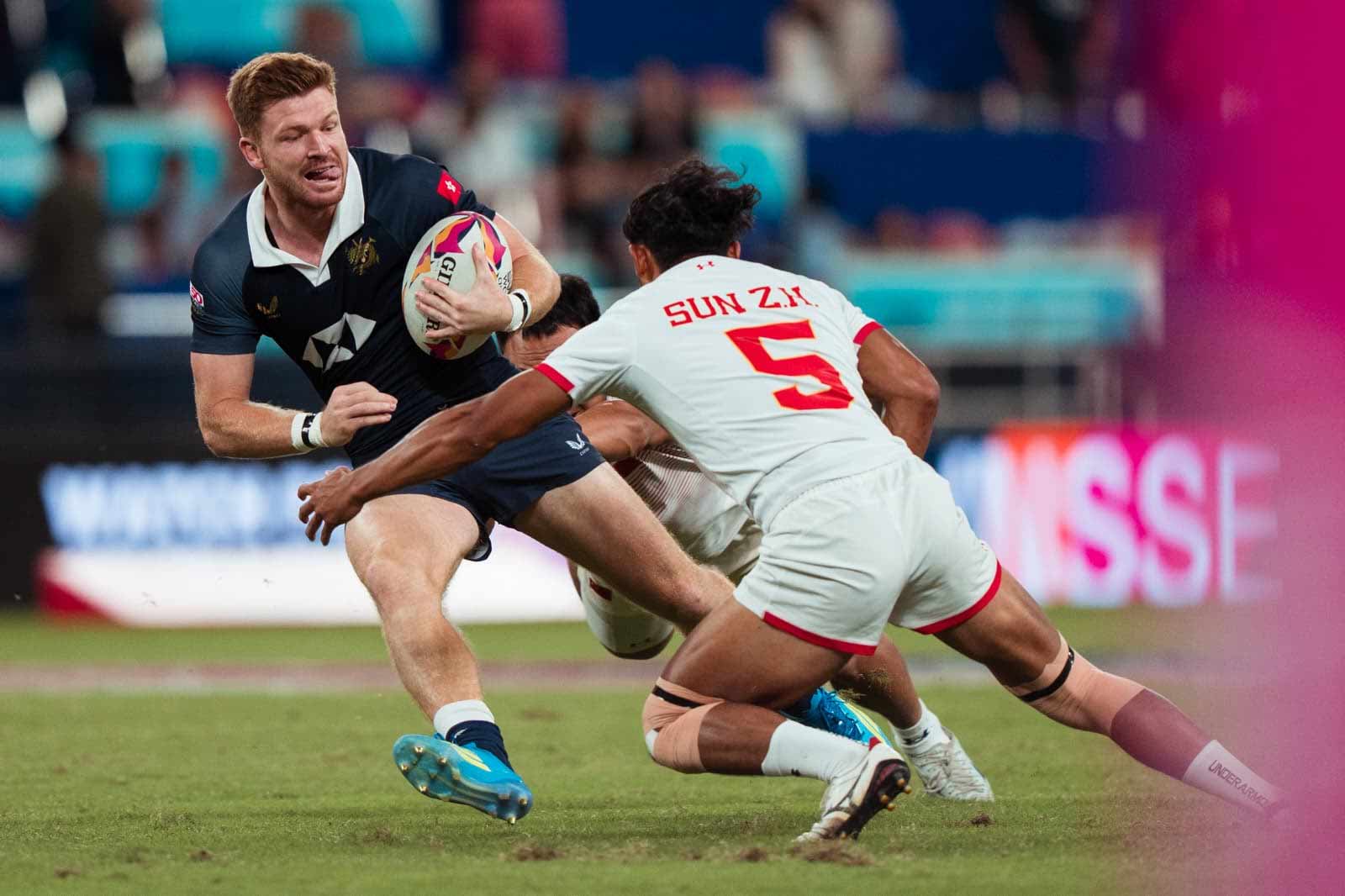
On the women’s side, the Black Ferns Sevens did exactly what the form guide suggested they might, seeing off Australia 19-14 in Sunday’s final to claim their fourth consecutive Hong Kong crown and their fifth straight tournament win of the season. France beat Canada in the third-place playoff. Closer to home for the host nation, Hong Kong China’s men claimed their third straight Melrose Claymores title, the invitational competition for Asian sides, beating Japan 19-15 in a match every bit as tight as the scoreline suggested; captain James Christie later credited the crowd as “our eighth man on the field”. By the time the last whistle blew on Sunday evening, organisers confirmed a new attendance record for the tournament: 113,395 fans across the weekend, more than 37,000 of them packed into Kai Tak for finals day alone. Fifty years on from a one-day event in front of 3,000 people, it felt like a fitting way to mark the anniversary. The New Zealand men, for what it’s worth, fell short of the final four, but watching the Black Ferns lift the cup from a stand still ringing with Vengaboys was more than enough to send the Kiwi contingent home happy.
On both match days, lunch was arranged by Cathay Pacific, setting the tone for how seriously the airline takes its role as title partner. The airline has built exclusive partnerships with some of Hong Kong’s most decorated kitchens, several of which I’d end up eating at myself before the week was out.
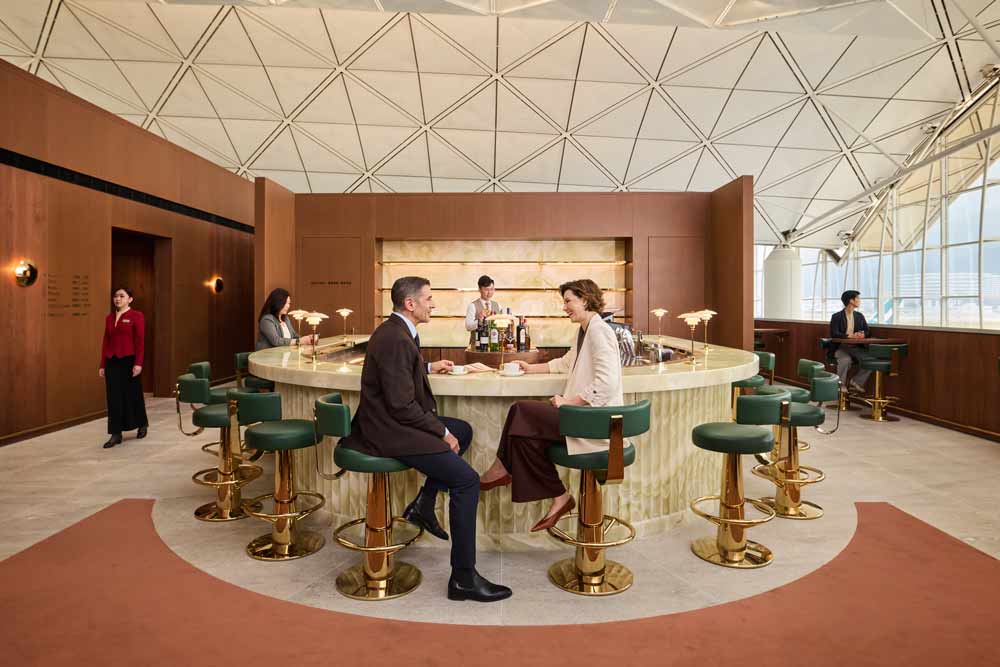
As guests of the airline, our group had the run of Cathay’s Business- and First-class lounges at HKIA, and I made a point of working my way through as many of them as I could. Each one turned out to have a genuinely different personality, and together they say a lot about how Cathay thinks about hospitality.
The Bridge, near Gate 35, reopened in May last year following an extensive redesign, and it shows: sleek lines, a considered dining menu and an exclusive retreat tucked away for First Class passengers and Diamond members, even though the lounge is primarily built for Business Class passengers. Near Gate 65, The Pier, Business is the more theatrical of the two Pier lounges, home to Cathay’s first Teahouse, pouring seasonal and artisanal teas, alongside the now-iconic Noodle Bar and a Food Hall that extends to wood-fired pizza, plus a relaxation room and shower suites for anyone who has just come from, or is headed straight into, a long-haul sector.
Near Gate 63, The Pier, First was the standout for me. The Dining Room operates in partnership with acclaimed Chinese restaurant Mott 32, and it is the kind of meal that makes you forget you’re inside an airport terminal. There are also massage services and full shower suites, while The Retreat offers eight day suites looking straight out over the runway, built for genuine rest rather than a quick pit stop. Near Gate 6, The Deck sits above the main terminal floor, a spot built as much for people-watching as for getting anything done. With a cocktail in hand and the sun going down over the runway, I can confirm it is an excellent place to do both.
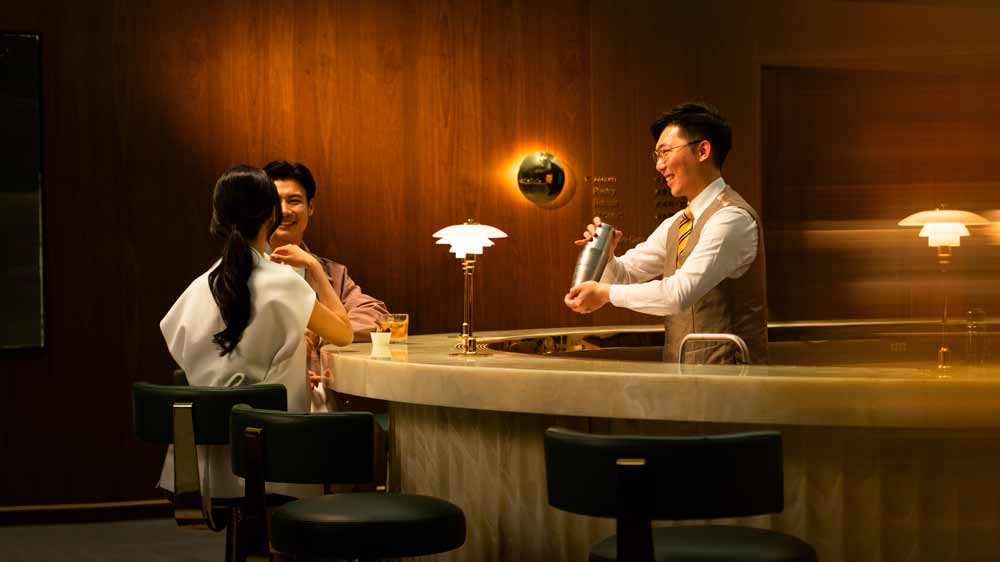
My final evening in Hong Kong fell on 22 April, the day Cathay Pacific reopened The Wing, First, its redesigned flagship lounge at Terminal 1, following an extensive collaboration with London design studio StudioIlse. I’d read the fact sheet before I left home. Walking in on opening day, I still wasn’t quite prepared for it.
A backlit Brushwing logo in brass, echoing the design language of Cathay’s cabins, welcomes you before you reach the reception desks built from green onyx and brass, materials the airline reserves exclusively for its First Class lounges. Underfoot, granite has been used for the first time in a Cathay lounge, a deliberate nod to its role in traditional Chinese architecture, and it grounds the whole space in a way that feels considered rather than decorative. Cathay Group CEO Ronald Lam described the reopening as an important milestone in the evolution of the airline’s flagship lounge design and a reflection of its long-standing commitment to putting people at the heart of everything it does. Having now sat in the space myself, it is hard to disagree.
From there, the lounge unfolds zone by zone. The Bureau offers two fully enclosed workspaces, built for privacy rather than performance, with acoustic panelling, privacy glass and two lighting modes, Engaged and Focused, depending on whether you’re in a meeting or just trying to get through your inbox before boarding. The Retreat, first introduced at The Pier, First and now reproduced here, houses seven private booths where you can book a foot massage or a neck-and-shoulder massage before your flight; I’d built in exactly enough time to try one, and it may have been the best decision of the whole trip. For something more casual, the Alcove’s five semi-private booths are built for a quiet drink, a book or catching up on emails, each equipped with its own charging point and compact table.
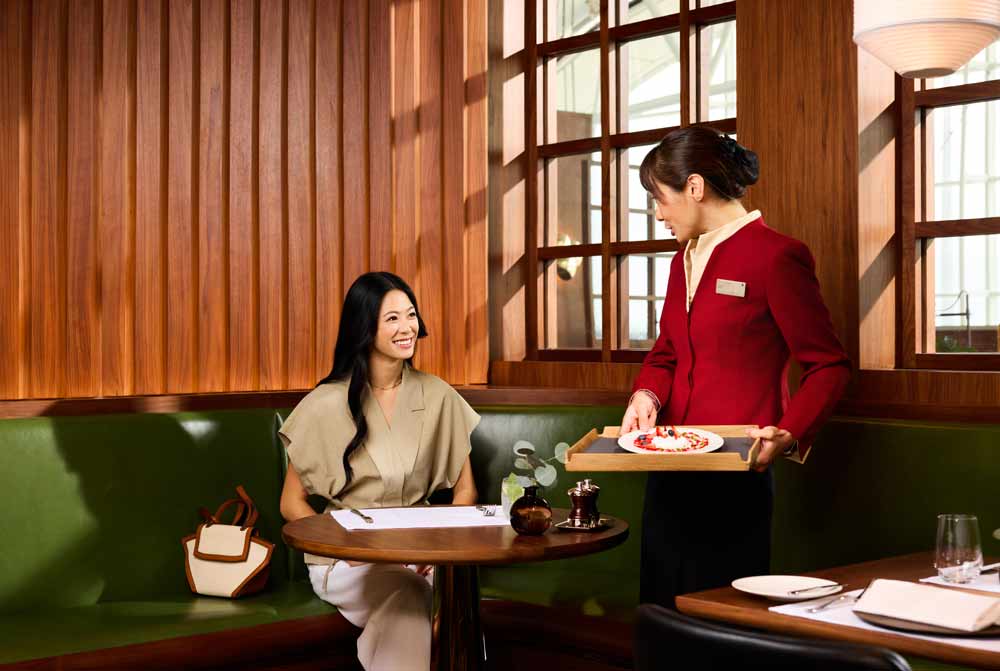
At the heart of it all is the Atrium, anchored by a striking green-onyx bar and topped by an open, light-filled ceiling that shifts the whole mood of the space depending on the hour. It is a genuinely clever piece of design: the same room serves a hearty breakfast in the morning and elegant afternoon tea later in the day, then transforms into a proper bistro by evening, pouring curated wines and cocktails as the sun goes down over the tarmac. Opposite it, the Pantry runs an extensive self-serve spread of light bites, pastries and desserts for anyone who wants something quick rather than a sit-down meal.
For my last dinner in Hong Kong, I sat down in the Dining Room, where the à la carte menu leans on the same Mott 32 partnership I’d enjoyed at The Pier, First earlier in the trip, alongside signature wonton and dan dan noodles and an excellent Australian Wagyu hanger steak with chimichurri. Twelve shower suites, including a barrier-free, family-friendly option, round out the offering, with a choice of full rain, cool mist or aquapressure settings depending on how you want to arrive at your gate.
Cathay has committed well over HK$100 billion to its fleet, cabin and lounge products, and digital innovation in recent years, and The Wing, First is a fine example of where that investment has gone. I’d flown into Hong Kong through The Bridge and The Pier lounges, and I flew out through The Wing, First on the very day it reopened to the public. It felt like a fitting bookend to a trip built entirely around two forms of hospitality: 50 years of rugby played at full throttle, and an airline that treats the ground experience with exactly the same care as the 11 hours in the air.